
Surface prep separates clean work from callbacks. After years of watching technicians grab whatever brush is closest, I’ve learned that the choice between a drill brush and an angle grinder brush determines whether you finish in an hour or spend the afternoon chasing the same stubborn coating. These tools occupy different ends of the power spectrum, and understanding where each excels saves time, materials, and occasionally skin. This breakdown covers the operational differences, filament options, and practical applications that matter when you’re standing in front of a corroded surface with a deadline.
Operational Characteristics That Shape Every Job
The split between drill brushes and angle grinder brushes comes down to physics. Drills spin slower with finer torque control. Angle grinders spin fast and hit hard. That basic difference ripples through every decision about which tool to reach for.
| Feature | Drill Brush | Angle Grinder Brush |
|---|---|---|
| Typical RPM | 500 – 2,000 RPM | 6,000 – 11,000 RPM |
| Torque | Moderate, with good low-speed control | High, designed for aggressive cutting/grinding |
| Control | Precise, suitable for delicate surfaces | Less precise, requires firm handling |
| Attachment | Hex shank, quick-change | Threaded arbor (M10, M14, 5/8″-11) |
| Power Source | Corded or Cordless Electric | Corded Electric, Pneumatic, or Battery |
A drill’s lower speed lets you work a surface without the brush bouncing or digging in unexpectedly. You can feel the resistance and adjust pressure in real time. An angle grinder brush, running at 8,000 RPM or higher, removes material whether you’re ready or not. That aggressive action is exactly what you want for heavy rust or weld slag. It’s a liability on anything delicate.
The attachment systems reflect these different purposes. Hex shanks on drill brushes swap in seconds, which suits the varied tasks drills handle. Threaded arbors on angle grinder brushes lock down tight because the forces involved would rip a quick-change fitting apart.
Drill Brush Applications Where Precision Matters
Drill brushes earn their place on lighter work where control outweighs raw speed. The lower RPM range means you can clean a surface without blowing through it or leaving swirl marks that show up under fresh paint.
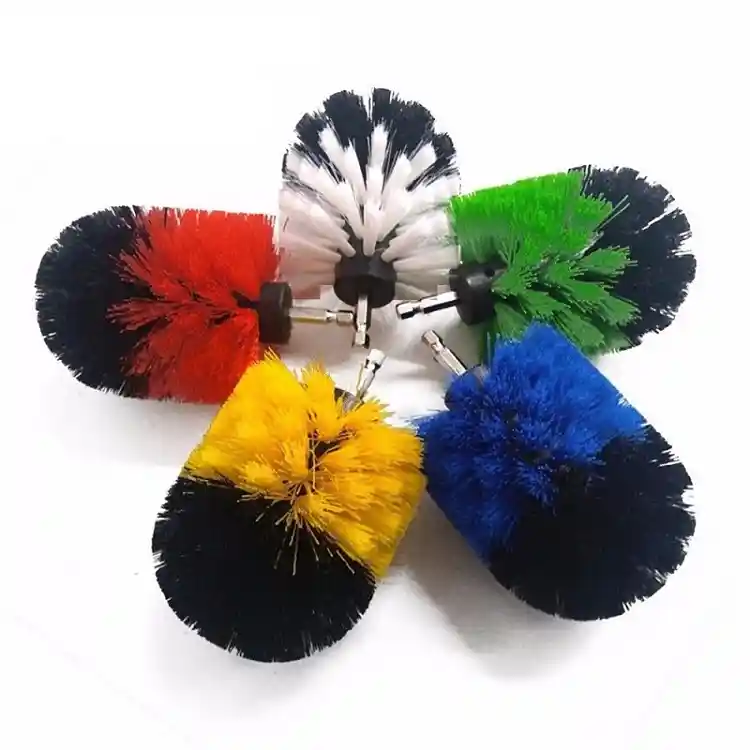
Automotive detailing is the classic example. A soft nylon drill brush cleans wheel wells, scrubs carpet fibers, and works grout lines without scratching chrome or gouging plastic trim. The same brush that handles a bathroom tile floor can prep a fiberglass boat hull. That versatility comes from the drill’s ability to modulate speed and the range of filament stiffness available.
For light rust removal, a medium-stiffness nylon brush lifts surface corrosion without the aggressive bite of wire. Paint stripping with a drill brush works best on loose, flaking coatings where you’re preparing for adhesion rather than grinding down to bare metal. The abrasive nylon options add grit particles to the filaments, giving you a controlled cutting action that sits between pure scrubbing and actual sanding.
Which Materials Favor a Drill Brush Over an Angle Grinder Brush
Drill brushes handle materials that punish aggressive tools. Plastics, fiberglass, ceramics, and softer metals like aluminum or brass all respond better to lower speeds and gentler filaments. Painted surfaces where you need to preserve the underlying material fall into this category too.
Soft nylon filaments work for delicate cleaning. Medium-stiffness nylon handles general scrubbing and light surface prep. The key is matching filament hardness to material hardness. A wire brush on aluminum leaves deep scratches. A nylon brush on aluminum leaves a clean surface ready for the next step.
Angle Grinder Brush Capabilities for Heavy Removal
Angle grinder brushes exist for jobs where a drill brush would take all day. The high RPM and torque combination tears through heavy rust, weld scale, and stubborn coatings that shrug off gentler approaches.
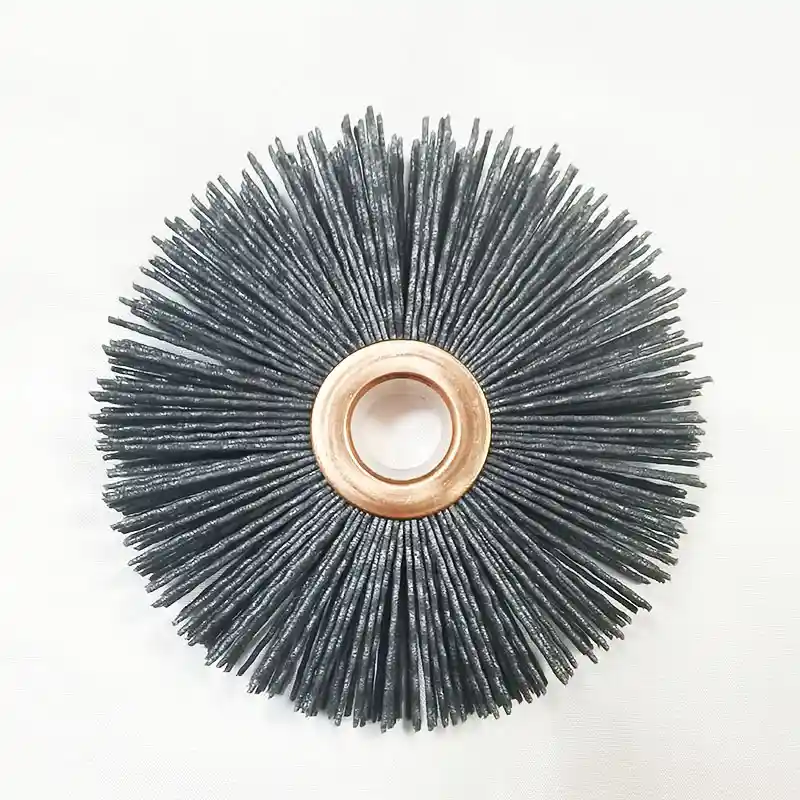
Metal fabrication shops rely on these brushes for weld cleaning. After welding, the surrounding metal carries slag, spatter, and heat discoloration. A wire wheel on an angle grinder strips all of it in a single pass, leaving clean metal ready for inspection or coating. Industrial rust removal on structural steel follows the same logic. Thick corrosion layers that would take hours with a drill brush come off in minutes.
Paint stripping on robust materials benefits from the same aggressive action. Old industrial coatings, multiple layers of marine paint, and baked-on finishes all yield to an angle grinder brush faster than chemical strippers or hand tools. Concrete surface prep rounds out the common applications, removing efflorescence, laitance, and contamination before coatings go down. For more on robust cleaning, explore 《wire wheel brush the right assistant for industrial cleaning and polishing》.
Power and Speed Differences in Practice
Angle grinders typically run between 6,000 and 11,000 RPM. Drills usually stay between 500 and 2,000 RPM. That five-to-one speed difference translates directly into material removal rate.
The higher rotational force in angle grinders means the brush filaments hit the surface harder and more frequently per second. Heavy rust that would require sustained pressure and multiple passes with a drill brush comes off with a single sweep from an angle grinder brush. The tradeoff is control. That same aggressive action can gouge softer materials or remove more than intended if your hand slips.
Filament Selection and Material Science
The brush body is just a delivery system. The filaments do the actual work, and their material properties determine what that work looks like.
Wire filaments come in several grades. Carbon steel wire is the hardest and most aggressive, suited for heavy rust and weld scale on ferrous metals. Stainless steel wire offers similar cutting power without leaving carbon contamination on stainless workpieces. Brass wire sits in the middle, providing enough bite for light rust and cleaning while being soft enough to avoid scratching softer metals.
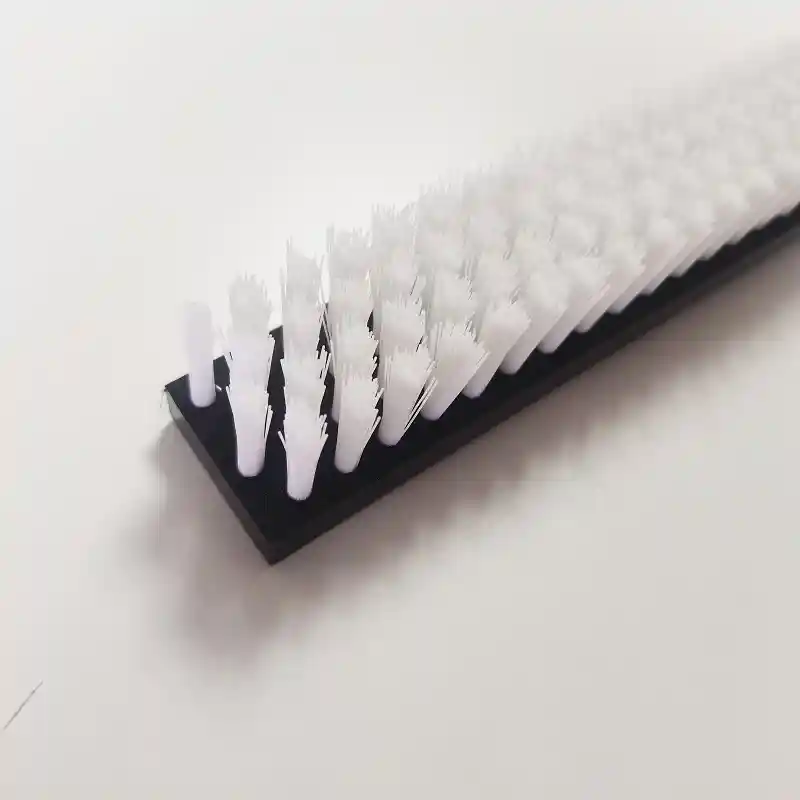
Nylon filaments cover the gentler end of the spectrum. Plain nylon scrubs and polishes without cutting. Abrasive nylon embeds grit particles into the filament material, creating a brush that cuts like sandpaper but conforms to irregular surfaces. The grit type and size determine how aggressive the cut is.
| Filament Material | Hardness | Best Use | Material Compatibility |
|---|---|---|---|
| Carbon Steel Wire | Very Hard | Heavy rust, weld scale, aggressive cleaning | Steel, iron, non-finished metals |
| Stainless Steel | Hard | Rust, corrosion, deburring (non-sparking) | Stainless steel, aluminum, non-ferrous metals |
| Nylon | Soft | Light cleaning, polishing, delicate surfaces | Plastics, ceramics, painted surfaces, wood |
| Abrasive Nylon | Medium-Hard | Deburring, surface conditioning, light sanding | Metals, composites, wood |
| Brass Wire | Medium | Light rust, cleaning, polishing | Softer metals, brass, copper, aluminum |
How Filament Material Affects Surface Preparation Results
The filament determines the mechanical action against the workpiece. Harder filaments cut. Softer filaments scrub. The match between filament hardness and material hardness controls whether you get efficient cleaning or surface damage.
Steel wire on soft aluminum leaves deep scratches that require additional finishing to remove. Nylon on heavy rust barely makes a dent. Abrasive nylon on deburring applications removes the sharp edges without changing the part dimensions. Each combination produces a different surface finish, and the right choice depends on what comes next in the process. For more detailed information on brush types, consider reading 《abrasive disc brush an excellent industrial industrial surface treatment tool》.
Safety Protocols That Prevent Problems
Power brushing tools demand respect. The combination of high speed, aggressive filaments, and rotating mass creates real hazards that proper technique and equipment mitigate.
Eye protection is non-negotiable. Wire filaments break. Rust particles fly. A single piece of debris at 8,000 RPM carries enough energy to cause permanent damage. Safety glasses with side shields are the minimum. Face shields add protection for extended work.
Gloves protect hands from both the workpiece and the brush. Heavy leather resists wire filament punctures. Hearing protection matters for extended sessions, especially with angle grinders.
Inspect every brush before use. Look for broken or missing filaments, cracks in the hub, and signs of uneven wear. A brush that’s been run past its useful life can come apart during operation. The maximum safe RPM rating printed on the brush exists for a reason. Exceeding it risks catastrophic failure.
Mounting technique matters. The brush must seat fully on the arbor and the retaining nut must be tight. A loose brush wobbles, wears unevenly, and can work itself free. Maintain a firm grip with both hands when possible, and position your body so a kickback doesn’t send the tool into you.
Matching Tool to Task for Optimal Results
The decision between a drill brush and an angle grinder brush starts with the job requirements. Material type, contamination level, surface area, and desired finish all factor in.
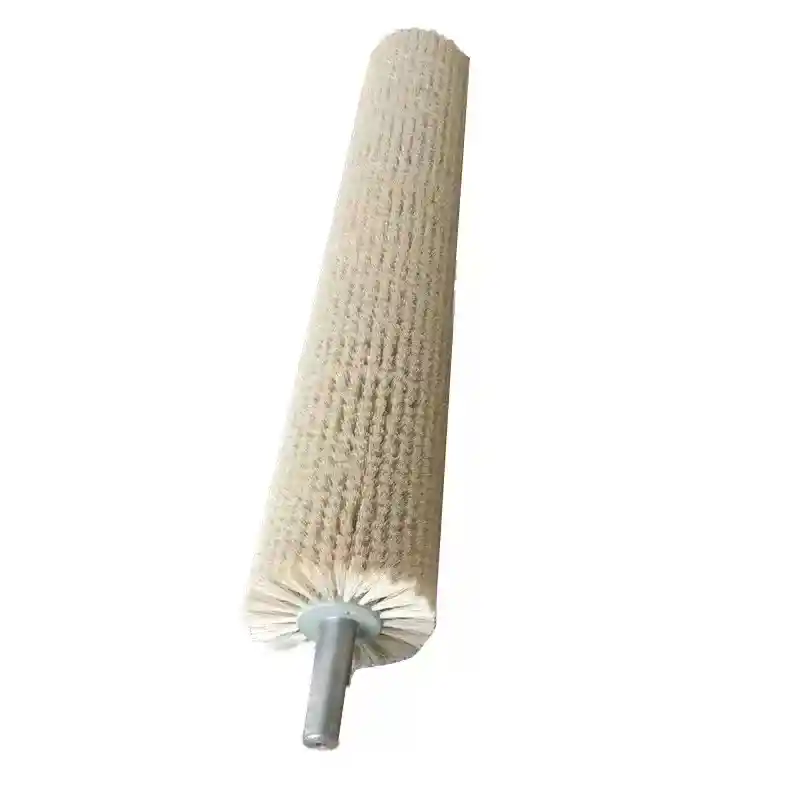
Light cleaning on delicate plastics calls for a soft nylon drill brush at low speed. Heavy descaling on structural steel needs a wire wheel on an angle grinder. Most jobs fall somewhere between these extremes, and the right choice balances efficiency against the risk of damage.
Cost factors in too. Drill brushes generally cost less and last longer on appropriate applications. Angle grinder brushes wear faster because they remove more material per minute. Using an angle grinder brush on a job suited for a drill brush wastes money on consumables and risks damaging the workpiece.
Custom brush configurations address applications where standard options fall short. Specific filament blends, unusual dimensions, and specialized mounting systems all solve problems that off-the-shelf products can’t. For specific applications, you might find 《brushes for steel wire industries cleaning descaling derusting polishing》 helpful.
Partner with Huixi Brush for Your Industrial Needs
Choosing the right brush solution can significantly impact your operational efficiency and product quality. At Huixi Brush, we specialize in customized brushes for industrial seal, cleaning, polishing, and deburring applications. With 16 years of manufacturing experience, we offer professional technical support, ODM/OEM service, competitive pricing, low MOQ, and fast delivery. We are dedicated to providing the best price, better service, and good quality.
Contact us today to discuss your specific requirements. We are your reliable brush supplier in China.
Email: [email protected]
Phone: +86 1580 0932 713