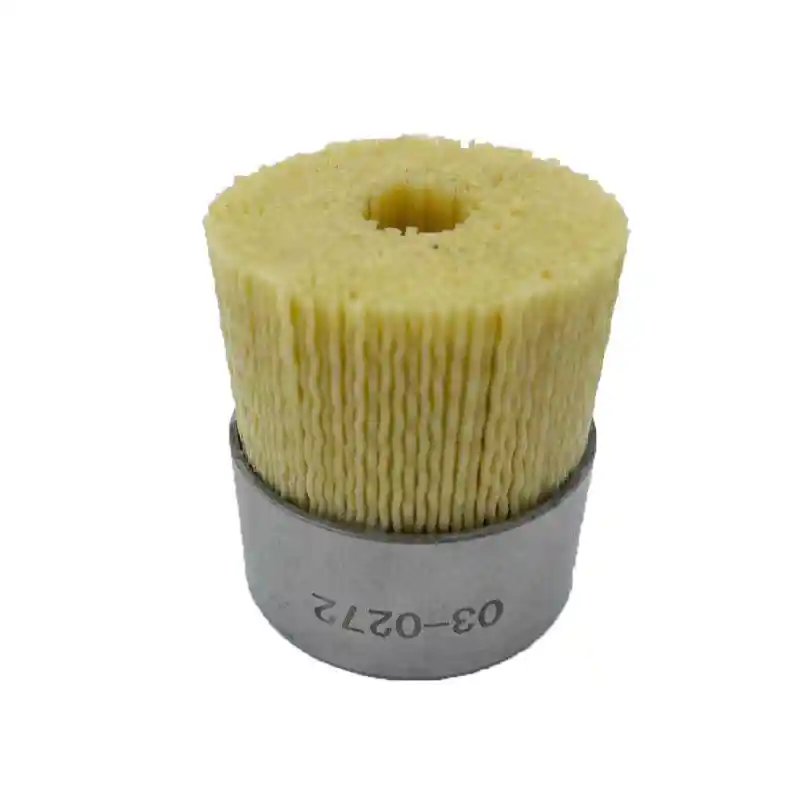

A disc brush does not finish the way a sanding disc or a flap wheel does. It conforms, cools, and cuts in a pattern that depends entirely on how the filaments are specified and packed. When I see a customer struggling with uneven surface finish, the problem is rarely the machine. It is almost always a mismatch between the disc brush parameters and the workpiece. Get the filament type, density, and backing plate right at the specification stage, and you eliminate most of the variables that cause rework in production. This article sorts through the design decisions that determine whether a disc brush delivers consistent finish quality or creates more problems than it solves.
What a Disc Brush Does That Other Abrasive Tools Cannot
A disc brush is not a rigid abrasive tool. The filaments flex individually as they contact the workpiece surface, which means the brush can follow mild contours, reach into low spots, and apply consistent pressure across an irregular face without gouging or creating flat spots. This is the fundamental advantage over bonded abrasives and coated discs, which transfer the full rigidity of the backing pad into the workpiece.
In practice, this flexibility does two things that matter for surface finishing. First, it allows a disc brush to deburr edges and radius corners in a single pass without changing the part geometry. Wire filaments crack off burrs at the root; abrasive nylon filaments wipe the edge and leave a uniform radius. Second, the filament tips act as thousands of individual cutting points that self-sharpen as the abrasive grain wears and exposes fresh grain underneath. A coated abrasive disc, by contrast, loads up and dulls progressively until it is replaced.
The trade-off is that a disc brush cannot remove stock at the rate of a rigid grinding wheel. For heavy material removal, you still need a harder tool. But for the surface conditioning steps between coarse grinding and final plating or coating, a properly specified disc brush does the work of several sequential abrasive steps in one operation.
Filament Type Determines Which Workpiece Materials You Can Finish
Filament selection is where most disc brush specifications go wrong. The choice is not simply nylon versus wire. Within each category, the abrasive grain type, grit size, and filament diameter all affect how the brush interacts with the workpiece.
Nylon abrasive filaments carry silicon carbide or aluminum oxide grain throughout the filament cross-section. Silicon carbide is sharper and cuts faster on non-ferrous metals, plastics, and composites. Aluminum oxide is tougher and holds up longer on steel and iron alloys. Within nylon, filament diameter matters as much as grit. A 0.8 mm filament loaded with 120-grit aluminum oxide will cut more aggressively than a 0.5 mm filament with the same grit, simply because the thicker filament transfers more energy to the workpiece before it flexes.
Nylon Abrasive vs. Wire Filament: Which Gives the Smoother Finish?
For surface finish below Ra 0.8 μm on most metals, nylon abrasive is the starting point. Wire filaments, whether crimped or straight, always leave a mechanical scratch pattern that is coarser than what abrasive nylon produces at equivalent speeds. Crimped wire brushes are faster for oxide and scale removal but the finish they leave is typically Ra 1.6 μm or higher depending on wire diameter.
If your specification calls for a cosmetic finish or a pre-plating surface below Ra 0.4 μm, you need fine-grit nylon abrasive and a disc brush with high filament density. I have seen programs where a switch from 80-grit to 180-grit nylon, combined with a 30 percent increase in filament count, took the finish from visually uniform to measurable below Ra 0.3 μm without any other process change.
What Happens When You Use the Wrong Filament on Soft Metals
Aluminum, brass, and copper present a specific problem. Wire filaments, especially steel, can embed small particles in the soft metal surface. These particles then oxidize or create sites for galvanic corrosion after plating. If you must use wire on soft non-ferrous metals, stainless steel wire or brass wire reduces this risk but does not eliminate it. For aluminum parts headed for anodizing, I always recommend nylon abrasive filament. The cutting action is cleaner, and there is no risk of ferrous contamination causing surface defects after anodizing.
The table below summarizes filament recommendations for common workpiece materials:
| Workpiece Material | Recommended Filament | Typical Grit Range | Surface Finish After Brushing |
|---|---|---|---|
| Carbon steel | Aluminum oxide nylon or crimped steel wire | 80–180 grit | Ra 0.8–2.5 μm |
| Stainless steel | Aluminum oxide nylon or stainless wire | 120–240 grit | Ra 0.4–1.2 μm |
| Aluminum (pre-anodize) | Silicon carbide nylon | 180–320 grit | Ra 0.2–0.6 μm |
| Brass / copper | Silicon carbide nylon or brass wire | 120–240 grit | Ra 0.4–1.0 μm |
| Engineering plastics | Silicon carbide nylon | 240–400 grit | Ra 0.1–0.3 μm |
Density and Trim Length: How They Shape Finish Consistency
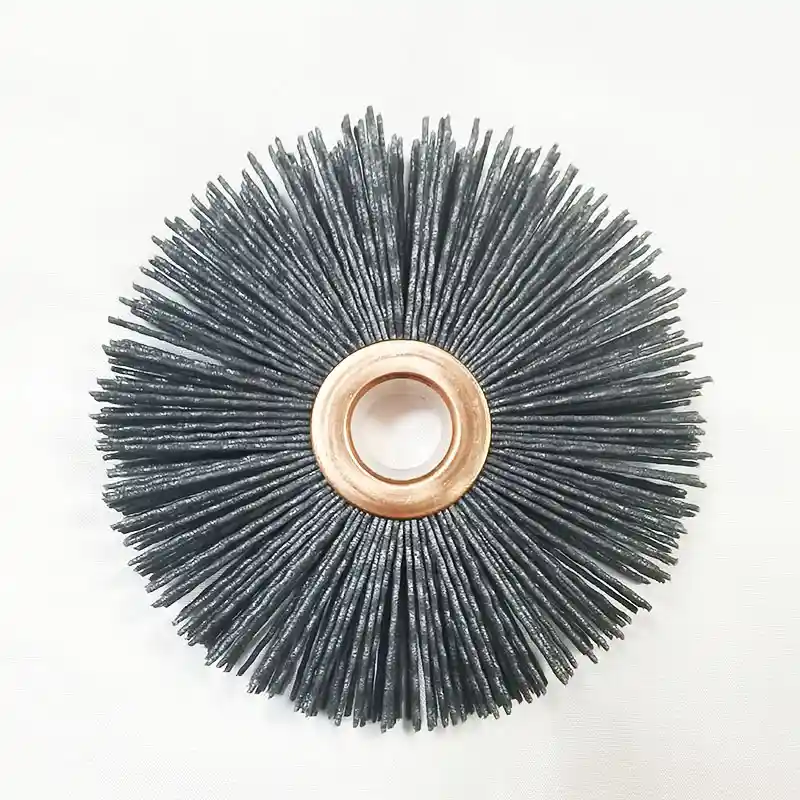
Filament density, measured as the number of filaments per square centimeter of brush face, controls how many cutting points contact the workpiece at any moment. Higher density means more cutting points sharing the load, which produces a finer, more uniform finish. Lower density concentrates the work on fewer filaments, which cuts faster but leaves a coarser, less even pattern.
Trim length interacts with density in a way that is easy to overlook. A longer trim gives each filament more leverage to flex, which reduces the effective cutting pressure at the tip. This is useful for conforming to contoured surfaces but can slow the cut on flat parts. Short trim lengths make the brush stiffer and more aggressive. The same filament type and density will behave completely differently at 25 mm trim versus 40 mm trim.
In practice, here is what I have found over years of matching disc brushes to production lines: for flat steel plate deburring, a trim length of 25 to 30 mm with medium density gives good cut rate and acceptable edge radius. For contoured aluminum castings where the brush must follow the surface without digging in, 35 to 40 mm trim with high density keeps the pressure uniform across the contour. The finish after a single pass will typically be within Ra 0.4 to 0.8 μm on aluminum with 240-grit nylon at these settings.
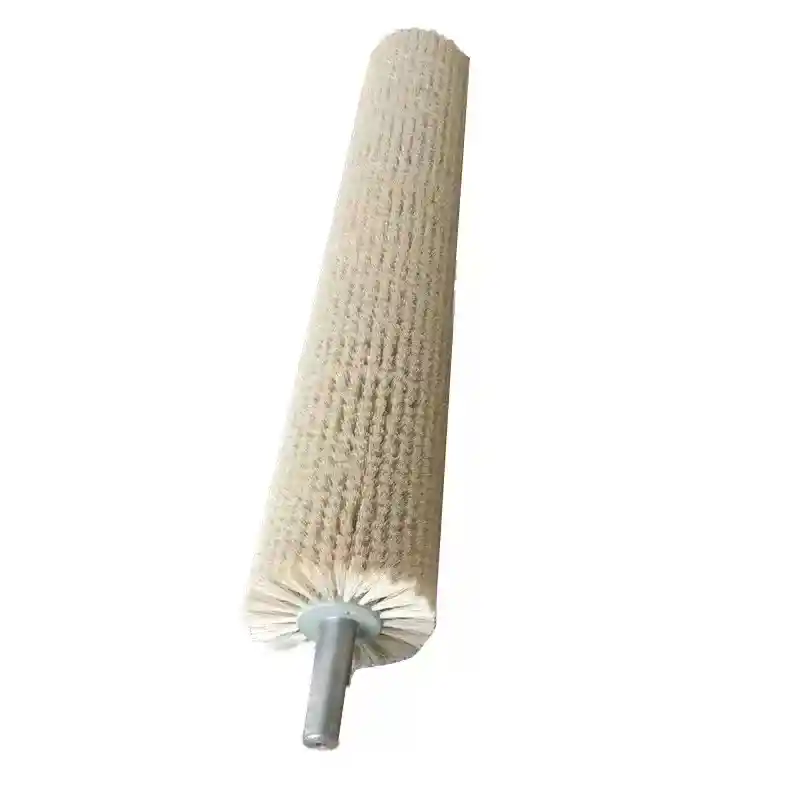
Backing plate material also affects how density works in operation. A rigid phenolic backing plate transfers all the machine pressure directly to the filament tips. A flexible backing plate, typically rubber or composite, absorbs some of the machine pressure and lets the filaments do more of the conforming work. For flat finishing where uniformity matters most, rigid backing is better. For parts with surface variation, the flexible backing prevents the hard edges of the disc from contacting the workpiece before the filaments do.
If your disc brush specification involves an unusual combination of trim length and density, or if you are running on a material that standard filaments struggle with, it is worth confirming the filament-to-backing-plate configuration before committing to a production order. Reach out at [email protected] with your workpiece details and we can check whether your parameters are within the range that has worked reliably in production.
Integrating Disc Brushes Into Automated Finishing Lines
When a disc brush is mounted on a CNC machine or a dedicated brushing station, the operating parameters become part of the specification. RPM, feed rate, and depth of engagement all affect how the brush cuts, and they interact with the filament and density choices you already made.
As a general starting point, surface speed at the filament tip should be between 600 and 1,200 meters per minute for nylon abrasive brushes on steel. Wire brushes can run at the lower end of that range or slightly below. Too slow, and the filaments do not cut efficiently. Too fast, and you generate excess heat that can soften nylon filaments or cause the abrasive grain to break down prematurely.
Feed rate determines dwell time, which is how long each point on the workpiece stays in contact with the brush. In automated lines, I typically recommend running test coupons at three feed rates before setting the production parameter. Start at the speed that gives you the finish you want on a flat test piece, then check whether the brush maintains that finish as it wears in over the first hundred cycles. Disc brushes change slightly during break-in as filament tips blunt to a stable profile. The finish after break-in is the real production finish, not the finish from the first part.
Specifying a Disc Brush That Will Not Wear Out Prematurely
Brush life depends on four factors: filament material, abrasive grain quality, operating speed, and workpiece hardness. Most premature disc brush failures I see are not material defects. They are the result of running the brush at a surface speed or engagement depth that exceeds what the filament can sustain.
A well-specified nylon abrasive disc brush running at 800 meters per minute on mild steel should maintain useful cutting performance for 40 to 80 operating hours under continuous production. Wire brushes typically last longer on deburring applications, 100 to 200 hours or more, because the steel filaments do not rely on embedded abrasive grain that wears out. However, wire filaments fatigue and break at the root over time, especially if the brush is run at high RPM with deep engagement.
How Many Operating Hours Should a Well-Designed Disc Brush Last?
There is no single number, because the answer varies with the application. But here is what I tell our customers: if you are getting fewer than 30 hours from a nylon disc brush on steel at moderate speed, check your engagement depth and surface speed first. Reduce depth by 0.5 mm and see if the life doubles. If it does, the original setting was beyond what the filament can handle, and the brush was failing from overstress rather than normal abrasive wear. Longer trim can also help by distributing the bending stress over more filament length.
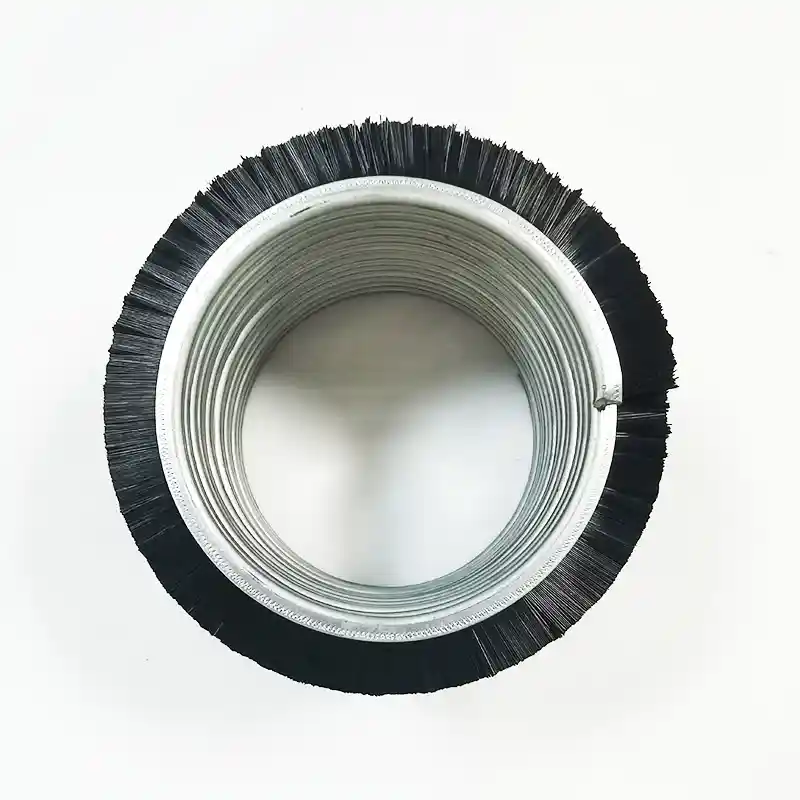
The other factor that shortens life is contamination. Oil, coolant residue, and swarf packed between filaments reduce cutting efficiency and accelerate wear because the filaments cannot flex freely. In wet finishing or oily environments, a disc brush with wider filament spacing allows better chip clearance and runs cooler, which extends life even though the initial cut rate is slightly lower than a full-density brush.
What to Ask a Disc Brush Manufacturer Before Ordering
Most disc brush catalogs list diameter, arbor hole, filament type, and grit. That is the minimum information. To get a disc brush that performs the way you need it to, ask these five questions before you place the order.
First, can the manufacturer adjust filament density independently of trim length? Some suppliers offer only fixed combinations. If your application requires a specific density at a non-standard trim, the manufacturer needs the capability to build to your specification rather than their stock configuration.
Second, what backing plate materials and thicknesses are available? The backing plate determines how the brush mounts, how it transfers pressure, and whether it can handle the RPM your process requires. Phenolic is standard for most applications; rubber or composite backings are available for flexible requirements; metal backings are used where the brush must handle high torque or operate at elevated temperatures.
Third, can the manufacturer produce a small pre-production batch for testing before you commit to a production quantity? Testing five or ten pieces on your actual line, with your actual parts, reveals issues that no specification sheet can predict.
Fourth, what is the minimum order quantity for custom configurations? Some manufacturers set high MOQs that make it difficult to iterate on a design. Others, including our factory at Huixi Brush, keep custom MOQs low enough that you can refine the specification across two or three test rounds without committing to a full production volume prematurely.
Fifth, can the manufacturer provide technical support to help you select the right parameters? A supplier who simply takes your drawing and builds to print is useful. A supplier who asks about your workpiece material, your current finish problems, and your production constraints, and then suggests a filament and density combination, is the difference between getting a brush and getting a solution.
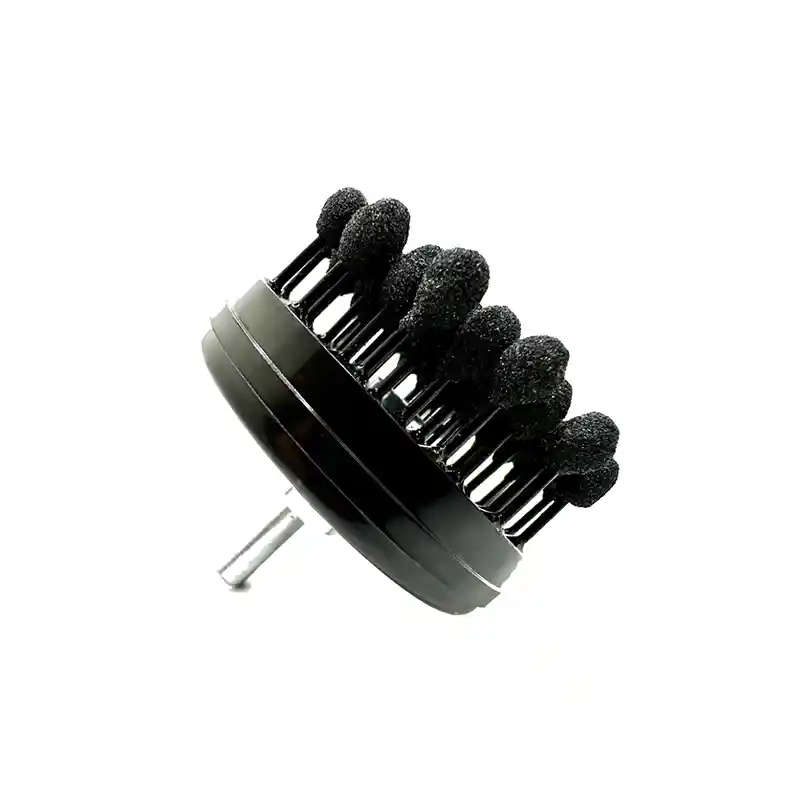
If your current disc brush is giving inconsistent results or wearing faster than you expect, send your part drawing, workpiece material, and finish target to our team at [email protected]. We can usually recommend a specification adjustment that improves performance without increasing your cost per part, because the fix is often a parameter change rather than a more expensive filament.
Practical Questions About Disc Brush Surface Finishing
Can a disc brush achieve the same finish as a coated abrasive disc?
It depends on what you call the same finish. A coated abrasive disc with fine grit can produce a lower Ra value on a flat surface, but it will also alter the geometry of edges and corners in ways a disc brush will not. The disc brush gives you a uniform finish that includes edge radiusing, while the coated disc leaves edges sharp. If your specification requires both surface smoothness and controlled edge breaks, the disc brush is the better single-tool solution.
What is the smallest arbor size available for small-diameter disc brushes?
Standard disc brushes from most manufacturers start at 100 mm outer diameter with arbor holes from 12 mm to 25 mm. For diameters below 75 mm, arbor holes as small as 6 mm are possible but the brush must be built on a smaller hub, which limits the filament density and maximum RPM. Small-diameter disc brushes are typically specialty items built to order rather than stock products.
How do I know if I need a custom filament blend instead of standard nylon?
If you have tried standard silicon carbide nylon and aluminum oxide nylon and neither gives the right combination of cut rate and finish on your specific material, a custom blend may be the answer. Some manufacturers can mix abrasive grain types or adjust the grain loading percentage in the filament. This is worth exploring when your workpiece material is an unusual alloy, a composite, or a coated surface where standard filaments either cut too aggressively or not enough.
Are disc brushes suitable for wet finishing operations?
Yes, with the right filament and backing plate selection. Nylon absorbs a small amount of water and can swell slightly, which changes filament stiffness. For wet applications, specify nylon filament that has been moisture-stabilized, and confirm with the manufacturer that the backing plate adhesive is rated for continuous water or coolant exposure. Stainless steel wire brushes can run wet indefinitely as long as the hub material is also corrosion-resistant. If your process involves water-based coolant or cutting fluid, share that detail with your supplier so they can specify the right filament treatment and hub material. For wet finishing applications or if you are unsure about material compatibility, reach out to us at [email protected] or call +86 1580 0932 713 with your process details, and we will confirm the right specification for your conditions.
If you’re interested, check out these related articles:
introduction of our concrete block machine brushes
wire wheel brush the right assistant for industrial cleaning and polishing
abrasive disc brush an efficient tool for many applications