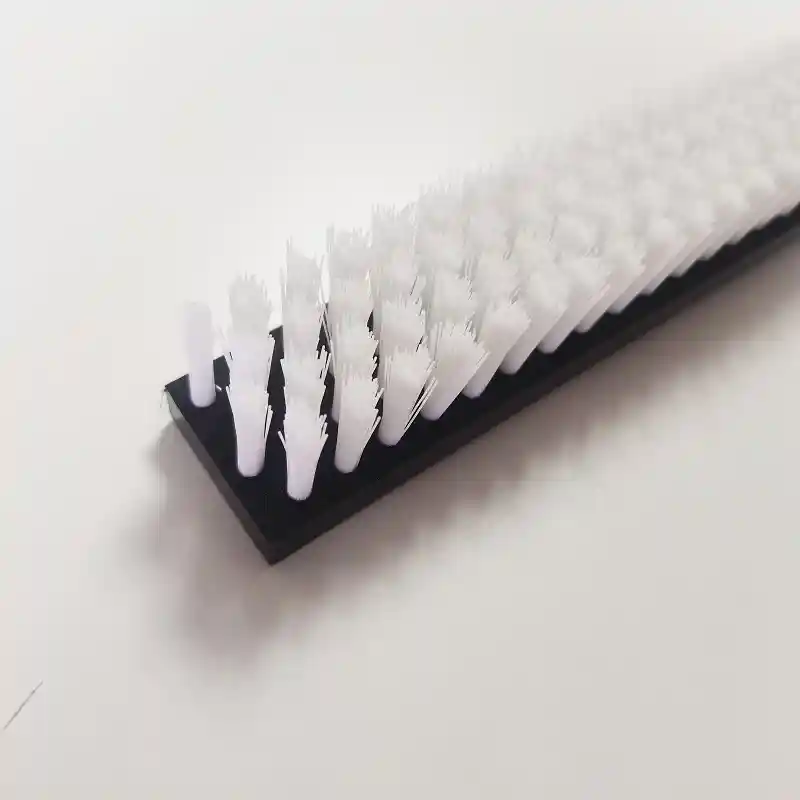

Diamond particles bonded to flexible filaments create a tool that behaves differently from conventional abrasives. The brush conforms to surface contours while the diamond does the cutting. After working with these brushes across stone, metal, and ceramic applications for over a decade, the performance gap between diamond and traditional abrasives becomes obvious quickly. Material comes off faster, the finish stays consistent longer, and the brush itself lasts through jobs that would destroy silicon carbide alternatives.
How Diamond Abrasive Brushes Actually Work
Diamond abrasive brushes embed industrial-grade diamond particles within flexible filament strands. This construction creates controlled material removal because the filaments flex under pressure while the diamond maintains contact with the workpiece. The hardness of diamond—rated 10 on the Mohs scale—means these brushes cut through materials that would simply glaze over traditional abrasives.
Grit selection determines everything about the final surface. Coarser grits in the 36-60 range tear through stock aggressively, leaving visible scratch patterns. Moving up to 200-400 grit produces blended surfaces ready for final polishing. At 1000 grit and above, the scratches become invisible to the naked eye, and reflective finishes become achievable.
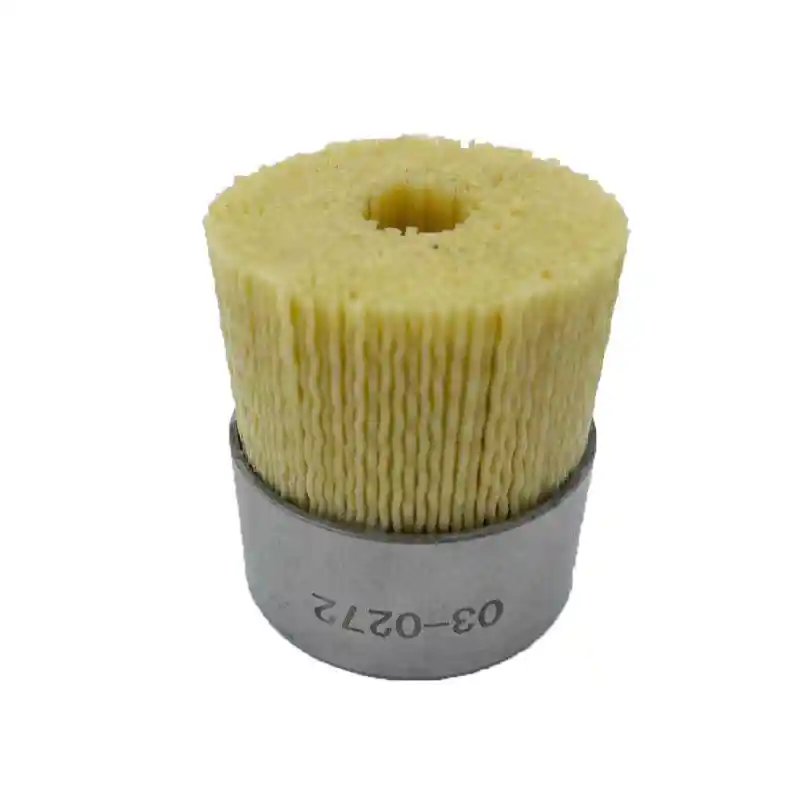
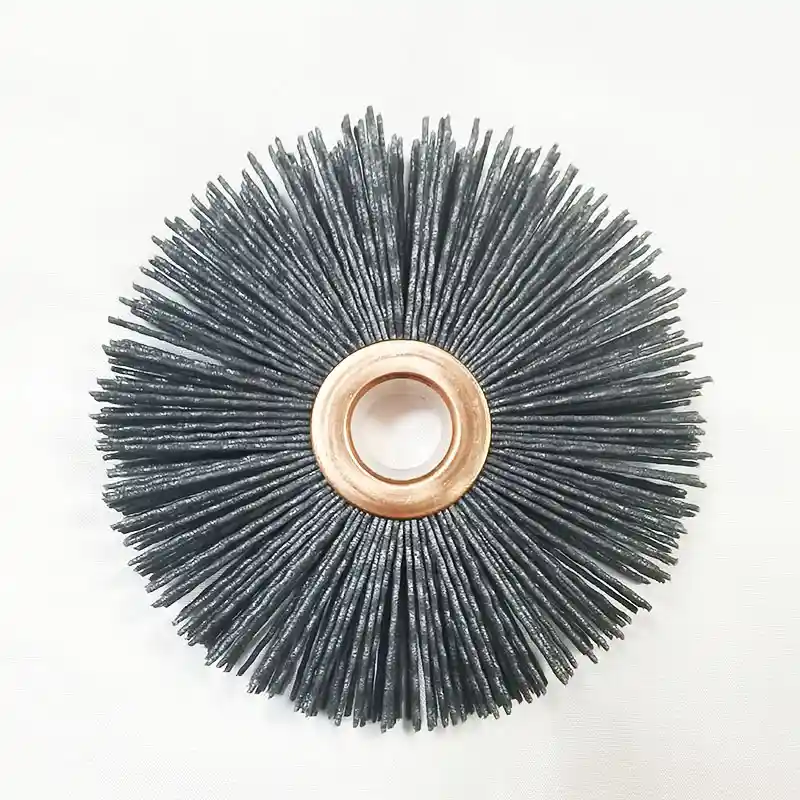
Brush configurations matter too. Wheel brushes work well for flat surfaces and edge work. Cup brushes reach into concave areas. Disc brushes handle large surface areas efficiently. The filament material—whether nylon-based or incorporating silicon carbide as a secondary abrasive—affects how aggressively the brush cuts and how much it flexes during operation.
| Grit Size | Application | Material Removal | Surface Finish |
|---|---|---|---|
| 36-60 | Heavy Stock Removal | Aggressive | Rough |
| 80-120 | Deburring, Edge Rounding | Moderate | Semi-Smooth |
| 200-400 | Surface Blending, Pre-Polishing | Light | Smooth |
| 600-800 | Fine Polishing | Very Light | Very Smooth |
| 1000+ | Ultra-Fine Polishing, Mirror Finish | Minimal | Mirror-like |
Stone Polishing Demands Diamond Performance
Stone fabricators rely on diamond abrasive brushes because nothing else delivers the same results on hard materials. Granite, with its quartz content, destroys conventional abrasives within minutes. Marble requires gentler treatment to avoid scratching but still needs diamond’s cutting ability to develop a true polish. Quartz composite materials present similar challenges.
The wet versus dry polishing decision affects both finish quality and working conditions. Wet polishing with diamond brushes produces finer finishes because water carries away swarf and prevents heat buildup that can damage both the brush and the stone. Dry polishing generates significant dust but works well for certain applications where water creates problems—like when working on installed countertops near electronics or cabinetry.
Granite polishing brushes typically start at coarser grits to remove saw marks and level uneven surfaces. Marble finishing tools jump to finer grits earlier in the sequence because the stone scratches more easily. Concrete grinding brushes need robust construction to handle the aggregate exposure and surface irregularities common in that material.
| Feature | Diamond Brushes | Traditional Abrasives |
|---|---|---|
| Hardness | Extremely High | High |
| Wear Resistance | Excellent, long lifespan | Good, but wears faster on hard materials |
| Efficiency | Faster material removal, consistent finish | Slower, less consistent on hard materials |
| Surface Quality | Superior, high-gloss achievable | Good, but may require more steps for fine finish |
| Cost-Effectiveness | Higher initial cost, lower long-term cost due to longevity and efficiency | Lower initial cost, higher long-term cost due to frequent replacement |
| Applications | Granite, marble, quartz, concrete, ceramics | General stone, wood, metal |
For those seeking more information on specialized abrasive tools, consider reading about 《abrasive disc brush an efficient tool for many applications》. It provides insights into another effective solution for various applications.
Precision Deburring Without Dimensional Change
Manufacturing tolerances in aerospace and medical devices leave no room for error. A deburring operation that removes even a few thousandths of an inch from a critical surface can scrap an expensive part. Diamond abrasive brushes solve this problem because they remove burrs selectively without attacking the base material aggressively.
The mechanism works because burrs present sharp edges to the brush filaments, concentrating cutting action on those high points. The surrounding flat surfaces experience minimal material removal. This selective action makes diamond abrasive brushes ideal for CNC finishing operations where parts need consistent, repeatable deburring across production runs.
Metal surface conditioning benefits from the same principle. Diamond brushes create uniform surface textures for subsequent coating adhesion or aesthetic requirements. Ceramic grinding applications use diamond brushes to refine fired surfaces without introducing the micro-cracks that aggressive grinding wheels can cause. Glass edge polishing requires the controlled material removal that diamond provides—too aggressive and the edge chips, too gentle and the polish never develops.
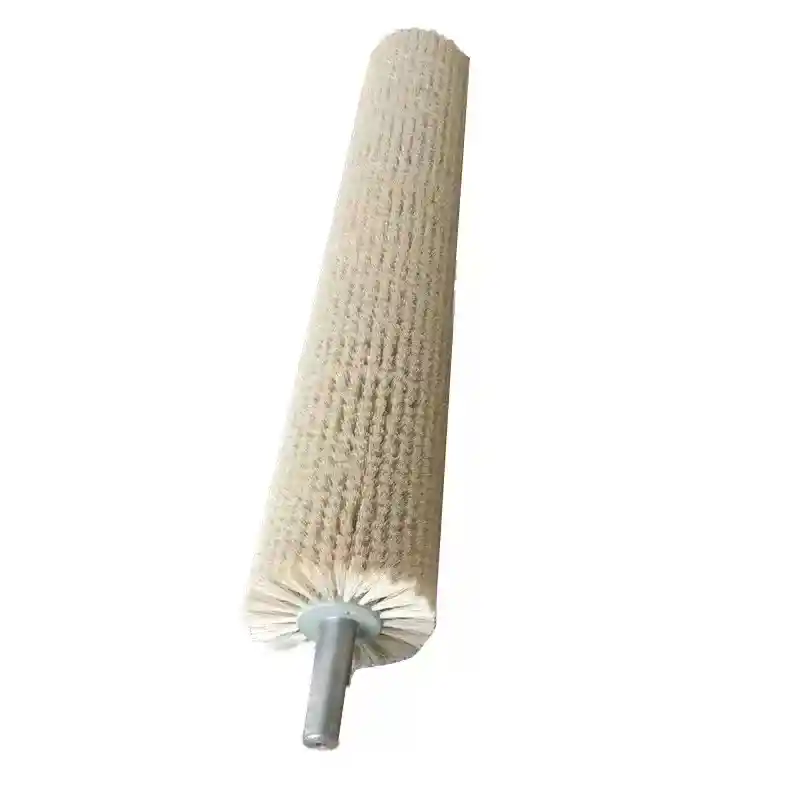
Getting the Most Life From Diamond Abrasive Brushes
Brush selection starts with understanding the application. The material being processed determines the minimum grit aggressiveness needed. The desired finish determines the final grit in the sequence. The machine type—whether handheld, CNC, or automated line—affects which brush configurations work mechanically.
Operating parameters matter more than most users realize. Running a diamond abrasive brush too fast generates heat that breaks down the bond holding diamond particles to the filaments. Running too slow reduces cutting efficiency and can cause the brush to load up with material. Pressure follows similar logic—too much causes premature wear, too little prevents effective cutting.
Cleaning diamond abrasive brushes after use prevents loading, where material fills the spaces between filaments and reduces cutting action. A stiff brush or compressed air removes most debris. For stubborn loading, soaking in appropriate solvents can restore performance.
Storage seems minor but affects brush life significantly. Filaments that get bent or crushed during storage may not recover their original shape, creating uneven cutting action. Keeping brushes in protective cases or hanging them prevents this damage.
| Maintenance Task | Description | Frequency | Benefits |
|---|---|---|---|
| Cleaning | Remove debris and swarf from filaments | After each use | Prevents loading, maintains cutting efficiency |
| Inspection | Check for wear, damage, or missing filaments | Before each use | Ensures consistent performance, prevents damage |
| Correct Speed | Operate within recommended RPM range | Continuous | Prevents overheating, reduces premature wear |
| Proper Pressure | Apply consistent, appropriate force | Continuous | Optimizes material removal, extends life |
| Storage | Store in a clean, dry place, protected from impact | Ongoing | Prevents damage, maintains brush integrity |
Custom Solutions Address Unique Challenges
Standard diamond abrasive brushes handle most applications, but unusual geometries or specific material combinations sometimes require custom designs. Modified filament densities change how aggressively brushes cut. Non-standard diameters fit specific machine spindles. Custom grit distributions create particular surface textures.
ODM and OEM arrangements allow manufacturers to specify exactly what they need rather than adapting processes to available tooling. This approach makes sense when production volumes justify the engineering investment or when standard brushes simply cannot achieve required results.
The abrasive technology field continues developing new bond systems, filament materials, and diamond particle treatments. These advances gradually improve performance and reduce costs, making diamond abrasive brushes practical for applications where they were previously too expensive to consider.
Frequently Asked Questions
What grit sizes are available for diamond abrasive brushes, and how do they impact surface finish?
Grit sizes range from coarse (36-60) for aggressive stock removal to ultra-fine (1000+) for mirror finishes. The relationship is straightforward: coarser grits remove material faster but leave deeper scratch patterns. Each step up in grit produces progressively finer scratches until they become invisible. Most polishing sequences use three to five grit steps, with each step removing the scratches from the previous one. Skipping grits often leaves visible scratch patterns in the final finish because finer grits cannot efficiently remove deeper scratches.
How do diamond abrasive brushes compare to traditional abrasives for stone polishing?
Diamond outperforms silicon carbide and aluminum oxide on hard stones by a significant margin. The hardness difference means diamond cuts where other abrasives simply slide across the surface. On granite specifically, traditional abrasives may need replacement every few square feet while diamond abrasive brushes can process dozens of square feet before showing significant wear. The cost per square foot processed typically favors diamond despite higher initial purchase prices. The finish quality also tends to be more consistent because diamond maintains its cutting geometry longer than softer abrasives that round over during use.
What maintenance is required for diamond abrasive brushes to ensure longevity and performance?
Regular cleaning prevents the loading that kills cutting performance. Check brushes before each use for damaged or missing filaments that could cause uneven finishing. Operating within recommended speed and pressure ranges prevents the heat buildup that destroys bond systems prematurely. Wet applications require appropriate coolants—plain water works for most stone applications, but metalworking may need specific cutting fluids. Proper storage in protective cases or hung vertically keeps filaments straight and ready for consistent performance.
Partner with Huixi Brush for Superior Abrasive Solutions
Elevate your industrial polishing and precision grinding operations with Shanghai Huixi Trading Co., Ltd.’s expertly engineered diamond abrasive brushes. With 16 years of manufacturing excellence and a global reputation for quality, we provide professional technical support and custom OEM/ODM solutions tailored to your specific needs. Contact us today for a consultation or to request a free sample and experience the Huixi difference in performance and reliability. Reach out to +86 1580 0932 713 or [email protected].