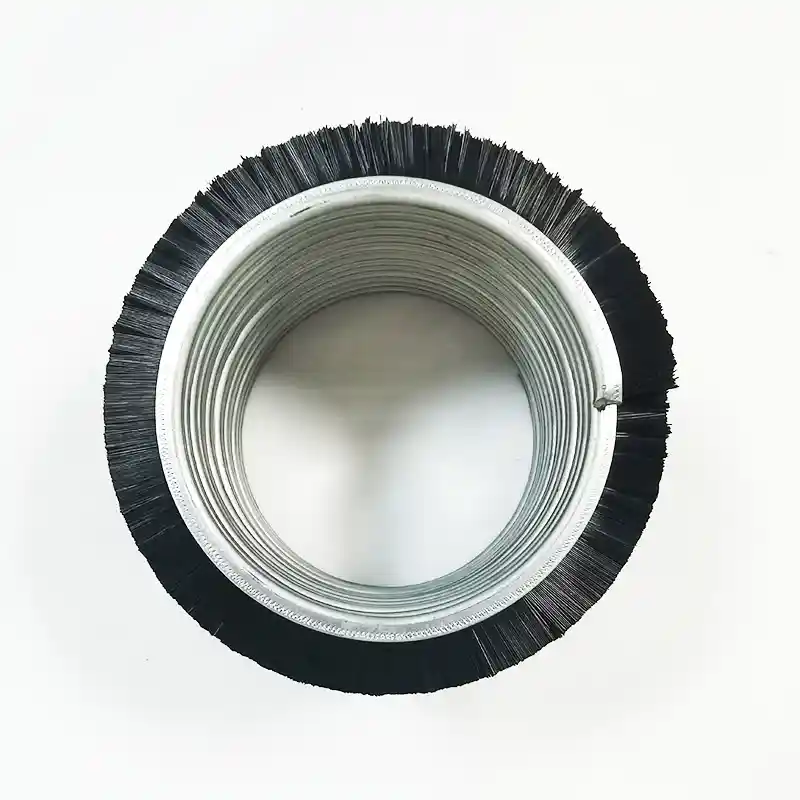

Descaling spiral brushes do not work like ordinary tube brushes. The open spiral winding carries scale out of the bore instead of packing it into a blocked end, and that difference shows up fastest in high volume pipe and cylinder cleaning. Most buyers arrive with one question about brush size, but the decision that decides cycle time and tool life comes earlier: wire profile, spiral direction, and fill density. This article walks through what to specify before ordering, which wire and density choices matter, and how to source without running a long trial sequence.
Why Descaling Spiral Brushes Remove Scale Better Than Straight Tube Brushes
Straight tube brushes tend to push loose scale ahead of the bristles and then pack it into a closed end. A descaling spiral brush uses an open helix with space between each wire loop, so the dislodged material has a path out of the bore. On horizontal tube lines that difference shows up in lower drive load and less time spent clearing packed brush fill.
The contact pattern is different too. Wire tips in a spiral brush meet the bore along a series of short working edges rather than one continuous circumference. Scale breaks away in a rolling path, and the brush does not wedge itself in the same way a straight brush can when the bore ID shifts slightly.
The open spiral is more than a cleaning shape. <descaling spiral brush an innovative tool and generalist in the field of industrial cleaning> covers how the same construction carries debris out of pipe, tube, and barrel bores and why it runs better than closed end brushes on horizontal line setups.
How the Spiral Geometry Cleans Without Jamming the Workpiece
The helix angle and the direction of the wire loops set where scale travels once it breaks free. An outward wound spiral pushes material toward the open end of the tube. An inward wound spiral pulls debris back toward the shaft or a collection point. Which direction is right depends on the line layout, not on the brush alone.
Which Winding Direction Should You Choose?
If the process needs scale discharged at the tube exit, specify an outward wound spiral. If debris must be collected at the machine side or kept away from a downstream station, an inward wound spiral is the better call. I have seen a buyer change only the winding direction and eliminate a jamming problem at the next process without changing wire size or diameter.
Stem length is the second variable that separates a clean run from a drive overload. A short stem transmits torque more directly but needs close alignment. A longer stem flexes enough to follow a slightly misaligned tube, yet it can wind up and soften the cleaning action at the working end. I ask whether the tube is fixed or rotating and where the brush is gripped before selecting stem length.
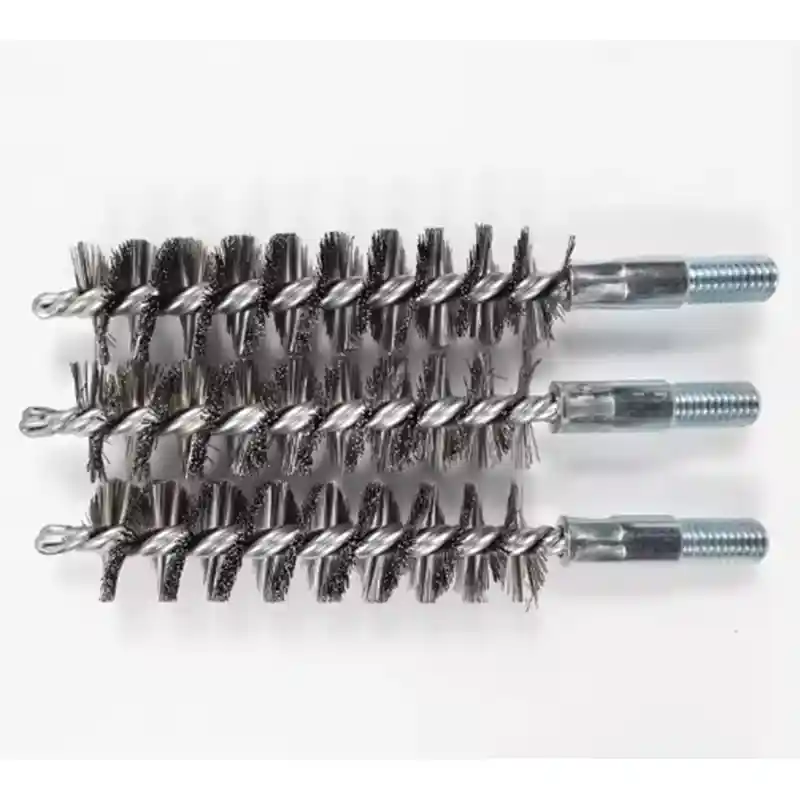
For lines where the brush enters from one end, <the differences between inward and outward spiral brush> explains how winding direction changes debris movement, shaft loading, and the feel of the brush during cycling.
What to Specify Before Ordering Descaling Spiral Brushes
Most order errors come from copying a previous part number without checking three variables: bore ID, tube length, and wire material. When those three align, the brush enters, cleans the target surface, and exits without overloading the drive. When one is off, the failures appear as bent stems, packed bristles, or high drive amps.
What Belongs on the Order?
| Specification | What to confirm | Why it changes the build |
|---|---|---|
| Bore ID | Minimum and maximum inner diameter | Wire loop OD must clear the tightest passage |
| Tube length | Full insertion depth | Stem length and flex span |
| Wire material | Carbon steel, stainless steel, or abrasive nylon | Scale hardness and contamination limits |
| Spiral direction | Inward or outward | Debris discharge point |
| Fill density | Wire loops per unit length | Cleaning rate and drive load |
If the application runs mixed diameters, one brush rarely covers the full range. A brush sized for the largest bore may not enter the smallest. I have seen lines buy a single nominal 25 mm spiral brush for tubes from 22 mm to 28 mm, then lose drive life because the brush fought the tight side. Two brushes for two diameter bands cost less than the production time lost to a jam.
If your line spans more than a few millimeters of bore variation, or you are not sure whether the spiral should wind inward or outward, send the bore ID, tube length, and current cycle time to [email protected] before you freeze the bill of materials. That single check catches most mismatched brush orders.
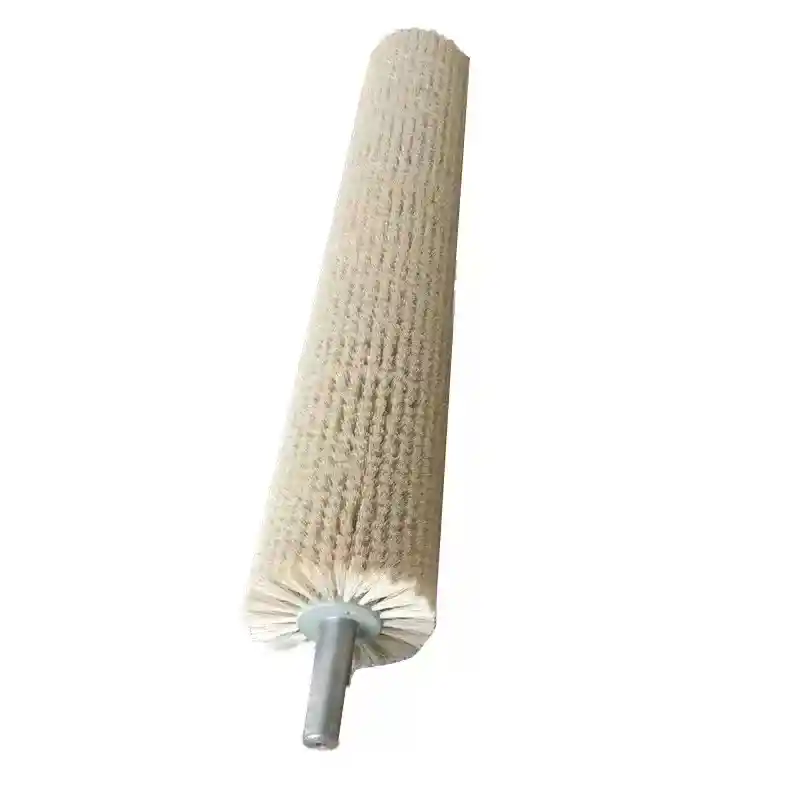
In steel wire plants and descaling lines, wire grade matters as much as brush diameter. <brushes for steel wire industries cleaning descaling derusting polishing> covers the wire constructions used for cleaning, derusting, and polishing in sequence and where each choice fits.
Which Wire Material and Fill Density Fit Your Line
Carbon steel wire cuts thick scale quickly when the workpiece is carbon steel and the rust level is high. Stainless steel wire fits stainless tubes or thin corrosion layers where carbon steel could leave contamination or discolor the surface. Abrasive nylon works when the goal is oxide removal without aggressive metal removal and without sparking risk. The wire material changes finish quality and brush wear rate, not just price.
Fill density changes cleaning rate and torque demand. Higher fill density puts more wire tips in contact, so cleaning speed rises. It also raises drive load and can pack scale if the helix pitch is too tight. For thick scale, I prefer a medium fill spiral with enough open pitch to discharge debris. For light surface cleaning, a denser abrasive nylon fill can shorten process time without harming the base material.
How to Source Descaling Spiral Brushes Without Trial and Error
A common sourcing mistake is treating the brush as a disposable commodity and buying only on unit price. Low price often comes from thinner wire or less controlled helix spacing, and the result is frequent replacement, longer cycle time, or uneven cleaning. The real cost appears later on the line.
Huixi Brush has manufactured industrial brushes for 16 years and supplies spiral, cylindrical, strip, and tube brushes with OEM and ODM service. Before quoting, I confirm the wire profile, winding direction, stem configuration, and expected working speed. That way the first production sample is matched to the line instead of becoming the first trial.
Send your bore diameter, tube length, and required wire material to [email protected], or call +86 1580 0932 713 with a sample drawing. I will review the specification and recommend a construction before you commit to a full order.
What Buyers Ask About Descaling Spiral Brushes
Does a descaling spiral brush replace chemical descaling?
A descaling spiral brush can replace chemical descaling in many mechanical oxide and scale removal steps, especially where a line wants to avoid acid disposal, rinsing, or chemical handling. It does not replace a chemical step when surface chemistry also matters, such as passivation or a specified etch condition. I see the best results when the brush removes scale and loose oxide first, and the chemical process then handles the final surface requirement. Start with the brush when the deposit is thick and mechanically bonded.
How do I know whether to choose inward or outward winding?
It depends on where the line wants the dislodged scale to go. Choose outward winding if the debris should discharge from the open tube end. Choose inward winding if it must move toward the machine side or a collection point. The decision affects jamming risk and cleanout time more than most buyers expect. If the tube orientation is fixed and cannot be reversed, copy the existing discharge direction. If the line can run either way, specify outward winding first and watch drive load across a full shift.
Should I use carbon steel or stainless steel wire for descaling?
Many buyers assume stainless steel wire is always the safer choice, but that is not correct for every scale. Carbon steel wire often cuts thick carbon steel scale faster and costs less, so it fits heavy descaling where surface contamination from the brush is not a concern. Stainless steel wire fits stainless workpieces, chloride sensitive environments, or rust removal where carbon steel could leave particles. For abrasive nylon, choose it when the surface cannot tolerate metal contact. The workpiece material and the downstream cleaning requirement decide the answer.
Can one brush clean multiple tube diameters?
In the applications I review, one brush rarely covers a wide diameter range well. A brush sized for the largest bore may not enter the smallest, and a brush sized for the smallest bore works too loosely in the largest. A two brush set usually runs cleaner and lasts longer than a single compromise size. If your product line spans more than a few millimeters of bore variation, share the full diameter range and current brush part numbers, and we will map the smallest practical brush set before you order.
If you’re interested, check out these related articles:
the differences between inward and outward spiral brush
abrasive disc brush an efficient tool for many applications