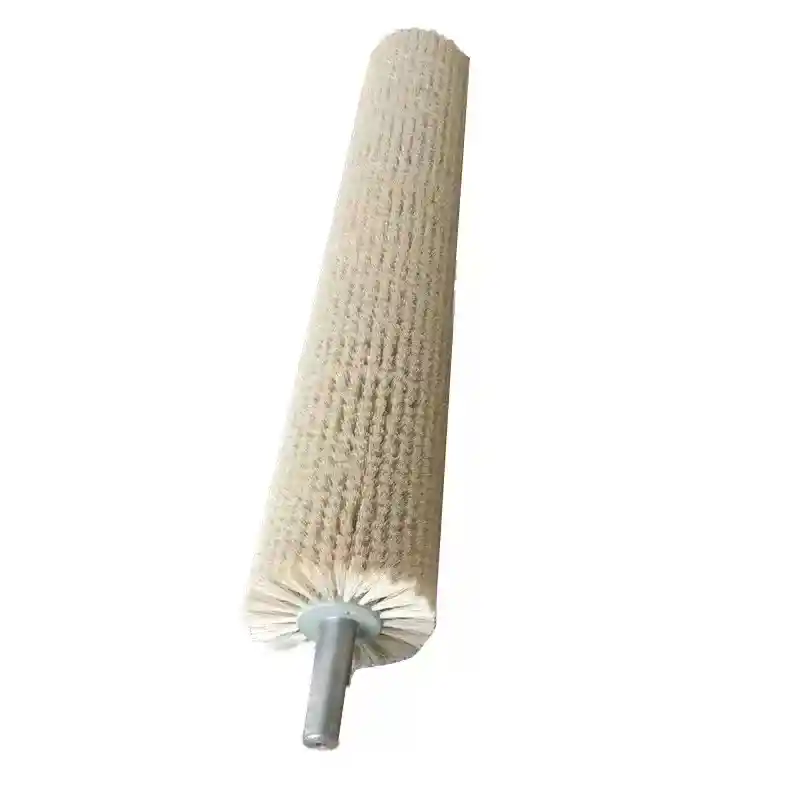

A cylindrical wire brush only looks simple. The wrong wire diameter or fill density turns a rust removal tool into a surface scoring problem, while the right specification removes mill scale and oxide without changing the workpiece dimension. I have spent fifteen years specifying these brushes for steel fabricators, plate processors, and tube mills. The decisions that matter are wire type, wire diameter, fill density, and shaft fit. Get those right and the brush runs true and delivers a consistent finish. Get one wrong and you replace a cheap brush with an expensive rework job.
How Does a Cylindrical Wire Brush Remove Rust Without Damaging Base Metal?
A cylindrical wire brush works by bending thousands of wire tips against the surface under rotation. Each wire tip acts like a small scraper, not an abrasive grain. The wire removes loose rust, mill scale, and oxide by impact and shear. Because the wire tip is round and flexible, it follows the surface profile instead of cutting a flat path. That is why a properly specified brush can strip corrosion from a rolled steel surface without reducing the material thickness.
Why Does a Cylindrical Wire Brush Not Cut Like a Grinding Wheel?
Grinding wheels remove material with fixed abrasive edges that shear the base metal. Wire tips deflect and release at the contact point. The result is a cleaning action that stops when the corrosion layer is gone and the base metal offers more resistance. If the wire is too coarse or the speed is too high, the tip impact energy rises enough to peen or score the surface. That threshold is why wire diameter and surface speed matter more than brush type.
Surface preparation with a cylindrical wire brush depends on wire tip behavior more than brush diameter. <advantage of hx cylindrical sanding brushes> covers how cylindrical sanding brushes differ from wire brushes when the goal is controlled stock removal instead of oxide cleaning.
Which Wire Fill and Density Produce the Right Cut for the Job?
Fill density is the number of wire tips packed into the brush face. A low density fill leaves space for rust and scale to clear the contact zone, which reduces loading and heat buildup. A high density fill puts more tips in contact and produces a finer finish, but it also traps debris and raises the load on the drive. Wire diameter works the opposite way. Thinner wire cleans more gently and reaches irregular profiles. Thicker wire cuts scale faster but leaves deeper marks.
| Wire fill | Best use | Stock removal | Surface risk |
|---|---|---|---|
| Crimped wire | Loose rust, light oxide, painted steel before recoating | Light | Low |
| Knotted wire | Heavy mill scale, weld slag, thick oxide | High | Medium |
| Stainless steel wire | Corrosion removal on stainless or aluminum parts | Light | Low |
| Brass-coated steel wire | Parts that must not spark | Light | Low |
| Abrasive nylon | Deburring and edge blending after wire cleaning | Very light | Very low |
How Does Fill Density Change Brush Life and Stock Removal?
High fill density increases the number of wire tips sharing the load, which makes the brush cut more evenly and last longer in light duty work. When the brush faces heavy scale, a dense fill clogs because there is not enough space between wire tips for debris to escape. In those jobs a lower fill density keeps the face open and clears scale continuously. Buyers often confuse a dense brush with a longer lasting brush. The longer life only holds when the brush does not load up.
When Should You Choose Knotted Wire Instead of Crimped Wire for a Cylindrical Wire Brush?
Crimped wire gives a flexible, uniform action. It works well for light rust, paint preparation, and final blending. Knotted wire twists multiple strands into a stiff rope-like tip. That stiffness concentrates impact energy, so it removes thick mill scale and weld slag faster. The tradeoff is a rougher surface and more heat. I specify crimped wire for most general rust removal and descaling on sheet metal because it leaves a controlled profile. I reserve knotted wire for sections where mill scale is thick and the downstream process can accept a coarser anchor pattern.
What Makes Knotted Wire Safer for Heavy Scale Than Crimped Wire?
Knotted wire is not safer in the sense of less aggressive. It is safer for the process because the stiff tips break scale loose without the brush face loading as quickly. The twisted wire also cuts through hard oxides that would bounce a crimped tip off the surface. The cost is a more visible anchor pattern on the base metal. If a buyer needs a smoother finish after descaling, I usually recommend a second pass with crimped wire or an abrasive nylon brush rather than slowing the knotted brush down.
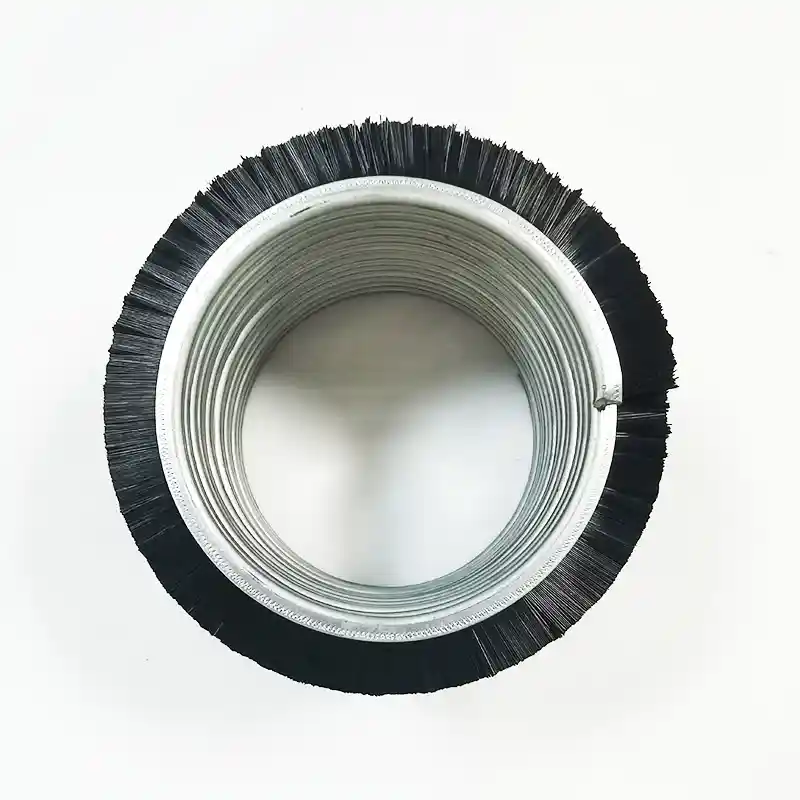
For heavy descaling inside pipes or deep grooves, a spiral configuration sometimes works better than a straight cylindrical brush. <descaling spiral brush an innovative tool and generalist in the field of industrial cleaning> covers how spiral tips clear scale without packing debris into the brush face.
If your program mixes sheet, plate, and structural profiles, specifying one wire type for all surfaces usually creates rework on at least one of them. Confirm the actual scale condition and base material with the brush supplier before you lock the bill of materials. Send a photo of the workpiece and current brush to [email protected] and we can check the fill and wire diameter against your speed and finish requirement.
What Shaft, Drive and Speed Limits Keep the Brush Running True?
Most premature cylindrical wire brush failures start at the shaft, not the wire. If the arbor hole is oversized or the keyway is loose, the brush runs eccentrically and wears one side while the other side still looks new. The same happens when the brush is run above the rated wire tip speed. Carbon steel wire generally works between 1,800 and 3,600 surface feet per minute depending on diameter and fill. Running faster overheats the wire and breaks tips. Running slower reduces cut and lets the brush rub instead of impact.
How Do You Stop a Brush from Wearing on One Side?
Uneven wear is usually a mounting problem, not a brush defect. Check the shaft runout first. If the shaft is straight, the likely cause is an undersized arbor or a brush that was pushed too hard against the workpiece. Periodic rotation of the brush end for end also spreads wear. On long production runs we have found that a slightly higher wire fill at the ends compensates for edge wear and keeps the working face flat longer.
Brush orientation changes how debris moves across the face. <the differences between inward and outward spiral brush> covers how spiral direction controls the flow of loose scale and dust along the brush length.
What Should You Confirm Before Buying a Custom Brush?
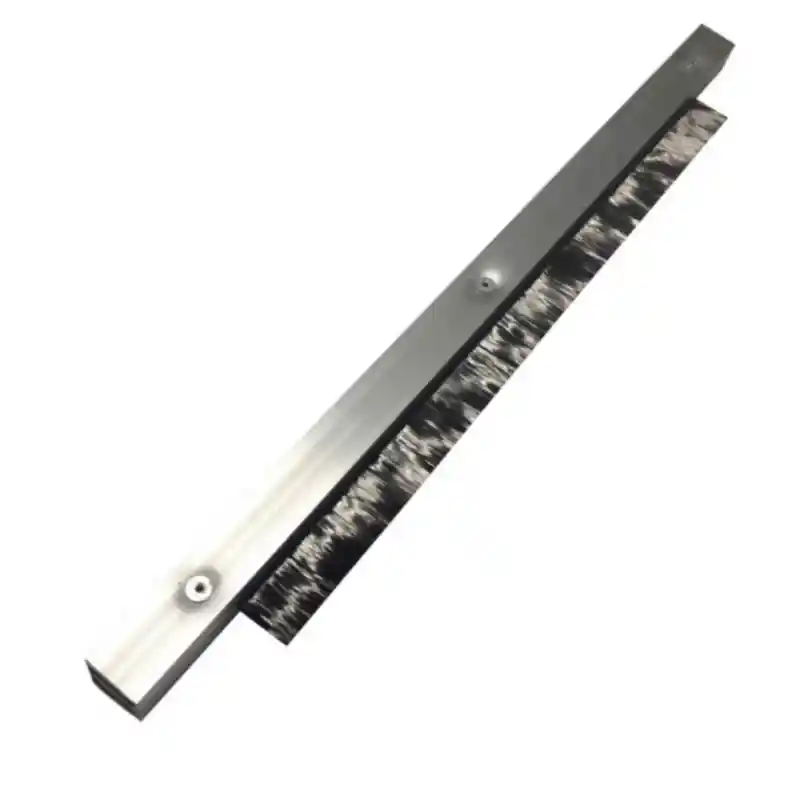
Buyers often find that a standard cylindrical wire brush runs for a few shifts and then either wears at the edges or leaves an inconsistent finish. The usual cause is not the brush type; it is a wire gauge, fill pattern, or shaft size that was never matched to the machine. Huixi Brush builds cylindrical wire brushes to the shaft, working length, wire diameter, and fill density your line requires, including mixed fills and special end configurations. Send the workpiece drawing or a brush sample to [email protected] or call +86 1580 0932 713. Confirm the wire diameter, overall length, arbor size, and surface finish requirement, and we will return a specification and quote.
What Do Buyers Ask Before Ordering a Cylindrical Wire Brush?
What is the difference between a cylindrical wire brush and a wire wheel brush?
A cylindrical wire brush works across the full face of a rotating shaft, so it covers wide flat surfaces in one pass. A wire wheel brush concentrates the same wire action on a narrow peripheral edge, which makes it better for corners, welds, and irregular profiles. Buyers choose a cylindrical brush for plate, sheet, and roller lines, and a wheel brush for bench work or localized cleaning. Both use similar wire materials, but the mounting and available working width are different.
Can a cylindrical wire brush remove mill scale without profiling the surface?
Many buyers assume any wire brush removes mill scale cleanly, but thick or adherent scale may need a knotted wire or a two-step process. A crimped wire cylindrical brush removes loose scale and light oxide without changing the base metal profile. For heavy mill scale, the brush removes the loose portion and leaves the tightly bonded scale behind unless you increase wire stiffness or add descaling steps. The surface profile result depends on wire diameter, tip speed, and contact pressure.
How do I know whether to choose carbon steel or stainless steel wire?
It depends on the workpiece material and contamination limits. Carbon steel wire is the standard choice for steel fabrications because it cuts well and costs less. Stainless steel wire is necessary when carbon steel wire could leave behind particles that rust or contaminate the surface, such as on stainless steel or aluminum parts. If the final part must pass a corrosion or cleanroom requirement, match the brush wire to the base material. For general steel descaling, carbon steel wire is the practical choice.
What maintenance keeps a cylindrical wire brush from wearing unevenly?
In production lines we have worked with, uneven brush wear usually traces back to shaft alignment or excessive pressure rather than the wire itself. Store brushes flat or suspended so the wire tips do not take a set. Rotate the brush position periodically and check arbor fit before each run. Keep brush speed within the supplier’s rated range and avoid forcing the brush into the workpiece to compensate for dull tips. If wear stays uneven after alignment checks, the fill density may need adjustment at the edges. Send your current brush specifications and a photo of the wear pattern to [email protected] and we will confirm whether the issue is mounting or fill density.
If you’re interested, check out these related articles:
main features and applications of hx nylon cylindrical brush
honing brush a magic tool for flexible burr removal
brushes for steel wire industries cleaning descaling derusting polishing
abrasive wheel brush a magical tool for industrial surface treatment
introduction of our concrete block machine brushes