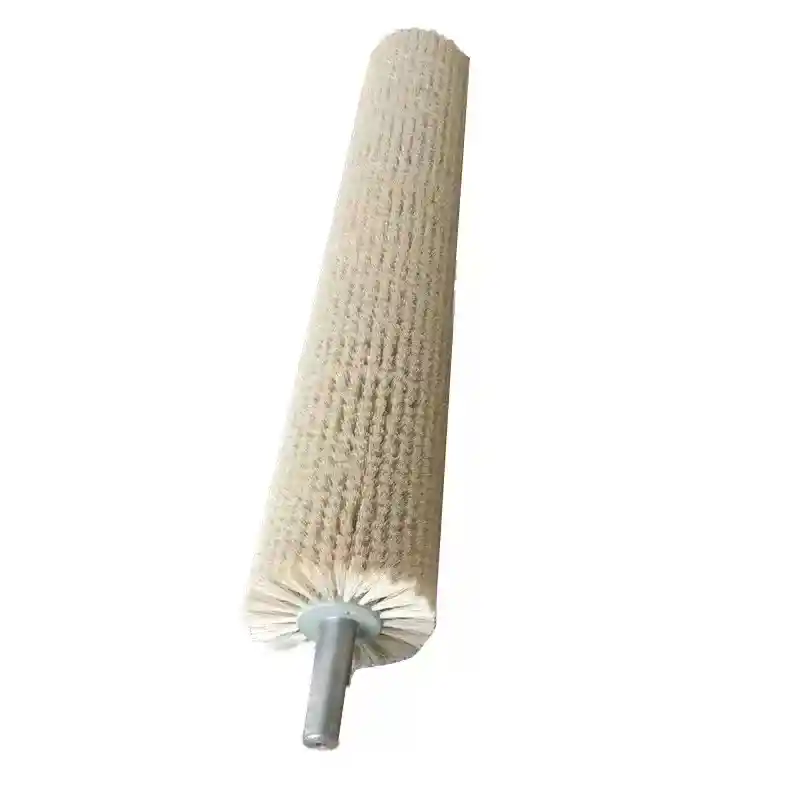

A cylindrical wire brush works by rotating wire filaments against a metal surface to remove rust, scale, and oxidation while also refining the surface finish. The outcome—consistent rust removal with controlled polishing—depends less on the brush’s size than on the filament material and brush density. In production environments, selecting the wrong combination leads to uneven wear, inconsistent surface quality, and frequent replacement. As an industrial brush engineer, I have seen how matching these two variables to the specific production line reduces rework and extends brush life. This guide covers the capabilities, selection criteria, material options, and customization avenues that help procurement teams and maintenance engineers source cylindrical wire brushes with confidence.
What Cylindrical Wire Brushes Do for Rust Removal and Polishing
The brush is mounted on a shaft and rotated at operating speed. Wire tips strike the workpiece surface, breaking oxide layers through impact and abrasion. When the wire is finer and the density moderate, the same action can polish the exposed metal, leaving a uniform matte finish. The difference between a 0.3 mm and 0.5 mm wire diameter is immediately visible on the workpiece: the thicker wire cuts rust faster but creates deeper scratch marks, while the thinner wire removes less material but leaves a smoother surface.
In steel fabrication, maintenance, and parts reconditioning, cylindrical wire brushes are used on inner bores, pipe ends, and flat external surfaces. They handle light flash rust as well as heavy mill scale, depending on the specification. However, many shops default to what is on the shelf, then compensate with extra passes or manual touch-up. Understanding the brush variables in the next section removes that guesswork.
How to Choose the Right Cylindrical Wire Brush
Before ordering, match the brush outer diameter, length, and arbor mounting to the workpiece and the machine tool. Then decide on filament diameter and brush density. These two factors control aggressiveness and surface finish far more than the overall size of the brush.
How Filament Diameter Influences Rust Removal
Thicker wire filaments bend less under pressure, transferring more impact energy to the rust layer. This makes 0.5 to 0.8 mm carbon steel wire the standard choice for heavy rust and weld slag. For polishing or light surface preparation, 0.2 to 0.3 mm wire removes rust gently without scoring the substrate.
| Wire Diameter (mm) | Aggressiveness | Typical Application |
|---|---|---|
| 0.2–0.3 | Low | Polishing, light rust, deburring |
| 0.35–0.5 | Medium | General rust removal, paint prep |
| 0.5–0.8 | High | Heavy rust, thick scale, weld slag |
Brush Density and Its Effect on Polishing Outcomes
Density describes how many wire filaments are packed into the brush. Higher density gives more contact points per revolution, which can produce a more uniform finish but also traps debris between the wires. Lower density clears particles easily but may leave lines on the surface. For polishing, a medium density with finer wire—around 0.3 mm—often yields the best blend of finish quality and brush life. If the brush is packed too tightly, the wires push against each other rather than flexing individually, and the result is a burnished streak pattern instead of an even matte finish.
If your line handles both heavy rust removal and a critical surface finish, the specification can cross several trade-offs. Sharing your process details with an experienced supplier often saves the trial-and-error time. Reach out at [email protected].
Wire Material Options and Their Performance
The wire material affects cutting speed, contamination risk, and brush longevity.
| Material | Aggressiveness | Corrosion Resistance | Best For |
|---|---|---|---|
| Carbon Steel | High | Low | Steel parts, construction equipment, general metal prep |
| Stainless Steel | Medium | High | Stainless workpieces, food industry, non-contamination environments |
| Brass | Low | High | Soft metals, non-sparking areas |
| Abrasive Nylon | Low | High | Final polishing, light deburring on sensitive surfaces |
Carbon steel is the most common choice for rust removal on iron and mild steel. It is affordable and cuts fast, but the wire can leave fine carbon residue that promotes flash rust if parts are not coated immediately. Stainless steel wire avoids that issue altogether and lasts significantly longer, though it costs more. Brass is slower and reserved for aluminum or copper parts, or where a non-sparking tool is required. Abrasive nylon filaments with embedded silicon carbide grit polish without any metal transfer, useful when surface contamination is unacceptable.
Customizing Cylindrical Brushes for Production Efficiency
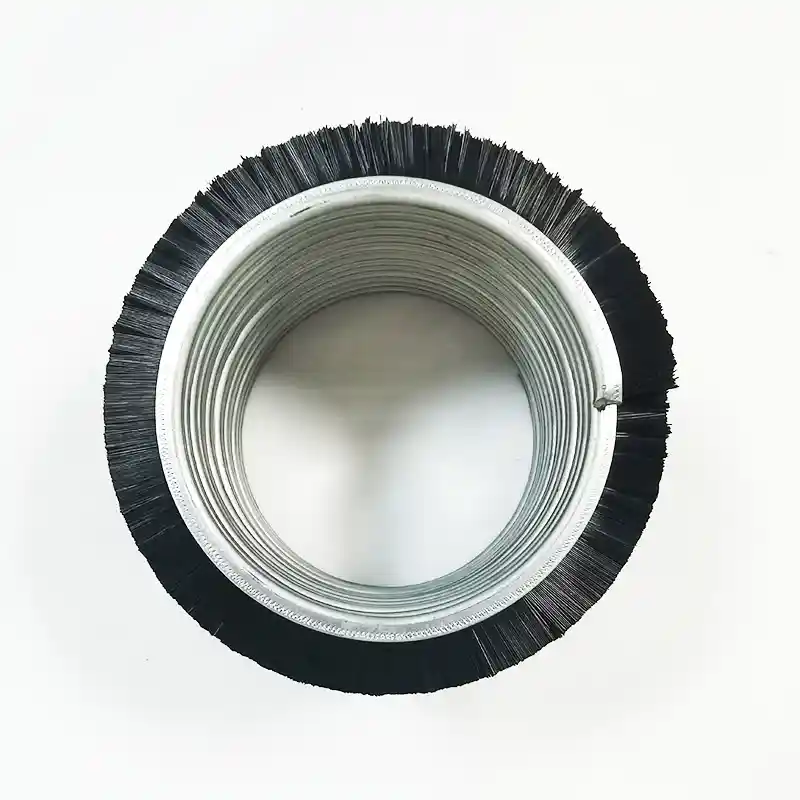
Off-the-shelf brushes cover common diameters and arbor sizes, but automated lines often need non-standard dimensions. I have worked on brushes for tube descaling machines where the outer diameter had to fit a specific bore with only 1 mm of clearance. A standard brush would have jammed or lost contact. Custom brushes can include stepped filament lengths, multi-spiral winding for grooves, and dense end sections for blind holes.
Customization does not automatically mean high cost. Many times it eliminates the extra processing steps that a standard brush cannot handle. Huixi Brush builds ODM brushes around your equipment parameters, from a single sample to production volumes, so the final brush drops into the line without adjustment.
Finding a Dependable Cylindrical Brush Supplier
A reliable supplier brings more than a catalog. Look for these capabilities:
- Experience in manufacturing industrial wire brushes, not just distributing them.
- The ability to supply free samples for on-site testing.
- Low minimum order quantities so you can validate performance before committing to volume.
- Technical support for material selection, density, and mounting design.
- Responsive after-sales communication to handle adjustments or reorders.
Huixi Brush has manufactured wire brushes in Anhui Province for sixteen years and supports customers across Europe, North America, Southeast Asia, and the Middle East. Our team provides engineering input during specification, ships samples quickly, and keeps MOQs low to reduce your procurement risk. When a rush order or design change happens, we respond with a practical path forward rather than a delay.
When a standard cylindrical wire brush leads to inconsistent surface finish or frequent replacement, the right specification usually resolves it. For advice based on your production line and surface requirements, share your part dimensions and application details with us. You can reach us at [email protected] or call +86 1580 0932 713. We work through filament material, density, and custom design options until the brush meets your performance targets.
Questions Engineers Often Ask About Cylindrical Wire Brushes
Can a single cylindrical wire brush handle both rust removal and polishing?
It depends on the wire diameter and the density. A brush with 0.3 mm stainless steel wire can remove light rust while leaving a smooth finish, acting as a one-step tool. For heavy rust, a two-step process works better: a coarse carbon steel brush for bulk rust removal, then a finer wire or nylon brush for the desired polish. The brush material also matters—brass and nylon remove less metal per pass, so running them alone on thick scale takes too long.
How long does a cylindrical wire brush typically last?
Brush life varies with wire material, speed, workpiece hardness, and contact pressure. In our production experience, a carbon steel brush running continuously on steel parts may last 200 to 300 hours before the wire shortens below the effective trim length. A stainless steel brush under the same conditions often reaches 400 to 500 hours. Operating at the correct RPM and avoiding excessive pressure extends life more than any other factor; heavy pressure bends the wires permanently and shortens the brush quickly.
Is it necessary to order custom brushes, or can standard sizes cover most needs?
Standard sizes work for many common tasks. If your workpiece geometry or machine mounting is unconventional, a custom brush performs better and reduces scrap. Custom brushes can include unique arbor sizes, multi-spiral filament patterns, and variable densities that standard catalogs do not offer. The upfront cost is often offset by longer brush life and fewer line stops for adjustment.
What is the difference between crimped and knotted wire for cylindrical brushes?
Crimped wire has small waves along the filament, making it flexible and gentle. It produces a consistent finish for light rust removal and polishing. Knotted wire is twisted into stiff bundles and cuts aggressively through heavy mill scale and weld slag, but it leaves a rougher surface. For most rust removal and polishing jobs, crimped wire is the better starting point. We recommend testing both types on your own parts to see the difference. If you need samples for comparison, contact us with your application requirements and we will arrange them—[email protected].
If you’re interested, check out these related articles:
how do you know about deburring brushes
abrasive disc brush an excellent industrial surface treatment tool