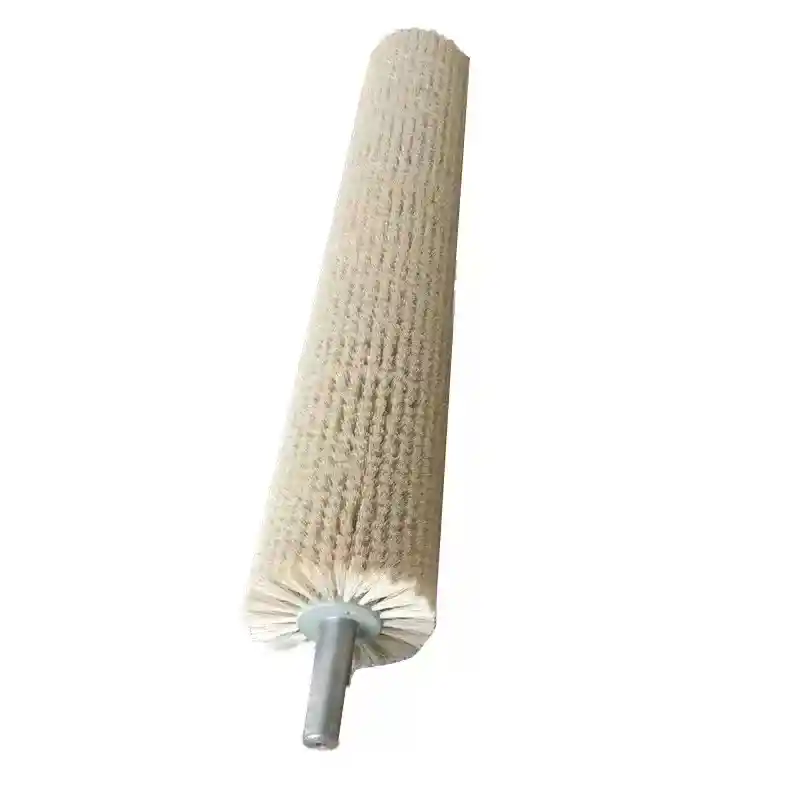

A cylindrical spiral brush matched correctly to an automatic conveyor sweeping station does more than clear loose debris. It protects belt life, prevents carryover, and preserves line speed when the filament density, spiral pattern, and mounting arrangement all align with the actual operating conditions. After fifteen years of manufacturing these brushes for conveyor applications across food processing, packaging, and material handling lines, I have seen how a brush that misses the mark on just one parameter can cause uneven belt wear or require frequent adjustment, while a properly specified roller turns sweeping into a set-and-forget process.
How the Cylindrical Spiral Brush Handles Conveyor Surface Sweeping
A cylindrical spiral brush differs from a straight brush roller because the filaments are wound in a continuous spiral around a central core. On a running conveyor, that spiral channel provides a directional sweep: debris is pushed to one side as the brush rotates against the belt surface, preventing material from simply rolling over the bristle tips. The open spiral also reduces the risk of fibrous material wrapping around the roller, which is a common failure mode on full-face tufted rollers.
The cleaning effectiveness is determined by the interaction of rotation speed, spiral pitch, and filament stiffness. A tighter pitch, meaning more filament rows per unit length, increases cleaning density but reduces the space for coarse debris to exit the spiral channel. A wider pitch handles larger particles better but may leave a fine powder residue. In production lines where I have specified brushes for mixed debris, I often recommend a medium pitch—roughly one spiral revolution per 50 to 80 millimeters of roller length—as a starting point, then adjust based on belt speed and debris loading observed during commissioning.
Key Specifications That Influence Cleaning Performance
When a maintenance manager asks me for a brush recommendation, the first specification I ask for is not the brush face length but the belt width, the debris type, and the conveyor speed. These three parameters set the boundaries for everything else.
Core diameter: The core must be large enough to prevent deflection under load. For belt widths over 800 millimeters, a core diameter below 40 millimeters can flex, causing uneven contact pressure and a tapered wear pattern. In modular plastic belt conveyors where the belt has some lateral play, a stiffer core helps maintain consistent engagement.
Brush outer diameter: An oversize brush increases tip speed and can generate excess heat or static, particularly with nylon filaments on synthetic belts. I usually size the brush diameter so the filament tips move 15% to 25% faster than the belt surface. That light overspeed produces a flicking action at the tip that dislodges stuck particles without scrubbing the belt surface aggressively.
Spiral direction and mounting: For a biased discharge to one side, the spiral must match the rotation direction. A right-hand helix turning clockwise pushes debris to the right; reverse the rotation and the debris moves left. When a line requires debris to exit on a specific side, I confirm the rotation direction before winding, because a mismatch will either trap debris or redirect it against the side wall.
| Parameter | Light Dust / Powder | Granular or Wet Debris | Oily or Sticky Residue |
|---|---|---|---|
| Recommended filament | Nylon or polypropylene | Crimped wire or abrasive nylon | Abrasive nylon with grit |
| Typical pitch | Medium (50–80 mm/rev) | Wide (80–120 mm/rev) | Tight (30–50 mm/rev) |
| Tip overspeed | 10–15% | 20–30% | 15–20% |
| Core material | Anodized aluminum | Stainless steel or coated steel | Stainless steel |
Selecting the Right Filament for Your Debris Type
Filament choice is where most generic recommendations fail. A brush supplier will often highlight a single material as “suitable for conveyor cleaning,” but in practice the filament must answer two questions: what type of debris are you removing, and what is the belt surface material?
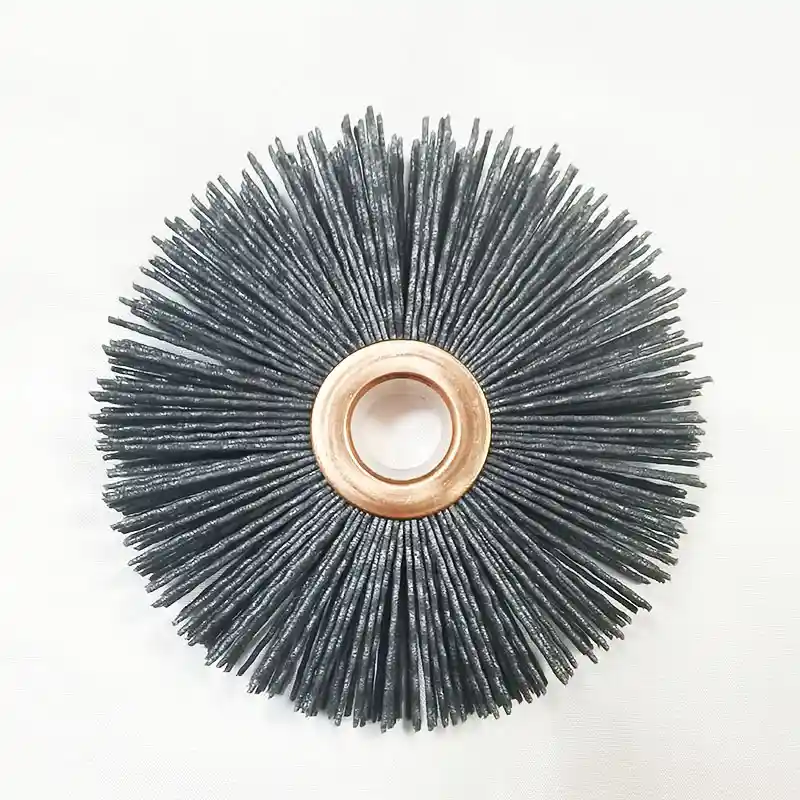
For dry dust and light powders on a rubber or PVC belt, nylon filament in the 0.35 to 0.50 millimeter diameter range provides enough flick force to lift dust without scratching. For granular material like sand, grain, or plastic pellets, a crimped wire filament with a diameter of 0.25 to 0.30 millimeters offers the stiffness to sweep heavier particles while maintaining enough spring to ride over belt joints without catching. Where any degree of moisture or oil is present, a straight nylon filament compresses and smears the substance. An abrasive nylon filament embedded with silicon carbide or aluminum oxide grit can scrub the belt without requiring a separate cleaning solution.
Static buildup is another factor many first-time buyers overlook. A rotating nylon brush on a synthetic belt can generate a surface charge that attracts fine dust right back onto the belt. In those situations, we use a carbon-impregnated nylon filament or add a grounding path through the core and bearings. If your cleaning test shows a haze of dust re-adhering immediately after the brush passes, static dissipation is almost certainly the root cause.
Customization and Mounting Options for Automatic Systems
Automated conveyor sweeping stations rarely accommodate an off-the-shelf brush without modification. The brush roller must integrate with the existing drive system, belt tensioner, and side frames, and the mounting arrangement directly affects how consistently the brush contact angle stays aligned.
For bolt-on replacement, end flange or shaft stub mounting is standard, but I often see the biggest improvement in cleaning consistency when a plant switches from a fixed mount to a floating or spring-loaded bracket. A floating mount allows the brush to follow minor belt variations without losing contact, and it compensates for filament wear over time without operator adjustment. On wide conveyors where the brush spans more than 1,500 millimeters, I recommend a split roller design with a central support bearing to eliminate sag in the middle.
If your environment involves washdown or food-grade conditions, the core and end fittings must be stainless steel, and the filament must be FDA-compliant. We have produced spiral brushes with food-grade nylon for bakery conveyor lines where belt cleaning must occur while the line runs, without contaminating product. Specifying these materials upfront avoids a costly retrofit later.
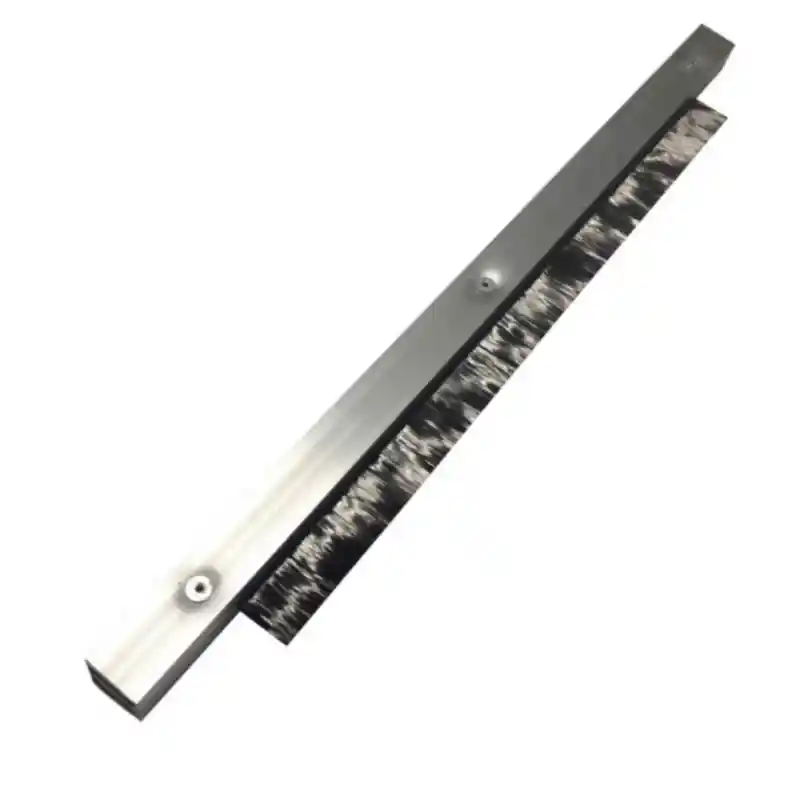
When a program requires a brush geometry that differs from the manufacturer’s standard dimensions, it is worth confirming the lead time and minimum order quantity before finalizing the specification. Send your conveyor width, speed, and debris details to [email protected] or call +86 1580 0932 713, and we can confirm whether an existing design fits or a short-run custom brush is feasible for your schedule.
What to Look for in a Brush Supplier for Conveyor Applications
Not every brush manufacturer has experience with high-cycle conveyor cleaning. I evaluate a supplier on three criteria that directly affect long-term performance.
First, can the manufacturer adjust filament density independently of the core? A fixed-insertion tooling approach limits customization, while a manufacturer that can vary the tuft pattern and filament trim profile solves more application problems with fewer trial iterations.
Second, does the supplier provide documented filament lot traceability? For lines where brush failure causes a line stop, knowing the filament batch and production date helps identify whether an early wear issue is a material defect or a process change downstream.
Third, what after-sales support is available for wear monitoring? A supplier that can review photos of brush wear and offer a re-specification serves a maintenance team better than one that only ships a replacement part. Huixi Brush has worked with conveyor end-users on three continents to adjust brush specifications after installation, often identifying a minor filament diameter change or pitch adjustment that doubled service life.
Common Questions About Conveyor Cylindrical Spiral Brushes
Can one brush roller clean both a dry and a wet conveyor?
It depends on the debris exposure and the filament material. A single brush with nylon filament works for dry dust and occasional light moisture, but once a liquid is consistently present, the filament stiffness needed to wipe effectively differs from a dry-only condition. In programs I have supported, the more reliable approach is to use separate cleaning stages: a stiff abrasive-nylon brush for the wet scrubbing zone and a softer nylon brush for final dry polishing, which avoids cross-contamination and extends the brush life of each roller.
How often should the brush be adjusted or replaced?
A well-specified spiral brush on a clean, dry conveyor can run 2,000 to 4,000 hours before the filament tips wear down enough to reduce contact pressure. The signal to adjust is visual: when the cleaning pattern shows a streak or an uncleaned band more than 20 millimeters wide, the bracket position needs to be reset. If multiple adjustments within a short period do not restore full cleaning, the filament is worn past its effective working length and the brush should be replaced. Keeping a log of adjustment dates and observed wear photos makes the replacement cadence predictable.
Does a spiral brush work on cleated or troughed belts?
A spiral brush can clean a cleated belt as long as the filament length is greater than the cleat height, so the brush contact area extends below the cleat top. For troughed belts, a single straight roller cannot follow the trough profile, so a segmented or contoured brush is needed. We have built spiral brushes with a stepped core profile for troughed conveyors in mining applications, where each segment is wound to a different diameter to match the belt shape.
Is a spiral brush better than a straight tufted roller?
It depends on the debris type and the discharge requirement. A straight tufted roller provides an even cleaning face and can be better for fine dust removal where no directional discharge is needed. A spiral brush excels when you need to eject debris to one side, and it resists fibrous material wrap. I do not consider one universally superior; the choice follows from whether side discharge or full-face contact matters more for your process.
Can I get a spiral brush made to the exact length of my non-standard conveyor?
Yes, bespoke lengths are standard practice for most manufacturers that offer OEM and ODM service. The core is machined to your face length, and the spiral winding is applied to cover the full dimension without cutting filler sections. Supply the exact face length and the end-mounting type (bore, keyway, or flange), and the specification can usually be confirmed within one production lead time. Share your face length, debris description, and belt speed with our team at [email protected], and we will confirm the configuration that fits your frame without modifications.
If you’re interested, check out these related articles:
advantage of hx boiler tube brush
the differences between inward and outward spiral brush
main features and applications of hx nylon cylindrical brush
rope cleaning brush for industrial use a key tool for maintaining safe production
abrasive disc brush an excellent industrial surface treatment tool