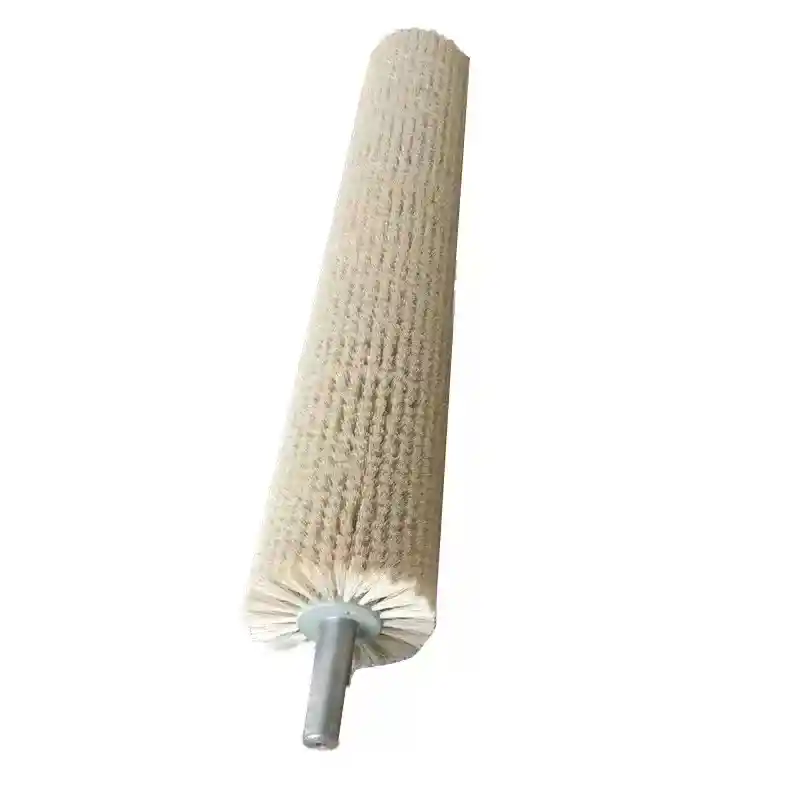

Selecting the right crimped wire wheel brush determines whether your surface preparation is efficient and damage‑free or a source of costly rework. Many engineers and maintenance teams expect a wire wheel brush to handle fine rust removal quickly, but achieving a polished finish that eliminates the need for secondary abrasive steps depends on matching wire diameter, crimp depth, and operating technique to the workpiece. In over fifteen years of designing and supplying industrial brushes for global manufacturers, I have seen how a properly specified crimped wire wheel can strip light oxidation and leave a smooth, paintable surface in a single pass. This article explains what matters when choosing and using a crimped wire wheel brush for fine rust removal and polishing, drawing from real manufacturing and application experience.
Crimped Wire Wheel Brush Design and Construction
A crimped wire wheel brush is built from individual steel or stainless steel filaments that are mechanically crimped into a wavy profile before being packed into a circular hub. The crimping gives each filament flexibility and a lower effective cutting angle compared to a straight wire. When the brush rotates, the individual wire tips strike the surface with a light flicking action rather than a heavy impact. That is the fundamental difference from a knotted wire wheel brush, where twisted tufts deliver far more aggressive stock removal.
In our production, we see that crimped wire wheels cover a much broader share of surface finishing work than many buyers realize. The filaments adapt to surface contours, removing rust from pits and slight irregularities while leaving the base metal intact. This is why crimped brushes are the standard choice in operations that value surface texture as much as cleanliness. You get effective cleaning without the risk of embedding wire fragments or altering part geometry, which is a real risk with more aggressive abrasive tools.
How Wire Type and Gauge Determine Finish Quality
The immediate question for anyone specifying a crimped wire wheel brush is what wire diameter to select. Wire gauge has a larger influence on surface finish than brush speed or pressure, yet it is often overlooked. Thicker wires, around 0.5 mm to 0.8 mm, remove rust faster but leave a visible texture. Finer wires in the 0.3 mm range produce a surface that feels almost polished to the touch after a moderate pass. The following table gives a practical comparison for common steel wire diameters we manufacture.
| Wire Diameter | Rust Removal Speed | Resulting Surface Roughness | Typical Application |
|---|---|---|---|
| 0.3 mm | Moderate | Very Smooth (Ra 1.6–3.2 µm) | Polishing, paint preparation on thin sheet |
| 0.5 mm | Good | Smooth (Ra 3.2–6.3 µm) | General rust removal on structural steel |
| 0.8 mm | Fast | Textured (Ra 6.3–12.5 µm) | Heavy oxide removal before later finishing |
Wire material matters as well. Carbon steel is cost‑effective for ferrous workpieces and delivers reliable rust removal. Stainless steel wire is required when working on stainless parts, non‑ferrous metals, or environments where carbon steel contamination and subsequent rust spotting cannot be tolerated. Brass wire fills a niche for extremely sensitive surfaces where even stainless would be too hard, though brass wears faster.
Why Wire Crimp Depth Affects Aggressiveness
Crimp depth is the second variable that separates an average brush from one that produces a refined finish. A tighter crimp pushes more wire tips into contact with the surface, spreading the impact pressure and reducing the cutting force per tip. A shallower crimp acts more like a straight wire, concentrating energy on fewer points and removing material more quickly. For fine rust removal and polishing, we typically specify a medium to tight crimp with a wire diameter no larger than 0.5 mm. This combination is forgiving on irregular surfaces and produces a smooth, uniform finish without micro‑grooves that catch light.
Proper Techniques for Fine Rust Removal and Polishing
Getting a polished look from a crimped wire wheel brush is less about the tool and more about how you use it. I have walked through dozens of customer processes where the brush was swapped for a different model, but the real problem was technique. The four factors that most directly affect whether you achieve a polished finish are speed, angle, pressure, and pass count.
First, match the brush to the correct RPM range for the wire diameter. Running a fine‑wire brush at the high end of an angle grinder’s no‑load speed overheats the filaments, causing them to lose tension and fold over. That produces a burnished smear rather than a clean cut. We recommend using a variable‑speed tool and limiting speed to the lower half of the brush’s rated RPM for polishing work.
Second, maintain a consistent 15 to 20 degree angle relative to the surface. Steeper angles concentrate brush pressure on a small contact patch and increase scratch depth. A shallow angle spreads the load and lets the wire tips flick across the surface without digging in.
Third, use only the weight of the tool for pressure. Pushing harder does not remove rust faster; it fatigues the wire and creates uneven surface grooves. If rust removal is too slow, go to a thicker wire rather than increasing hand pressure.
Fourth, for the finest polished appearance, run a second pass with a 0.3 mm stainless wire after the rust is gone. The fine wire knocks down any remaining peaks and leaves a uniform semi‑bright finish that often eliminates the need for a separate polishing step with compound.
If your production involves large batch processing where surface roughness is specified on an engineering drawing, it is worth confirming the correct wire configuration on test coupons before committing to a full production run. A quick trial avoids the waste of reworking parts that were processed with a wire that was slightly too coarse.
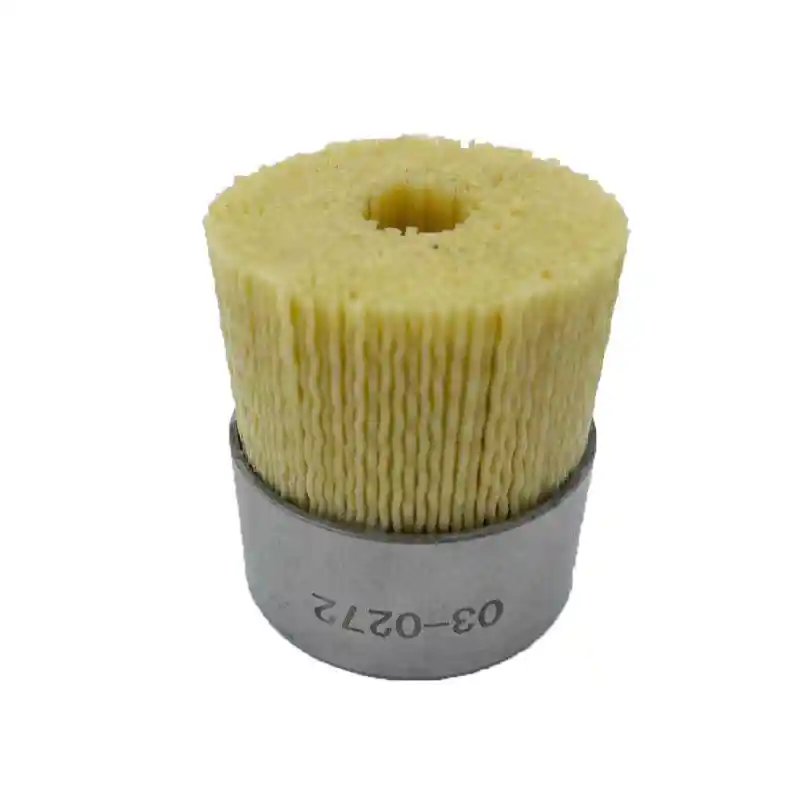
Selecting the Right Crimped Wire Wheel Brush for Your Application
Choosing a brush means matching three variables to your shop conditions: brush diameter, arbor size, and wire specification. A 100 mm to 150 mm wheel is common for handheld angle grinders and provides good control for localized rust removal. Bench grinder setups use larger diameters and must stay within the brush manufacturer’s maximum RPM rating to prevent wire shedding.
Arbor size determines compatibility with the spindle. Most standard wheels use a 22.2 mm arbor, but metric and imperial variations exist. We have seen buyers order the wrong arbor size because they assumed all wheels are interchangeable, and the fix costs time.
The wire specification, as detailed earlier, is the most critical factor for the finish you want. If your workpiece material varies across orders, consider keeping both a 0.5 mm carbon steel wheel for general rust removal and a 0.3 mm stainless wheel for final finishing in your tool room. That two‑step process often replaces a separate abrasive disc operation and streamlines the workflow.
For production shops with unique requirements, off‑the‑shelf wheels do not always cover the range. In our own manufacturing, we receive regular requests for non‑standard wire diameters, such as 0.35 mm or 0.45 mm, and for specific crimp profiles that balance cutting speed with surface quality. If your program involves a non‑standard arbor, a specific wire hardness, or a tight surface roughness number, reaching out to a manufacturer that can adjust these parameters avoids the frustration of field‑testing multiple catalog brushes before finding one that works.
Production Quality and Customization for Reliable Performance
A crimped wire wheel brush that performs well on a trial order can degrade on the next shipment if the crimping tension, wire hardness, or hub balance shifts in production. These are not visible in a photograph but directly affect brush life and surface consistency. This is where working with a manufacturer that keeps tight process control becomes a real advantage rather than a sales claim.
Our manufacturing plant in Anhui Province has invested in automated crimping and tensioning equipment that holds wire diameter and crimp depth within narrow tolerances across batch runs. This means the brush that performed well in your trial produces the same result in your repeat order six months later. We also keep low minimum order quantities for custom wire diameters, which is important for prototyping and small‑batch production. For example, a customer transitioning from a wire‑free cleaning process to a light mechanical brushing operation can test three different wire gauges before standardizing on the one that delivers the target surface roughness.
Because we support both OEM configurations and private‑label packaging, we can supply brushes that match your existing power tools and production fixtures exactly, down to specific arbor dimensions and hub materials. That flexibility reduces the need to redesign tooling around a brush supplier change.
If you are currently experiencing inconsistent brush life or variable surface quality from batch to batch, sharing your process conditions and target surface finish allows us to identify whether the root cause is wire specification, crimp geometry, or a tool speed mismatch. We provide samples for evaluation so you can validate performance before committing to a full order. Contact us at [email protected] or call +86 1580 0932 713 with your part number and application details, and we will confirm the right configuration and supply samples for your trial.
Common Questions About Crimped Wire Wheel Brushes
Can a crimped wire wheel brush handle thick mill scale and heavy rust?
A crimped wire wheel brush is an excellent tool for light to medium surface rust and oxidation, but thick mill scale or heavy pitting requires a different approach. Trying to force a fine‑wire crimped brush through heavy scale overheats the filaments, accelerates wear, and leaves a rough, uneven surface. In our experience, the most efficient path is to use a knotted wire wheel for the first pass to break up heavy deposits, then follow with a crimped wheel at a moderate speed to refine the surface. This two‑step method removes material quickly without distorting the workpiece, and the final pass with the crimped wheel produces a smooth finish that is ready for painting or coating with minimal extra preparation.
What separates a high‑quality crimped brush from a cheap import?
The differences show up fastest in wire fatigue and hub balance. A quality crimped wire wheel brush uses wire with consistent hardness and a controlled crimp profile so the filaments flex without breaking prematurely. A cheap brush often saves cost by using softer wire or shallower crimps, which cause the wire ends to fold over after a few minutes of use and lose all cutting ability. Hub balance is the other item: an unbalanced wheel vibrates, wears the operator, and creates an inconsistent finish. We balance every wheel before packaging, which is a step many low‑cost suppliers skip. The price difference is small compared to the cost of rework and operator frustration from a brush that fails early.
Can a crimped wire wheel polish to a mirror finish on its own?
No single wire wheel brush will produce a true mirror finish. The polishing action of a crimped wire wheel, even with fine 0.3 mm wire, leaves a semi‑bright surface that is smooth to the touch but not optically reflective. To reach a mirror finish, you still need a subsequent step with a polishing compound and a sisal or cotton buff. However, a fine crimped wire wheel dramatically reduces the compound and buffing time required, because it eliminates the deep scratches that a coarse abrasive would leave. For many industrial applications where a clean, smooth, light‑reflecting surface is sufficient, the finish straight from a fine‑wire crimped brush meets the requirement without any extra polishing step.
How do I know when to replace a crimped wire wheel brush?
Replace the brush when you see a noticeable drop in cutting speed under the same pressure, or when the wire tips appear flattened and burnished rather than sharp. A fresh wire brush has individual wire ends that catch the surface; as they wear, the tips mushroom and glide over the oxide instead of cutting. Continuing to use a worn brush not only slows your process but increases the risk of work‑hardening the rust on the surface, making subsequent passes less effective. If you are processing a large batch, tracking part count gives you a reliable change interval. When the brush stops delivering the surface roughness your process requires, it is time to replace it. If your production rate makes frequent changes a burden, sharing your throughput and finish spec with us allows us to recommend a wire configuration that extends brush life without sacrificing cleaning speed.
If you’re interested, check out these related articles:
honing brush treat burrs in barrel parts without affecting accuracy and scale
brushes for steel wire industries cleaning descaling derusting polishing