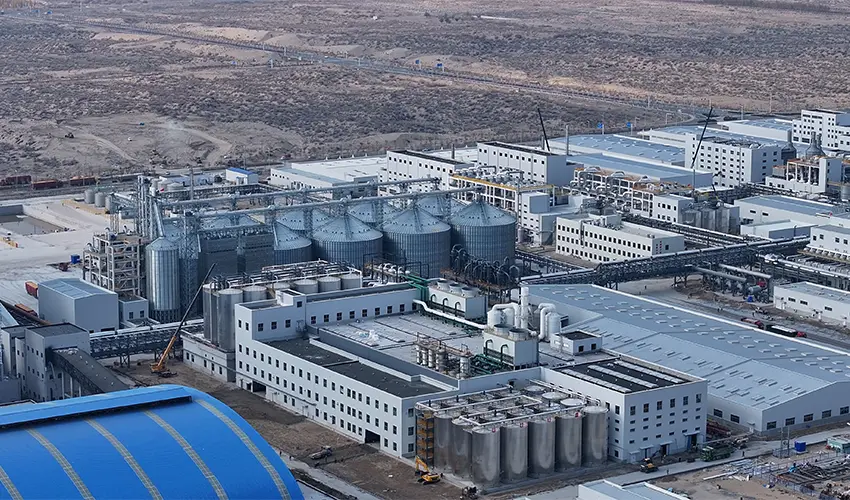

Budgeting for a corn ethanol plant is not just a tally of steel, concrete, and equipment line items. When you are planning a fuel ethanol project, the real difference between a marginal return and a project that attracts financing lies in how the by-product streams are integrated into the capital plan. In my work planning integrated agri-industrial systems, I have seen how DDGS, carbon dioxide, and biogas revenue can shift the net cost equation by 15 to 25 percent when designed as part of the initial scope rather than bolted on later. That changes the entire financial model.
How Construction Scale Affects Capital Cost Per Gallon
Scale is the first driver of cost per unit of output. A 10-million-gallon-per-year corn ethanol plant built on a greenfield site will cost substantially more per gallon of annual capacity than a 100-MGY facility. The difference comes from the fact that major equipment items like distillation columns, fermentation tanks, and molecular sieve dehydration units do not scale linearly with capacity; their cost rises as an exponent of roughly 0.6 to 0.7 of throughput.
To put boundaries on investor expectations, typical total installed costs for corn ethanol plants fall into these ranges:
| Annual Capacity (MGY) | Capital Cost Range (USD/gallon annual capacity) |
|---|---|
| 10 – 20 MGY | $2.50 – $3.50 |
| 50 – 100 MGY | $1.80 – $2.50 |
| 100 – 200 MGY | $1.50 – $2.00 |
These figures assume a full EPC scope on a flat, serviced site without extraordinary civil works. Any single value you see from a feasibility study needs to be compared against whether it includes or excludes the by-product handling systems that will ultimately determine the net project cost.
What Equipment Packages Cost and How Technology Choices Change the Budget
Process technology selection influences how much you spend on equipment, but more importantly, it determines your energy consumption profile and the quantity of saleable co-products. In a typical dry-mill corn ethanol plant, the equipment cost distribution looks roughly like this:
| Process Area | Share of Total Equipment Cost |
|---|---|
| Grain receiving, storage, and milling | 10 – 12% |
| Liquefaction and saccharification | 8 – 10% |
| Fermentation (including yeast) | 15 – 18% |
| Distillation and dehydration | 25 – 30% |
| DDGS handling and drying | 12 – 15% |
| CO2 recovery and compression | 5 – 7% |
| Utilities (steam, cooling, CIP) | 10 – 12% |
The choice between a molecular sieve dehydration unit and older azeotropic distillation has a direct impact on energy use. A modern pressure-swing adsorption molecular sieve system, when integrated with heat recovery, can cut steam consumption for dehydration by 30 to 40 percent relative to older designs. That reduction flows through to the boiler size, fuel cost, and operating budget. In my experience planning grain processing facilities, selecting the dehydration technology early locks in the energy intensity of the plant and is one of the most consequential cost decisions an investor makes.
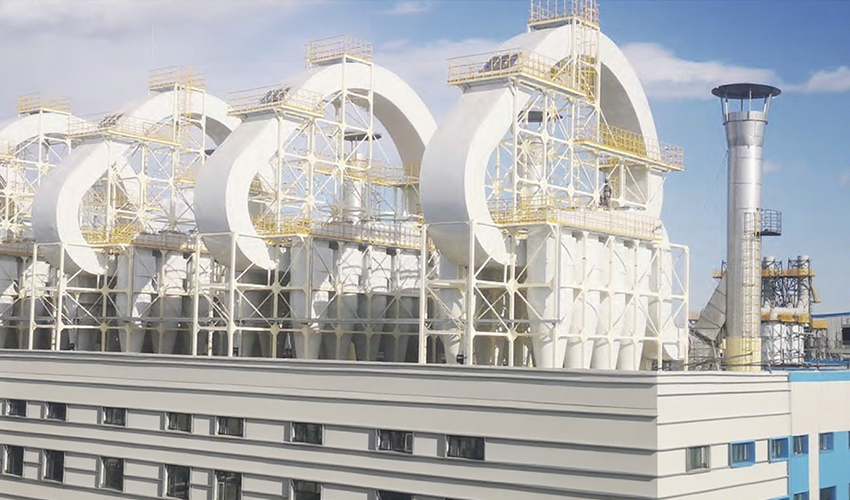
Why By-Product Integration Reduces Your Net Construction Cost
This is where most budget models go wrong: they treat by-products as a revenue stream that starts after commissioning, but they do not treat them as a capital cost offset during the budget planning phase. The reality is that DDGS, CO2, and biogas handling systems add capital equipment cost to the project, yet their revenue contribution, when discounted back and factored into the equity requirement, can reduce the net capital outlay significantly.
A 100-MGY corn ethanol plant typically produces around 320,000 metric tons of DDGS, 100,000 metric tons of CO2, and, if an anaerobic digester is included, enough biogas to displace 15 to 20 percent of the plant’s natural gas demand. The DDGS alone, priced at $180 to $220 per metric ton depending on market, represents a revenue stream that can cover 25 to 35 percent of total annual operating cost. When the capital plan accounts for this from day one, lenders will apply a lower risk premium and may accept a higher debt-to-equity ratio.
Agrifam’s alcohol production solution is built around a closed-loop model that achieves 100 percent by-product resource utilization. In the projects I have evaluated, incorporating a biogas recovery system and food-grade CO2 capture during the initial design phase, rather than as a Phase 2 add-on, shortened the projected payback period by 18 months because the incremental equipment cost was more than offset by the avoided natural gas purchase and the guaranteed CO2 offtake contract.
Budgeting for Site Development, Utilities, and Environmental Compliance
Civil works, utilities, and permits are not placeholders to be estimated as a fixed percentage of equipment cost. They vary sharply by region. A site in a corn-surplus province of China with existing road, rail, and grid access will carry a site development cost of $5 to $10 million for a 100-MGY plant. The same plant sited in a remote location without reliable water supply can double that figure.
Water availability drives two cost levers: the intake and treatment system at the front end, and the wastewater treatment system at the back end. Corn ethanol plants consume 3 to 4 gallons of water per gallon of ethanol produced. If water is scarce, a zero-liquid-discharge design may be required, adding $8 to $12 million to the capital budget. Power supply is another variable. A plant of this scale typically requires 10 to 15 megawatts of electrical load, and if the grid cannot deliver it reliably, a captive power generation unit adds cost and complexity.
Environmental permitting costs, including the EIA preparation, public consultation, and mitigation measures, can reach $1 to $2 million and take 12 to 18 months. These costs are rarely factored into early stage financial models, yet they set the project clock ticking.
From Feasibility to Financial Close: Structuring Your Ethanol Plant Project Budget
A disciplined budget moves through four phases: a pre-feasibility study that puts rough numbers around land, feedstock, and market access; a bankable feasibility study that firms up equipment pricing and engineering design; an EPC contract negotiation phase where the risk allocation between owner and contractor is settled; and a financial close phase where debt and equity are committed.
The common mistakes I see are under-budgeting for contingency and failing to align the budget timeline with the financing timeline. A 100-MGY plant built on an EPC basis in a region with stable construction costs will typically carry a contingency allowance of 10 to 15 percent of the total project cost. If the project is in a market with volatile material prices or currency risk, that should be 15 to 20 percent. Construction typically spans 24 to 30 months from notice to proceed until mechanical completion, followed by 3 to 6 months of commissioning.
A practical budget framework for a 100-MGY corn ethanol plant, assuming a reasonably serviced site with integrated by-product systems, would fall in the range of $160 to $200 million, inclusive of engineering, equipment, civil works, commissioning, and contingency. The exact figure depends on how thoroughly the by-product streams are monetized and whether the plant is designed as a standalone facility or as part of a larger grain processing complex where shared infrastructure lowers the unit cost.
Structuring Your Budget Around the Full Value Chain
The budget conversation should move beyond the plant gate. When the feasibility study shows that a corn ethanol plant located adjacent to a feedlot can eliminate DDGS drying and transport costs, or that a compressed CO2 pipeline to a nearby food-grade user can avoid liquefaction capital, the project boundary expands. In our work with integrated farm-to-table system planning, the most successful projects are those where the ethanol plant budget is treated as one node in a broader agricultural industrial chain rather than a standalone manufacturing investment.
If your project involves coordinating grain supply, co-product offtake, and fuel ethanol blending logistics, it is worth developing the budget assumptions alongside a partner who can view the full value chain. Agrifam has delivered alcohol production solutions where the integrated design reduced the overall project capital requirement by more than 20 percent compared to a stand-alone approach, simply because shared grain storage, shared water treatment, and shared energy infrastructure shifted the cost burden across multiple revenue units.
For a targeted budget model based on your specific capacity, location, and feedstock conditions, outline your project parameters and contact Agrifam at [email protected] or call 010-8591 2286. A tailored cost estimate that reflects your actual site constraints will give you a more reliable basis for investment decisions than industry averages.
Common Questions About Corn Ethanol Plant Budgets
What is the typical construction cost for a 100 million gallon per year corn ethanol plant?
A 100-MGY plant built on a reasonably serviced site with modern molecular sieve dehydration and integrated DDGS, CO2, and biogas systems will typically fall between $160 million and $200 million. The range reflects regional differences in labor, steel prices, and the depth of by-product integration. A plant that skips CO2 recovery and biogas can come in closer to $140 million, but it sacrifices recurring revenue that often repays the incremental capital within three to four years.
How long does it take to build and commission a corn ethanol plant?
Construction from notice to proceed to mechanical completion typically requires 24 to 30 months for a plant of this scale. Commissioning adds another 3 to 6 months. Permitting and feasibility work before notice to proceed can consume 12 to 18 months. A realistic timeline from project initiation to full production is 3.5 to 4 years.
Can by-product sales really reduce the net project cost by 15 to 25 percent?
Yes, but only if the by-product handling systems are budgeted as integral parts of the initial capital plan. When DDGS drying, CO2 capture, and anaerobic digestion are designed in from the start, the combined revenue reduces the owner’s equity requirement and improves the debt service coverage ratio. In projects I have reviewed, lenders accepted a loan-to-cost ratio 5 to 10 percentage points higher when long-term DDGS and CO2 offtake agreements were in place, effectively reducing the cash equity the sponsor had to raise.
What is the most overlooked cost item in a corn ethanol plant budget?
Water and wastewater infrastructure. Many early-stage estimates use a general utility factor of 10 to 15 percent of equipment cost, but if the site lacks reliable water supply or the discharge permit requires zero-liquid-discharge, the water and wastewater systems alone can reach $15 to $20 million. That single line item can move the total project cost by 8 to 12 percent.
Where should a corn ethanol plant be located to optimize construction cost and long-term profitability?
The ideal site has three characteristics: it sits inside a corn surplus region with a 50- to 100-mile supply radius, it has access to rail or river logistics for DDGS and ethanol shipment, and it is close enough to an industrial or agricultural cluster that CO2 and waste heat can be sold rather than vented. A location that meets all three conditions will typically see a 10 to 15 percent lower total project cost and a 2- to 3-year faster payback compared to a remote greenfield site.
If your project involves a specific site under evaluation, share the logistics parameters and water availability data with Agrifam at [email protected]; we can map the cost sensitivities to your actual location rather than generic benchmarks.
If you’re interested, check out these related articles:
Driving Global Food Conservation Through Technological Innovation