
Continuous alcohol fermentation is often discussed as a vessel engineering challenge, but in practice, stable high ethanol yields depend more on yeast management as a system-wide problem. Treating fermentation as an isolated step—rather than a process integrally linked to mash preparation, heat recovery, and co-product streams—limits what any single fermenter design can deliver. In our experience planning complete grain-to-ethanol plants, the most reliable performance improvements come from upstream consistency and yeast recycling strategies that align with the entire plant’s energy and mass balance, not from tuning fermentation parameters alone.
How Continuous Fermentation Differs from Batch Processes
Batch fermentation dominates many existing ethanol plants because it is forgiving: each tank starts fresh, contamination events are contained, and operators can adjust conditions between batches. Continuous fermentation, by contrast, maintains a steady-state culture where fresh mash is fed continuously and fermented beer is withdrawn at the same rate. Residence time, rather than batch time, determines throughput. The payoff is substantial: higher volumetric productivity, reduced tankage, lower peak cooling loads, and more consistent ethanol concentration in the beer stream feeding distillation.
The trade-off is biological stability. A continuous system amplifies any drift in yeast health, because the entire fermenter volume acts as a single interconnected population. If contamination enters or a yeast subpopulation loses vigor, the problem spreads without the natural reset of a new batch. This makes yeast strain selection, propagation, and ongoing viability monitoring far more critical in continuous operation than in batch. Plants that make the switch successfully typically report a 15–20% increase in effective fermentation capacity from the same tank volume, but the gains come only when yeast management is treated as a continuous process itself, not a one-time inoculation.
Yeast Strain Selection and Propagation for Continuous Operation
The yeast strains that perform reliably in batch fermentation are not always the best candidates for continuous service. A strain that produces high ethanol in a 60-hour batch may wash out in a system with a 24-hour residence time if its flocculation characteristics are poor or its growth rate under elevated ethanol concentrations is insufficient. For continuous alcohol fermentation, selection criteria must include tolerance to ethanol concentrations above 8% (v/v), robust flocculation or the ability to thrive in a cell-recycle loop, and genetic stability over hundreds of generations.
Propagation practice changes as well. Instead of growing a fresh yeast pitch for each batch, a continuous system often maintains an aerobic propagation vessel that feeds the main fermenter with a steady stream of active yeast. Pitching rate, once a batch-specific calculation, becomes a dynamic parameter tied to feed rate and ethanol concentration. We have found that installing a small dedicated propagator with its own sterile mash supply, rather than drawing from the main mashed stream, gives operators the flexibility to adjust yeast concentration without affecting the fermenter’s sugar profile. This also reduces the risk of introducing unsterilized substrate into the propagation line.
| Strain Characteristic | Importance in Continuous Fermentation |
|---|---|
| Ethanol tolerance (>9% v/v) | Prevents growth inhibition in high-productivity systems |
| Flocculation ability | Retains yeast in fermenter with simple settlers |
| Genetic stability | Reduces performance drift over multi-month campaigns |
| Low glycerol production | Maximizes carbon conversion to ethanol |
| Osmotic tolerance | Handles varying sugar concentrations from upstream milling |
A further layer of complexity is strain management over long campaigns. Even genetically stable strains can drift under continuous selection pressure. Routine sampling and plating, combined with yeast viability staining and occasional flow cytometry, give early warning of emerging sub-populations that may reduce yield. When drift is detected, the propagator can be used to gradually re-establish the original population without a complete system shutdown.
If your plant is evaluating which yeast strain to standardize for a new continuous line, the choice has implications for every downstream unit operation, from distillation energy to stillage handling. We can review strain performance data against your specific mash composition and target ethanol concentration. Contact our process team at [email protected] before finalizing the strain specification.
Controlling Contamination and Maintaining Viability
No factor erodes continuous fermentation performance faster than a chronic bacterial contamination. In a batch system, contamination can be cut out by discarding a single fermenter and cleaning it. In a continuous train, the bacterial population can establish a steady state of its own, competing with yeast for sugars and producing organic acids that inhibit yeast metabolism. The most common culprits are lactic acid bacteria, which thrive in the same temperature and pH range as Saccharomyces cerevisiae.
Prevention starts with mash sterilization, or at least a high-temperature pre-treatment that reduces the microbial load to a manageable level. The liquefaction step, if operated above 85°C, already provides significant kill, but any subsequent cooling and saccharification must be protected from recontamination. Piping, heat exchangers, and the fermenter itself require designed-in cleanability. Clean-in-place (CIP) systems with sequenced acid and caustic washes, verified by ATP swabbing, are standard in well-engineered continuous plants. We design CIP circuits to reach every dead leg and instrument port, because contamination patterns often trace back to the single point that the cleaning cycle missed.
Once fermentation is underway, real-time monitoring of lactic acid concentration, either by HPLC or enzymatic assay, provides a direct contamination indicator. A rising trend almost always precedes a measurable drop in ethanol yield. At that point, a short-duration antimicrobial treatment—such as a virginiamycin dose—can suppress the bacteria while preserving yeast activity, but it is a temporary measure. Permanent correction requires identifying the contamination source and, if necessary, taking the fermenter offline for a full sterilization cycle. Plants that operate continuous fermentation for more than six months without a scheduled maintenance stop typically build in a planned clean-up every 90 to 120 days; the lost production time is more than offset by the yield gain in the following weeks.
Key Process Parameters That Drive Ethanol Yield
Beyond the biological factors, three process parameters exert the strongest influence on ethanol yield in continuous fermentation: temperature, pH, and sugar feed rate. The relationship is not additive; a feed rate change that works at 32°C may not work at 34°C because the yeast’s metabolic pathway shifts.
Temperature affects both the rate of sugar consumption and the rate of ethanol inhibition. Most industrial strains have an optimum around 30–32°C for continuous operation, but this must be verified under the actual ethanol concentration in the fermenter. A fermenter running at 9% ethanol may require a temperature setpoint 1–2°C lower than one at 7%, because ethanol toxicity increases with temperature. This interaction means that the cooling system must be capable of removing not only the metabolic heat but also the heat that arrives with the incoming mash if it is not properly cooled before feeding. A heat recovery loop that preheats the next batch of grain, while simultaneously cooling the mash stream, can cut overall plant steam consumption by 8–12%.
pH control is equally context-dependent. Yeast performs well between pH 4.0 and 5.0, but the exact setpoint affects by-product formation. A slightly higher pH (around 4.8–5.0) can accelerate fermentation but may increase glycerol production, diverting carbon from ethanol. A lower pH (4.0–4.2) suppresses most bacterial contaminants and reduces glycerol, but can slow the fermentation rate. In continuous operation, we often set the pH target at 4.3–4.5 as a balanced operating window and trim it based on weekly yield data. Automatic acid dosing tied to inline pH sensors is now standard in modern plants, but the calibration frequency matters; a drifting pH probe can produce weeks of suboptimal operation before anyone notices a yield shift that a simple offline measurement would have caught.
Sugar feed rate determines the specific productivity of the yeast population but also the risk of substrate inhibition. A common mistake is to push the feed rate to the theoretical maximum, resulting in residual sugar accumulation, osmotic stress, and eventually a yield collapse. The target should be a feed rate that maintains fermentable sugar concentration in the fermenter below 2 g/L, ensuring the yeast is carbon-limited rather than toxin-limited. This requires coordination with the upstream saccharification step: if saccharification is incomplete, the fermenter receives starch fragments rather than fermentable sugars, and the yeast starves even at high total solid loading.
Integrating Fermentation with Upstream and Downstream Systems
The point at which fermentation reaches its full economic potential is not inside the fermenter; it is at the boundaries where mash enters and beer exits. A continuous fermentation system that receives inconsistent mash—with varying dextrose equivalent, temperature, or solids content—will deliver inconsistent ethanol output, regardless of how well the yeast strain is managed. This is where the concept of the integrated plant becomes not a marketing phrase but an operational necessity.
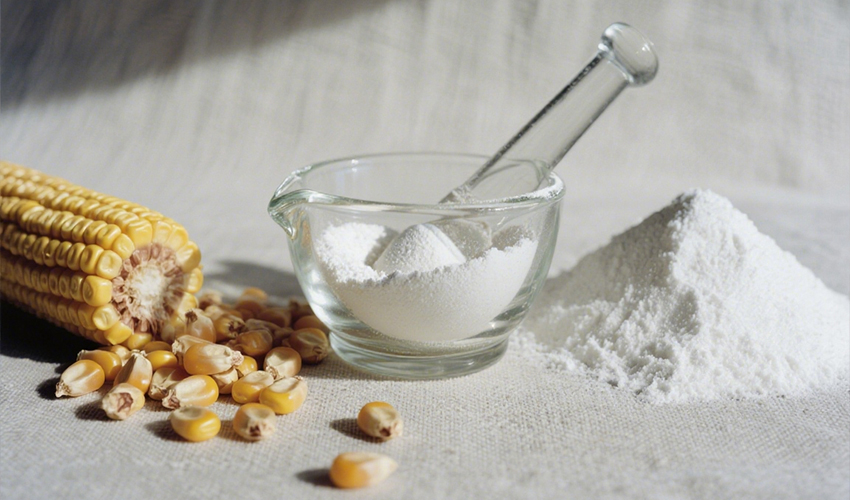
Upstream, the liquefaction and saccharification steps must be tuned to produce a fermentable sugar profile that matches the yeast’s uptake kinetics. If liquefaction is incomplete, the viscosity of the mash can cause mixing problems in the fermenter, creating dead zones. If saccharification enzyme dosage is too low, the mash arrives with insufficient glucose, and the yeast spends energy inducing its own amylases rather than producing ethanol. We calibrate enzyme dosing not just by theoretical corn starch content but by actual post-liquefaction dextrose equivalent measurements from the plant’s own inline analyzers. This closes the loop between grain quality, milling efficiency, and fermentability.
Downstream, the ethanol concentration in the beer directly determines the steam requirement for distillation. Every percentage point increase in beer ethanol, from 8% to 9%, reduces distillation energy by roughly 8–10%. Continuous fermentation, when stable, can consistently deliver beer at 9–10% ethanol, compared to 7–8% in many batch plants. This has a compounding effect: less steam for distillation, smaller stillage volume, and potentially lower DDGS drying costs because the centrifuge receives a more concentrated feed. Plants that capture this benefit can reduce overall thermal energy consumption by up to 25% when combined with a properly designed heat integration scheme, such as using stillage heat to preheat incoming mash or generating biogas from anaerobic digestion of thin stillage for boiler fuel.
The co-product stream also becomes more predictable. A continuous fermenter with stable yeast health produces DDGS with consistent protein content because the yeast contribution to the stillage is uniform. Buyers of DDGS value nutritional consistency, and a plant that can document a coefficient of variation under 5% on crude protein over a year of production often commands a premium. This is not achievable with batch fermentation where yeast health varies from tank to tank.
Measuring the Return on Yeast Management Investment
The improvements from better yeast management do not appear as a single line item on a profit-and-loss statement; they distribute across yield, energy, maintenance, and co-product revenue. Quantifying them requires tracking a few key metrics consistently.
| Metric | Typical Batch | Well-Managed Continuous | Improvement |
|---|---|---|---|
| Ethanol yield (L/tonne corn) | 390–400 | 410–420 | 5–8% |
| Beer ethanol (% v/v) | 7.5–8.5 | 9.0–10.0 | 1.5–2.0 pp |
| Annual fermentation uptime | 92–94% | 96–98% | 4–6% |
| Distillation steam (kg/L EtOH) | 2.0–2.3 | 1.7–1.9 | 15–20% |
| DDGS protein CV (%) | 8–12 | 3–5 | 50–60% reduction |
The single largest source of payback is usually the combination of higher yield and lower steam consumption. In a 150,000-tonne-per-year corn ethanol plant, a 5% yield improvement adds roughly 7,500 tonnes of additional ethanol annually. At current fuel ethanol prices, that alone can fund the incremental cost of a continuous fermentation system in under three years, even before accounting for operational savings. The more predictable co-product revenue and reduced contamination-related downtime accelerate the return further.
Common Questions About Continuous Alcohol Fermentation
How long can a continuous fermentation run before yeast needs replacement?
A well-managed continuous fermenter can operate for 90 to 120 days without a complete yeast replacement, provided that contamination is controlled and the yeast population is regularly refreshed through the propagation system. However, even in stable operation, genetic drift accumulates. We recommend a scheduled maintenance stop every three to four months to clean the system and re-inoculate with a fresh culture, rather than waiting for a yield decline to force an unplanned shutdown.
Is it true that continuous fermentation only works with specific corn varieties?
Not exactly. The process works with any millable corn, but the fermentation stability is affected by upstream milling and liquefaction performance more than by the corn variety itself. If the plant has robust cleaning and grinding equipment, and the liquefaction is properly controlled, the mash consistency required for continuous operation can be achieved. Difficulty typically arises when there is high variability in corn moisture or starch content; pre-cleaning and blending silos largely mitigate that.
What modifications are needed to convert a batch plant to continuous?
Converting an existing batch plant requires adding a continuous feed system, a sterile mash supply line, a propagation vessel sized for the desired throughput, and a cell recycle or retention mechanism if the chosen strain does not self-flocculate. The existing fermenters can often be re-piped in series. The larger challenge is not the hardware; it is the control logic. The plant’s automation system must be reprogrammed to manage feed rate, pH, and temperature as interdependent variables. We have converted several batch facilities, and the typical payback on capital is under four years when yield improvements and energy savings are both captured.
Does yeast recycling increase the risk of genetic mutation?
Yes, it does. Every time yeast is recycled—whether through a settling cone, centrifuge, or membrane—the population experiences a selection pressure that favors cells that survive the recovery process. Over time, this can select for variants with lower fermentation performance. The mitigation is periodic genetic monitoring and planned introduction of fresh culture from the propagation vessel. In plants we have supported, quarterly re-inoculation keeps genetic drift within acceptable limits while still capturing the economic benefit of recycling.
How do we measure yeast viability reliably in a continuous system?
Measuring yeast viability in a continuous fermenter requires a combination of flow cytometry for rapid cell counts and viability staining, corroborated by standard plate counts on selective media to check for bacterial contamination. But the most operationally useful indicator is the trend in ethanol concentration at a fixed feed rate. If that trend deviates by more than 0.2% over 48 hours without a known cause, a yeast audit is warranted. Share your process data with us and we can help interpret viability patterns against your fermentation configuration to pinpoint whether the issue is biological or process-related. Send an email to [email protected] or call 010-8591 2286.
If you’re interested, check out these related articles:
Driving Global Food Conservation Through Technological Innovation