Scent works on a level most branding efforts never reach. It bypasses the analytical mind and lands directly in memory and emotion—before a customer even registers what they’re experiencing. I’ve watched businesses spend months refining their visual identity while completely overlooking this invisible dimension of brand presence. The right fragrance doesn’t just complement your brand; it becomes inseparable from how people remember you. Finding that scent requires systematic comparison of fragrance samples, testing how each one interacts with your space, your customers, and the story you’re trying to tell.
Why Scent Creates Brand Connections That Visuals Cannot
The olfactory system connects directly to the limbic brain, where emotions form and memories consolidate. This neurological shortcut explains why a particular smell can transport someone back decades in an instant, while even the most striking logo rarely triggers the same visceral response. Research in retail environments has documented purchase intent increases of up to 80% when strategic scenting is implemented—a figure that reflects just how powerfully scent shapes behavior beneath conscious awareness.
Fragrance samples serve as the testing ground for this sensory strategy. Rather than committing to a scent based on a brief impression, samples allow extended evaluation across different times of day, varying foot traffic levels, and multiple staff and customer reactions. This exploration phase reveals subtleties that a single sniff in a showroom would miss entirely. The fragrance that seems perfect in isolation might feel overwhelming in a small retail space or disappear entirely in a venue with high ceilings and strong air circulation.
Evaluating Fragrance Samples Against Brand Criteria
Brands that maintain consistent sensory experiences across touchpoints report customer loyalty rates approximately 20% higher than those with fragmented sensory identities. This consistency doesn’t happen by accident. It requires establishing clear evaluation criteria before the first fragrance sample arrives.
Fragrance Evaluation Checklist
| Criteria | Notes |
|---|---|
| Scent Profile | Top, middle, and base notes; overall aroma |
| Longevity | How long the scent lasts |
| Intensity | Strength and projection of the fragrance |
| Brand Fit | Alignment with brand values and image |
| Target Audience Appeal | Resonance with desired demographics |
Personal preference matters less than you might expect in this process. A fragrance you personally love might clash with your brand’s positioning or alienate your core demographic. The evaluation needs to account for how each scent makes people feel, what associations it triggers, and whether those responses align with the experience you’re trying to create.
Professional-grade fragrance samples reveal qualities that consumer-level products often mask. The purity of ingredients, the complexity of the scent pyramid, and the way the fragrance evolves over hours all become apparent through proper sampling. For luxury brand scenting especially, these details communicate quality and attention to craft in ways customers sense even when they can’t articulate what they’re noticing.
Scent Delivery Systems and Their Practical Differences
The technology behind scent diffusion determines how consistently and effectively your chosen fragrance reaches customers. Each approach offers distinct trade-offs between coverage area, control precision, and installation requirements.
Scent Diffusion Technologies Comparison
| Technology | Coverage Area | Control | Key Features |
|---|---|---|---|
| Nebulization | Large (up to 15,000m³) | App/Programmable | Fine mist, consistent, no heat/water |
| Evaporation | Small (up to 80m³) | Manual/Timer | Simple, portable, subtle diffusion |
| HVAC Integration | Very Large (up to 30,000m³) | App/Programmable | Uniform scent, discreet, wide area coverage |
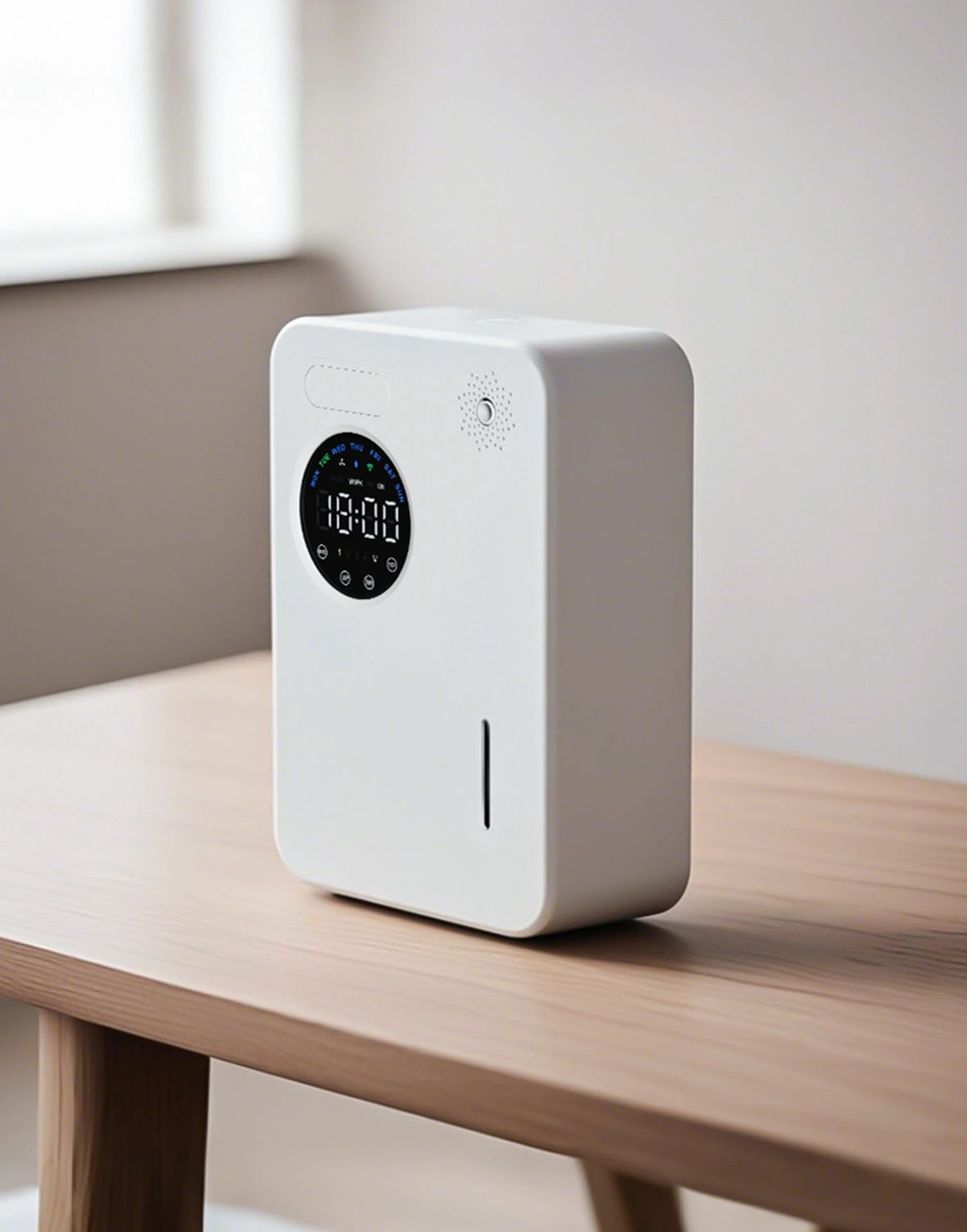
Nebulization breaks fragrance oils into microscopic particles without heat, preserving the scent’s integrity while achieving broad, even distribution. The Commercial Scent Oil Diffuser (Bluetooth APP) exemplifies this approach, offering app-based scheduling and intensity control for commercial environments where consistency matters.
Smaller spaces benefit from different solutions. The Home Aroma Oil Diffuser Desktop Sensor (Waterless) incorporates radar sensing to activate when people are present, conserving fragrance oil while ensuring the scent greets visitors at the right moment. For personal offices or compact retail areas, the Home Essential Oil Diffuser Aroma Dispenser Machine provides portability and multiple timer modes without requiring permanent installation.
Large-scale venues face unique challenges. The Commercial HVAC Scent Diffuser Aroma Dispenser System integrates directly into existing climate control infrastructure, distributing fragrance through the same ductwork that manages temperature. This creates uniform scent coverage across expansive spaces while keeping the equipment invisible to customers.
 ## Mapping Scent to the Customer Journey
Strategic scent integration extends beyond ambient diffusion in a single location. Each touchpoint in the customer journey presents an opportunity to reinforce olfactory brand identity.
Scent Integration Points in Customer Journey
A retail chain that implemented targeted scenting based on systematic fragrance sample testing documented a 15% increase in customer dwell time and a 10% lift in sales. These results emerged from matching specific scents to specific zones—energizing notes near the entrance, calming fragrances in fitting rooms, and signature brand scent at checkout.
Hospitality applications often involve custom fragrance development, with the signature scent appearing in lobby diffusion, in-room amenities, and take-home samples that extend the experience beyond the property. Event branding uses scent to define temporary spaces, creating sensory memories that persist long after the event concludes.
Deploying Fragrance Samples Across Different Environments
Environmental factors significantly influence how fragrance samples perform in real-world conditions. Temperature affects volatility, airflow determines distribution patterns, and humidity can alter how scent molecules interact with the air.
The Battery Aroma Oil Dispenser Wall Mount Diffuser offers placement flexibility for spaces where electrical outlets are inconvenient or where the diffuser needs to move between locations. Larger venues might require the broader coverage of a Wall Plug-in Essential Oil Diffuser Machine, which provides consistent output without battery replacement concerns.
Testing fragrance samples under actual operating conditions reveals performance characteristics that controlled environments miss. A scent that projects beautifully in an empty space might get lost when the room fills with people, each person’s body heat and movement affecting air circulation. Systematic testing across different occupancy levels and times of day prevents surprises after full implementation.
Quantifying Scent’s Contribution to Business Outcomes
Research indicates that approximately 75% of daily emotions connect to smell, making olfactory experience a primary driver of mood and memory formation. This neurological reality translates into measurable business outcomes when scent strategy aligns with brand objectives.
Market research methodologies adapted for fragrance evaluation can quantify consumer perception shifts. Competitive scent analysis identifies opportunities to differentiate through olfactory positioning. Tracking customer behavior metrics before and after scent implementation provides concrete return-on-investment data.
The Scent-Share Desktop Scent Diffuser for Home Bluetooth APP enables controlled testing environments through precise scheduling, allowing businesses to isolate scent as a variable when measuring customer response changes. This data-driven approach transforms fragrance selection from subjective preference into strategic decision-making.
Effective fragrance sample comparison involves blind testing protocols, diverse feedback collection across demographic segments, and evaluation against predefined brand alignment criteria. The goal is converting personal reactions into actionable insights that inform long-term scent strategy.
Working with Scent-Share for Comprehensive Scenting Solutions
Scent-Share Technology operates as a complete scenting solution provider, integrating research and development, manufacturing, marketing, and ongoing support services. A decade of experience across 68 countries and more than 300 fragrance varieties has built institutional knowledge about how scent performs across diverse markets and applications.
The product range addresses needs from intimate personal spaces to expansive commercial venues. The Home Aroma Air Diffuser Scent Machine serves compact environments, while the Scent-Share Hotel Scent Oil Diffuser Commercial Scenting handles the demands of large hospitality properties. Decorative options like the Modern Minimalist Reed Oil Diffuser and natural crystal aroma stones provide passive scenting alternatives that complement active diffusion systems.
Custom scent development capabilities allow brands to create proprietary fragrances that no competitor can replicate. This exclusivity strengthens brand identity while preventing the dilution that occurs when multiple businesses use the same off-the-shelf scents.
Frequently Asked Questions About Brand Scenting
How do professional fragrance samples enhance brand perception?
Professional fragrance samples allow businesses to test scents under real conditions before committing to full implementation. This testing reveals how a fragrance interacts with specific spaces, customer demographics, and brand positioning. The quality difference between professional and consumer-grade samples also matters—higher purity ingredients and more complex scent profiles communicate sophistication that customers perceive even without conscious analysis. Brands that invest in proper sampling demonstrate attention to detail that extends beyond scent into overall brand perception.
What criteria should businesses use to evaluate scent samples for their brand?
Start with brand alignment: does this fragrance evoke the emotions and associations your brand intends to create? Then consider your target audience’s likely responses, which may differ significantly from internal team preferences. Practical factors include longevity in your specific environment, intensity at various distances from the diffusion point, and compatibility with your chosen delivery technology. Allergen profiles and ingredient transparency matter increasingly to consumers, particularly in hospitality and wellness contexts where guests may have sensitivities.
Can scent samples significantly improve customer loyalty and sales?
The evidence supports meaningful impact when implementation is strategic rather than arbitrary. Scent creates emotional associations that strengthen brand recall and positive sentiment. Customers who feel good in your space stay longer, explore more products, and return more frequently. The key is matching the fragrance to your brand identity and customer expectations—a mismatch can produce negative results as easily as alignment produces positive ones. Systematic fragrance sample testing reduces the risk of mismatch while identifying the scent most likely to drive the outcomes you’re measuring.
Begin Developing Your Brand’s Scent Identity
Scent-Share Technology (Guangzhou) Co., LTD brings specialized expertise to every stage of scent strategy development, from initial fragrance sample comparison through global deployment and ongoing optimization. Our team works with brands across industries to identify olfactory signatures that strengthen customer connections and differentiate market positioning. Reach out at [email protected] or +86 185 6557 5758 to discuss how strategic scenting might serve your brand’s specific objectives.