
Working with brass finishing over the years teaches you one thing quickly: the difference between an acceptable surface and an excellent one often comes down to brush selection. Getting that consistent luster across hundreds of components without burning through brushes or overheating the metal requires understanding both the material and the tools. This piece covers how brass polishing brushes function in industrial settings and what actually matters when sourcing them.
Why Industrial Brass Polishing Demands More Than Basic Abrasion
Industrial brass polishing removes oxides, surface imperfections, and minor burrs through controlled mechanical interaction between abrasive filaments and the metal surface. The goal extends beyond appearance. A properly polished brass surface resists corrosion better and creates less friction in moving assemblies. The abrasive brush types you select determine how aggressively material comes off and what texture remains behind.
Several factors make consistent brass component finishing genuinely difficult. Complex geometries create uneven contact pressure, leading to spots that get over-polished while others barely get touched. Heat buildup from friction can discolor brass surprisingly fast, especially on thin-walled parts. Selecting the wrong grit size leaves scratch patterns that subsequent finishing steps struggle to remove. Deburring brass components adds another layer of complexity since residual burrs compromise both function and safety in assembled products.
| Common Brass Finishing Challenges | Solutions |
|---|---|
| Uneven surface removal | Optimized brush pressure and speed; multi-stage polishing |
| Discoloration due to heat | Cooling lubricants; appropriate brush material selection |
| Excessive material removal | Finer grit abrasives; shorter polishing cycles |
| Inconsistent surface luster | Uniform polishing compounds; automated systems |
| Residual burrs | Specialized deburring brush designs |
Matching Brush Configurations and Filament Materials to Your Application
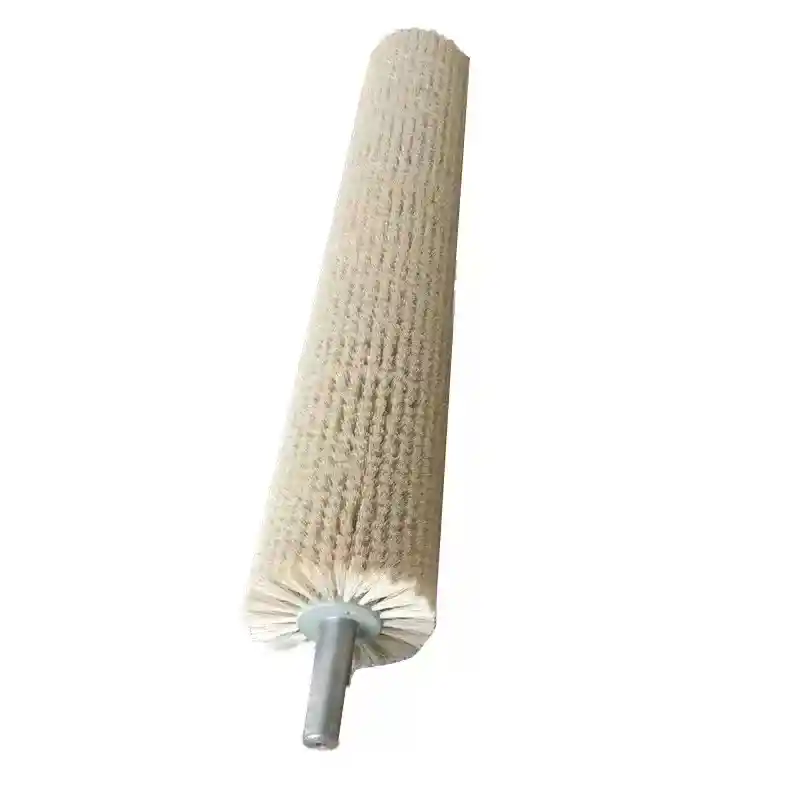
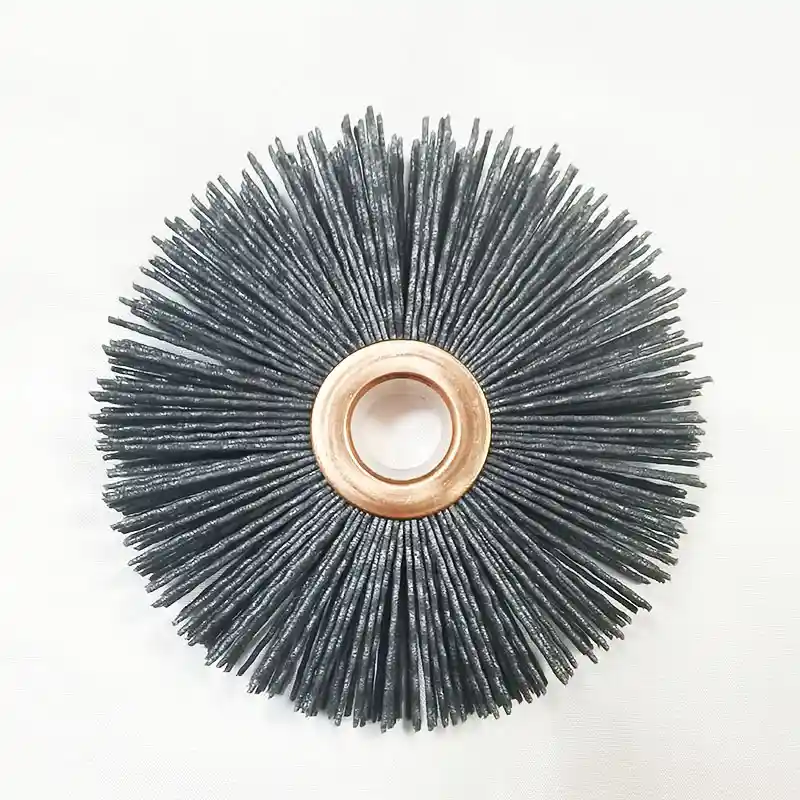
The brass polishing brush type you choose needs to match both the part geometry and the finish you want. Cylindrical brushes work well for internal diameters and flat linear surfaces. Wheel brushes cover broader external areas efficiently. Disc brushes conform to irregular shapes better than rigid alternatives. Each configuration creates different contact patterns and pressure distributions.
Filament material determines the actual cutting action. Natural fibers like Tampico polish gently when used with appropriate polishing compounds compatibility, making them suitable for final luster stages. Synthetic nylon filaments impregnated with abrasive particles provide more aggressive cleaning and deburring. Wire filaments in brass or stainless steel handle heavier material removal and surface conditioning tasks. The interaction between brush type, filament, and operating parameters determines whether you get the surface finish quality your application requires.
| Brush Type | Filament Material | Typical Application |
|---|---|---|
| Cylindrical Brushes | Abrasive Nylon, Tampico | Internal pipe polishing, linear surface finishing |
| Wheel Brushes | Brass Wire, Sisal, Cotton | General surface polishing, deburring, buffing |
| Disc Brushes | Abrasive Nylon, Silicon Carbide | Contoured surfaces, edge blending, fine finishing |
| End Brushes | Brass Wire, Nylon | Small areas, intricate details, internal corners |
| Spiral Brushes | Steel Wire, Nylon | Cleaning and polishing of long, tubular components |
Where Brass Polishing Brushes Prove Essential Across Industries
Brass polishing brushes show up in more manufacturing environments than most people realize. Automotive production uses them on engine components, electrical connectors, and decorative trim pieces where precision brass polishing affects both longevity and visual quality. Plumbing operations depend on them for cleaning brass parts and plumbing fixture polishing since smooth surfaces seal better and resist corrosion longer.
Jewelry manufacturing brushes handle the delicate work of achieving high-luster finishes on ornamental brass pieces with intricate details. Aerospace component finishing applies these brushes for deburring brass components and surface preparation before plating or coating, where specifications leave little room for error. General manufacturing facilities use brass polishing brushes throughout their processes for surface preparation, cleaning, and final finishing. The right brush, combined with appropriate polishing compounds and controlled pressure, produces consistent results across production runs.
Heavy Duty Options for Demanding Production Environments
High-volume production and aggressive material removal call for industrial wire brushes built to handle the stress. Thicker gauge brass or tempered steel filaments withstand intense cleaning cycles without rapid degradation. Power brushes for brass designed for high-speed automated machinery maintain performance under continuous operation. Large diameter wheel brushes and cylindrical brushes with dense fill patterns process parts faster while maintaining surface consistency. These heavy-duty brass brushes serve foundries, large-scale metal fabrication facilities, and any operation where throughput matters as much as finish quality.
What Separates a Capable Brass Polishing Brush Supplier from the Rest
Finding a reliable brass polishing brush supplier affects both your product quality and your production costs over time. Manufacturing capabilities matter first. Advanced production processes and documented quality control in brush production indicate a supplier who understands consistency. Testing procedures that verify brush performance before shipping prevent problems from reaching your floor.
Custom brush solutions capability becomes important when standard products fall short of your requirements. Many applications need specific dimensions, particular filament types, or precise abrasive impregnations that off-the-shelf options cannot provide. Technical support for brushes separates suppliers who simply sell products from those who help solve finishing problems. OEM/ODM brush services open possibilities for developing proprietary solutions tailored to your specific processes. Logistics considerations including competitive pricing, low MOQ/free samples, and fast delivery affect your operational flexibility, particularly when working with global brush suppliers.
Evaluating Suppliers for Custom Brass Polishing Brush Projects
Custom brass polishing brush projects require suppliers with demonstrated experience in specialized industrial brushes. A track record in ODM/OEM brush services shows they understand the development process. Case studies or examples of similar completed projects reveal their actual capabilities versus their marketing claims. Technical support brushes capabilities determine whether they can collaborate effectively on design and material specifications or simply take orders. Supplier reliability metrics like on-time delivery rates and customer retention indicate how they perform under real operating conditions. Thorough evaluation identifies partners capable of delivering tailored brush solutions rather than close approximations.
Getting More Life and Better Results from Your Brass Polishing Brushes
Process optimization and consistent brush maintenance extend both brush longevity and finish quality. Using the correct brush for each specific application prevents the inefficient polishing and premature wear that comes from mismatched tools. Regulating brush speed and pressure carefully protects both the brush and the workpiece from damage. Excessive force generates heat that discolors brass and accelerates filament breakdown.
Regular cleaning removes accumulated polishing compounds and brass particles that clog filaments and reduce abrasive effectiveness. Proper storage away from moisture and temperature extremes preserves filament integrity between uses. The filament material determines how aggressively the brush polishes and how fine the resulting surface becomes, which directly affects both finish quality and how long the brush remains effective. A scheduled brush maintenance program reduces replacement costs and maintains polishing consistency across production batches.
How Brass Polishing Technology Continues to Advance
Industrial brass polishing keeps evolving as manufacturers push for better efficiency, tighter precision, and reduced environmental impact. Automated brass finishing systems now integrate robotic arms with vision systems to maintain consistent output across high-volume runs while reducing operator-dependent variation. Advanced polishing techniques combine multiple brush stages with real-time monitoring to optimize each step.
Innovations in brush design include smart brush technology with embedded sensors that track wear and performance data during operation. Sustainable brush materials using biodegradable filaments and recycled components address environmental concerns without sacrificing performance. Machine learning applications are beginning to predict optimal polishing parameters and identify potential defects before they occur. The trajectory points toward highly integrated, data-driven solutions that improve both productivity and environmental responsibility in industrial brushes applications.
Frequently Asked Questions About Brass Polishing Brushes
What advantages do brass polishing brushes offer compared to alternative finishing methods?
Brass polishing brushes deliver excellent surface uniformity across complex part geometries that chemical methods struggle to match. The mechanical action provides effective deburring efficiency while preserving critical dimensions. Environmental considerations favor brushes over many chemical alternatives since they generate less hazardous waste. The control they offer over the finishing process makes them a cost-effective finishing solution for most industrial brass applications, particularly when consistency across production volumes matters.
How does Huixi Brush maintain quality and durability standards for industrial brass polishing brushes?
Huixi Brush maintains quality through material selection and manufacturing controls developed over 16 years of production experience. High-grade, durable brush materials form the foundation. Precise production techniques ensure consistent brush construction across batches. Quality control processes test filament integrity, structural soundness, and abrasive performance before products ship. This approach produces industrial brass polishing brushes that meet demanding operational requirements and deliver reliable service over their working life.
Does Shanghai Huixi Trading Co., Ltd. manufacture custom brass polishing brushes for specialized applications?
Shanghai Huixi Trading Co., Ltd. provides custom brass polishing brushes designed for specific industrial requirements through comprehensive ODM/OEM brush services. The process involves close collaboration on design and material specifications to ensure the final product matches application needs precisely. Professional technical support guides decisions on dimensions, filament types, and construction details. This capability delivers specialized industrial brushes engineered for particular processes rather than adapted from standard products.
Partner with Huixi Brush for Your Industrial Polishing Needs
As a specialized manufacturer and trading company with 16 years of production experience, Shanghai Huixi Trading Co., Ltd. offers unparalleled expertise in customized industrial brushes. From cylindrical and spiral brushes to wheel and drill brushes, we provide professional technical support, ODM/OEM services, competitive pricing, and low MOQ/free samples. Partner with us for reliable, high-quality brass polishing solutions that meet your exact industrial specifications. Contact us today at +86 1580 0932 713 or [email protected] to discuss your project and discover the Huixi difference.