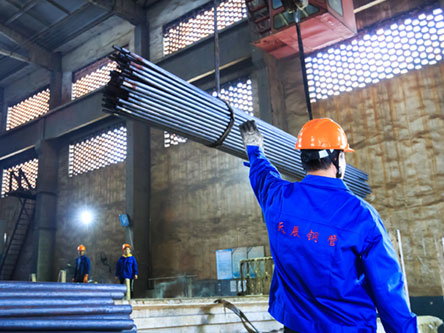

ASTM A179 seamless cold-drawn low-carbon steel tubes handle the thermal demands that keep condensers and heat exchangers running without incident. These tubes exist because efficient heat transfer requires material that holds its shape under cycling temperatures while resisting the gradual degradation that comes with continuous service. The cold-drawing process does something specific here—it refines the grain structure and tightens dimensional control in ways that hot-formed alternatives simply cannot match. When a tube wall varies by even a fraction of a millimeter, heat transfer efficiency drops and stress concentrations appear. That matters in systems where failure means shutting down an entire process line.
What ASTM A179 Actually Specifies
ASTM A179 covers seamless cold-drawn low-carbon steel tubes intended for tubular heat exchangers, condensers, and similar heat transfer equipment. The standard exists to guarantee that tubes possess both the material integrity and dimensional precision required for reliable thermal exchange. Cold drawing enhances the steel’s mechanical properties while producing the smooth surface finish and uniform wall thickness that efficient heat transfer demands. The low carbon content keeps the material weldable and formable—practical considerations when fabricators need to bend, expand, or join these tubes during installation.
Chemical Composition Limits
The chemical makeup of ASTM A179 tubes follows tight boundaries that directly affect how the material performs under service conditions. Carbon content stays low enough to preserve ductility while providing adequate strength. Manganese contributes to hardness and tensile properties. Phosphorus and sulfur limits prevent the brittleness and weld cracking that would compromise tube integrity over time.
| Element | Composition (%) |
|---|---|
| Carbon (C) | 0.06 – 0.18 |
| Manganese (Mn) | 0.27 – 0.63 |
| Phosphorus (P) | ≤ 0.035 |
| Sulfur (S) | ≤ 0.035 |
Mechanical Properties That Define Service Limits
The mechanical properties of ASTM A179 tubes determine how they respond to operational stress. Tensile strength sets the maximum load before fracture. Yield strength marks where permanent deformation begins. Elongation indicates how much the material can stretch before breaking—a measure of ductility that matters when tubes experience thermal expansion and contraction cycles. Hardness limits ensure the tube resists surface damage without becoming too brittle.
| Property | Requirement (min) |
|---|---|
| Tensile Strength | 325 MPa (47 ksi) |
| Yield Strength | 180 MPa (26 ksi) |
| Elongation (in 2 in.) | 35% |
| Hardness (Rockwell B) | 72 HRB |
Dimensional Control and Surface Quality
Precise dimensions and clean surface finish are not optional features for ASTM A179 tubes—they determine whether the tube actually performs its heat transfer function. Wall thickness variations create hot spots. Diameter inconsistencies cause fit problems during tube sheet installation. The cold-drawing process produces the tight tolerances and smooth surfaces that minimize fluid friction and prevent scale accumulation inside the tube.
How Cold Drawing and Heat Treatment Work Together
The seamless character of ASTM A179 tubes comes from a cold-drawing sequence that progressively refines the material. A hollow shell passes through dies that reduce both diameter and wall thickness while improving surface finish and mechanical properties. After cold drawing, heat treatment restores ductility and relieves the internal stresses that accumulate during forming. Annealing, normalizing, or stress relief treatments optimize the final microstructure depending on the intended service conditions.
Testing Requirements That Verify Tube Integrity
Every ASTM A179 tube undergoes testing designed to catch defects before they become field failures. Hydrostatic testing confirms that tubes hold pressure without leaking. Flaring and flattening tests verify that the material can deform without cracking—important for tubes that will be expanded into tube sheets. Eddy current and ultrasonic inspection detect surface and subsurface flaws that visual examination would miss. Positive Material Identification confirms that the tube chemistry matches the specification.
What Quality Control Checks Matter Most for ASTM A179 Tubes?
The critical quality control checks for ASTM A179 seamless tubes address both material composition and structural soundness. Hydrostatic testing verifies pressure integrity under conditions more severe than normal service. Eddy current testing finds surface discontinuities while ultrasonic testing locates internal flaws. PMI inspection confirms the correct chemical composition—a check that prevents material mix-ups from reaching the field. These tests work together to ensure that tubes meet ASTM A179 requirements before they leave the facility.
Where ASTM A179 Tubes Get Used
ASTM A179 tubes appear wherever efficient heat transfer matters and reliability cannot be compromised. Power generation facilities use them in condensers and feedwater heaters. Chemical processing plants rely on them for heat exchangers handling corrosive or high-temperature fluids. Refrigeration systems, HVAC equipment, and automotive heat exchangers all benefit from the thermal efficiency and consistent quality these tubes provide.
Can ASTM A179 Tubes Be Customized for Specific Applications?
Standard specifications cover most applications, but some projects require tubes with non-standard lengths, specialized surface treatments, or testing protocols beyond the baseline requirements. Custom ASTM A179 tubes can accommodate unique geometries or performance criteria that standard products do not address. The key is working with a supplier who controls the manufacturing process closely enough to deliver consistent quality even when the specification deviates from standard parameters.
How ASTM A179 Compares to Related Standards
Selecting the right tube specification requires understanding what distinguishes ASTM A179 from alternatives designed for different service conditions. ASTM A192 covers seamless carbon steel boiler tubes rated for higher pressure service. ASTM A210 specifies medium-carbon steel tubes with greater strength for boiler and superheater applications at elevated temperatures. Each standard targets a specific combination of pressure, temperature, and application requirements.
| Standard | Material Type | Primary Application | Key Difference from A179 |
|---|---|---|---|
| ASTM A179 | Low-Carbon Steel | Heat Exchangers, Condensers | Cold-drawn, seamless |
| ASTM A192 | Carbon Steel | High-Pressure Boilers | Higher temp/pressure |
| ASTM A210 | Medium-Carbon Steel | Boilers, Superheaters | Higher strength/temp |
| JIS G3461 | Carbon Steel | Boilers, Heat Exchangers | Japanese standard |
| DIN 17175 | Carbon/Alloy Steel | High-Temp Applications | European standard |
What Separates ASTM A179 from Other Boiler Tube Specifications?
The differences between ASTM A179 and other boiler tube specifications come down to chemistry, mechanical properties, and intended service. ASTM A179 uses low-carbon steel optimized for heat transfer efficiency in condensers and heat exchangers operating at moderate temperatures. ASTM A192 handles higher pressure boiler service with slightly different mechanical requirements. ASTM A210 provides greater strength for superheater applications where temperatures climb higher. Choosing the wrong specification means either over-engineering the application or risking premature failure.
Manufacturing Control and Consistent Quality
Consistent ASTM A179 tube quality depends on controlling every step from raw material selection through final inspection. Vertically integrated manufacturing—where one organization manages the entire process—eliminates the variability that comes from coordinating multiple suppliers. Full process control means tighter tolerances, more reliable testing, and faster response when specifications change or problems arise.
How Does Cold Drawing Affect ASTM A179 Tube Performance?
Cold drawing improves ASTM A179 tube performance in several measurable ways. Dimensional accuracy increases because the drawing process produces tighter tolerances than hot forming methods. Surface finish improves, which reduces fluid friction and enhances heat transfer efficiency. Mechanical properties strengthen as the cold working refines the grain structure. These improvements translate directly into longer service life and more reliable operation in demanding heat exchange applications.
Reliability Comes from Specification Compliance
Meeting ASTM A179 specifications is not about checking boxes—it determines whether tubes will perform reliably over years of service in systems where failure carries real consequences. Compliant tubes deliver consistent heat transfer, resist the gradual degradation that comes with thermal cycling, and maintain their integrity under the pressures and temperatures they encounter in actual operation. The specification exists because experience has shown what works and what fails.
Connect with Our Experts for Your Tubing Needs
Have specific requirements or questions about ASTM A179 tubes or other precision steel tubing? Our team of experts is ready to assist you with tailored solutions and technical insights. Reach out today to discuss your project needs and discover how our high-quality products can contribute to your success.
Email: [email protected]
Tel: +86 51988789990
Phone: +86 13401309791
WhatsApp: +86 13401309791