
Metal surfaces need to look good and perform well. That’s not negotiable anymore. Whether you’re finishing automotive panels or aerospace components, the surface quality directly affects how the part functions and how customers perceive it. Abrasive nylon brush technology has become a go-to solution for manufacturers dealing with deburring challenges and surface conditioning requirements. These brushes deliver repeatable results that improve both the practical performance and visual appeal of metal parts.
How Abrasive Nylon Brush Technology Actually Works
Abrasive nylon brush technology marks a real shift in how surface treatment gets done. The design embeds abrasive particles directly into flexible nylon filaments. This creates a tool that removes material in a controlled, predictable way. The construction allows for uniform surface conditioning without taking off too much material or warping the workpiece. Parts that need careful handling benefit most from this approach.
Breaking Down the Components
Several elements determine how an abrasive nylon brush performs. The brush core materials give the tool its structural backbone. Manufacturers typically use durable plastics or metals for this purpose. The abrasive filaments are usually nylon strands loaded with abrasive grit. Silicon carbide grit handles general finishing work well. Aluminum oxide abrasive tackles tougher jobs. How much abrasive gets packed into the nylon and how well it bonds to the filament affects cutting power and how long the brush lasts. Filament diameter and brush density matter too. They control flexibility and how much pressure the brush applies to the surface.
The Difference Between Abrasive Nylon and Wire Brushes
Abrasive nylon brushes solve problems that wire brushes create. Wire brushes can tear off too much material. They sometimes leave wire fragments embedded in the workpiece. Abrasive nylon brushes work more gently. The abrasive action stays controlled. This means less risk of scratches, surface damage, or throwing off dimensional accuracy. Nylon brushes don’t spark either. That matters when flammable materials are nearby. The brush flexibility built into nylon filaments lets them follow complex shapes. Irregular surfaces get a more even finish as a result.
Where Abrasive Nylon Brushes Make the Biggest Impact
Abrasive nylon brushes show up across a wide range of metal finishing tasks. Their ability to produce consistent, controlled results makes them suitable for everything from aggressive material removal to delicate surface prep. Modern industrial processes depend on this kind of precision.
Getting Deburring and Edge Radiusing Right
Abrasive nylon brushes handle deburring metal parts and edge radiusing exceptionally well. Machining operations leave burrs and sharp edges behind. These brushes remove that unwanted material, making parts safer to handle and better suited for their intended function. Precision deburring happens because the brush targets edges selectively without messing with the main surface. The result is a uniform edge finish with less manual cleanup. Automated deburring solutions often rely on these brushes to maintain consistency across high-volume production runs.
Creating the Right Look and Feel
Abrasive nylon brushes do more than clean up edges. They create specific surface finishes that serve both aesthetic and functional purposes. Decorative finishes like satin or matte textures become achievable. Surface texture improvement can boost paint adhesion or reduce friction between moving parts. Polishing stainless steel with the right abrasive nylon brush produces a consistent luster. These brushes also strip away oxide scale and prepare surfaces for coating or bonding. That prep work determines how well subsequent treatments adhere.
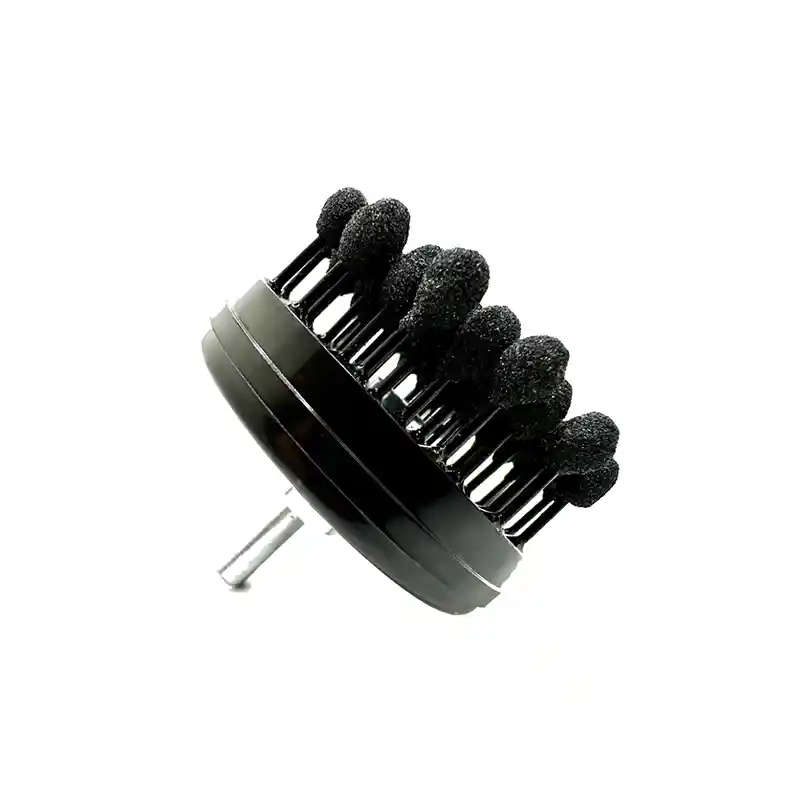
If you’re interested, check 《abrasive disc brush an excellent industrial surface treatment tool》.
Picking the Right Brush for the Job
Getting the brush selection right saves time and produces better results. Several factors need consideration before committing to a particular brush type. A methodical approach cuts down on wasted effort and keeps quality consistent.
- Identify the Workpiece Material: The type of metal being finished determines which abrasive materials and filament types will work. Aluminum behaves differently than stainless steel or cast iron.
- Define the Desired Finish: Specify what the finished surface should look like. Heavy deburring requires different tools than light cleaning or polishing.
- Choose the Abrasive Grit Selection: Pick the right grit type and size. Coarser grits cut faster. Finer grits leave smoother surfaces.
- Consider Brush Density and Filament Diameter: Denser brushes with thicker filaments cut more aggressively and last longer. Less dense brushes with thinner filaments flex better around complex shapes.
- Evaluate Operating Speed Considerations: Match the brush to your equipment’s speed capabilities. Wrong speeds cause premature wear or poor finishing results.
- Determine Wet vs. Dry Applications: Some brushes work better with coolant. Others are designed for dry use.
- Assess Workpiece Material Compatibility: Confirm the brush won’t contaminate or damage the workpiece.
- Consult Technical Specifications: Manufacturer guidelines provide specific recommendations based on application and material.
| Feature | Silicon Carbide Grit | Aluminum Oxide Abrasive |
|---|---|---|
| Hardness | Very Hard | Hard |
| Applications | Ferrous metals, cast iron, plastics, general deburring | Non-ferrous metals, stainless steel, high-tensile alloys |
| Finish Quality | Aggressive cutting, leaves sharp edges | Tough, durable, produces smoother finishes |
| Wear Resistance | Good | Excellent |
| Best For | Heavy deburring, rapid stock removal | General-purpose finishing, polishing, surface conditioning |
| Filament Color (Typ.) | Black, Grey | Brown, Red |
Keeping Brushes Working Longer
Proper maintenance extends brush life and keeps performance consistent. Skipping maintenance leads to faster wear, unpredictable results, and higher costs. A structured routine pays off over time.
- Regular Cleaning: Use brush cleaning techniques to clear out swarf, debris, and residue buildup. Clogged brushes lose their effectiveness.
- Optimal Operating Pressure: Apply the right amount of pressure. Too much causes rapid wear and heat buildup. Too little produces weak results.
- Correct Speed Settings: Stay within recommended speed ranges. Over-speeding breaks filaments. Under-speeding wastes time.
- Proper Storage: Keep brushes in clean, dry conditions away from sunlight and temperature extremes. This protects the nylon and abrasive bonding.
- Inspect for Wear: Check regularly for brush wear indicators like shortened filaments, uneven wear, or exposed core material. Replace worn brushes before they cause problems.
- Safety Protocols: Follow safety in metal finishing guidelines. Wear eye protection and gloves.
- Avoid Cross-Contamination: Dedicate brushes to specific materials or finishing stages. Mixing uses compromises finish quality.
- Coolant Use (if applicable): For wet applications, maintain adequate coolant flow. This manages heat, extends brush life, and improves surface finish.
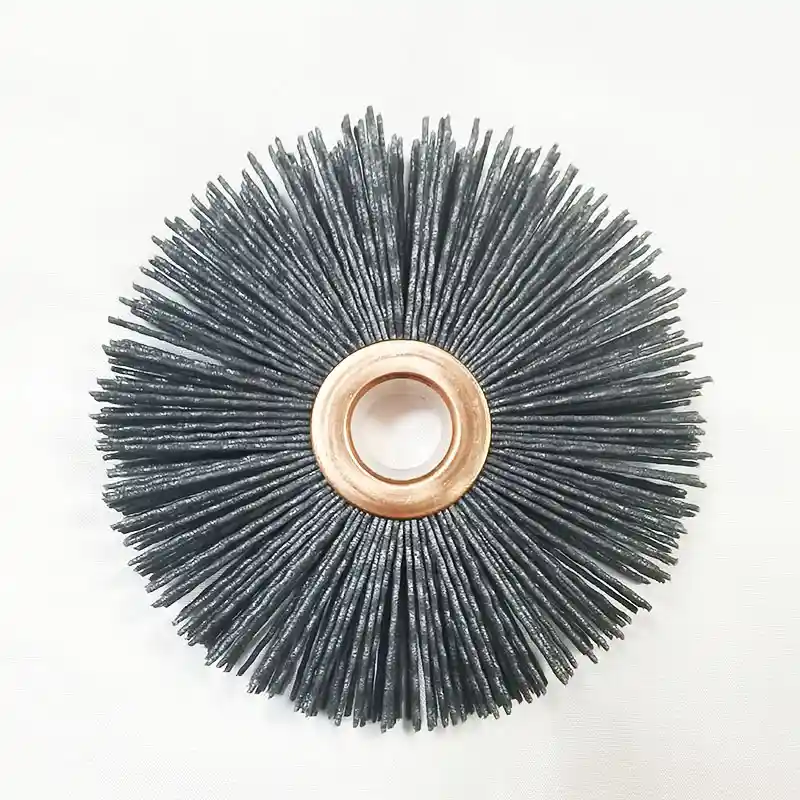
If you’re interested, check 《abrasive wheel brush a magical tool for industrial surface treatment》.
What Huixi Brush Brings to the Table
Shanghai Huixi Trading Co., Ltd. has built a reputation as a leading provider of customized industrial brushes. Sixteen years of production experience at our manufacturing facility in Anhui Province backs up that claim. Our trading company in Lingang New Area, Shanghai City, handles global service and efficient delivery.
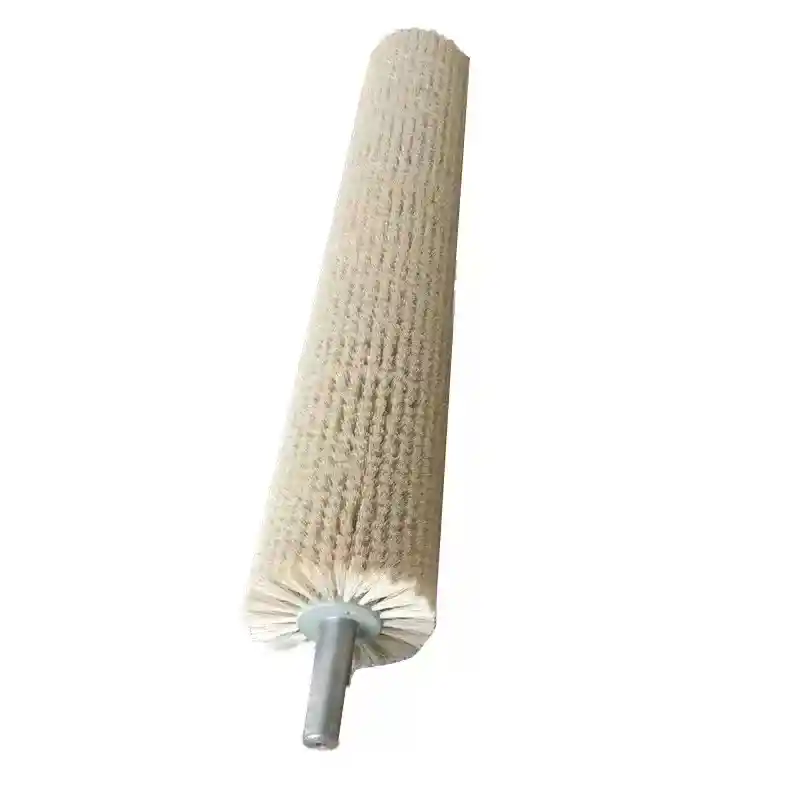
We specialize in bespoke brushes for industrial seal, cleaning, polishing, and deburring brush applications. Our product range covers cylindrical brushes, spiral wire brush, strip brush, wire wheel brush, tube brushes, abrasive disc brush, drill brushes, and wire scratch brushes. Huixi Brush delivers high-quality brushes that meet demanding industrial specifications. We provide professional technical support based on extensive hands-on experience. Our ODM/OEM service brushes address specific design and application needs. Competitive prices, low MOQ/free sample options, and fast delivery reflect our customer-focused approach. Positive feedback from clients across Europe, North America, Australia, New Zealand, the Middle East, and Southeast Asia speaks to the quality of our products and services.
Taking Your Metal Finishing Further
Abrasive nylon brushes have earned their place in modern metal finishing operations. The technology enables precise surface conditioning, effective deburring, and consistent aesthetic results across diverse industrial applications. Understanding how these brushes work, where they apply best, and how to select the right one improves product quality and operational efficiency. Huixi Brush brings sixteen years of manufacturing experience and a commitment to quality to every project. We offer a comprehensive range of advanced metal finishing solutions, including customized abrasive nylon brushes, supported by expert technical guidance and global service capabilities.
FAQ
What makes abrasive nylon brushes better than traditional finishing methods?
Abrasive nylon brushes produce more consistent, uniform finishes than wire brushes or manual abrasion. The risk of scratching or marring the workpiece drops significantly. Spark-free operation makes them safer around flammable materials. Their flexibility lets them conform to complex shapes, which makes them particularly effective for deburring and edge radiusing. Tool life tends to be longer, and operational costs typically come down over time in metal surface finishing applications.
How should I approach selecting an abrasive nylon brush for a specific application?
Start with the workpiece material. Aluminum, stainless steel, and other metals each have different requirements. Define what finish you need, whether that’s deburring, a satin texture, or polishing. Match the grit size of the abrasive filament to your goals. Consider brush density and diameter based on the geometry you’re working with. Working with an experienced industrial brushes supplier like Huixi Brush provides access to professional technical support that can guide you toward the optimal choice for your specific metal finishing needs.
Do abrasive nylon brushes work on parts with complex shapes?
Abrasive nylon brushes handle complex metal geometries well. The flexible abrasive filaments reach into tight contours and internal surfaces that rigid tools can’t access. This capability makes them effective for consistent, precise deburring and edge radiusing on parts with challenging shapes. The finished product quality improves as a result.
Start a Conversation with Huixi Brush
Better metal finishing starts with the right tools and the right partner. Shanghai Huixi Trading Co., Ltd. offers deep expertise in customized industrial brushes, including a full range of abrasive nylon solutions. Sixteen years of manufacturing experience and global service capabilities make us a reliable choice for superior surface quality. Reach out for professional technical support, ODM/OEM services, and information about how our high-quality brushes can improve your operations. Contact us at +86 1580 0932 713 or [email protected].