
Working with curved surfaces has taught me that standard finishing tools often fall short. The geometry fights back—uneven contact, inconsistent pressure, missed spots in recesses. Abrasive brushes changed how I approach these parts. Their ability to conform to contours while maintaining controlled material removal makes them practical for deburring, polishing, and surface conditioning across a range of industrial applications. What follows covers the mechanics behind these brushes, where they fit in automated and manual workflows, and how to match the right brush to your specific situation.
How Abrasive Brushes Conform to Non-Planar Geometries
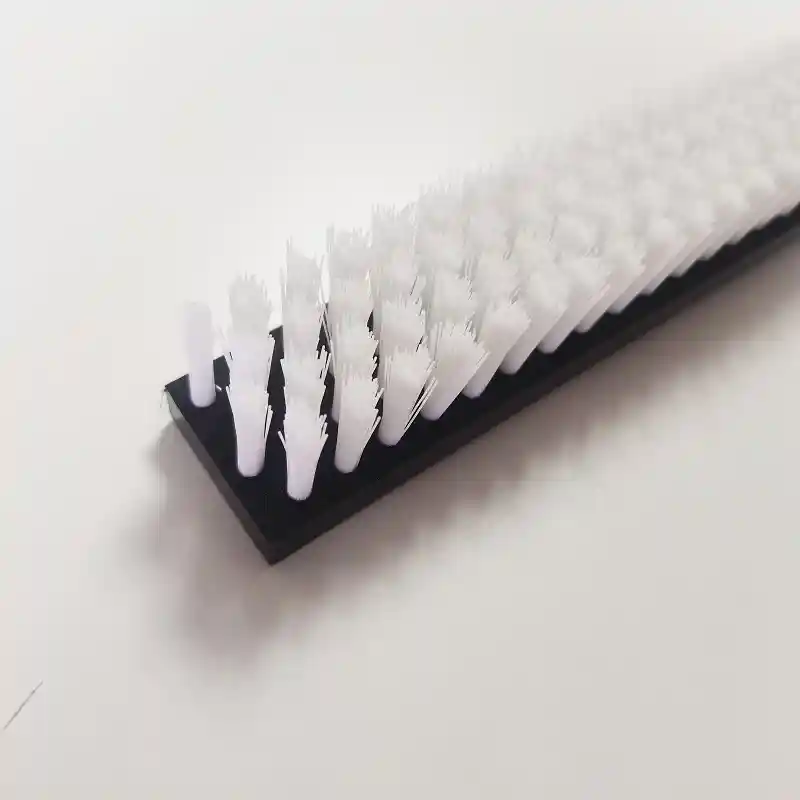
Abrasive brushes work because they bend. Unlike rigid grinding wheels that demand flat contact, flexible abrasive brushes adapt to whatever shape sits beneath them. The secret lies in the bristle construction—nylon abrasive filaments impregnated with grit particles that cut as the brush moves across the surface.
The mechanical action is straightforward. Each filament tip carries abrasive particles that contact the workpiece. As the brush rotates, these particles abrade material in small, controlled amounts. Bristle flexibility distributes pressure evenly across curves and into recesses, preventing the gouging and uneven removal that plague rigid tools. This conforming action matters most when component surface integrity cannot be compromised—aerospace parts and medical devices come to mind.
Grit selection drives the outcome. Silicon carbide grit brushes cut aggressively on non-ferrous metals and ceramics. Aluminum oxide brushes handle ferrous metals and high-tensile alloys with better durability. Coarser grits remove material faster for heavy deburring. Finer grits produce polished finishes. The brush bristle materials themselves vary too—nylon dominates for its balance of flexibility and wear resistance, though other polymers serve specific temperature or chemical environments.
| Abrasive Material | Typical Applications | Hardness (Mohs) | Characteristics |
|---|---|---|---|
| Aluminum Oxide | General purpose, ferrous metals, high tensile alloys | 9.0 | Tough, durable, cost-effective |
| Silicon Carbide | Non-ferrous metals, cast iron, plastics, ceramics | 9.5 | Sharp, fast cutting, brittle |
| Ceramic | High-performance, hard metals, aerospace alloys | 9.0-9.5 | Self-sharpening, long life |
| Diamond | Extremely hard materials, carbides, glass | 10 | Ultimate hardness, precise finishing |
CNC Integration Turns Abrasive Brushing Into a Repeatable Process
Mounting abrasive brushes in CNC machining centers changes what’s possible with curved surface finishing. The machine controls rotational speed, feed rate, and contact pressure with precision that human hands cannot match. This translates to consistent surface roughness improvement across production runs—batch after batch of parts meeting the same specification.
Robotic sanding brushes navigate complex geometries through programmed paths. Edge blending brushes and radiusing brushes follow contours exactly as specified, removing the variability that creeps into manual operations. CNC machining abrasive tools make aerospace deburring and automotive finishing predictable rather than dependent on operator skill and attention.
The economics favor automation for volume work. Labor costs drop when machines handle repetitive finishing tasks. Workplace safety improves because operators spend less time exposed to dust and repetitive motion. Specialized brush tool holders enable quick changes between operations, keeping cycle times competitive. For high-volume production of curved components, CNC abrasive brushing delivers both quality and throughput.
How CNC Abrasive Brushes Deliver Consistency While Cutting Labor Costs
CNC abrasive brushes remove human variability from the finishing equation. Every parameter—speed, pressure, dwell time—stays constant across thousands of parts. The result is uniform surface finishes and predictable material removal that manual methods cannot replicate at scale. Automation handles the repetitive work, freeing skilled labor for tasks that actually require judgment. This cost-effective deburring solution pays for itself through consistent surface finish quality and reduced rework.
Manual Finishing Still Has Its Place
Automation handles volume. Manual finishing handles everything else—prototypes, repairs, one-off parts, and situations where the geometry is too unusual for fixturing. Handheld abrasive brushes give operators direct control and immediate feedback. You feel when the brush catches an edge or encounters a harder spot in the material.
Brush selection matters more in manual work because the operator compensates for tool limitations in real time. Small diameter brushes reach into tight cavities during mold and die finishing. Flexible brushes conform to carved details in woodworking sanding without flattening delicate features. Metal fabrication finishing demands different brush bristle materials and grit sizes depending on whether you’re cleaning welds or preparing surfaces for coating.
Ergonomics affect productivity over a full shift. Lightweight brushes with well-designed handles reduce fatigue. The right finishing brushes matched to the task mean less time fighting the tool and more time making progress. A proper brush selection guide helps professionals avoid trial-and-error when facing unfamiliar materials or geometries.
Which Abrasive Brushes Handle Complex Curved Geometries Best
Flexible abrasive brushes outperform rigid alternatives on curved surfaces. Long, conforming brushes adapt to contours without altering part geometry. Small diameter brushes access tight radii and intricate details that larger tools cannot reach. For truly challenging shapes, specialty abrasive brushes—sometimes custom-designed for specific applications—provide targeted finishing where standard products fall short.
If you’re interested, check 《honing brush treat burrs in barrel parts without affecting accuracy and scale》.
Matching Brush Specifications to Material and Application Requirements
Selecting the right abrasive brush starts with understanding what you’re trying to accomplish. The workpiece material, desired finish, and process conditions all influence the choice. Abrasive brush grit sizes set the baseline—coarser grits for aggressive stock removal, finer grits for surface refinement. Wet or dry sanding brushes suit different environments and material sensitivities.
Material compatibility brushes prevent problems before they start. Medical device polishing requires specific bristle materials to avoid contamination. Aerospace finishing standards specify brush characteristics to meet certification requirements. The abrasive must be harder than the workpiece—silicon carbide cuts aluminum effectively but wears quickly on hardened steel.
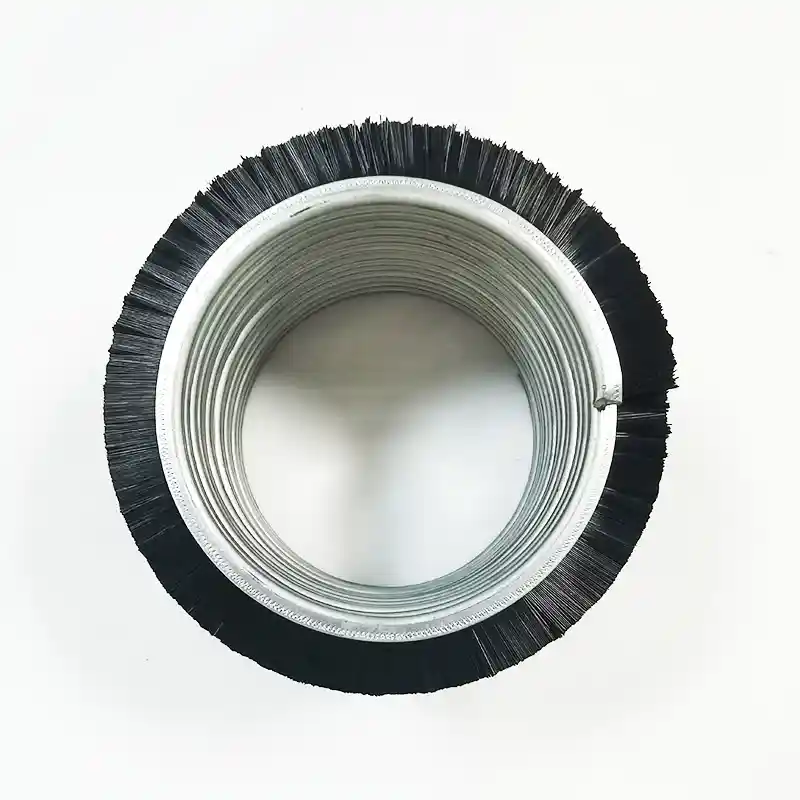
Brush form and size complete the selection. Wheel brushes cover area efficiently. Cup brushes access internal surfaces. End brushes provide precision for detail work. Matching brush dimensions to workpiece geometry ensures adequate coverage without excessive overlap or missed areas. A comprehensive brush selection guide simplifies these decisions for applications ranging from surface conditioning brushes for general industrial use to specialized polishing brushes for critical components.
Key Factors When Choosing Abrasive Brushes for Specific Materials
Material compatibility brushes require matching abrasive hardness to workpiece properties—the grit must cut the material, not bounce off it. Bristle stiffness affects conformability; softer bristles follow delicate contours while stiffer bristles provide aggressive action on harder surfaces. Coolant use with brushes prevents heat buildup that can damage heat-sensitive materials or degrade the brush itself. Temperature, chemical exposure, and required surface finish all factor into the final selection.
Huixi Brush Brings 16 Years of Industrial Brush Manufacturing Experience
Shanghai Huixi Trading Co., Ltd. has built its reputation over 16 years of producing industrial brushes for sealing, cleaning, polishing, and deburring applications. Our manufacturing facility in Anhui Province handles production while our trading company in Lingang New Area, Shanghai manages customer relationships and logistics.
We provide professional technical support alongside ODM/OEM brush service for customized solutions. Our product range includes cylindrical brushes, spiral brushes, strip brushes, wheel brushes, tube brushes, disc brushes, drill brushes, and wire scratch brushes. Customers across Europe, North America, Australia, New Zealand, the Middle East, and Southeast Asia have validated our approach through repeat orders and positive feedback on quality and service. Competitive pricing, low MOQ options, free samples, fast delivery, and responsive after-sales support define how we work with customers seeking a reliable industrial brushes supplier in China.
Start Improving Your Curved Surface Finishing Results
Precision abrasive brushes can upgrade your surface finishing processes for both CNC and manual applications. Shanghai Huixi Trading Co., Ltd. offers technical consultation and custom manufacturing to address your specific requirements. Reach out to discuss your application or explore our industrial brush solutions. +86 1580 0932 713 | [email protected]
What Makes Abrasive Sanding Brushes Effective for Deburring Operations
Abrasive sanding brushes deliver consistent deburring because they conform to part geometry rather than fighting it. Curved surfaces receive uniform treatment that manual methods struggle to replicate. Burr removal, edge blending, and surface finish control happen in a single operation, reducing handling and improving part quality. The efficiency gains compound across production volumes.
Can Existing CNC Equipment Accept Abrasive Brush Tooling
Most CNC machining centers accommodate abrasive brushes with appropriate tool holders. Programming handles the rest—defining paths, speeds, and pressures for automated deburring, edge radiusing, and surface conditioning. The integration enables higher throughput and repeatable results on curved components without major equipment changes.
How Huixi Brush Maintains Quality Across Its Abrasive Finishing Product Line
Shanghai Huixi Trading Co., Ltd. draws on 16 years of manufacturing experience to maintain consistent quality. Material selection follows established specifications for each application type. Production techniques have been refined through continuous improvement. Professional technical support and ODM/OEM services allow us to customize cylindrical brushes, disc brushes, and other products to meet specific industry standards, ensuring optimal performance and durability for demanding applications.