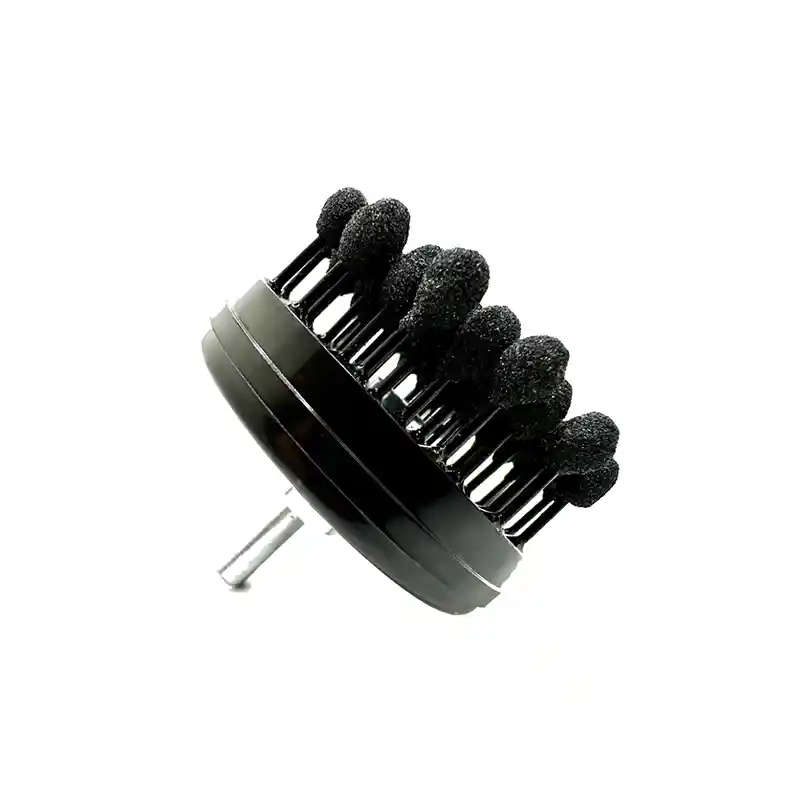

Achieving a consistent fine surface finish in bores and internal diameters is a challenge many production engineers face daily. When traditional honing stones fall short in flexibility or cause dimensional variation, a precision honing brush often provides the answer. These abrasive-filled tools conform to the workpiece geometry, removing burrs and refining surface roughness with minimal stock removal. Our team has spent over a decade customizing these brushes for applications ranging from hydraulic cylinders to medical devices, and we’ve learned that the right combination of filament, grit, and core design can deliver repeatable Ra values below 0.2 µm.
How Does a Precision Honing Brush Create a Fine Surface Finish?
At its most basic, a honing brush consists of abrasive filaments mounted into a central core—usually metal or plastic. As the brush rotates and oscillates inside the bore, the filaments splay outward under centrifugal force and mechanical pressure, making light, uniform contact with the surface. Unlike rigid honing stones, the flexible filaments adjust to variations in diameter and surface contours, so they can apply consistent cutting pressure across the entire inner surface. This controlled abrasion removes a thin layer of material, smoothing out peaks and valleys to reduce roughness parameters such as Ra and Rz. The process generates a cross-hatch pattern that improves oil retention and wear resistance in components like engine cylinders and valve bodies.
Which Abrasive Types and Grit Sizes Achieve the Best Surface Roughness?
The abrasive you choose directly influences the final finish and productivity. For fine finishing, silicon carbide (SiC) filaments are common for cast iron and non-ferrous metals because they cut aggressively but fracture to expose fresh edges. Aluminum oxide (Al₂O₃) is more durable and works well on steel and alloy parts, providing a smoother finish at comparable grits. More demanding applications—such as hardened tool steels or ceramic components—may require diamond-impregnated filaments, though cost increases significantly.
Grit size correlates with achievable Ra; as a rule of thumb, a 120-grit filament can deliver Ra around 0.4-0.6 µm, while 320-grit approaches 0.1-0.2 µm. However, filament density and pressure matter equally. In flexible hones, abrasive mesh definitions can vary; we always test samples on the target material to confirm final roughness.
| Abrasive Type | Typical Grit Range | Best for Materials |
|---|---|---|
| Silicon Carbide | 60-320 | Cast iron, aluminum, brass |
| Aluminum Oxide | 80-400 | Steel, stainless steel |
| Ceramic | 100-600 | Hard alloys, nickel alloys |
| Diamond | 120-800 | Hardened steel, ceramics |
Still Determining the Right Abrasive for Your Material?
Choosing between silicon carbide, aluminum oxide, or diamond filaments can feel like a balancing act between cost, finish, and production speed. If your application involves a material combination or tolerance that doesn’t fit standard recommendations, reaching us at [email protected] can help clear the uncertainty before you commit to a large order.
Why Brush Density and Core Design Are Just as Important as Abrasive
Filament density, or fill factor, dictates how many cutting points contact the surface per revolution. A denser brush removes material faster but can generate heat and clog in tight bores. For fine finishing, we often recommend a medium density—enough filaments to average out individual scratches, yet open enough for debris evacuation. The filament shape also matters: round filaments provide consistent abrasion, while crimped or shaped filaments can hold compound and reduce loading.
Core design determines how effectively the brush follows the bore. A rigid core works for straight, consistent bores, but a flexible core or segmented design is needed for intersecting holes or out-of-round conditions. We’ve seen cases where a poorly designed core caused uneven wear and created deeper scratches, completely undermining the finishing goal.
Specifying a Custom Precision Honing Brush for Your Application
Off-the-shelf brushes rarely deliver optimal results in high-precision applications. When we work with clients, we begin by clarifying the bore diameter, length, material, and target surface finish. From there, we select the abrasive, grit, filament length, and core design that match those inputs. For example, a customer producing aluminum fuel system components needed a brush that could reach a 6-mm bore and consistently produce Ra 0.15 µm without scratching the soft metal. After testing different silicon carbide filaments and adjusting density, we arrived at a custom solution that reduced rework rates by over 40% compared to their previous brush.
If your production volume justifies it, having a brush tailored to your exact specifications is a worthwhile investment that pays back through higher first-pass yield and longer brush life. Provide your part print and surface finish requirement, and the manufacturer can recommend which filament material and density will get closest to your target—and back it with sample testing.
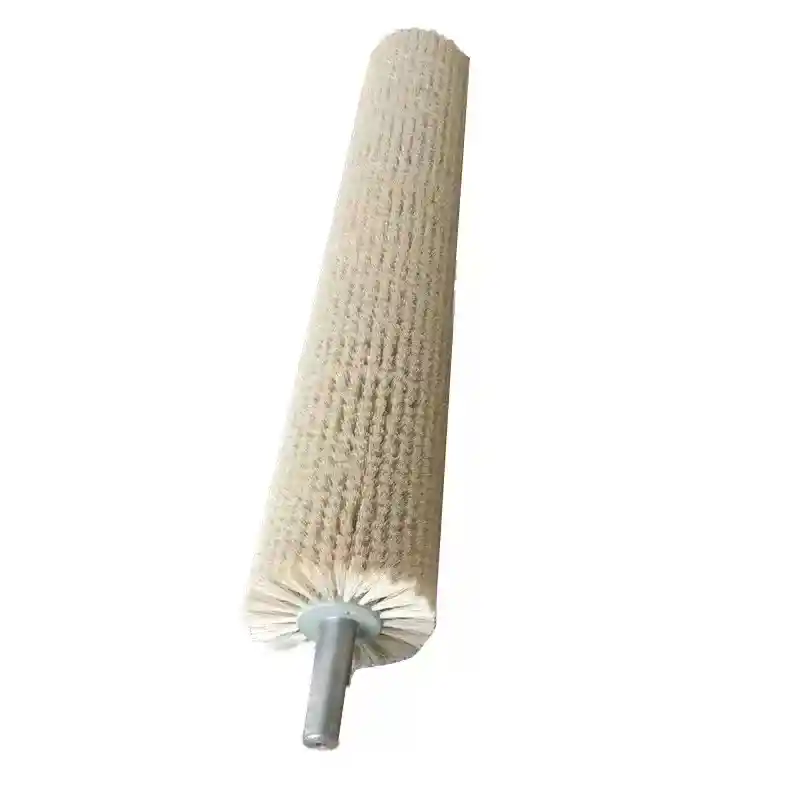
Sourcing a Reliable Precision Honing Brush Supplier
Not all honing brushes are created equal. When evaluating suppliers, look for: consistent abrasive quality from batch to batch, the ability to produce custom diameters and grit combinations with short lead times, and a willingness to provide free samples for process validation. Material traceability is also important—ask for a Certificate of Conformance for the abrasive filament and core materials.
Huixi Brush, with 16 years of production experience, supports OEM/ODM projects from a manufacturing base in Anhui Province. We routinely ship custom honing brushes to clients in Europe, North America, and Southeast Asia. For projects requiring a surface finish validation, we can produce sample brushes to your dimensions and ship them quickly. If your operation demands a precision finishing solution that standard catalogs can’t meet, reach out to discuss your requirements.
Common Questions About Precision Honing Brushes
Can a honing brush replace a honing stone?
It depends on the application. For debutring and light surface refinement, a flexible hone can often replace a rigid hone, especially when bore geometry varies or clearance is tight. However, if you need to correct significant taper or ovality, a fixed stone hone may be necessary. In many production cells, we see the brush used as a secondary finishing step after rough honing with stones.
How long does a honing brush last?
Brush life varies with abrasive type, filament loading, operating speed, and material being processed. In steel bores, an aluminum oxide brush may last several thousand cycles, whereas diamond brushes can outlast conventional abrasives by a factor of five or more. Regular inspection and replacement before filaments lose dimension preserves consistent finish.
What surface finish can I expect from a precision honing brush?
With proper grit and process control, a honing brush can routinely achieve Ra 0.1–0.4 µm on ferrous alloys. Softer metals may yield slightly rougher surfaces unless fine grit and lighter pressure are used. We always recommend running a DOE with sample brushes to confirm repeatability on your part.
Can you get a custom diameter brush?
Yes, custom diameters are standard practice. The brush core and filament length can be specified in increments as small as 0.5 mm. Providing the nominal bore ID and tolerance allows the manufacturer to design a brush that fits correctly and maintains proper contact pressure.
Do I need to run the brush in a lubricant or compound?
In most cases, a honing oil or water-based coolant is recommended to flush debris and prevent filament loading. Some abrasive filaments can be run dry for light debutring, but surface finish consistency is usually better with lubrication. The filament type determines the best approach; the manufacturer can advise based on your material and finish target.
Getting a precision honing brush that consistently meets your surface finish spec requires more than picking a part number from a catalog. Differences in filament material, core flexibility, and grit selection can make the difference between a pass and a rework. If your production demands a tailored solution, share your part number and target finish with us at [email protected] or call +86 1580 0932 713, and we’ll work with you to develop a brush that fits your process.
If you’re interested, check out these related articles:
advantage of hx cylindrical nylon brushes
the differences between inward and outward spiral brush
rope cleaning brush for industrial use a key tool for maintaining safe production
what you know about brass wire brush strip