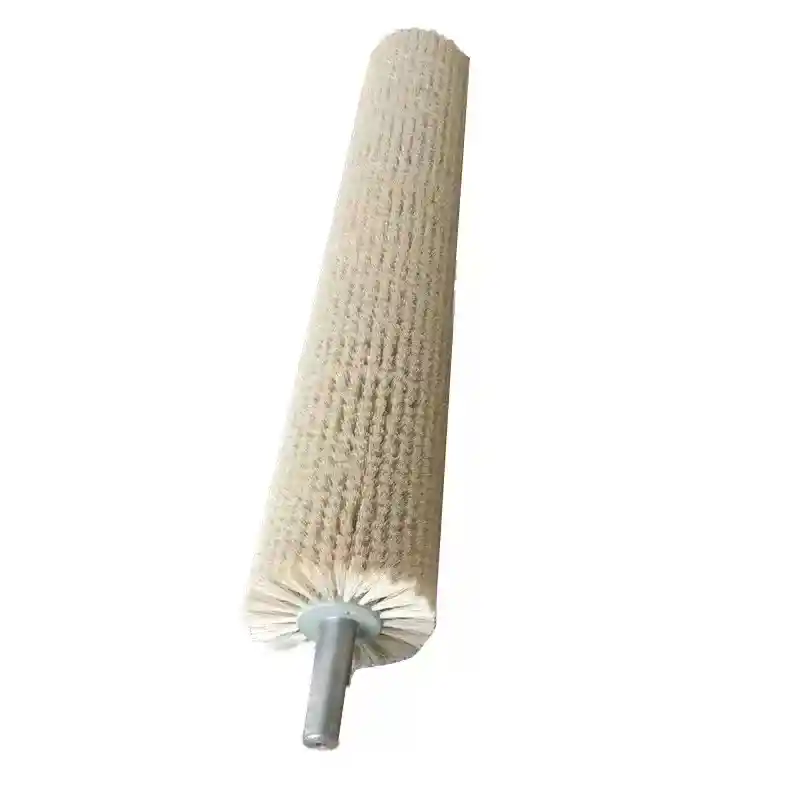

When specifying a cylindrical spiral brush for a production line that requires both cleaning and conveying, assuming an off-the-shelf design will handle both tasks well is a fast route to disappointment. We have supplied custom brushes to dozens of operations where the same brush had to sweep debris from a conveyor bed and simultaneously move lightweight parts forward without causing scratches or jams. Achieving that dual role depends on getting the filament material, spiral pitch, and brush density exactly right for the product being handled. This article walks through the most important design decisions, based on fifteen years of brush manufacturing and application support, so you can avoid the common missteps that force a rework order.
How a Cylindrical Spiral Brush Handles Two Jobs at Once
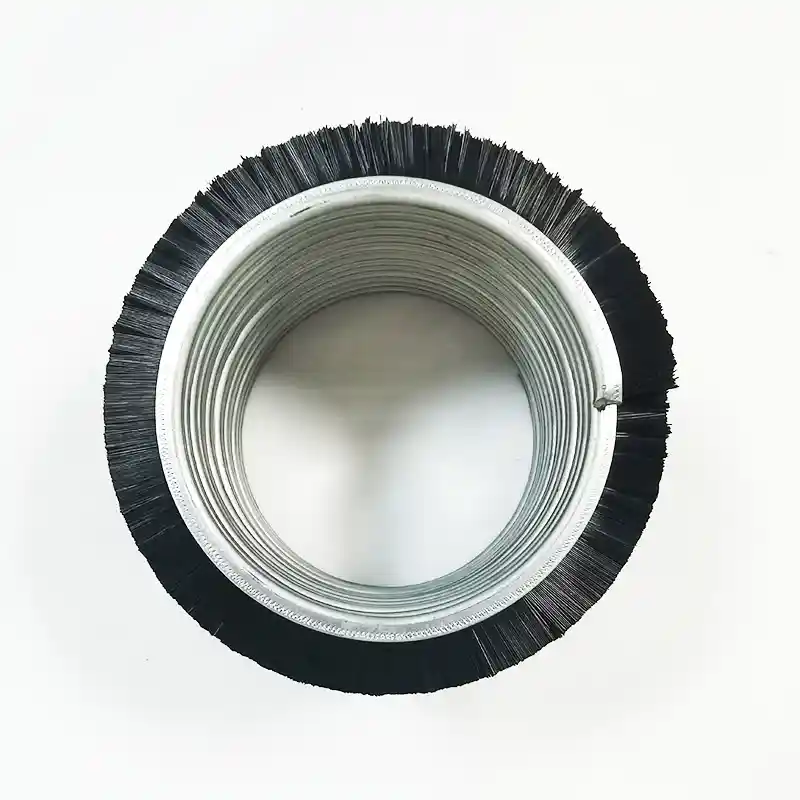
A cylindrical spiral brush consists of a central shaft or tube with metal channel wound in a continuous spiral around the core, holding filament securely along its length. When the brush rotates, the filament tips contact the work surface. If the intention is cleaning, the filament must be stiff enough to dislodge debris but flexible enough to avoid gouging. If the same brush must also convey a product forward, the spiral geometry creates a mechanical pushing action, much like an auger, that moves items along the line.
The real challenge is that these two demands often pull in opposite directions. Aggressive cleaning filament can dam the product flow or cause scuffing. A gentle filament that preserves product surface may not remove stuck-on residue. In our experience supporting food and packaging plants, the brushes that perform both functions acceptably share one characteristic: the filament and spiral were chosen after a careful study of the product weight, speed, and contamination type, not selected from a catalog listing.
Why Filament Material Makes or Breaks Dual-Purpose Performance
Filament material is the single biggest lever you have to balance cleaning aggression and product handling. No single material excels at everything, so the choice must match the dominant requirement.
| Filament Material | Cleaning Ability | Product Handling | Temperature Resistance | Relative Cost |
|---|---|---|---|---|
| Nylon (abrasive grit) | High | Moderate risk of scratching | Up to 150°C | Moderate |
| Polypropylene | Medium | Gentle, good for light parts | Up to 90°C | Low |
| Natural Tampico | Low to medium | Very gentle, non-marring | Up to 80°C | Medium |
| Stainless Steel Wire | Very high | Aggressive, use only when surface finish is not critical | High | High |
| Brass Wire | Medium | Moderate, softer than steel | Up to 200°C | High |
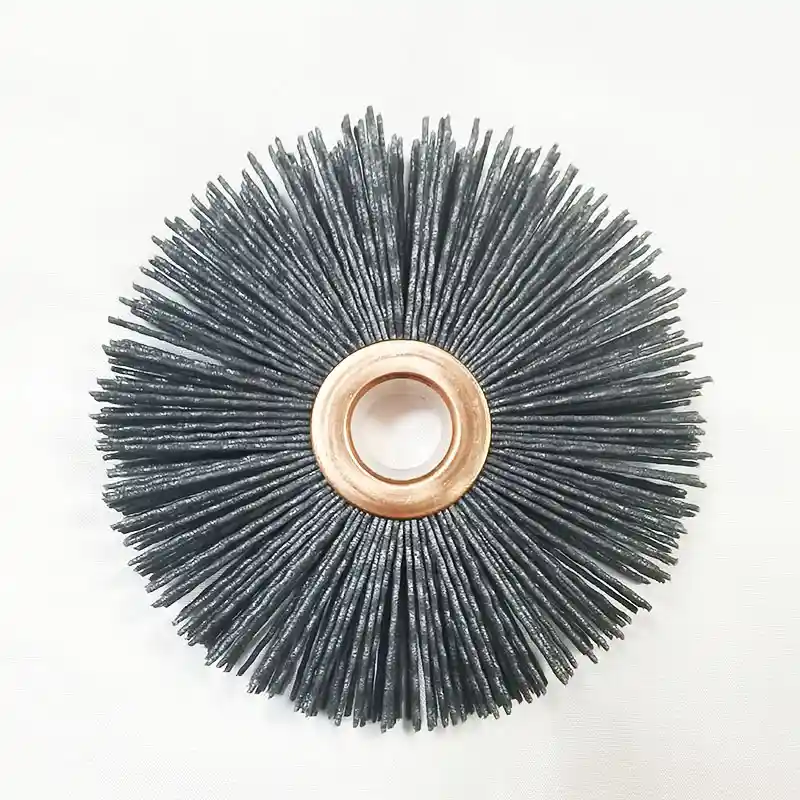
We have found that many lines processing stamped metal parts or plastic containers can work with a medium-grit nylon filament, which provides enough cleaning action to remove light oil or dust while still moving parts consistently. For food contact or thin-walled plastic bottles, polypropylene or Tampico reduces the risk of surface damage. When the process involves baked-on carbon or heavy scale, stainless steel wire may be non-negotiable, and the conveying function must be designed around the brush rather than the other way around.
Spiral Pitch and Density: Where Cleaning Meets Conveying
The spiral pitch, defined as the distance the filament channel advances in one full rotation, directly affects how far a product moves with each brush revolution. A tight pitch, where the turns are close together, gives more filament contact points per unit length. That translates to better cleaning coverage but slower conveying speed. A wide pitch moves product faster but leaves gaps in cleaning between the spiral bands.
Brush density, meaning how many filament tufts fill each meter of channel, adds another layer of control. A high-density brush packs more cleaning fiber into the same space and is better for scrubbing rough surfaces. However, it also increases the brush’s resistance to product flow, which can cause jamming if the product is light or irregularly shaped. For multi-purpose brushes, we typically start with a medium pitch and medium density, then adjust after a trial run. The right balance almost never emerges from a desk review alone, which is why prototype testing is so important.
If your process involves products of varying sizes or inconsistent conveyor speed, the brush specification will need to account for the widest range of conditions, not just the average. We have seen installations where the brush worked perfectly at full production speed but jammed during slow runs because the product had more time to settle into the brush, effectively increasing resistance.
If your production line handles mixed part sizes and you are unsure which pitch and density to specify, confirming the requirements with an experienced supplier can save weeks of trial and error—reach us at [email protected] or call +86 1580 0932 713.
The Most Frequent Specification Errors We See
Across hundreds of brush projects, a few patterns repeat often enough to be worth calling out. One is ordering a brush with excessive filament length. Long filament increases the brush’s sweep arc and may look like better cleaning, but if the product is light, the same long filament can catch and flip items off the line. Shorter, denser filament is usually safer for conveying.
Another error is copying a specification from a similar machine without considering the new product’s surface sensitivity. We have supplied replacement brushes to plants where a nylon brush had been ordered for a line that previously used Tampico, causing scratching that halted production until a softer configuration arrived. Matching the brush to the product you run now, not what a sister plant runs, will prevent that kind of downtime.
A third mistake is assuming that a higher RPM always improves cleaning. While faster rotation increases the number of filament contacts per second, it also generates more heat and can accelerate filament wear. For conveying, a moderate speed often moves product more reliably because the brush has enough time to engage each item without flinging it.
When a Standard Brush Cannot Deliver Both Functions
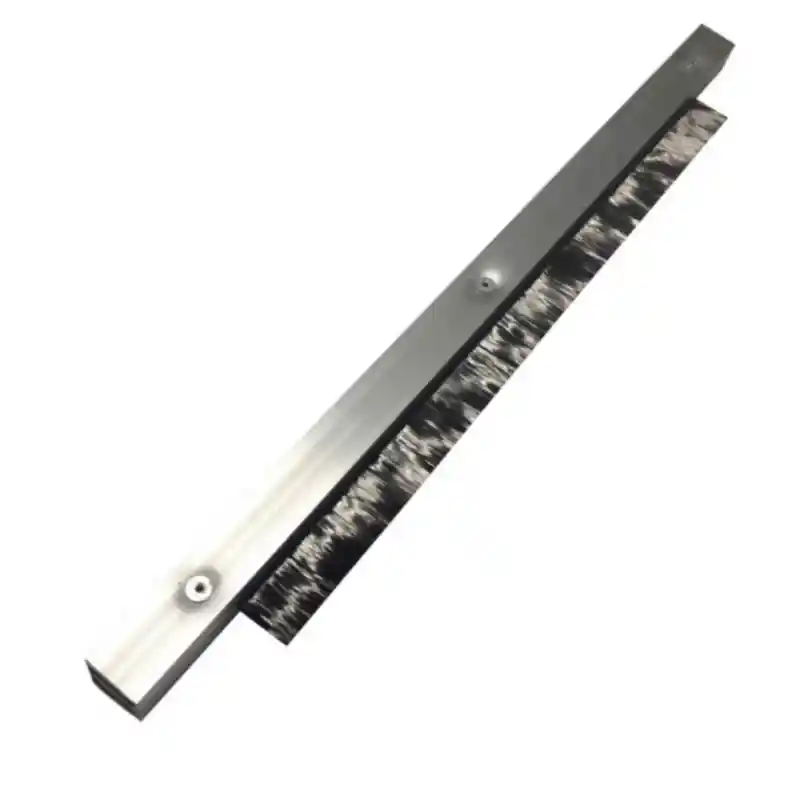
There are lines where cleaning and conveying requirements are so far apart that no single off-the-shelf cylindrical spiral brush will do both jobs well. That situation is more common than parts catalogs suggest. For example, a line that must remove adhesive residue from the bottom of heavy rubber mats while also moving them uphill through a wash tunnel places extreme, conflicting demands on the brush. The filament needs the stiffness of wire for aggressive cleaning but must not tear the mat surface. In these cases, a custom brush built with a specialized filament grade, a non-standard core diameter, or a segmented spiral pattern can solve the problem.
Custom brushes also allow the addition of features that improve reliability in wet or chemically aggressive environments, such as stainless steel cores, sealed end fittings, or chemically resistant filament. The investment in a custom configuration is often recovered quickly through less downtime and fewer brush changes. Because we manufacture in-house and support low minimum order quantities, a custom brush does not necessarily carry the cost premium that many buyers expect.
What to Look for in a Cylindrical Spiral Brush Supplier
A supplier who can provide a comprehensive range of filament options and spiral configurations is essential when the brush must perform two jobs. Ask whether the manufacturer stocks multiple filament types and can switch quickly if the first trial produces unsatisfactory results. Response time matters, because production lines do not stop for brush adjustments without cost.
Also confirm that the supplier can offer technical guidance based on your specific application data, not just quote a catalog number. Questions about your conveyor speed, product weight and material, contamination type, and operating environment should be part of the sales discussion. A supplier who does not ask for these details is unlikely to deliver a brush that holds up in your actual conditions.
At Huixi Brush, we keep a wide range of filament materials and core configurations in production and can ship initial samples within a short lead time. We also work directly with your engineering team to refine the brush specification based on trial feedback until the performance matches what the line requires. Reach us at [email protected] or call +86 1580 0932 713.
Common Questions About Dual-Purpose Cylindrical Spiral Brushes
Can a single cylindrical spiral brush really clean and convey without compromise?
Most off-the-shelf brushes will favor one function over the other. The brush that cleans best tends to move product poorly, and the brush that conveys best often leaves residue behind. The trick is not to eliminate the trade-off but to manage it through careful filament and spiral selection so that both functions meet the minimum acceptable standard for your line. This usually requires testing with the actual product.
Which filament works best for a food processing line that needs gentle cleaning?
Polypropylene and natural Tampico are the most common choices for food contact where product damage is a concern. Both are relatively soft and non-marring. Polypropylene resists moisture and most food acids, making it suitable for wash-down environments. Tampico absorbs water and may not hold up in continuously wet conditions, but it provides excellent gentle scrubbing on dry or lightly moist surfaces. Food-grade approval of the filament material should be confirmed with the filament supplier before ordering.
How do I know if my brush pitch is too tight for conveying?
If you see products stacking up behind the brush or irregular spacing on the outfeed side, the pitch is likely too tight for the operating speed. A simple check is to measure how far a product moves forward per brush revolution and compare that to your desired throughput. If the forward advance is less than the product length, the brush may cause jamming. Widening the pitch or increasing the rotation speed, while watching that cleaning does not suffer, usually solves the problem.
Does brush diameter matter for dual-purpose performance?
Yes. Larger diameters provide higher tip speed for a given RPM, which improves cleaning impact but can make conveying less predictable because the increased arc of the filament may flip lighter products. For conveying applications, a smaller-diameter brush rotating faster often gives more controlled product movement than a large-diameter brush at low speed. We generally recommend the smallest diameter that still provides adequate filament contact for the cleaning task.
What is the most important thing to get right before placing an order?
Defining the product properties and process conditions in as much detail as possible. That means specifying weight, shape, surface sensitivity, contamination type, line speed, operating temperature, and any wash-down chemicals. Without that information, even an experienced brush manufacturer is making an educated guess. Sending a sample product for lab testing on an actual brush prototype is the most reliable way to confirm the specification. Send your part number, product details, and quantity requirements to [email protected] and we will help confirm the right configuration before you commit to a production order.
If you’re interested, check out these related articles:
what you know about brass wire brush strip
advantage of hx cylindrical sanding brushes
wire wheel brush the right assistant for industrial cleaning and polishing