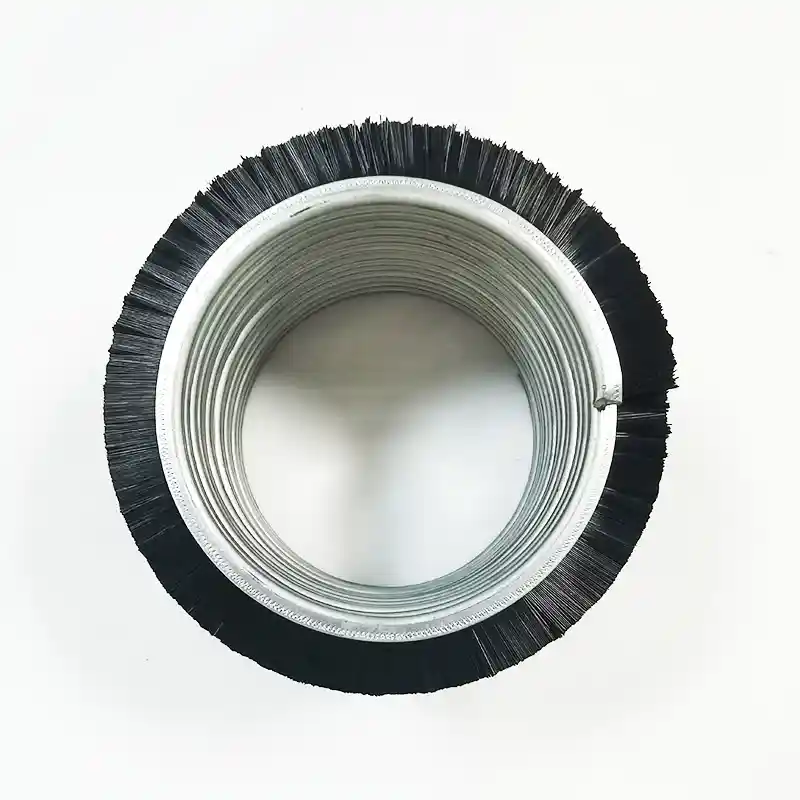

Rope cleaning brushes remove embedded dirt, rust, and salt from wire and synthetic ropes, but the wrong brush configuration eats into rope surfaces instead of protecting them. Having specified spiral brushes for rope maintenance across marine, mining, and construction applications over fifteen years, I have seen more rope damage come from mismatched filament hardness and bristle density than from the contaminants being removed. The practical way to select a rope cleaning brush is to match the filament material and spiral geometry to the rope type and contaminant, rather than treating all rope brushes as interchangeable. When these two variables are right, the brush strips contamination without scarring the rope surface. When they are wrong, the cleaning cycle itself becomes the source of the damage.
What Actually Happens When a Rope Cleaning Brush Contacts the Rope Surface
A rope cleaning brush works by running bristle tips across the rope surface under mechanical or manual pressure, dislodging particulate, rust scale, salt deposits, and dried lubricant from the valleys between strands. The cleaning action is not simply scraping — it is a controlled abrasion that should remove the contaminant layer but stop short of cutting into the rope substrate.
The critical point most generic cleaning guides miss is that bristle stiffness and tip geometry determine where that “stop” line falls on a given rope. A stainless steel wire bristle with a sharp cut end, driven into a soft synthetic rope at high brush rotation speed, will cut into individual fibers before it clears the dirt between them. The same bristle on a hardened steel wire rope may produce perfect cleaning with zero substrate damage. The rope type sets the damage threshold. The brush configuration either respects it or exceeds it.
Three variables control whether the cleaning cycle protects or harms the rope. The first is filament material hardness relative to rope surface hardness. The second is bristle tip condition — cut tips cut, while crimped or flagged tips tend to sweep. The third is bristle density, which controls how many contact points share the applied pressure. Dense bristle packs distribute force and reduce per-tip penetration. Sparse packs concentrate force and increase penetration depth — useful for heavy rust on thick steel cables, dangerous for synthetic braided lines.
Matching Brush Filament Material to Your Rope Type
Filament material selection is the single most consequential decision in specifying a rope cleaning brush, because it sets the hardness ceiling for every bristle in the assembly. Get this wrong and the cleaning cycle becomes an accelerated wear cycle.
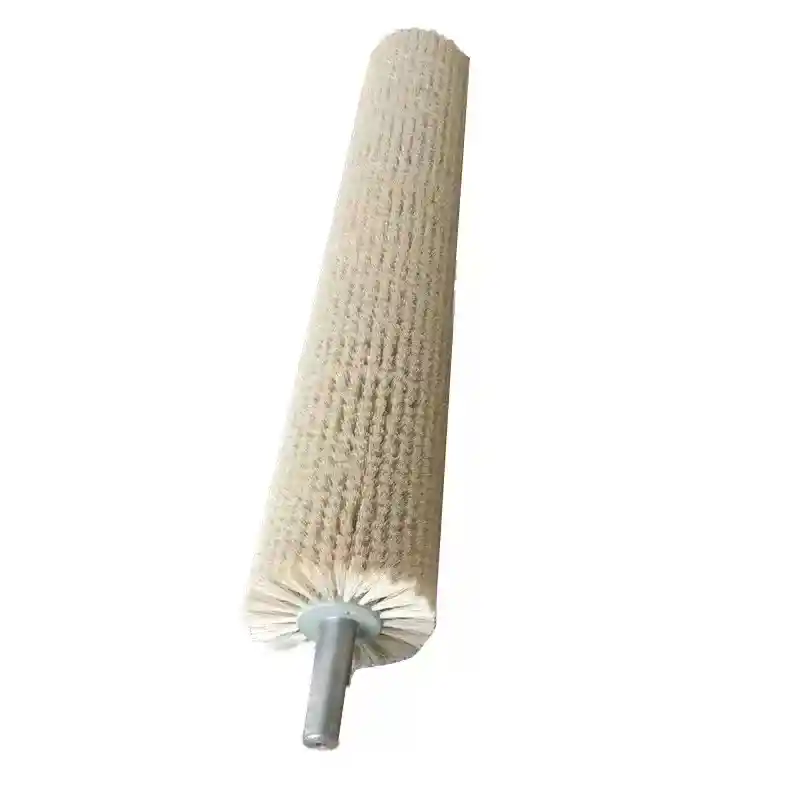
Nylon filaments work best on synthetic ropes — polyester, polypropylene, nylon rope itself, and aramid — because nylon bristles flex and deflect before they can cut into the polymer fibers. Even at high rotation speeds, a properly specified nylon filament brush will dislodge salt crystallization, dried mud, and light oxidation from synthetic rope surfaces without pulling fibers out of the braid. The tradeoff is that nylon cannot dig out heavy rust scale or welded-on contaminant from steel wire rope. It will glaze over the deposit and leave the underlying corrosion intact.
For galvanized and uncoated steel wire ropes, stainless steel wire filaments deliver the cutting force needed to break rust bonds and strip old lubricant residue. The key is using crimped wire rather than straight-cut wire. Crimped bristles present curved, irregular tips that scrape rather than gouge. In our production experience, a crimped stainless steel filament in 0.3 mm diameter, set at medium bristle density in a spiral brush body, removes mill scale and salt deposits from 12–20 mm steel wire rope without producing visible scratch marks on individual wire strands. Straight-cut filaments of the same diameter and material, run at the same speed, leave longitudinal scoring.
For mixed-use operations where the same brush may contact both steel and synthetic components in a rope assembly, brass-coated steel wire or a nylon-steel hybrid filament layout provides a middle ground. Brass wire is softer than stainless and gentler on synthetics, though it wears faster on heavy rust. Hybrid brushes — alternating nylon and crimped steel wire rows — give the operator a single tool that handles moderate contamination across both rope types.
| Filament Material | Best Rope Type | Contaminant Capability | Risk to Rope Surface |
|---|---|---|---|
| Nylon (abrasive-impregnated) | Synthetic (PP, PE, aramid, nylon) | Salt, mud, light oxidation | Very low — bristle flex prevents cutting |
| Crimped stainless steel wire | Steel wire rope (galvanized or uncoated) | Rust scale, salt, old lubricant | Low if density is correct; medium if over-sparse |
| Brass-coated steel wire | Mixed steel/synthetic assemblies | Moderate rust, salt | Low-medium; brass wears before rope substrate |
| Straight-cut steel wire | Heavy steel wire rope only | Heavy rust, weld spatter | High on most ropes; narrow use case |
Spiral Configuration and Bristle Density: The Controls Most People Overlook
The spiral form is the dominant geometry for industrial rope cleaning brushes because it wraps bristles around the rope in a helical path, giving full circumferential coverage without requiring the operator to rotate the brush manually around the rope axis. But not all spirals behave the same way. The pitch — how tightly the bristle rows coil along the brush shaft — and the bristle density within each row together determine how many cleaning contacts the rope surface receives per linear inch of travel.
A tight spiral pitch with high bristle density produces overlapping cleaning paths that leave no untreated gaps. This is the configuration we specify for rope inspection cleaning, where the goal is to expose every strand surface for visual or magnetic particle inspection. The tradeoff is higher friction and more aggressive material removal if the filament type and pressure are not adjusted together. For post-inspection cleaning or light maintenance between shifts, a wider pitch with medium bristle density reduces drag and still clears loose surface contamination.
Bristle length matters more than most buyers expect. Long bristles — 25 mm and above — flex more under load, which reduces the effective tip pressure on the rope surface. That flex is desirable on synthetic ropes and on steel ropes with light contamination. Short bristles — under 15 mm — transmit drive pressure to the tips more directly, which amplifies cleaning force. That direct transmission is needed for heavy rust on thick wire rope, but it is also what scores the surface if the filament material is too hard relative to the rope.
The bristle length to rope diameter ratio is a practical starting point for specification. When bristle length exceeds roughly 60% of the rope diameter, the bristles wrap partially around the rope circumference and clean the strand valleys efficiently without bottoming out the shaft against the rope crown. When bristle length is less than 40% of the rope diameter, tip contact becomes concentrated on the strand peaks and the valleys receive less cleaning action. For a 16 mm steel wire rope, bristle lengths between 10 and 16 mm work, with shorter lengths reserved for heavy rust and longer lengths preferred for routine maintenance passes.
Specifying a Custom Rope Cleaning Brush for Your Operation
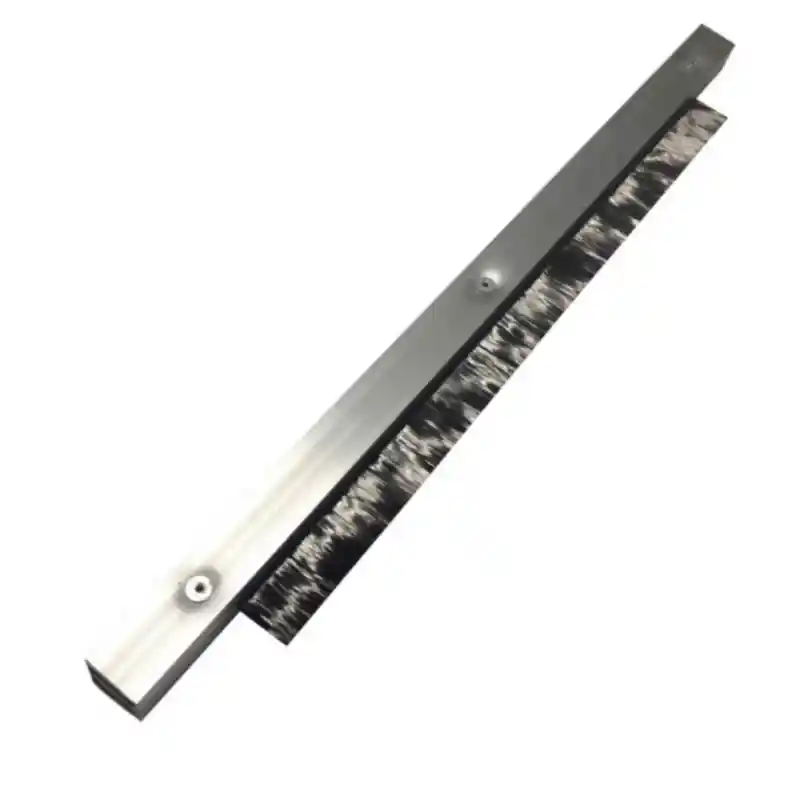
Off-the-shelf rope cleaning brushes fit common diameter ranges and contaminant types, but production environments rarely match the assumptions built into stock products. A custom specification starts with four input measurements: rope diameter, rope construction (stranded, braided, or parallel-lay), contaminant type and thickness, and whether the cleaning station is manual, powered inline, or mounted on a traversing mechanism.
The brush core diameter sets the inner working diameter of the spiral. For a powered cleaning station where the brush rotates around a stationary or slowly fed rope, the core ID should be 3–5 mm larger than the rope OD to allow bristle deflection without jamming. For a manual pull-through brush, a tighter clearance of 1–3 mm works because the operator controls feed speed and can feel resistance building.
Filament selection follows the contaminant. Salt and light oxidation on synthetic rope call for nylon filaments with abrasive grit impregnation — silicon carbide at 120–180 grit is sufficient for marine mooring lines without fiber damage. Heavy rust and scale on steel wire rope call for crimped stainless steel wire at 0.3–0.4 mm diameter, with bristle density set to 60–80% of maximum packing to balance cutting force with bristle self-cleaning. When rust is combined with hardened grease, adding alternating rows of straight wire — 20% of the total bristle count — provides a scraping action that breaks the grease crust before the crimped bristles clear the rust underneath.
If your cleaning program involves multiple rope diameters or mixed rope types in the same facility, a single brush rarely covers all conditions without compromise. In those cases we typically recommend two brushes: a nylon brush for synthetics and light maintenance, and a stainless steel crimped brush for steel ropes with heavy contamination. The cost of adding a second brush holder on the cleaning station is almost always less than the cost of replacing ropes damaged by a one-brush-fits-all approach. Share your rope diameters and contaminant conditions with us at [email protected] or +86 1580 0932 713, and we can confirm the filament and spiral specifications that match your exact operation.
Common Questions About Rope Cleaning Brush Specification
Can one rope cleaning brush handle both steel wire rope and synthetic rope?
A single brush can handle both only when the contaminant is light and non-metallic — surface salt, dried mud, and loose particulate that a medium-density nylon filament brush can clear from both surfaces. But the moment rust scale, welded contaminant, or hardened grease enters the picture, a nylon brush cannot clear it from steel rope, and a steel wire brush will scar synthetic fibers. A nylon-steel hybrid brush splits the difference for moderate mixed contamination, but for separate heavy-duty steel rope maintenance, a dedicated stainless steel crimped spiral brush is the safer route. If your facility runs both rope types under different contamination conditions, it is worth confirming the filament layout before committing to a single brush specification.
How do I know if my brush is damaging the rope instead of cleaning it?
Look for longitudinal scratches running parallel to the rope axis — those are bristle marks from filaments that are too hard or from straight-cut tips at excessive pressure. On synthetic ropes, pulled or fuzzy fibers appearing after cleaning cycles indicate bristle tips are catching and tearing individual filaments. On steel ropes, a shiny, polished appearance after repeated cleaning passes often means the brush is removing base metal, not just contaminants. We check bristle condition after every shift in production environments: worn, flattened bristle tips lose their scraping edge but gain surface contact area, which changes the cleaning action from cutting to burnishing. If the brush is burnishing rather than cleaning, the bristles need replacement.
What bristle material lasts longest in continuous rope cleaning operations?
Crimped stainless steel wire outlasts nylon by a factor of three to five in steel rope applications with moderate to heavy contamination, simply because steel does not abrade away as fast as polymer filaments scraping against a metal substrate. But filament longevity should not drive the material decision. A nylon brush that wears out faster but never damages a synthetic rope is more cost-effective than a steel brush that lasts three times longer while degrading the rope surface with every pass. The right metric is cost per rope cleaned without damage, not cost per brush. Share your rope specifications and cleaning frequency and we can calculate the expected filament life and per-cycle cost for each material option at [email protected].
If you’re interested, check out these related articles:
brass brushes work perfectly for pipe cleaning
where stainless wire spiral brush can be used
brushes for steel wire industries cleaning descaling derusting polishing