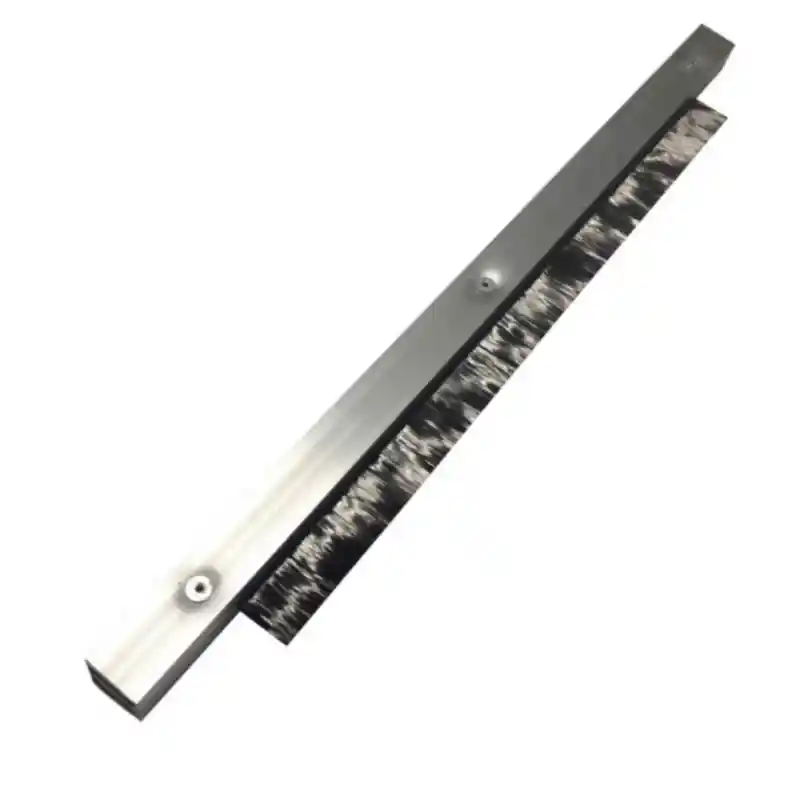

An industrial strip brush is one of the most versatile tools for sealing, cleaning, and shielding applications in manufacturing and processing equipment. But specifying the right brush is not as simple as picking a part number from a catalog. The filament material, density, holder profile, and installation method all determine whether the brush lasts months or fails in weeks. I have worked with strip brushes for over fifteen years at Huixi Brush, and the most common problem I see is not a manufacturing defect. It is a mismatch between the brush and the application. This article covers the engineering decisions that matter for reliable performance.
How Industrial Strip Brushes Seal, Clean, and Shield Equipment
A strip brush uses densely packed filaments held in a metal or plastic channel to create a flexible contact surface. For sealing, the brush fills irregular gaps between moving and stationary parts. The bristles flex under pressure and spring back, blocking dust, fluids, or air while allowing the surface to move without binding. This is common in door seals, machine enclosures, and conveyor side seals.
For cleaning, the same strip design can remove debris from a moving product or conveyor belt. The filament tips scrape or wipe the surface, dislodging particles without damaging the material underneath. For shielding, a strip brush placed along the edge of a moving part prevents operators from reaching into dangerous areas, while still allowing air or light to pass.
The difference between a strip brush and a static brush seal often comes down to mounting orientation and filament density. A brush seal is typically mounted perpendicular to a surface to form a barrier, while a strip brush used for cleaning or shielding may be angled for optimal contact. In practice, many strip brushes serve as both a seal and a cleaning element simultaneously.
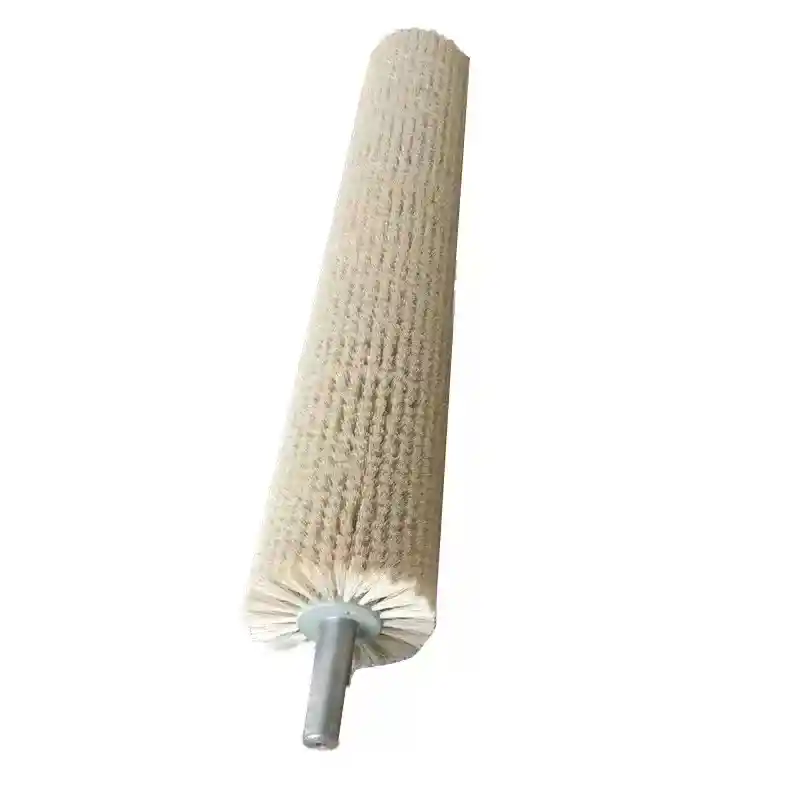
Key Filament Materials and Selection Criteria
The filament is the single most important decision in a strip brush specification. Getting it wrong leads to rapid wear, surface damage, or functional failure. Below are the most common materials and their typical uses.
| Filament Material | Best For | Temperature Limit | Chemical Resistance | Wear Resistance |
|---|---|---|---|---|
| Nylon 6/6 | General sealing and light cleaning | 80°C continuous | Good against oils, weak against acids | Moderate |
| Polypropylene | Chemical washdown, wet environments | 60°C | Excellent against acids and alkalis | Lower |
| Horsehair | Fine dust sealing, gentle contact | Not for high heat | Limited | Low |
| Stainless Steel Wire | Heavy cleaning, abrasive conditions | Up to 300°C | Very good | High |
| Abrasive Nylon | Deburring, surface finishing | 80°C | Good | High (with grit) |
I have seen cases where a nylon strip brush failed in weeks because it was used near a drying oven that ran at 90°C. The filament softened and took a permanent set, losing contact with the sealing surface. Switching to a stainless steel wire brush solved the problem. If your application operates at the upper end of a filament’s temperature rating, confirm with your brush supplier that the material can handle continuous exposure, not just intermittent.
For cleaning applications where aggression is needed, abrasive nylon loaded with silicon carbide or aluminum oxide performs well. For static dissipation or ATEX environments, a stainless steel wire brush with a conductive holder is often required. When in doubt, share your operating environment details with a brush engineer before locking in the filament.
Strip Brush Profile, Holder Design, and Installation Factors
The holder profile and mounting method directly affect how the brush performs over time. The most common holder shapes are U-channel and T-slot, both typically made from aluminum, galvanized steel, or stainless steel. A U-channel offers simple insertion and replacement of the brush strip, while a T-slot provides more secure retention for high-vibration applications.
Bristle length and overall brush height must be matched to the required deflection. A brush that is too short will not maintain contact when the gap widens. Too long, and the filaments may buckle or fold over, losing effectiveness. For sealing, I generally recommend a bristle deflection of 25 to 30 percent of the free bristle length. For cleaning, a higher deflection of 40 percent gives more aggressive wiping action but also increases wear.
Installation mistakes can undermine a well-specified brush. The brush must be mounted straight and parallel to the mating surface. Any twist in the holder will cause uneven wear and gaps in the seal. For curved surfaces, a flexible strip brush with a segmented holder works best. We have supplied many such brushes for circular machine guards and rotary tables. If the radius is tight, the strip brush holder may need to be pre-bent at the factory to avoid filament splay.
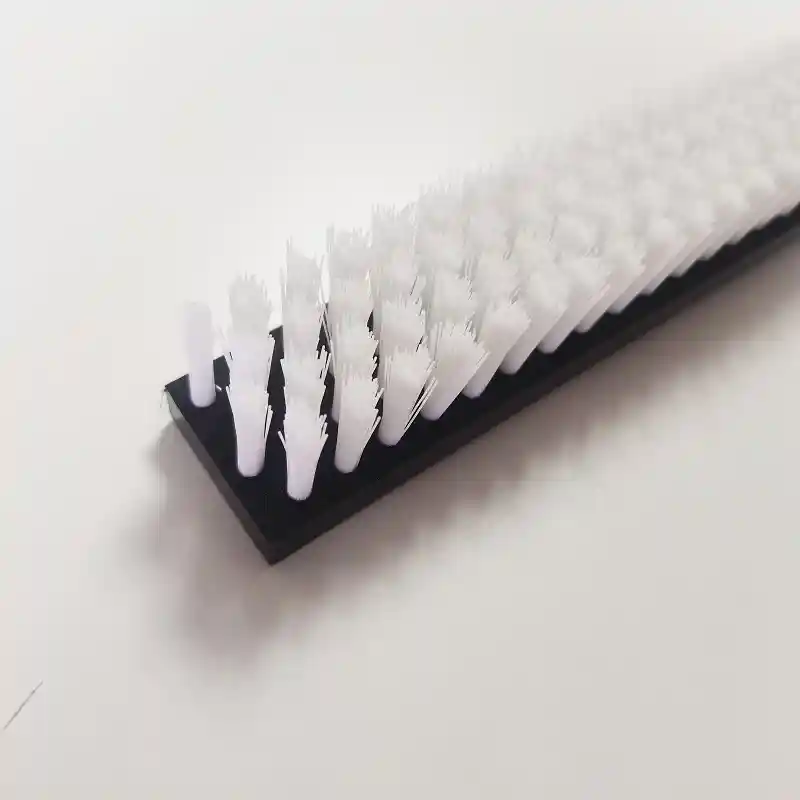
Midway through a strip brush specification, one often overlooked factor is the end treatment. Open bristle ends can snag on passing parts or collect debris. A simple end cap or folded-back strip prevents this. I always recommend end caps for sealing strips in clean environments.
Custom Strip Brush Engineering for Demanding Applications
Off-the-shelf strip brushes cover many applications, but I estimate that roughly one in four projects requires some level of customization. This could be a non-standard filament blend, a specific holder length, a different base material, or a unique bristle pattern.
For example, a customer in the food processing industry needed a strip brush for a washdown conveyor that had to resist aggressive cleaning chemicals and meet FDA requirements. Standard polypropylene worked for the chemicals, but the holder needed to be 316 stainless steel instead of aluminum. We also increased the filament density to 150 percent of the standard specification to prevent water ingress. That combination of material, density, and holder came from discussions with the customer’s engineering team and testing a few prototypes.
When standard profiles do not fit, the next step is a custom strip brush. At Huixi Brush, we handle these requests by starting with the specific function: sealing, cleaning, shielding, or a combination. Then we work through the filament, holder, dimensions, and mounting method. Low minimum order quantities and free samples help customers validate the design before placing a production order. If you have an unusual gap shape or a challenging operating environment, involve your brush supplier early. The earlier you consult, the fewer iterations you will need.
When to Involve a Brush Engineer
Industrial strip brushes look simple, but the specification process is where performance gets built or lost. A filament that works on paper may behave differently under real machine speeds, vibration, and contamination. We regularly help customers who have already tried a catalog brush and found it wears too fast or does not seal properly.
Share your part number or drawing along with operating conditions such as speed, temperature, chemical exposure, and required service life. We will confirm the best strip brush configuration or propose a custom design. Reach Liu Jian and the Huixi Brush team at [email protected] or call +86 1580 0932 713.
Common Questions When Specifying Industrial Strip Brushes
How long does an industrial strip brush typically last?
Service life depends on filament material, speed, contact pressure, and contamination. In a clean sealing application with nylon filament and minimal abrasion, a strip brush can last two to three years. In a heavy cleaning application with stainless steel wire running at high speed, it might need replacement every six months. Monitoring bristle wear and replacing before complete failure helps avoid damage to the mating surface.
Can I use one strip brush for both sealing and cleaning?
Yes, many strip brushes serve dual purposes. The key is selecting a filament that can handle both tasks. For example, a nylon brush can seal a door edge and wipe light debris, but if heavy cleaning is required, a wire brush is better. The holder and mounting must also allow the brush to flex enough for sealing while maintaining enough rigidity for cleaning contact.
What is the most common mistake when installing a strip brush?
Mounting the brush twisted or with inconsistent contact pressure across its length. Even a slight misalignment creates gaps in the seal or uneven cleaning. Using a straightedge and checking deflection at multiple points during installation resolves this. For long strips, center support brackets prevent sagging.
Do you offer free samples for custom strip brushes?
Yes. We provide free samples of custom strip brush designs so you can test fit, filament performance, and holder compatibility before production. Share your requirements and we will confirm the sample lead time. Reach us at [email protected] with your application details.
If you’re interested, check out these related articles:
abrasive wheel brush a magical tool for industrial surface treatment
abrasive disc brush an efficient tool for many applications
rope cleaning brush for industrial use a key tool for maintaining safe production
honing brush treat burrs in barrel parts without affecting accuracy and scale
brushes for steel wire industries cleaning descaling derusting polishing