Scent marketing mistakes usually appear after the diffuser is installed, not before. A lobby can smell right at setup and become cloying by noon. A retail floor can run the same intensity from opening to close while heat, humidity, and HVAC cycles change how fragrance travels. I have spent ten years designing scent programs for hotels, offices, and retail spaces. The failures I see most often are not creative failures. They are technical decisions made too early and left without correction. Fix those decisions first and the fragrance has room to do its job.
Scent Intensity Chosen from Personal Preference Instead of Space Conditions
Brand teams often choose a fragrance because it matches the brand story, then set intensity by how the scent feels in a meeting room. That method ignores the largest variable: the space itself. A 300m³ commercial diffuser can cover a boutique floor, but the same oil concentration will behave differently in a high-ceiling lobby with glass walls and afternoon sun.
I have seen a hotel scent approved at low intensity in an empty ballroom, only to vanish when 200 guests entered and forced air movement pushed the fragrance toward the ceiling. The correction is to start with room volume, ceiling height, and occupancy, then adjust the fragrance output to the space. If the scent is right for the brand but wrong for the room, the room usually wins.
Scent Zoning That Ignores Ceiling Height, Airflow, and Occupancy
One fragrance does not mean one uniform intensity. A hotel lobby, corridor, and elevator lobby have different ceilings, different dwell times, and different emotional work to do. We plan scent zones the way lighting designers plan light zones. In a lobby, we want a gentle first impression that holds across a broad area. In a corridor, we can run a slightly lower output because guests pass through rather than linger. In a fitting room, the scent can be more present because expectation and privacy are higher.
How should a hotel lobby zone differ from a corridor?
In a lobby, we usually set a lower, stable output with wider diffusion because guests enter from outside and need to settle into the space. In a corridor, we lower the output further or use passive diffusion because the ceiling is lower and the air volume is smaller. The goal is not to make every zone equally fragrant. It is to make every zone feel intentional without forcing fragrance into places where people only pass through.
Why does occupancy change the scenting plan?
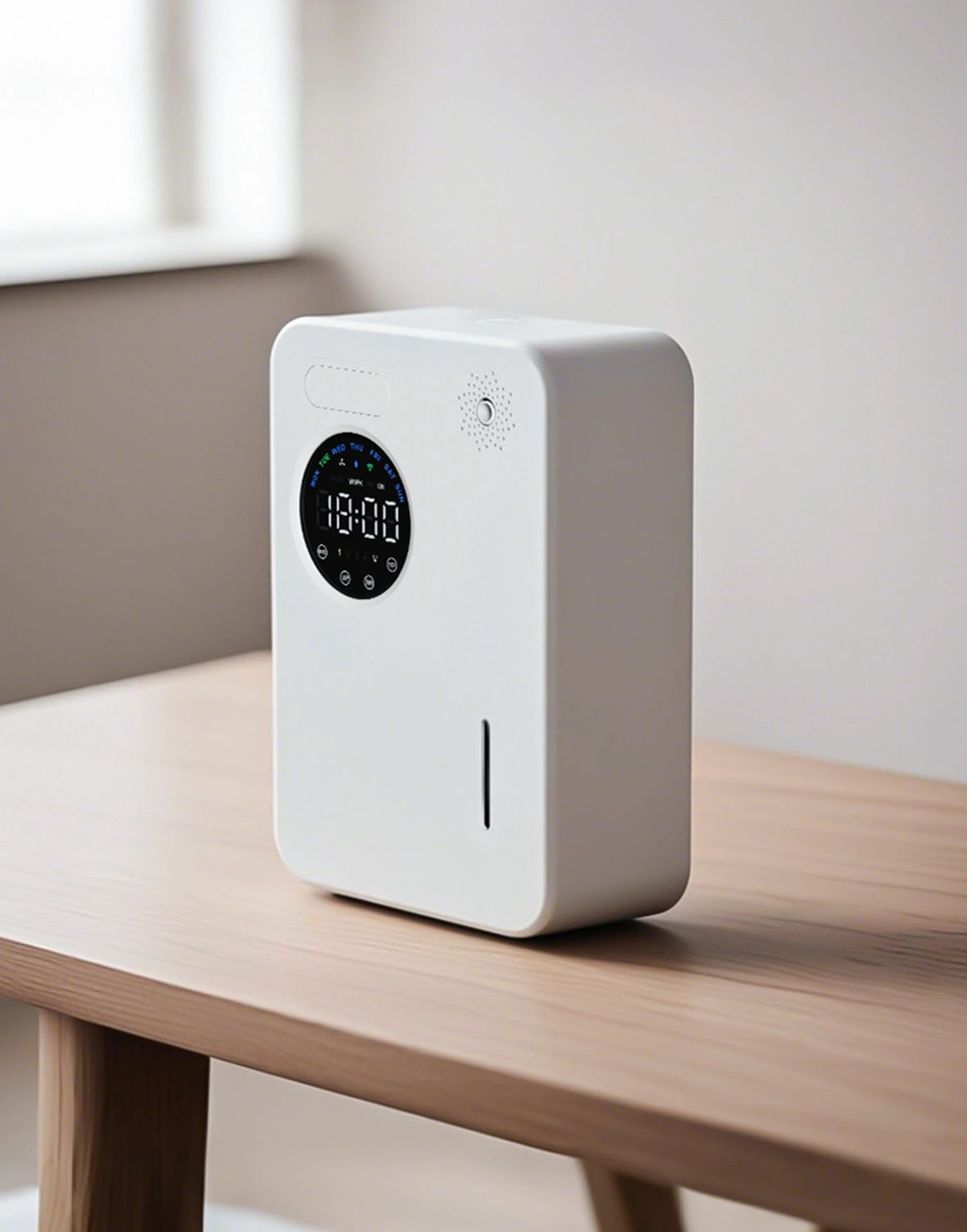
Occupancy changes both air movement and body heat. A retail store that smells balanced at 10am may feel thick at 3pm when more people are on the floor and the HVAC system is working harder. We usually schedule intensity around traffic peaks instead of running one flat setting all day. Bluetooth app controlled diffusers let teams change those schedules without staff touching the machine, which matters when the front desk is busy.
Diffuser Selection Made Before Coverage and HVAC Mapping
The wrong diffuser choice usually comes from choosing equipment first and measuring afterwards. A standalone commercial diffuser is not an HVAC system, and an HVAC system is not a ceiling unit. The difference is not only power; it is how fragrance is carried through the space. Standalone units rely on a fan and natural air movement. HVAC scent systems use the building’s air handling to distribute fragrance across much larger areas.
What is the difference between a standalone diffuser and an HVAC scent system?
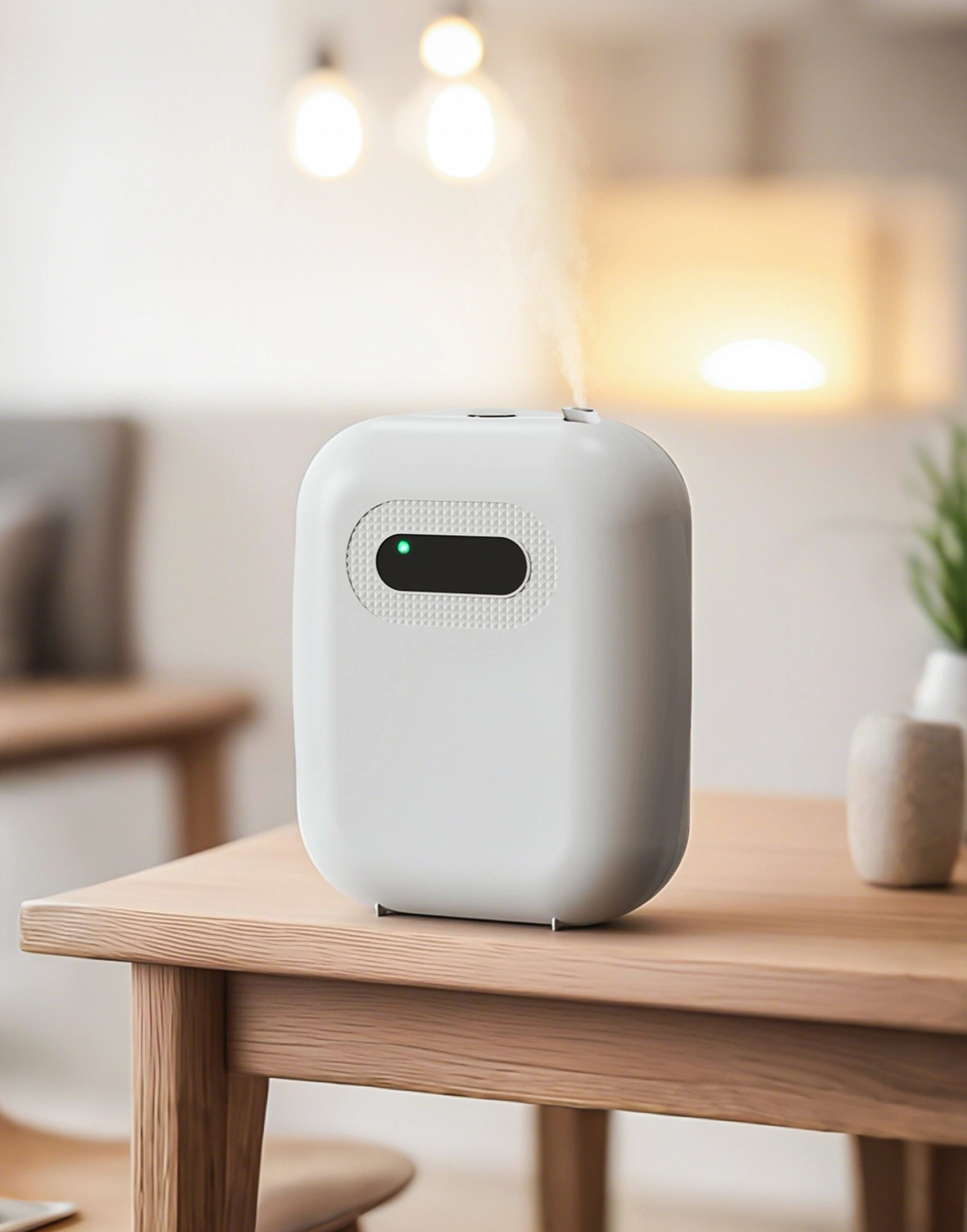
A standalone unit works well in a single room or defined zone with stable airflow. A Bluetooth app controlled commercial diffuser with 300m³ coverage fits a boutique or a private office. An HVAC scent system that connects to the air handler can cover 3,000m³ to 8,000m³ and distribute the fragrance through existing ducts. The decision depends on the floor area, ceiling height, and whether the HVAC system runs consistently during business hours.
How do you confirm coverage before ordering?
We ask for floor plans and ceiling height first. Then we match the diffuser to the worst-case air movement, not the best-case empty room. A 1,000 square foot retail floor may need only one 300m³ unit. A hotel lobby with double-height ceilings may need a 3,000m³ tower or an HVAC-configured system. If the space has multiple independent duct zones, a dual system HVAC diffuser can serve two zones with separate pumps and atomizers. The point is to let the building decide the equipment, not the other way around.
If your program involves a mixed space with different ceiling heights or an existing HVAC system, it is worth confirming coverage and fragrance consumption before finalizing your equipment list. Share your floor plan with [email protected] and we will confirm the diffuser match.
| Diffuser Type | Coverage | Best Use |
|---|---|---|
| Commercial Scent Oil Diffuser (Bluetooth APP) | 300 m³ | Boutique retail floor, private office |
| Hotel Scent Oil Diffuser Tower | 3,000 m³ | Hotel lobby, open lounge |
| Commercial HVAC Scent Diffuser | 8,000 m³ | Large hotel or retail HVAC integration |
| Dual-System HVAC Scent Diffuser | 5,000–15,000 m³ | Multi-zone buildings, large facilities |
Scent Maintenance Left Out of the Initial Program Plan
The first failure we usually hear about is silence: the diffuser is running but nobody can smell anything. The most common reason is not a broken machine. The oil bottle is empty or the atomizer needs cleaning. In a busy hotel, that can happen within the first month if no one is assigned to the program. A well designed scent system still needs a refill schedule, a cleaning routine, and a named owner on site. We build maintenance into the plan at the start because fragrance consistency is not a product feature; it is an operating habit.
How often should commercial fragrance oil be replaced?
It depends on the bottle size, the intensity setting, and the duty cycle. A 150ml bottle in a moderate-use retail diffuser may need replacement every few weeks. A 500ml or 1L aluminum bottle in a hotel tower will run longer, but the rate changes with the program schedule. We record the estimated consumption at setup and put a refill reminder in the app or the local team’s calendar. If the scent drops off earlier than expected, we check the atomizer and the fan before increasing the dose.
Correcting Scent Marketing Mistakes Before They Compound
Most failed scent programs are not saved by a better fragrance. They are saved by a better space plan, a better equipment match, and a maintenance rhythm that keeps the scent working after the first week. If your current program feels inconsistent or staff have stopped noticing the fragrance, the problem is usually in the operating plan, not in the oil. Send your floor plan, ceiling height, and occupancy pattern to [email protected]. We will confirm the right diffuser type and fragrance consumption before you order anything else. You can also reach us at +86 185 6557 5758 or +86 134 2048 5758.
Questions Brands Ask After a Scent Program Fails
Should we match the fragrance to the brand or to the space?
Match the fragrance to the brand first, then adjust the technical delivery to the space. Brand fit determines the fragrance family and the story you want guests to remember. Space fit determines intensity, zoning, and equipment. A warm woody scent may fit a luxury retail brand perfectly, but it will feel heavy in a small fitting room if the output is not reduced. We usually keep the fragrance identity and change the delivery plan by zone.
Is there a way to tell when scent intensity is too high?
Many operators assume that if they can smell the fragrance clearly, the customer can too. That is usually the beginning of an intensity problem. A scent is too high when staff stop noticing it, when guests mention it without being asked, or when the same note lingers in fabric and hair after the visit. The right level is usually the one you stop perceiving after three minutes. If you notice the scent throughout the entire visit, it is doing too much work.
Can one diffuser cover an entire restaurant or retail floor?
If the space is a single open rectangle under 300m³ with stable airflow, one commercial diffuser can work. If the space has partitions, low ceilings near the kitchen, or multiple seating zones, one unit will usually create hot spots and dead zones. Restaurants are difficult because cooking ventilation pulls air toward the kitchen. We often use separate zones for the entrance, the dining room, and the bar rather than forcing one diffuser to cover the whole floor.
When should we replace fragrance oil in a commercial diffuser?
In programs we have run, the first refill cycle is almost always shorter than the brochure estimate because teams are still adjusting intensity and learning the space. After that, consumption stabilizes. We encourage a visual check every two weeks and a planned refill every four to six weeks for most 150ml and 500ml setups. Larger HVAC bottles may run longer, but the schedule should match the duty cycle. If your program has high traffic or long operating hours, send your current settings and bottle size to [email protected] and we will confirm a realistic refill schedule before you reorder.
If you’re interested, check out these related articles: