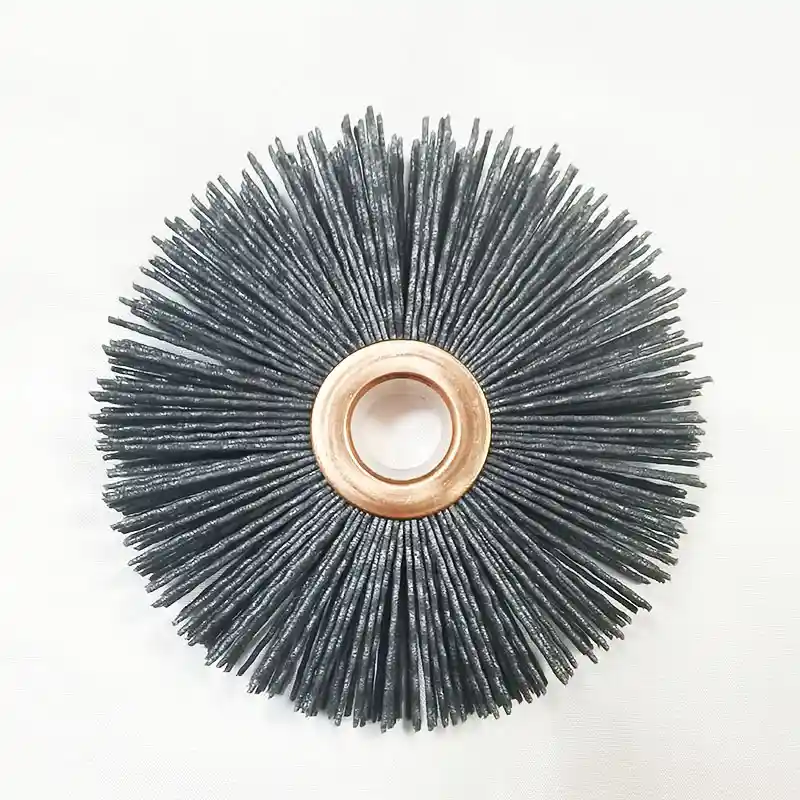

A brushed finish should remove contamination, not create a new surface defect. A nylon wheel brush does that when the filament grade, abrasive type, and operating parameters match the workpiece, but the same tool can haze polished metal if it runs too hard. I have spent fifteen years specifying these brushes for aluminum extrusions, coated parts, and soft alloys, and the most common failure I see is not the brush itself but a wrong filament selection. The decision rests on three points: filament diameter, abrasive grit, and contact pressure. This article lays out how to control all three.
Nylon Wheel Brush Filament Grades Set the Cleaning Limit
A nylon wheel brush works by letting fine filaments flex into surface contours. The filament material, not the wheel body, decides whether the brush cleans or cuts. Plain nylon removes loose residue and light oxidation. Abrasive nylon carries grit inside each filament, usually silicon carbide, aluminum oxide, or ceramic, and behaves like a controlled abrasive block. The key variable is filament diameter. Thinner filaments, generally under 0.5 mm, wrap around edges and leave a softer finish. Thicker filaments, above 0.8 mm, hold a deeper corner and remove more material, but they also concentrate force in a smaller contact area. That concentration is where scratching starts.
I have seen polished aluminum haze in less than two passes when a standard 0.6 mm nylon filament ran against a thin anodized layer. The brush was not defective. The filament stiffness was wrong for the coating. Once we changed to a finer filament with a lighter trim, the same machine held the required finish. That single correction changed the result because the contact area spread across more filaments.
Most nylon wheel brushes share filament chemistry with cylindrical nylon brushes used in inline machines. <advantage of hx cylindrical nylon brushes> covers how nylon filament length and trim affect cut rate and service life in similar surface treatment work.
Abrasive Grit and Surface Finish Requirements Must Match the Workpiece
Grit sizing works differently on nylon than on solid abrasives. A 120 grit nylon wheel does not cut like a 120 grit grinding wheel. The filament absorbs some of the pressure, so the surface result is usually finer and cooler. Start with a grit one or two levels finer than the final finish requirement if you are unsure. A 180 grit wheel can remove a light oxidation layer while leaving a satin finish, but a 320 grit or 500 grit wheel is safer for decorative surfaces that must keep smoothness. The table below gives a starting point for common workpiece materials.
| Wheel type | Abrasive | Typical result | Best match |
|---|---|---|---|
| Fine nylon | Silicon carbide 220 to 320 | Satin finish with low metal removal | Aluminum, brass, thin coatings |
| Medium nylon | Aluminum oxide 120 to 180 | Light deburring and oxide removal | Stainless steel, mild steel |
| Non-abrasive nylon | None | Loose residue removal only | Polished or clear-coated parts |
| Fine ceramic | Ceramic 320 to 500 | Fine edge blending | Hard alloys, coated metals |
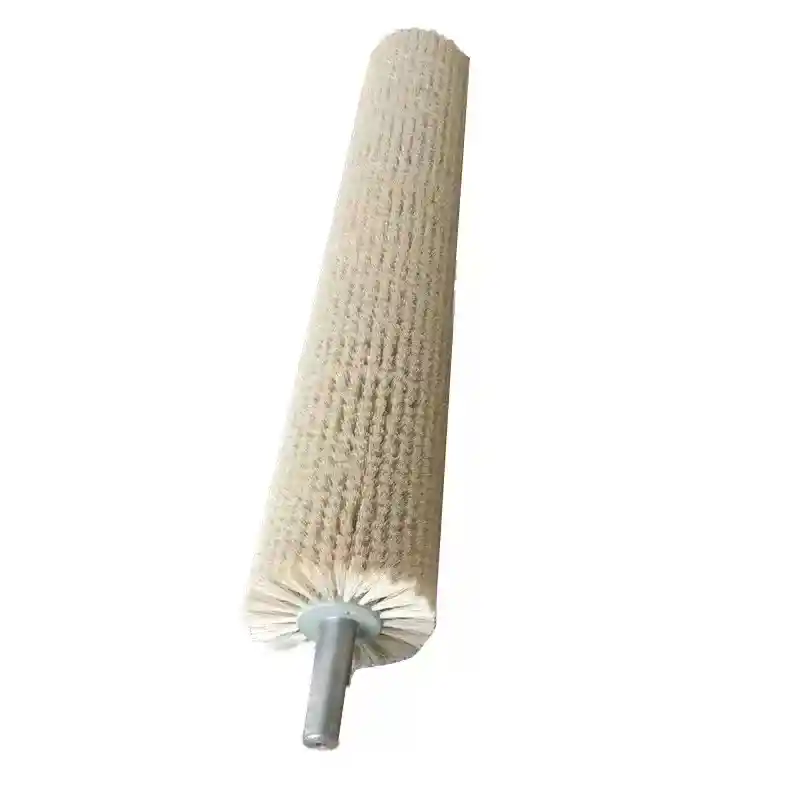
Grit selection affects not just appearance but also edge condition. <main features and applications of hx nylon cylindrical brush> covers why fine nylon abrasive tools break edges without changing part geometry, the same principle behind a correct wheel brush grit rating.
Nylon Wheel Brush Speed and Pressure Control Scratch Risk
Speed and pressure decide whether any wheel brush behaves as a cleaner or a cutting tool. In test runs I usually start below 1,200 surface feet per minute for fine finishing and move up only after the finish shows no haze. For a 6 inch wheel, that is roughly 700 to 800 rpm, but the important number is surface speed, not spindle speed. A narrow wheel on a high speed spindle can reach a damaging surface speed quickly.
Pressure is worse than speed for fine surfaces. A stiff brush loaded against the part can fold filaments and drive the filament tips sideways into the surface. That is the mechanism behind most fine scratches. Keep contact light enough that the filament tips do the work. If the brush stalls or the spindle speed drops, the operator is pressing too hard.
Start Low and Read the Finish
Run a scrap part at low speed and low pressure first. Look at the surface under the same magnification the inspector will use. If the surface shows parallel bright lines, reduce pressure or switch to a finer grit before changing anything else.
Wet Operation Changes the Result
Wet nylon brushing cools the surface and flushes residue, which reduces the chance that loose particles become scratch points. For aluminum and coated parts, water or a light water soluble coolant often produces a cleaner finish than dry operation, but it also requires a stainless or sealed wheel construction.
If your program involves anodized aluminum, chrome plated components, or polished plastic, confirm the filament type and maximum recommended speed before finalizing the specification. Send your part material and current finish problem to [email protected] and we can recommend a test wheel before a full order.
Common Applications Where Nylon Wheel Brushes Protect Delicate Surfaces
A nylon wheel brush earns its place where a wire wheel or coated abrasive is too aggressive. Aluminum extrusions, automotive trim, brass fittings, plated parts, powder coated surfaces, and printed circuit board edges are typical candidates. The brush removes light oxide, light burrs, and surface residue while keeping the base geometry intact. It is not the tool for heavy weld scale or deep rust, and using it that way shortens brush life and pushes the filament into the wrong cutting mode. That is why a plant using a nylon wheel for final blending still uses a wire wheel or abrasive disc upstream when mill scale is present.
If the surface has rust or mill scale before finishing, removing that layer with a wire product often makes the nylon step faster and more consistent. <the differences between [knotted wire wheel brush](https://www.huixibrush.com/knotted-wire-wheel-brush/) and crimped wire wheel brush> covers how knotted and crimped wire wheels differ in cut rate and finish, which determines the starting surface before nylon finishing.
Nylon Wheel Brush Specification Checks Before Ordering
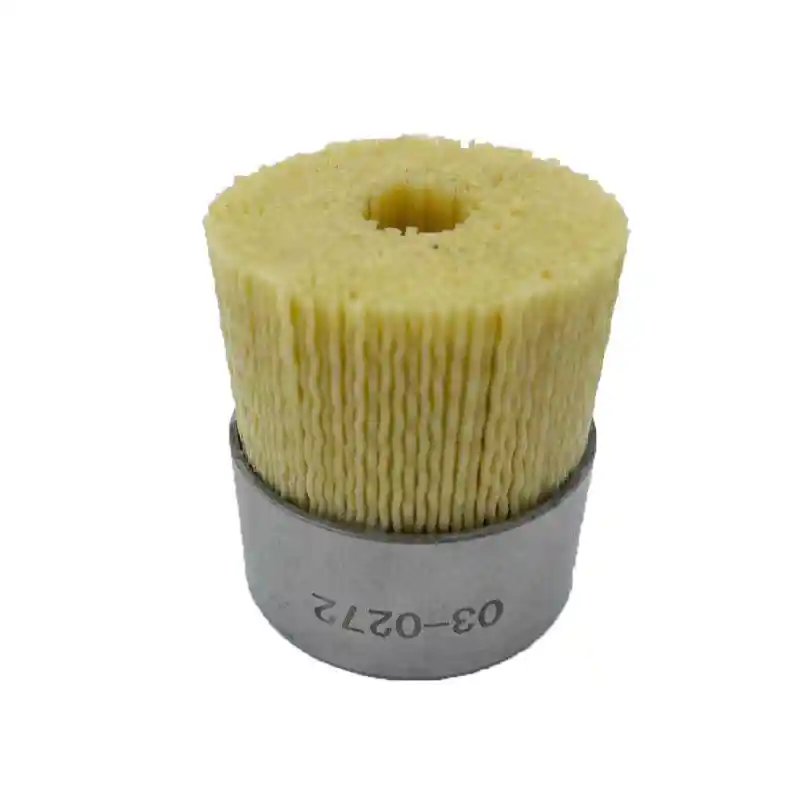
Specifying a nylon wheel brush correctly is faster than correcting a finishing problem after the line is running. The five checks below keep the inquiry focused.
- Confirm the workpiece material, coating type, and required final roughness.
- State the wheel diameter, face width, arbor hole, and maximum spindle speed.
- Select the filament type, diameter, trim length, and grit rating if abrasive nylon is required.
- Confirm the acceptable color change or surface hazing limit on a sample part.
- Ask for a test wheel and run the same speed and pressure as production.
A wrong spec usually appears as edge rounding, haze, or short brush life, not as a complete failure. When we see those problems at Huixi Brush, we check the filament density and grit before changing the machine settings. Most finishing problems trace back to the brush specification, and fixing that before order saves rework.
If your current wheel brush is leaving fine lines on a delicate surface, send your part drawing, filament grade, and target finish to [email protected] or call +86 1580 0932 713. Share the part material and the current problem, and we will confirm the wheel construction and grit before you commit to a production quantity.
Common Questions About Nylon Wheel Brushes
Can a nylon wheel brush scratch polished metal?
The answer is yes if the filament is too stiff or the pressure is too high. A nylon wheel brush is gentle compared with a wire wheel, but it is not scratch proof. On polished aluminum or clear-coated surfaces, the brush works when the filament diameter is fine, the grit is fine or non-abrasive, and contact pressure is light. Scratches usually show up as thin parallel lines, which means the filament tips are folding sideways under load. Reduce pressure or select a finer filament first, then recheck the surface under inspection lighting.
How is an abrasive nylon wheel different from a plain nylon wheel?
Many buyers assume abrasive nylon and plain nylon remove material the same way, but the cutting action is different. Abrasive nylon carries silicon carbide, aluminum oxide, or ceramic grit inside each filament, so the brush continues to cut as the filament wears. Plain nylon removes loose residue and light oxidation without controlled abrasive action. That difference matters on coated or polished work. An abrasive wheel can produce a satin finish and light edge blending, while a plain nylon wheel suits wet cleaning or surfaces that must keep their existing finish. If the part has a roughness requirement, abrasive nylon is the usual starting point.
Should I run a nylon wheel brush dry or wet?
It depends on the workpiece and whether the process can accept liquid. In most cases, wet operation produces a cooler and cleaner finish because water or a light coolant flushes away removed material and keeps loose particles from scratching the surface. Dry operation works when the part must remain dry or when the brush runs on a portable tool. Coated and polished parts usually respond better wet, while some powdered metal or electrical parts may require dry finishing. If the process permits liquid contact, wet is the safer first trial for delicate surfaces.
What should I check before ordering a nylon wheel brush?
In specification work I handle, the orders that move fastest are those that include five data points: part material, current defect, required surface finish, wheel dimensions, and maximum spindle speed. Filament type, filament diameter, and grit rating come next. Missing any of these makes the quote less accurate. When a buyer sends a sample part or photo, the specification moves faster because we can see the coating, edge condition, and likely wear pattern before recommending a wheel. Send your part drawing and finish requirement to [email protected] and we will confirm the correct nylon wheel brush configuration for your production line.
If you’re interested, check out these related articles:
main features and applications of hx nylon cylindrical brush
wire wheel brush the right assistant for industrial cleaning and polishing
abrasive wheel brush a magical tool for industrial surface treatment
advantage of hx cylindrical nylon brushes
abrasive disc brush an efficient tool for many applications