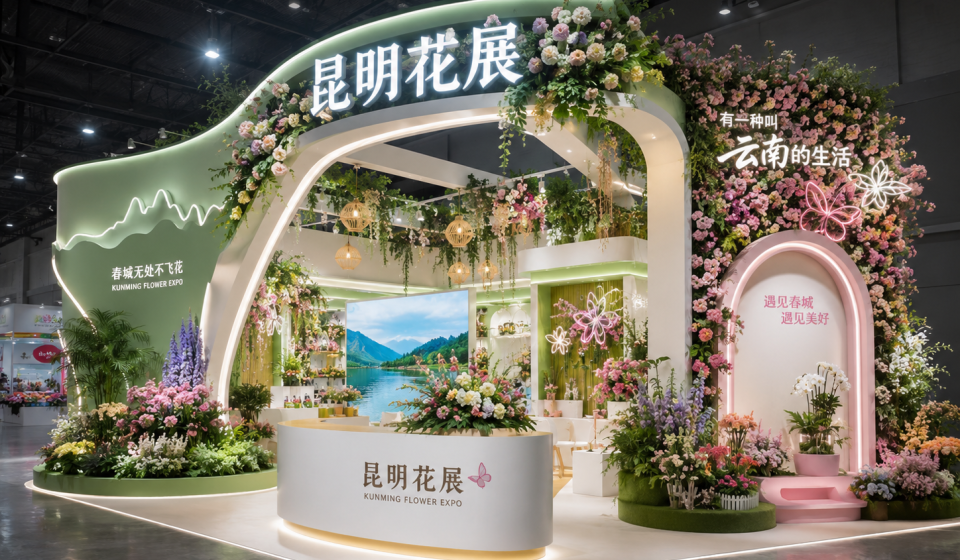

For professional flower growers and distributors, sourcing horticulture equipment that genuinely performs under commercial conditions is not a matter of ticking boxes on a spec sheet. It means finding suppliers who understand how a greenhouse structure interacts with Yunnan’s intense sunlight, or how a precooling unit must be tuned to prevent thermal shock in freshly cut roses. The most direct way to confirm that knowledge is to visit IFEX Kunming, where China’s largest concentration of greenhouse manufacturers, irrigation specialists, and cold chain providers gather within walking distance of each other. I have guided international buyers through this exhibition for over a decade, and the quality of an equipment sourcing decision almost always traces back to whether the buyer saw the equipment in person and asked the right questions of the supplier’s technical team.
Why IFEX Consolidates Serious Horticulture Equipment Suppliers
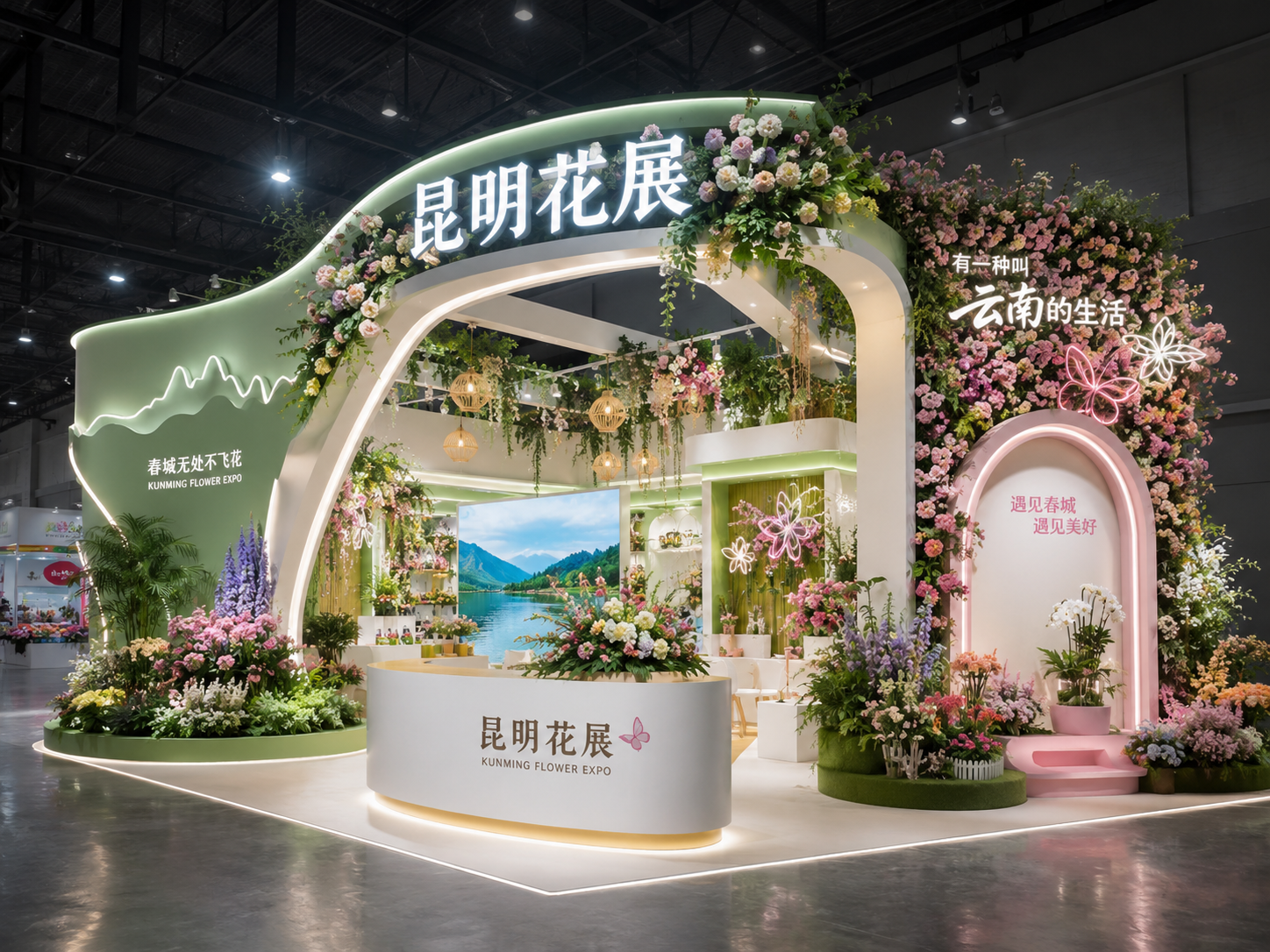
Yunnan province is China’s largest cut flower production base, and the Kunming area alone houses over 200,000 hectares of flower cultivation. When a region reaches that scale, its supporting equipment industry grows in direct proportion. A greenhouse manufacturer based near Dounan has built structures for the exact climate conditions a European buyer will face if sourcing from Yunnan. An irrigation company in Yuxi has spent years optimizing drip systems for the local soil and water quality. At IFEX, these suppliers are not exhibiting general-purpose products; they are showing equipment refined through continuous feedback from neighboring farms. That means a buyer can bypass the generic catalogs and speak directly with engineers who can discuss, for instance, the difference between a single-span greenhouse optimized for rose production and a multi-span version better suited for carnations.
If your operation involves specific growing protocols or postharvest handling requirements, confirming how a supplier’s standard systems adapt to your methods is easier during face-to-face technical discussions at the expo than through email exchanges. Send your equipment specifications to [email protected], and the IFEX matchmaking team can pre-schedule meetings with relevant technical staff before you arrive.
Greenhouse Structures: What Matters Beyond the Frame
When evaluating greenhouse suppliers at the expo, I encourage buyers to look beyond the steel gauge and cover material specs that every catalog lists. In my experience, the difference between a greenhouse that maintains consistent internal conditions and one that creates microclimatic shocks for the plants often lies in the ventilation design. For example, a Yunnan rose grower I spoke with last season reported that switching from roll-up side vents to a roof-only ventilation system with horizontal airflow fans reduced temperature gradients across the bed by over 3°C during summer afternoons. The supplier of that system had developed the solution specifically because they had a service team living in the same valley.
Similarly, insect netting selection is not a simple mesh count decision. A greenhouse near a rice paddy will need a different aperture than one on a dry slope. At IFEX, you can ask a supplier to show you the netting under magnification and compare it with pest prevalence data from your own location. These nuanced discussions rarely happen through a quote request form.
Irrigation Systems: Matching Water Delivery to Root Zone Reality
Irrigation is the element where oversimplification causes the most rework. Flower varieties do not just differ in daily water volume; they differ in the precise soil moisture tension at which they stop transpiring efficiently. A carnation crop in a well-drained volcanic soil needs a completely different irrigation schedule and emitter layout from a lily crop in heavier clay. At IFEX, I have observed buyers discover this quickly when a supplier’s agronomist pulls out a soil moisture release curve chart and asks, “What is the wilting point of your substrate?”
Key technical points to verify with irrigation suppliers include the emitter flow rate consistency across a lateral line (coefficient of variation should typically be under 5% for uniform flowering), the filtration capacity relative to your water source’s silt load, and whether the control system can integrate with existing greenhouse climate computers. A reputable supplier will have test data from local installations, and at IFEX, many bring actual demonstration rigs where you can see dispersion uniformity with your own eyes.
Cold Chain: The Hours That Determine Profit
For cut flowers, the cold chain does not begin at the packing house. Quality loss starts at the moment of harvest, and every 15 minutes the stem spends above the target temperature after cutting reduces vase life in a measurable way. Equipment buyers at IFEX often overlook the critical difference between forced-air precooling and room cooling, and I make it a point to walk them through this with suppliers who can explain it on the spot.
Room cooling may take 4 to 6 hours to bring flower core temperature from field heat to 2°C, while forced-air precooling can achieve the same in under 90 minutes. The financial consequence is not trivial: flowers that linger at intermediate temperatures continue to respire, consuming carbohydrate reserves that translate directly into shelf life. When evaluating cold chain equipment at the expo, ask to see temperature pull-down curves from actual Kunming flower shipments, not just the compressor specifications. A refrigerated truck suited for vegetables may have insufficient humidity control for flowers, causing calyx browning even when the temperature gauge reads correctly. Having these conversations with multiple cold chain providers in one afternoon gives you a comparative perspective that scattered online research cannot replicate.
Making Equipment Comparisons That Lead to Confident Orders
One practical technique I recommend to buyers on their second day at IFEX is to gather preliminary proposals from at least three suppliers for the same equipment category, then sit down with a coffee and compare not the prices but the technical assumptions each proposal makes. A greenhouse quote that includes a taller gutter height assumes you will use hanging basket production; if your current operation is bench-based, the additional height is wasted investment. An irrigation proposal that calculates pump capacity based on a simultaneous zone operation of 80% may be more realistic for a grower who expands planting areas seasonally than one based on 100% peak demand. These small assumptions, when discussed at the expo with the engineer who wrote the quote, prevent expensive mismatches later.
The ability to have these line-by-line proposal reviews within hours, not weeks, is what makes a dedicated sourcing trip worthwhile. If your program includes cold storage capacity planning that depends on seasonal volume peaks, request a refrigeration engineer to walk you through the sizing rationale before you finalize your BOM. Reach out at [email protected] and we can help arrange those targeted technical sessions.
Common Questions About Sourcing Horticulture Equipment at IFEX
How quickly can I place an order and expect shipment after IFEX?
Lead times vary significantly by equipment type. Standard greenhouse structures with localized customization typically ship within 45 to 60 days, while complex automated irrigation systems with imported controller components can extend to 90 days or more. The advantage of placing orders at the expo is that the supplier’s production scheduler is present and can commit to a specific manufacturing slot. I advise buyers to push for a confirmed shipping window, not just a generic “approximately two months.” If your planting schedule has a hard deadline, share it with the supplier during the meeting so they can build backwards.
Do greenhouse and irrigation suppliers at IFEX provide installation support overseas?
Many Yunnan-based equipment suppliers have export experience and will include on-site installation supervision for the first batch of greenhouses or the initial irrigation system setup, particularly for orders above a certain volume. The scope typically covers a team of two to three technicians for 10 to 14 days, with the buyer covering travel and accommodation. Discuss this explicitly: some suppliers quote installation separately, while others bundle it. At IFEX, you can clarify the exact number of installation days and whether the team will train your local staff on maintenance routines.
What if the equipment needs spare parts later — how reliable is the supply?
Spare parts availability is an area where buyers should probe beyond the standard promise. I always suggest asking the supplier to list the exact spare parts inventory they maintain for export customers and the typical airfreight delivery time for an emergency order. A supplier with a dedicated after-sales inventory in Kunming can ship a replacement irrigation solenoid or fan motor within a week, whereas one relying on just-in-time manufacturing may need four weeks. At the expo, you can compare these response times directly and factor them into the total cost of ownership.
How do I handle payment terms and quality guarantees for large equipment orders?
For first-time equipment purchases, a common structure is 30% deposit, 60% against shipment documents, and 10% after successful installation and commissioning. Quality guarantees for greenhouses usually cover the structure for 10 years and the covering material for 3 to 5 years, depending on the polymer type. I encourage buyers to walk through the warranty terms with the supplier at the booth and note any exclusions: some warranties require trained local staff to perform specific maintenance or void coverage if unauthorized modifications are made.
Is it possible to see working installations before committing?
Yes, and this is one of the strongest reasons to extend your IFEX trip by a day or two. Many suppliers are willing to arrange visits to nearby farms where their equipment has been operating for a season or more. Observing a greenhouse after a monsoon rain or an irrigation system running during a heatwave reveals details no brochure ever will. After you have narrowed down to two or three serious candidates, ask for a site visit. The willingness of a supplier to facilitate this often indicates their confidence in the equipment’s long-term performance. Share your equipment sourcing priorities, and we can help coordinate site visits to relevant installations around Kunming before you depart.