
Most workplace fragrance programs fail quietly. The diffuser runs at the default setting, the scent pools near the HVAC return, and within two weeks employees either stop noticing it or start complaining about it. Workplace fragrance best practices are not about choosing a safer oil; they are about matching intensity, coverage, and scheduling to how a building moves air and how people use each zone. From our office scenting projects, the difference between a signature environment and a subtle nuisance rarely comes down to fragrance quality. It comes down to placement and control.
What Are Workplace Fragrance Best Practices?
A workplace fragrance program is not a stronger version of a home diffuser setup. It is a coordinated series of decisions: which zones get scent, how much reaches each desk, when the system runs, and how complaints are handled. In my experience, the programs that hold up share three traits. They treat faint and consistent as the default. They match the diffusion method to HVAC air movement rather than to interior design. They keep a written zone map and schedule, so any adjustment can be traced.
Most articles on this topic stop at scent selection. They list lavender for focus or citrus for energy and call the job done. I have watched that approach create uniform scent in a building with very non-uniform airflow. A fragrance that reads as clean in the central corridor can be imperceptible near a window bank and overwhelming at the reception desk. Best practices start with the room, not the oil.
This is also why one-size guidance fails. A 60-person open floor with low partitions needs different intensity than a private office suite with return air grilles in each room. The goal is not to perfume every square meter equally. It is to keep the scent below the point where a seated employee can name it on demand.
How Do You Match Fragrance Intensity to Office Zones?
Fragrance intensity is not set once. It is the result of oil dosage, airflow, and distance from the diffuser. We usually begin with a lower concentration and raise it only after a full occupied-week observation. This matters because an empty office at 9 a.m. smells different from the same office at 3 p.m., when body heat, equipment, and door traffic change the air.
How Should Intensity Change in High-Traffic Zones?
Reception areas and lobbies can take slightly higher intensity because people move through them quickly. A burst of citrus or a soft white tea note can read as intentional. Keep the scent low enough that a visitor can still smell the cleaning products and the coffee from the break room; if fragrance covers those, the space begins to feel artificial. I have found that three to five seconds of noticeable scent upon entry is the right runway. Beyond that, the fragrance is doing too much work.
How Should Intensity Change Around HVAC Vents and Windows?
Workstations near supply diffusers or perimeter glazing behave differently. Scent follows the airstream, so it may concentrate around a column or window bank while leaving the center of the room flat. We place a temporary paper strip or a small test pad near the suspected dead spot and check it after two days. If the strip has no detectable scent while the diffuser side is strong, we move the diffuser or adjust the angle before touching the fragrance oil. This is the part of workplace fragrance best practices that generic guides rarely show.
Which Scent Diffusion Systems Fit Open Offices and Private Rooms?
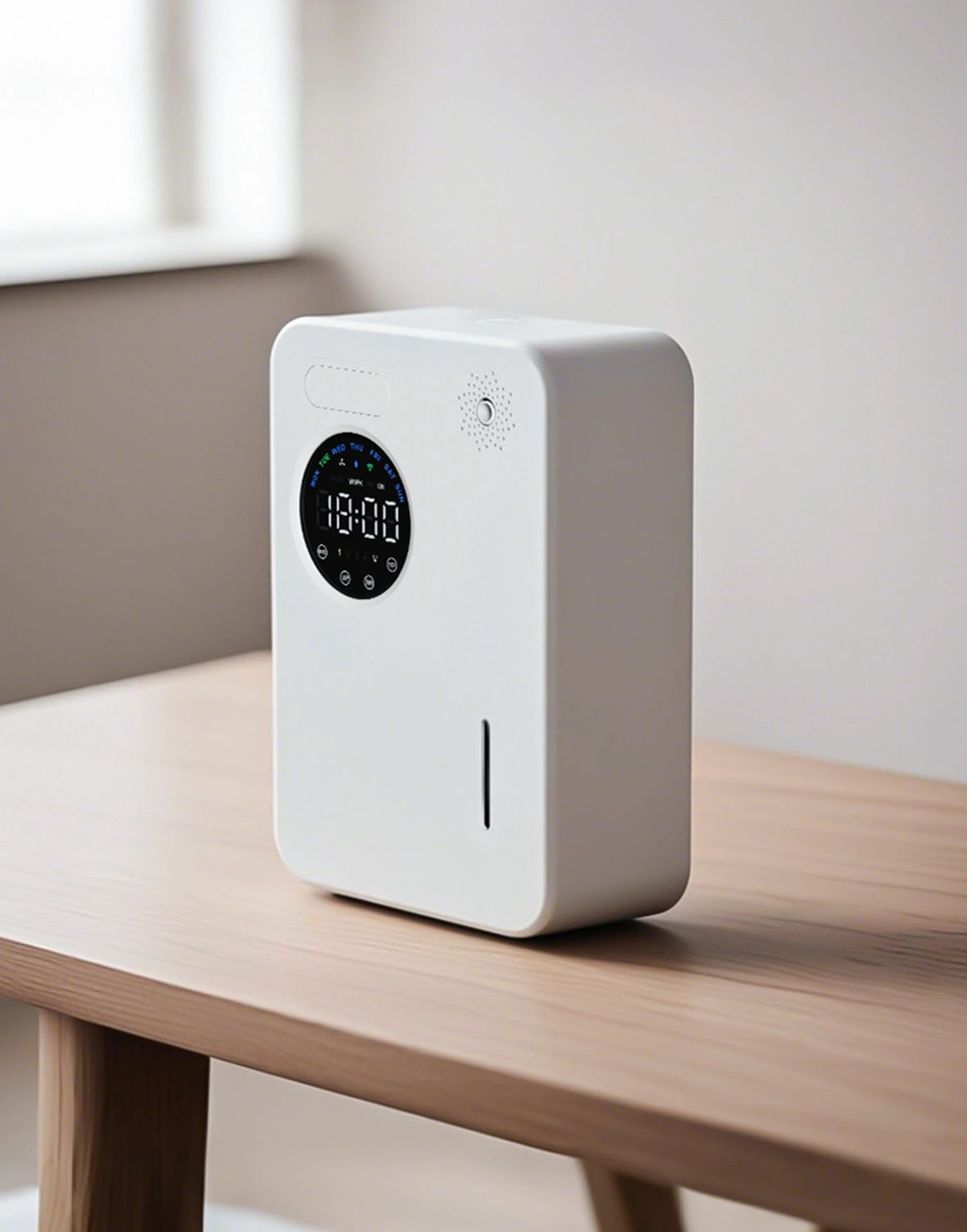
Open office floors and private rooms rarely need the same hardware. The right choice depends on coverage area, HVAC design, and whether the facility team wants app control or a set-and-forget unit.
| Space | Diffuser Type | Coverage | Control |
|---|---|---|---|
| Private office or focus room | Desktop or wall mount diffuser | 80 to 300 m³ | Timer or Bluetooth app |
| Open workstation zone | Standalone commercial diffuser | up to 300 m³ | Bluetooth app and 24/7 scheduling |
| Large floorplate or atrium | HVAC scent diffuser | up to 8,000 m³ | HVAC integration with zoning |
| Reception or corridor | Track-mount ceiling diffuser | 500 to 600 m³ | Bluetooth app |
These coverage numbers matter less than where the air actually goes. A unit rated for 300 m³ placed in a dead corner will underdeliver, while a larger unit can feel overwhelming if it faces a low ceiling and fixed desks. Before selecting, map the return air path and the highest-occupancy areas.
If your floorplate has mixed open and private areas or variable air volume, it is worth confirming coverage against your zone map before finalizing the equipment list. Send a marked plan and headcount by zone to [email protected] and we will check dead spots and coverage.
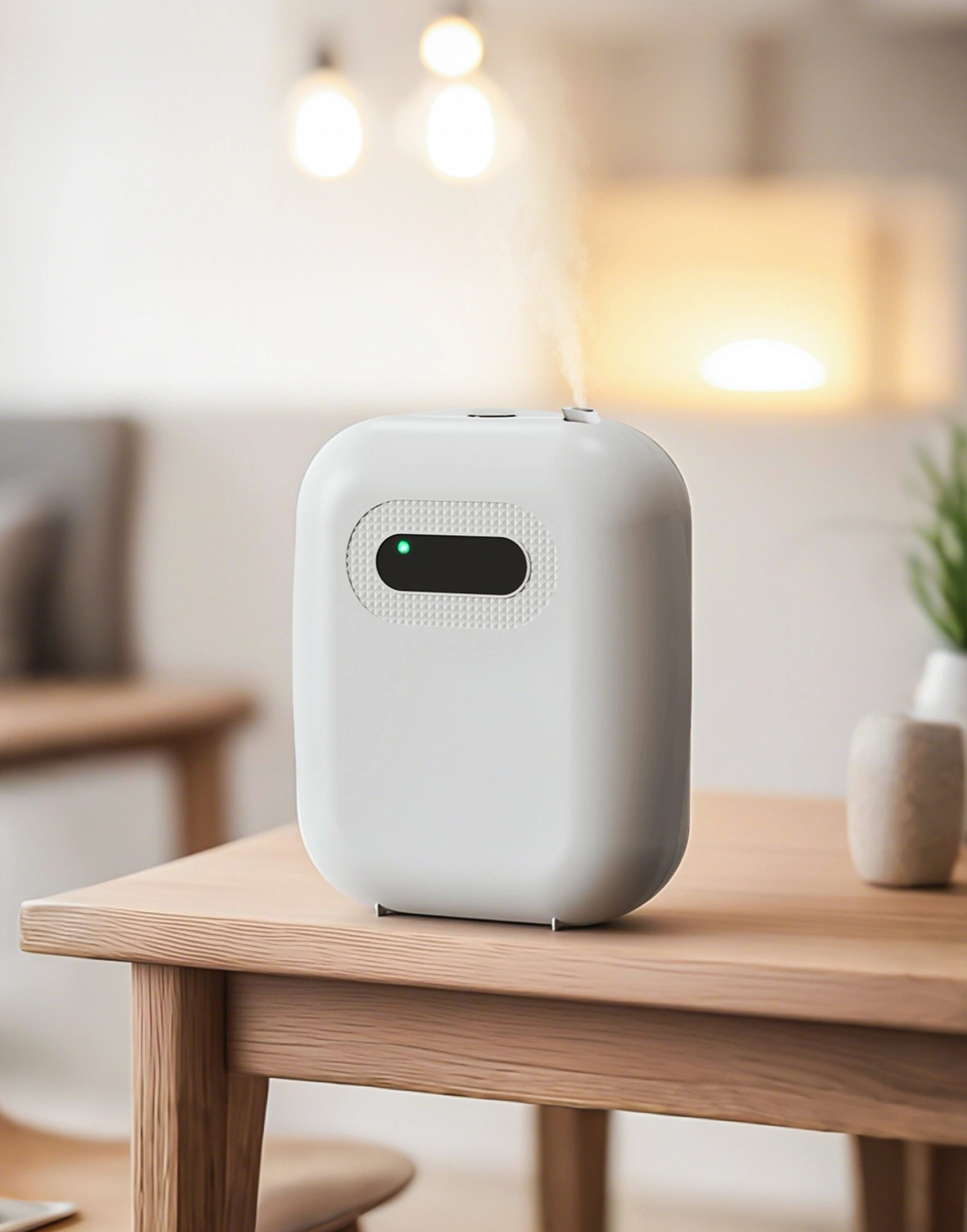
For hardware with deeper scheduling and custom finishes, read Custom Smart Aroma Diffusers.
How Do You Prevent Workplace Scent Fatigue and Complaints?
Complaints rarely start as ‘the scent is too strong.’ They start as headaches, dry eyes, or a feeling that the air is stale. If the scent stays constant all day, the brain adapts and people either stop noticing it or become irritated by its presence. The fix is variability within a narrow band.
What Triggers Most Workplace Fragrance Complaints?
In the projects I have reviewed, the two main triggers are stale air and poor placement. Stale air happens when a diffuser runs over a space with low fresh-air exchange, so fragrance compounds accumulate instead of dispersing. Poor placement happens when the diffuser sits near one desk, near the copying area, or directly above a conference table where the same people sit for hours. Headache complaints usually appear within the first two weeks, which is why we run a quiet pilot with only a subset of employees asked for feedback.
How Do You Resolve a Complaint Without Switching Off the System?
Record the time, zone, and activity before changing anything. A complaint at 10 a.m. near the south window is not the same as a complaint at 4 p.m. in the training room. If the pattern repeats in one zone, reduce output in small increments before changing the oil. If the complaint is tied to a person with fragrance sensitivity, shift the nearest diffuser or lower the schedule in that pocket rather than removing scent from the entire floor. This kind of targeted response is faster and keeps the program credible.
What Should You Do Next With Your Workplace Scenting Plan?
A scenting plan fails when it is treated as a one-time purchase rather than an operating routine. If you have zones with uneven airflow, low fresh-air intake, or historical complaints about stale air, those problems shape the entire program. You do not need the strongest diffuser; you need a placement and scheduling plan that matches the building.
Send your floor plan, square footage by zone, and occupancy pattern to [email protected] or call +86 185 6557 5758 or +86 134 2048 5758. We will confirm the right coverage, oil consumption, and maintenance schedule before you commit to hardware. This is a low-friction way to pressure-test the plan before spending on equipment.
What Questions Should You Ask Before Committing to Workplace Fragrance?
Does a Workplace Fragrance Program Actually Change Perception?
Yes, but only when the scent is subtle enough to be felt before it is named. In office lobbies we have scented, the shift shows up in longer conversations rather than in immediate comments. People describe the space as calm or well kept, and they rarely mention the fragrance. If staff are talking about the scent itself, the intensity is usually too high. The practical value is a more controlled arrival moment and a consistent sensory thread across floors, not a stronger smell.
How Much Fragrance Oil Does an Office Diffuser Use?
It depends on diffuser type, run schedule, and the oil concentration. A small 150 ml bottle may run for several weeks in a private office, while an HVAC system with a 1-liter bottle can consume oil faster because it covers a much larger air volume. We calculate consumption by zone rather than by building. A midsize open floor may use roughly one 150 ml bottle every two to four weeks at moderate settings. Confirming your floor plan and runtime before ordering avoids running out mid-month.
Can Scenting Hurt Indoor Air Quality?
Many buyers assume fragrance oil alone causes air quality issues. The bigger risk is dust, water, and bacterial residue in an uncleaned diffuser. A properly maintained program should not hurt indoor air quality, and a neglected one can. In our project work across different climates, the highest-complaint sites are usually the ones that skipped monthly cleaning. Use fragrance oils from a supplier with clear safety documentation and schedule filter checks alongside HVAC maintenance. If your building already has ventilation complaints, fix that before adding scent.
What Is the First Step for a Multi-Floor Office Rollout?
In multi-floor rollouts I have handled, starting with one floor or one department catches problems that a building-wide launch hides. Map the zones, set low intensity, and collect feedback for two full workweeks. A phased rollout catches airflow dead spots that a floor plan cannot show. Once the first zone feels stable, apply the same settings and schedule to the next floor, then adjust for local returns and sunlight. If you are planning a multi-site rollout, email your floor plans and occupancy pattern to [email protected] or call +86 185 6557 5758, and we will confirm coverage and oil consumption before you commit.
If you’re interested, check out these related articles:
