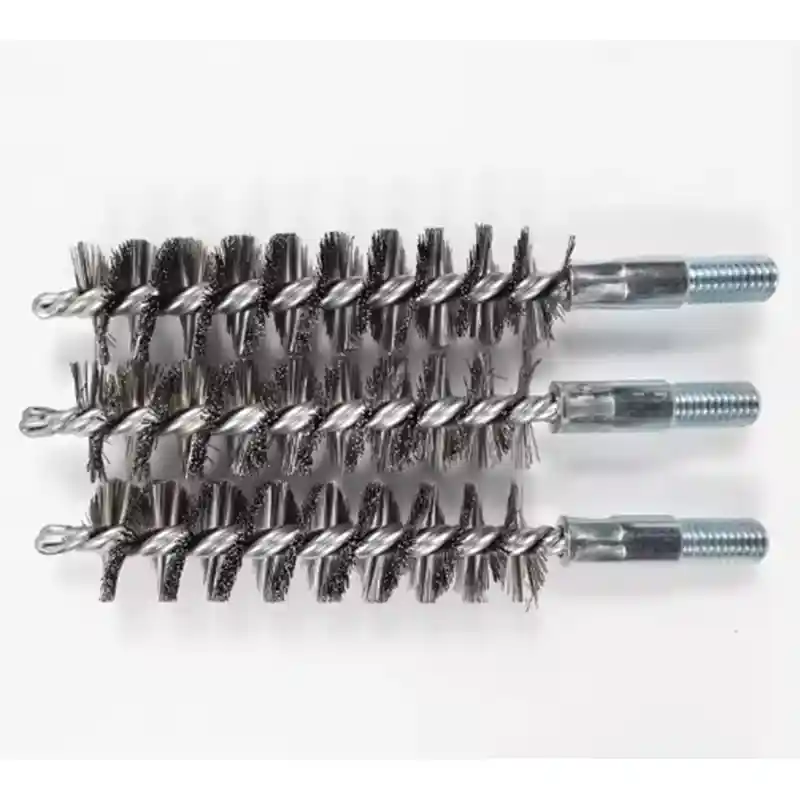

Tube deburring brush selection goes wrong most often when the brush is ordered from the nominal tube size rather than the measured bore. For inner-edge deburring on tubes and hollow components, I start with three values: minimum bore, edge location, and the maximum surface change permitted on the drawing. From those points the brush diameter, fill density, abrasive type, and stem design fall into place. The objective is a first article sample that works on the line without creating another approval loop. The specification points below are the ones I review with buyers when an RFQ reaches Huixi Brush.
Spec the Tube Deburring Brush Around the Actual Bore
Nominal tube sizing creates the first problem. A 12 mm tube can have a minimum bore from 9.5 mm to 11.8 mm after drawing or welding, and a brush built only to the outer diameter will either miss the burr or wedge in the bore. I ask for the minimum measured ID, not the drawing value. The second measurement is the edge condition. A cut tube end often carries a thin rolled edge from sawing or parting, while a machined end can have a heavier root where the tool exits. The same brush will not behave the same way on both conditions.
The brush O.D. must run larger than the minimum bore so the filament tips load against the edge. For wire-fill tube brushes, that interference is often 0.2 to 1.0 mm on small bores. Abrasive nylon fills need more because the filaments flex deeper before cutting. Cross holes change the rule again. If the bore intersects a smaller hole, the brush has to pass through the break edge while the filaments at the opening lose support. A lower fill density or a spiral set lets the brush travel without hooking. For straight tube ends, a dense wire fill works faster. For machined shoulders inside a hollow component, the brush often has to bottom out cleanly, so the stem end and trim length need a defined stop.
Match the Tube Deburring Brush Fill to the Burr and Tube Material
Fill material is the next decision. Carbon steel wire cuts a heavy ferrous burr quickly, but it can mark softer tube bores. Stainless steel wire avoids carbon contamination and fits stainless, aluminum, and food-grade parts. Brass wire is less aggressive and works when the tube material itself is soft. Abrasive nylon adds a controlled radius and a finer surface finish, but it cuts more slowly on a thick burr. The abrasive grit follows the edge requirement first. Aluminum oxide lasts well on low-carbon steel. Silicon carbide suits hardened or brittle edges, yet it can be too aggressive on a thin wall if the brush speed is high.
| Fill Material | Best Fit | Limits |
|---|---|---|
| Carbon steel wire | Heavy ferrous burrs at tube ends | Can mark softer bores and leave fine scratches |
| Stainless steel wire | Stainless, aluminum, food-grade tubes | Less aggressive than carbon steel |
| Brass wire | Soft metals and light edge break | Wears quickly on hard steel |
| Abrasive nylon, aluminum oxide | Ferrous tubes and radiused edge break | Slower on heavy scrap, good finish |
| Abrasive nylon, silicon carbide | Hard nonferrous or hardened edges | Aggressive on thin walls at high speed |
| Fine wire, low density | Cross holes and thin-wall tubes | Removes secondary burr, not a blunt primary burr |
Fill selection changes when the same filament style moves from a tube form to a wheel or disc form. <how do you know about deburring brushes> covers the basic deburring brush categories and where a wire fill outperforms an abrasive nylon fill.
Set Stem Design and Interference for Longer Tube Deburring Brush Life
Stem design sets how far the brush can reach and how much side load the bore can handle. A single-stem tube brush gives access to small bores, but the core has to stay straight under pressure. For longer reaches and stiffer engagement, a twisted wire stem works better. I keep two lengths separate on the drawing: the stem length is the unloaded section between the chuck and the fill, and the working length is the filled section that does the cutting. If only overall length is given, the factory may pack the fill too long or leave too little stem to reach a deep bore.
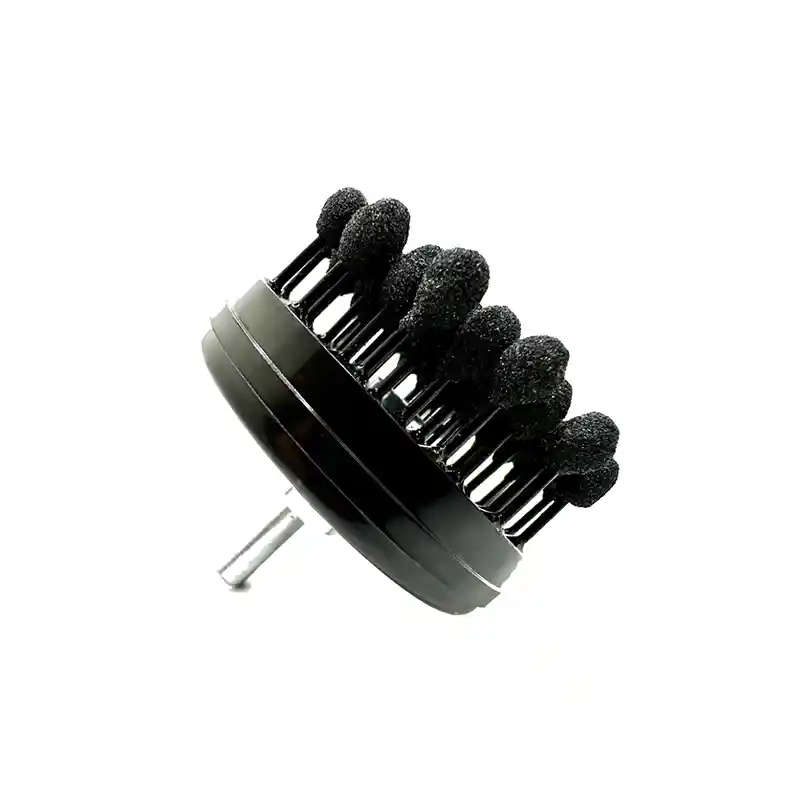
Density changes the load. Dense fill holds the filament tips against the burr with less deflection, but it also raises the torque the brush draws. Too dense in a thin-wall tube creates chatter and can open the bore. Lower density climbs through cross holes more easily and leaves less secondary cutting. The same principle applies to a honing brush in a blind bore, where the brush has to deburr without changing the critical dimension.
When the brush has to remove a burr at a cross hole or stepped bore, the feed direction and spiral lay become part of the result. <the differences between inward and outward spiral brush> covers why the spiral direction changes whether the brush cuts forward or pulls itself into the bore.
If your program involves multiple bores, cross holes, or a tight ID tolerance, it is worth confirming the stem type and fill density with a sample before finalizing the BOM. Send the measured bore and tube material to [email protected] and we will confirm the brush configuration.
Compare Manual and Inline Tube Deburring Methods
Manual deburring with a cordless drill or bench motor works for short runs and repair work. The operator controls feed rate and dwell, so one brush can cover several bore sizes if the interference stays within reason. The risk is uneven edge break because hand pressure varies. For production, I look at spindle-mounted or machine-fed tube brushes. A lathe-mounted tube brush can feed at a set rate, dwell for a measured number of revolutions, and retract. Through-spindle coolant clears the fines and keeps the abrasive from loading.
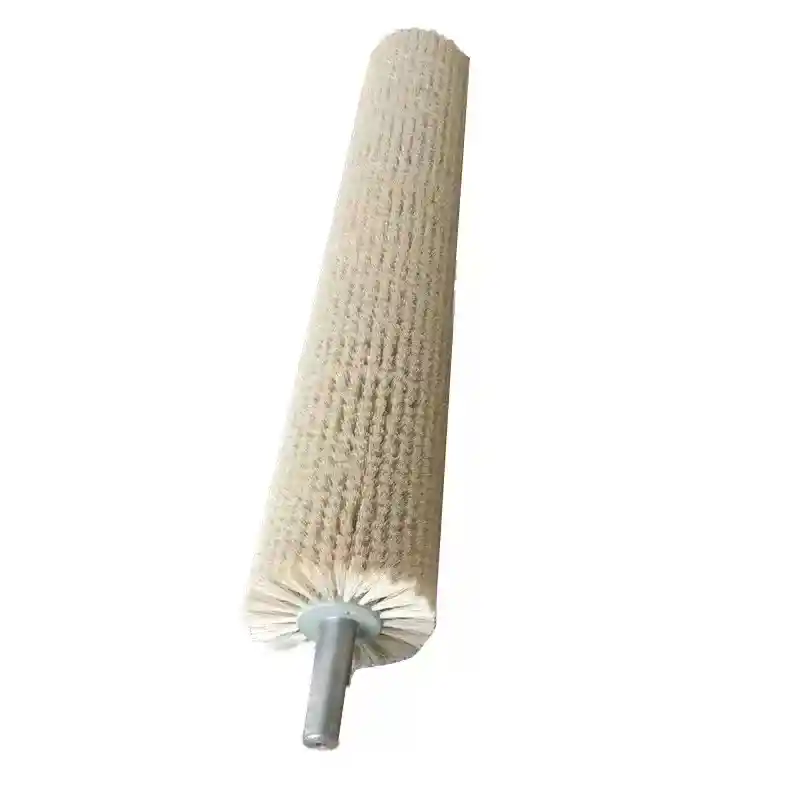
The brush must be specified for the spindle direction and chuck depth. A tube deburring brush flexes through the bore and recovers at the exit, so the shank length and working length need separate numbers on the drawing. For a lathe-mounted operation, I run the sequence this way: set the brush O.D. to the measured bore, set the feed to keep dwell under three seconds, clear chips each cycle, and inspect the first five edges under magnification. That catches most problems before the whole batch is judged.
For barrel parts and other hollow components, edge control follows the same principle, but the main risk shifts from tube stretch to dimensional change. <honing brush treat burrs in barrel parts without affecting accuracy and scale> covers how a flexible abrasive brush removes the burr without changing the critical bore dimensions.
Send a Clear Tube Deburring Brush Inquiry
Unclear inquiries waste the first round on wrong samples. Before I quote a tube deburring brush, I need the tube material, the minimum measured ID, the wall thickness, the edge location, and the required cycle time or part volume. A photo of the burr is more useful than a written description. With that information Huixi Brush can confirm fill material, brush O.D., stem length, and whether a low density set is needed for cross holes. Send the tube drawing and target quantity to [email protected], or call +86 1580 0932 713 to discuss before orders.
Check Common Tube Deburring Brush Questions
Can a tube deburring brush remove material from the tube ID?
It removes only the material required to break the edge when the brush is specified correctly. The burr and a small radius are removed, and the bore itself is not enlarged beyond the control point. A wire fill cuts the raised edge, while an abrasive nylon fill leaves a more controlled edge break. On soft tubes, too much interference or a dense fill can produce a light ID pattern, so I confirm the brush on a sample first. Edge quality is the first goal, not pressure.
What is the smallest bore a tube deburring brush can handle?
It depends on the stem core and filament diameter. A fine wire fill on a twisted stem can enter bores around 2 mm if the trim length is short and the burr is light. Smaller than that, the stem becomes too weak to do useful work. I ask for the actual minimum bore from the tube sample rather than the outer diameter. The column stiffness of the stem matters more than the brush O.D. once the bore drops below 6 mm.
Can the same tube deburring brush clean a cross-drilled bore?
Many buyers assume a standard straight brush clears both the main bore and the cross hole, but the unsupported filaments at the opening can deflect and leave a secondary burr. I prefer a lower fill density or a spiral stem for cross-drilled tubes so the tips re-engage the edge as the brush rotates through the opening. The brush should still be specified for the main bore first, then the cross hole is checked in a separate sample because the intersection edge behaves like a new cutting point.
How many tube deburring brushes should a buyer qualify before production?
In tube deburring programs I have worked on, I usually start with two or three pieces: the baseline wire or abrasive fill, one denser fill for comparison, and one changed trim length if the bore depth varies. Qualifying from that range shows where the edge break is stable and where the brushes wear first. For high volume, the right answer is a small sample run on the actual tube, not one universal brush kept in stock. Share the tube drawing and minimum bore, and we will confirm the configuration and sampling plan.
If you’re interested, check out these related articles:
honing brush a magic tool for flexible burr removal
abrasive disc brush an excellent industrial surface treatment tool
wire wheel brush the right assistant for industrial cleaning and polishing