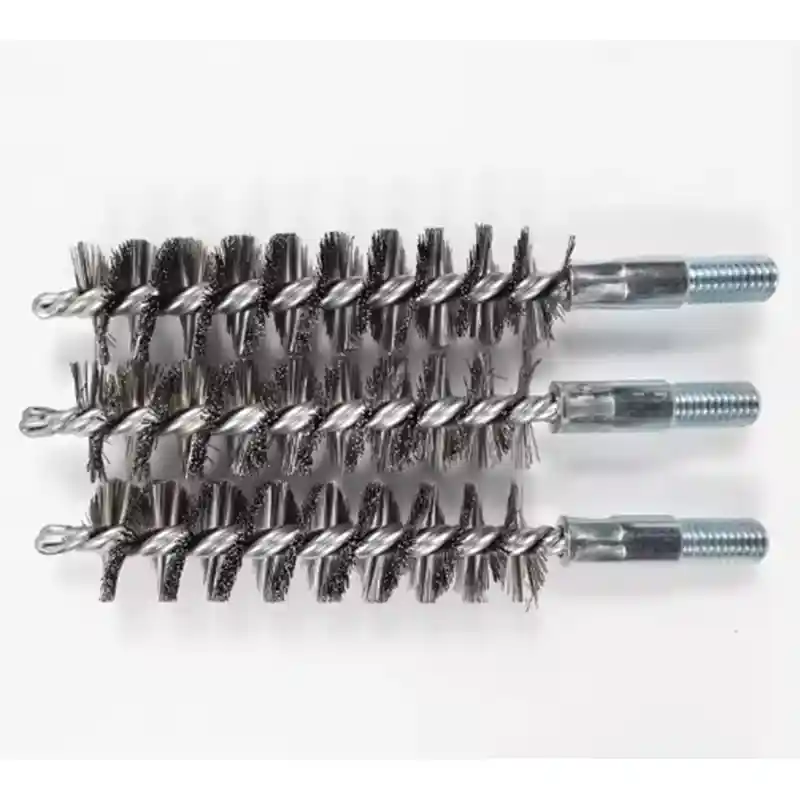

A tube deburring brush is a small-diameter rotary or hand brush that reaches into the bore of metal or plastic tubing and removes burrs, sharp edges, chips, and loose material left by cutting, drilling, or machining. The goal is not aggressive stock removal. The goal is a clean, consistent internal edge that assembles safely, seals correctly, and does not damage O-rings, wires, or mating components.
What a Tube Deburring Brush Does
In tube fabrication, the inside edge often receives less attention than the outside edge, but it causes many of the same downstream problems. A burr on a tube ID can cut an O-ring during assembly, restrict flow, retain contamination, or create a sharp contact point that leads to premature wear. A tube cleaning brush with a deburring-grade fill removes those defects from the internal edge without changing the bore diameter beyond the drawing tolerance.
Edge condition is commonly defined on the drawing according to ISO 13715 [1]. The brush should break the edge enough to remove loose material and the sharp transition, but not so much that it creates an uncontrolled chamfer or alters the sealing face. In most cases, the correct result is an edge that feels smooth to a gloved fingertip and shows no reflected burr line under magnification.
For specification-based help rather than a catalog guess, send the tube ID, material, wall thickness, and required edge condition to [email protected]. The inquiry can be routed to an engineer for a brush construction recommendation.
How to Choose the Right Tube Deburring Brush
Selection starts with the bore, not the product photo. Five factors usually determine the best construction:
- Tube ID and accessible length
- Metal or plastic material
- Required aggressiveness
- Stem or hand-hold configuration
- Manual, drill, or machine operation
The table below is a practical selection guide.
| Factor | What to Specify | Why It Matters |
|---|---|---|
| Tube ID | Minimum and maximum bore diameter | Controls brush outside diameter and fill density |
| Length | Reach depth and total tube length | Determines stem length and support |
| Material | Stainless steel, carbon steel, aluminum, brass, plastic | Sets bristle type to avoid contamination or scratching |
| Edge target | Light edge break, full deburr, pre-coating prep | Controls filament diameter and trim length |
| Use | Manual, cordless drill, CNC or inline station | Determines stem, speed limit, and balance |
A deburring brush can be built in wire or abrasive nylon form. Wire fills are common for steel and stainless tube ends, while abrasive nylon brush fills are often better for plastic, coated, or thin-wall parts because they cut less aggressively and leave a smoother surface.
When the bore is small, thin-walled, or plastic, the brush choice changes quickly. <how do you know about deburring brushes> covers the main brush types and where each style works.
If you are comparing wire and nylon constructions, a short note with the tube material and final edge requirement can be sent to [email protected] for a direct recommendation.
Deburring Methods and Operating Notes
The brush can be used by hand, in a cordless drill, or on a fixed station. The key operating rule is to keep the brush centered and moving along the bore. A stationary tool in one spot creates uneven edge rounding and may wear the brush prematurely. In manual work, a light axial feed with rotation is usually sufficient. In powered work, the brush should be run at a speed that lets the filament tips cut rather than melt; this is especially important for plastic tubing.
After deburring, the surface texture should be checked only where the drawing requires it. Surface roughness parameters can be measured with methods defined in ASME B46.1 [2] or ISO 21920-2 [3]. For most tube-edge work, visual inspection plus a gloved-finger test is enough for process release. A profilometer is usually reserved for sealing surfaces, medical parts, or high-pressure fittings.
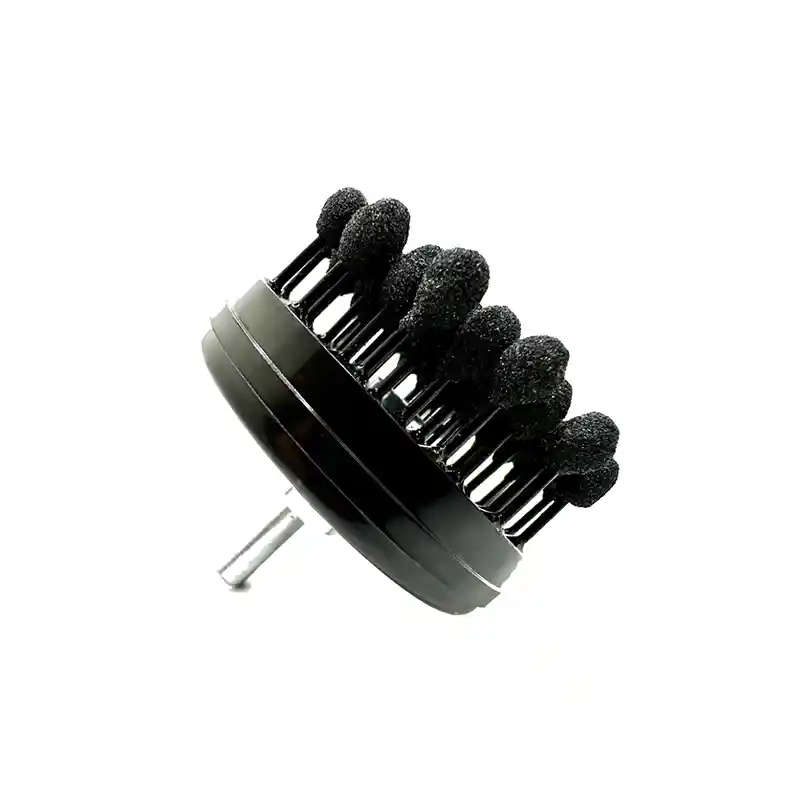
If the part also needs bore finishing rather than edge removal alone. <honing brush treat burrs in barrel parts without affecting accuracy and scale> covers how a honing brush clears burrs while protecting dimensional accuracy and surface scale.
Metal and Plastic Tubing Considerations
Metal tubing usually requires a bristle material that cuts the burr without introducing contamination or galvanic risk. Stainless steel tube work typically uses stainless steel or non-ferrous wire to avoid carbon steel particles that can promote corrosion. Aluminum parts often use brass or abrasive nylon brushes to prevent scratching and embedded steel particles. Carbon steel tube ends can be deburred with carbon steel wire, but the brush should be dedicated to that material to prevent cross-contamination in mixed production.
Plastic tubing is more sensitive to heat and surface damage. Nylon, PTFE, PEEK, and polycarbonate tubes require a softer fill and lower operating speed than metal parts. An abrasive nylon brush is often the right choice because the filaments flex into the edge and remove the burr without gouging the bore. Soft brass wire may be acceptable for some rigid plastics, but it should be tested on scrap parts first.
Quality Checks and Process Control
A reliable tube deburring process includes a release check. Operators should confirm that the internal edge is free of loose burrs, no bristle filaments remain in the bore, and the ID is still within tolerance. If the tube will hold an O-ring or sealing component, inspect the contact zone for scratches or uneven edge rounding.
For higher-volume production, add a periodic check rather than relying on operator feel alone. Use a defined sample interval, a clean inspection light, and a simple pass/fail standard. Surface texture requirements can be verified according to the same standards referenced above [2][3]. The goal is repeatability: the first tube and the last tube of a batch should have the same edge condition.
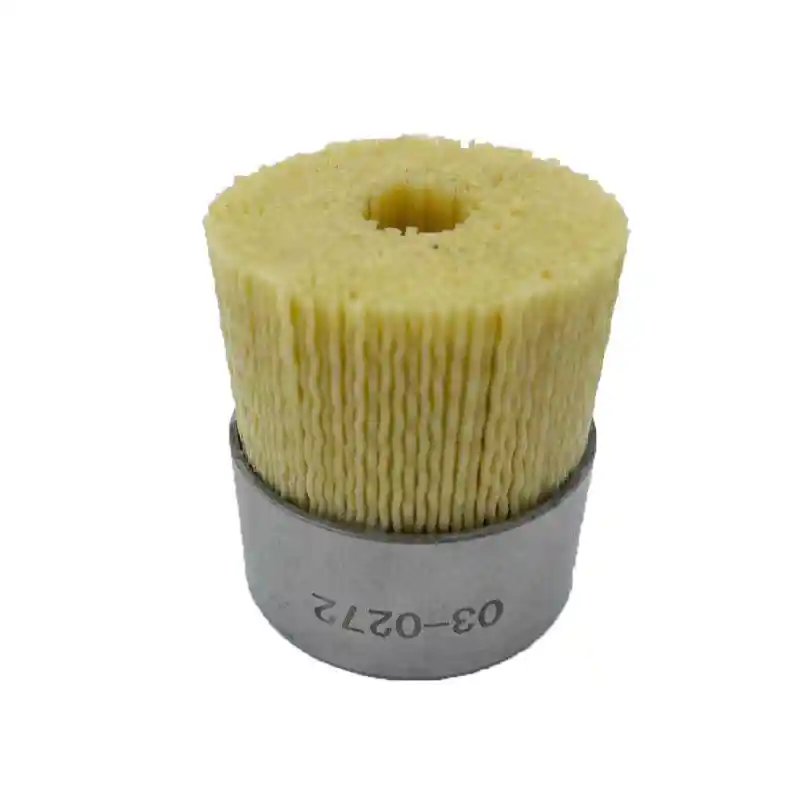
When the job moves from tube ID work to flat or profile surfaces. <abrasive disc brush an excellent industrial surface treatment tool> covers disc brush options for broader surface treatment tasks.
Start With a Clear Tube Deburring Specification
Shanghai Huixi Trading Co., Ltd. builds tube deburring brushes to match a defined application rather than forcing a stock size into a different job. To get a useful recommendation, send the following information to [email protected] or call +86 1580 0932 713:
- Tube material and hardness
- Tube ID, wall thickness, and length
- Edge condition required
- Manual or powered operation
- Production volume and target batch size
- Wet or dry process
- Drawing or sample if available
A clear specification shortens the sampling cycle and helps confirm the right bristle material, stem, trim length, and overall brush size before production.
FAQ
What is the difference between a tube brush and a deburring brush?
A tube brush can be designed for cleaning, polishing, or deburring. A deburring brush is specifically configured with a fill, trim, and stem intended to break internal edges and remove burrs without aggressive stock removal.
Can one tube deburring brush work for both metal and plastic tubing?
It is not usually recommended. Metal and plastic require different filament types and operating speeds to avoid surface damage or contamination. Using separate brushes by material group gives more consistent results.
How do I know if the internal edge is fully deburred?
In most production checks, a gloved fingertip should pass over the edge without snagging. Under magnification, the edge should show no loose fragments or sharp reflected burr line. For critical parts, use the surface roughness method specified on the drawing.
What should I specify when requesting a custom tube deburring brush?
Provide the tube ID, material, wall thickness, length, required edge condition, manual or powered use, and production volume. A drawing or sample is helpful, especially for unusual shapes or tight tolerances.
References
[1] ISO 13715:2017, Technical product documentation — Edges of undefined shape — Indications and dimensioning. Geneva, Switzerland: ISO, 2017.
[2] ASME B46.1-2019, Surface Texture (Surface Roughness, Waviness, and Lay). New York, NY: ASME, 2019.
[3] ISO 21920-2:2021, Geometrical product specifications (GPS) — Surface texture: Profile method — Part 2: Terms, definitions and surface texture parameters. Geneva, Switzerland: ISO, 2021.
If you’re interested, check out these related articles:
brass brushes work perfectly for pipe cleaning
rope cleaning brush for industrial use a key tool for maintaining safe production