
When residue builds up inside narrow glass test tubes, a generic brush often cannot reach the bottom or scrub the walls evenly. At Huixi Brush, I have seen labs struggle with this exact problem, using brushes that are too wide, too stiff, or simply not long enough for the job. A test tube brush that matches the tube’s inner diameter and length makes deep cleaning practical and repeatable, without scratching delicate glass surfaces. Choosing the right brush comes down to three things: bristle material, stem design, and dimensional fit. Understanding these factors saves time and extends the life of your glassware.
The Challenge of Cleaning Narrow Glass Tubes
Standard test tube brushes often fail in narrow tubes because the brush head is too wide to pass through the opening or too short to reach the bottom. In labs, we see this when technicians try to force an oversized brush into a 10mm tube and end up bending the stem or jamming the bristles. The result is incomplete cleaning and, over time, scratched glass from metal stems scraping the interior.
In chemistry and biology labs, test tubes range from 6mm to 25mm in diameter. The smaller ones, particularly 10mm and under, pose a real cleaning challenge because the opening leaves little clearance. Brushes sold as test tube brushes often assume a 16mm tube, which is far too wide for narrow glass. I have heard from lab technicians who resorted to cotton swabs and pipe cleaners because their brushes could not fit.
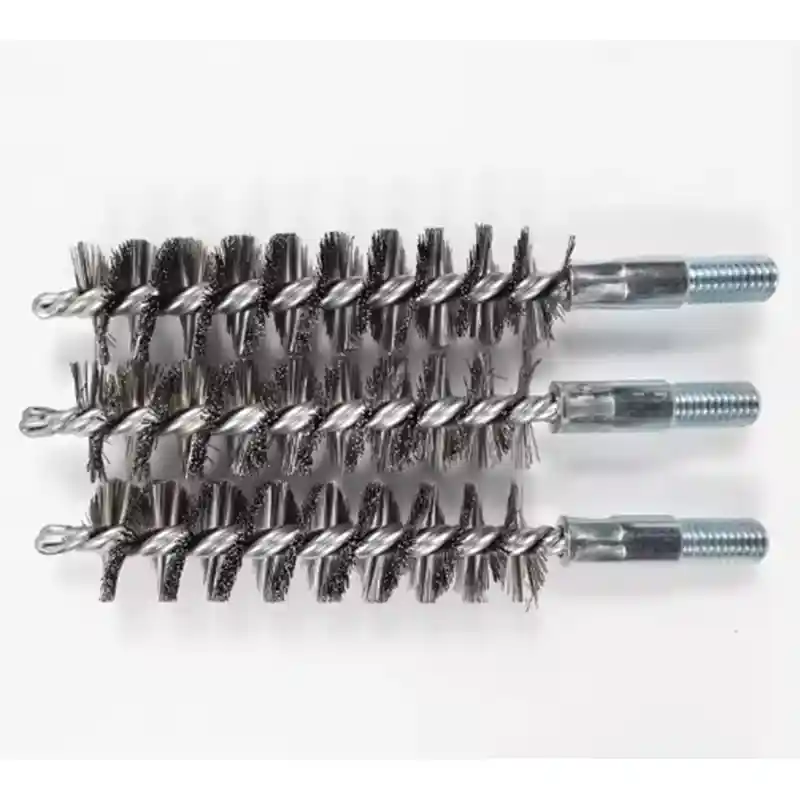
Narrow glass tubes, typically with inner diameters below 12mm, demand a brush that matches the internal dimensions closely. The bristle pack must be dense enough to scrub the walls but flexible enough to compress without requiring excessive force. I have found that brushes with a twisted wire core and precisely trimmed bristle diameter perform best for tubes under 8mm because they combine rigidity with a slim profile.
Bristle Materials and Stem Design for Deep Cleaning
The bristle material directly determines how thoroughly the brush cleans and whether it risks damaging the glass. Three materials cover most lab test tube brush applications:
| Material | Best For | Glass Safety | Durability |
|---|---|---|---|
| Nylon | Routine cleaning, chemical resistance | High | Good |
| Natural fiber (tampico, goat hair) | Delicate glass, non-abrasive cleaning | Very high | Moderate |
| Brass or stainless steel wire | Heavy residue removal, not for glass tubes | Low (scratches glass) | Very high |
For narrow glass tubes, I recommend nylon bristles in most cases. Nylon filaments can be extruded to very fine diameters (as thin as 0.1mm) while maintaining stiffness, so the brush stays slim but effective. Chemical resistance is another reason nylon works well in labs. Nylon 6 and 6.6 filaments resist most common lab solvents, including alcohols, acetone, and mild acids, so the bristles do not swell or degrade with repeated exposure. Natural fibers work well for fragile tubes or when chemical solvents are not used, but they wear faster and may leave fibers behind.
Bristle length relative to tube diameter is another specification I often see overlooked. The bristle should be slightly longer than the tube’s radius for full wall contact. For a 10mm ID tube, I would specify bristle length around 6-7mm from the core wire. This creates enough compression against the glass to scrub effectively without jamming.
The stem is equally important. Twisted wire stems (spiral wire) are standard for tube brushes because they anchor the bristles solidly and let you adjust stem length without affecting the brush head. Core diameter, the wire gauge at the center, varies by overall brush length. For brushes under 300mm total, we typically use stem diameters between 1.5mm and 2.5mm. For longer brushes, 3mm stems prevent bending. When a lab needs to clean tubes longer than 400mm, I suggest a double-wound core for extra rigidity without increasing the outside diameter.
A detail that helps with narrow tubes: ask your brush supplier to extend the stem beyond the bristle section so you have a bare wire grip at the end. This lets you push the brush through without your fingers hitting the tube opening. We always include this feature on custom orders for deep tube cleaning. If your lab uses tubes with tapered or curved sections, make that known during ordering. A straight brush cannot clean curved glass effectively, and we may need to adjust the core wire temper to allow controlled flexing.
If your tubes have non-standard diameters or require specific bristle stiffness for chemical exposure, it is worth confirming the brush specification before ordering. Reach out at [email protected] with your tube details.
Custom vs. Standard Test Tube Brushes
Off-the-shelf brushes cover common tube sizes, like 16mm, 18mm, and 25mm, but many labs use non-standard tubes with diameters of 6mm, 8mm, or 10mm that do not fit generic brushes well. This is where custom brush manufacturing makes a measurable difference in daily lab work.
I have seen a research lab reduce tube cleaning time by about 40% after we switched them from a generic 12mm brush to a custom 8mm brush with a longer stem. The custom brush fit the tubes properly, so each stroke removed more residue, and the technicians no longer had to double-clean.
The key measurement is the inner diameter of the tube at its narrowest point, typically the opening. Provide that measurement plus the total tube length. The brush head diameter should be 1-2mm narrower than the tube ID to allow easy insertion while still making wall contact through the bristles. For a 10mm ID tube, a brush head diameter around 9mm works well.
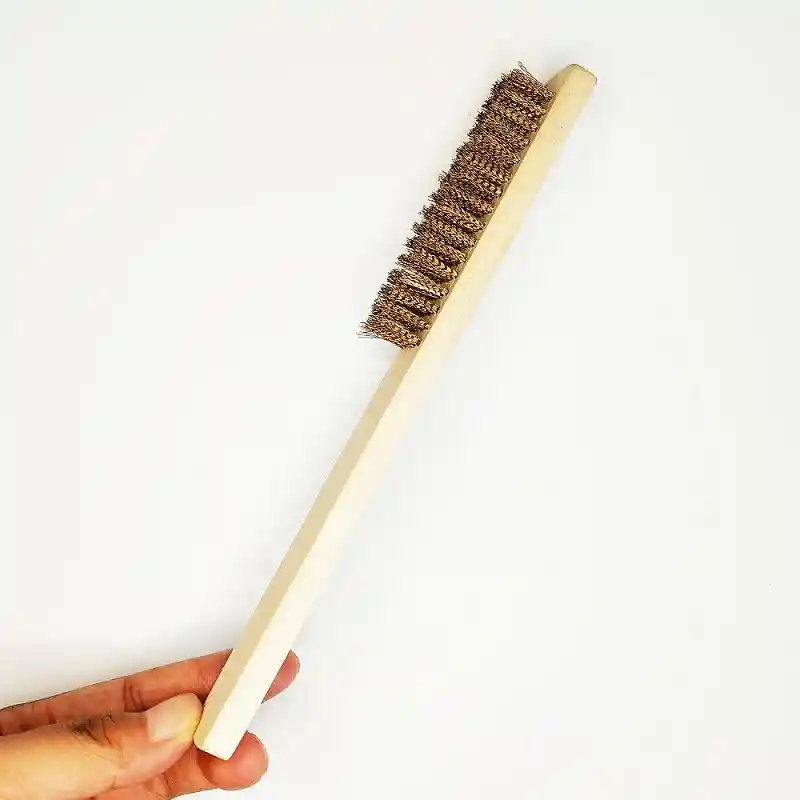
Many labs also benefit from specifying the handle type. Wooden handles with a comfortable grip reduce hand fatigue during batch cleaning. For autoclave use, choose all-metal construction without wooden components. At Huixi Brush, we accept small custom orders with low minimums, sometimes as few as 100 pieces, so labs do not need to buy thousands to get the right brush. We work with labs to get these details right on the first order, because the cost of a wrong brush is wasted time and potentially scratched tubes.
Maintaining Brushes for Consistent Lab Results
A test tube brush lasts longer and performs better with simple maintenance. Rinse the brush immediately after use to prevent residue from hardening in the bristles. For nylon brushes, a rinse with distilled water followed by air drying is sufficient. Natural bristle brushes should avoid prolonged soaking, which can loosen the fiber set. Avoid using abrasive cleaners on the brushes themselves, because grit can embed in the bristles and then scratch glass during the next use.
Inspect the stem wire every few weeks. If the twisted wire starts to separate or rust spots appear, replace the brush. A failing stem can break inside a narrow tube, creating a much larger problem than the cost of a new brush. We recommend labs keep a spare set of brushes for their most-used tube sizes so replacements are always on hand.
Autoclave sterilization is possible for brushes with stainless steel cores and nylon or wire bristles, but repeated autoclaving will eventually degrade nylon filaments. For labs that autoclave daily, budget for replacement every three to six months depending on usage frequency.
Getting the Right Brush for Your Lab
Narrow glass tubes do not forgive the wrong brush choice. The cost of scratched glassware, repeated cleaning cycles, and technician frustration adds up quickly. A test tube brush that matches your tube dimensions, uses the right bristle material, and has a stem designed for the depth will eliminate these problems.
I work with labs to specify brushes that fit their exact requirements. Send your tube ID, length, and any special cleaning concerns to [email protected] or reach us at +86 1580 0932 713. I will confirm the brush specifications and provide a sample or quote typically within 24 hours. Huixi Brush has produced tube brushes for labs across Europe, North America, and Asia, and we are ready to support your next order.
Common Questions About Test Tube Brush Selection
Many labs assume nylon will scratch glass, but nylon filaments are softer than glass on the Mohs hardness scale, so they do not scratch when used correctly.
Scratching usually happens when the metal stem contacts the tube because the brush is too wide or bent during insertion. I have inspected brushes returned from labs, and the scratches almost always align with the stem track rather than the bristle path. A properly sized brush where the bristles extend slightly beyond the stem tip prevents this contact and leaves the glass untouched.
In my experience, we can produce test tube brushes with a head diameter as small as 3mm using fine-filament nylon and a thin twisted-wire core.
For tubes below 3mm, flossing with a solvent and pull-through swab is often more practical than a brush. For chromatography columns with 4mm inner diameters, I have supplied brushes with 0.08mm nylon filaments that clean without damaging the stationary phase coating. They work reliably when handled with care.
A digital caliper gives the most accurate reading. Measure the inner diameter at the narrowest point, then measure the tube’s full internal depth.
Provide both numbers to your brush supplier, plus the tube material so we can recommend the right bristle type. If the tube has a flared opening, note that separately, it sometimes allows a slightly larger brush head. We sometimes add a softer brush tip for tubes with fragile bottom seals.
We recommend separate brushes for cleaning and reagent application. Reagent application may require a different bristle stiffness or material, and cross-contamination can invalidate test results.
In labs that handle biological samples, using dedicated cleaning brushes, ideally color-coded by application, is a low-cost way to maintain protocol integrity. Keep cleaning brushes marked for their purpose and replace them on a set schedule to avoid mix-ups.
For labs with specific tube sizes or cleaning protocols, getting the right brush upfront saves reordering and downtime. Share your tube dimensions and cleaning frequency with us at [email protected] or call +86 1580 0932 713, and I will help you specify a brush that fits your workflow exactly.
If you’re interested, check out these related articles:
abrasive wheel brush a magical tool for industrial surface treatment
introduction of our concrete block machine brushes
advantage of hx boiler tube brush