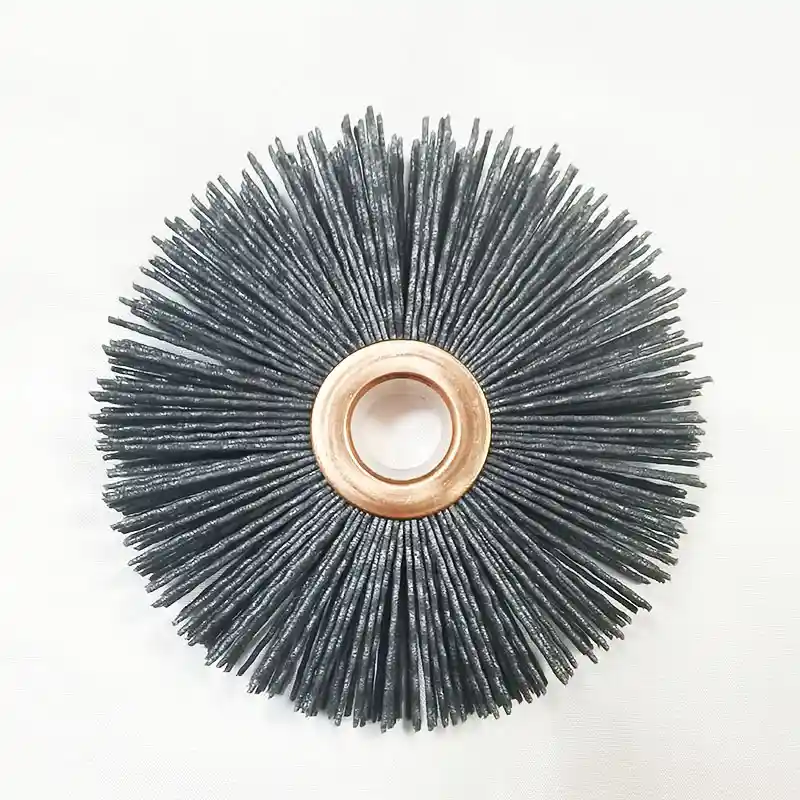

A stem-mounted wheel brush is a compact abrasive wheel mounted on a straight stem or shank. It fits a rotary tool, die grinder, or drill spindle and is used mainly for precision deburring, edge blending, and light surface cleaning in tight features. Because the tool reaches internal edges in a controlled way, it often works where a full-size wheel brush cannot enter safely.
Why the Stem-Mounted Format Works for Precision Deburring
The first advantage is access. A stem-mounted wheel brush places the working diameter at the end of the shank, so it can enter recessed areas, cross-drilled holes, internal shoulders, and narrow grooves. The stem also keeps the tool body away from the part, which reduces the chance of accidental contact with adjacent surfaces.
The second advantage is control. Because the brush is guided like a pencil grinder, the operator can break a sharp edge, blend a machined corner, or clean a thread root without removing extra stock. That is important when the part already meets print and only the burr needs to be cleared.
The third advantage is changeover. Most stem-mounted brushes use a straight round shank and require only a collet or chuck. The simple mounting is why they are easy to stage at a deburring bench and practical for short-run or mixed-part production.
Stem-mounted brushes solve a different problem than large-diameter stringer bead wheels. <the differences between [knotted wire wheel brush](https://www.huixibrush.com/knotted-wire-wheel-brush/) and crimped wire wheel brush> covers knot and crimp aggressiveness and surface finish trade-offs.
Choosing the Right Fill Material and Wheel Profile
The best specification depends on part material, burr thickness, and finish target. Common fill materials include:
- Abrasive nylon for light deburring, edge radiusing, and surface blending without heavy stock removal.
- Crimped steel wire for medium cleaning, rust removal, and flexible tip action that follows textured surfaces.
- Knotted steel wire for heavier scale or oxidation where more tip impact is needed.
- Brass or stainless steel wire when contamination, corrosion resistance, or non-sparking behavior is a process concern.
| Selection factor | What to evaluate |
|---|---|
| Internal corner radius | Choose a wheel diameter smaller than the tightest radius the brush must follow. |
| Workpiece material | Abrasive nylon suits soft metals and fine finishes; wire fill handles harder scale and heavier contamination. |
| Burr type | Thin machining burrs clear with light pressure; thick thermal-cut edges may require a more aggressive fill. |
| Process location | Manual cells favor small diameters and stem lengths; automated spindles require consistent shank tolerance. |
A practical bench setup keeps several grits and fill types available. Changing one specification often changes the result more than changing speed or feed pressure. For custom shank lengths and nonstandard wheel diameters, Huixi Brush can configure a stem mounted wheel brush around the actual part geometry rather than forcing the part to fit a standard tool.
For applications where an off-the-shelf size cannot reach the burr safely, contact Huixi Brush at [email protected] or +86 1580 0932 713 with the bore size, shank requirement, and finish target. A custom bristle density or wheel diameter often prevents secondary hand filing.
Deburring Process Parameters and Operator Practice
Process control matters more than maximum speed. Use the speed rating marked on the brush or the power tool as the upper limit; running above that rating can release filaments or damage the substrate [1]. Start at a lower speed and increase only if the burr does not clear with light pressure.
Let the filament tips do the work. Heavy feed pressure bends the fill, reduces cutting action, and generates heat that can smear aluminum, stainless steel, or plastic. Use short, controlled passes and keep the brush moving. Dwelling too long in one spot overworks the area and can leave an uneven finish.
After use, remove chips and loaded material with a brush comb or air nozzle. A loaded brush glides over burrs instead of cutting them and can leave a shiny, uneven surface.
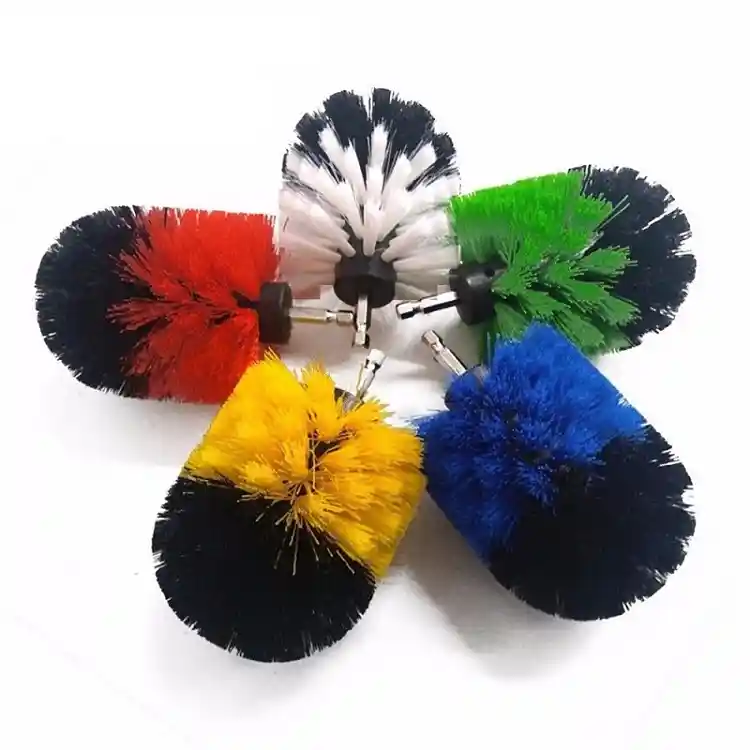
For rust and scale removal to a bare metal surface, power tool cleaning practices align with SSPC-SP 11 [2]. General hand tool safety and maintenance requirements are covered under OSHA 29 CFR 1910.242 [3]. The power brushing safety standard [1] also requires attention to speed rating, guard condition, and eye protection.
Applications Where Stem-Mounted Wheel Brushes Perform Best
Stem-mounted wheel brushes fit manual deburring benches, CNC machine tending, mold maintenance, and small-part finishing cells. Typical uses include:
- Breaking sharp edges on milled or turned parts
- Deburring cross-drilled holes in valve and fluid control components
- Cleaning internal shoulders, keyways, and spline roots
- Blending machined surfaces before plating or anodizing
- Removing light rust or oxidation from recessed fastener seats
Internal deburring often combines several brush types, not just one wheel profile. <how do you know about [deburring brush](https://www.huixibrush.com/deburring-brush/)es> covers selection cues for hard-to-reach edges and burr removal in machined components.
Maintenance, Inspection, and Replacement
A stem-mounted wheel brush is a wearing tool. Inspect it before each shift for flattened filaments, uneven wear, cracked stems, or an off-center wheel. Reject any damaged stem immediately because the overhung mass can bend or separate at speed.
Balance and concentricity are important for small brushes. Replace the brush when the wheel is no longer concentric or when the cut rate drops sharply. Continuing with worn brushes usually increases cycle time rather than lowering tool cost.
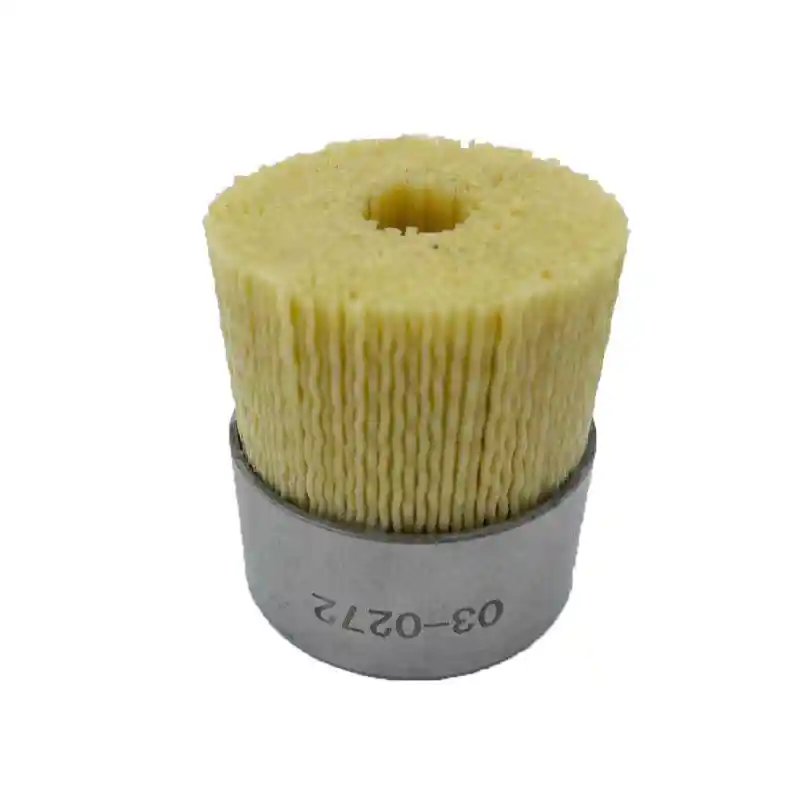
For larger-area surface work, a stem-mounted wheel brush is not a substitute for a full-size abrasive wheel. The compact tool works precise edges and internal features; a wider wheel covers open plate and panels more efficiently.
If the target is broader surface treatment rather than local edge work, the wheel profile must match the area. <abrasive wheel brush a magical tool for industrial surface treatment> covers abrasive wheel applications for industrial surface finishing.
Specify a Stem-Mounted Wheel Brush for Your Deburring Process
To get a recommendation that fits the part rather than forcing the part around a standard brush, prepare these details:
- Bore or internal feature diameter and depth
- Part material and required surface finish
- Power tool spindle or shank size
- Preferred wheel diameter and fill material
Email Huixi Brush at [email protected] or call +86 1580 0932 713 for a technical recommendation, sample, or OEM/ODM quote. With more than fifteen years of brush manufacturing experience, the team can help match the stem, wheel diameter, and fill material to your deburring process.
FAQ
What is a stem-mounted wheel brush used for?
It is used for precision deburring, edge blending, and light surface cleaning in narrow or recessed areas. It is commonly mounted in a die grinder, rotary tool, or drill and applied to cross-drilled holes, internal shoulders, keyways, and small machined edges.
Can a stem-mounted wheel brush deburr aluminum without scratching the surface?
Abrasive nylon fill is usually the safer choice for aluminum and other soft metals. It cuts lightly and leaves a controlled finish. Wire fill can remove material faster but may leave deeper scratching if the speed is too high or the pressure is too heavy.
How do I choose between abrasive nylon and wire fill?
Start with the burr thickness and finish target. Abrasive nylon is better for light burrs and soft metals or fine finishes. Wire fill is more suitable for scale, oxidation, and heavier contamination. When in doubt, test both on a scrap part and compare the edge condition and surface finish.
What is the most common installation mistake?
Mounting the stem too shallow in the collet or chuck is a frequent mistake. Too much exposed stem length can cause vibration, bending, and uneven brush contact. Insert the stem deep enough for stable support and inspect it for damage before each use.
References
[1] ANSI B165.1-2023, Power-Driven Brushing Tools — Safety Requirements, American National Standards Institute, 2023.
[2] SSPC-SP 11, Power Tool Cleaning to Bare Metal, SSPC: The Society for Protective Coatings, 2018.
[3] U.S. Occupational Safety and Health Administration, 29 CFR 1910.242, Hand and Portable Powered Tools and Equipment, General.
If you’re interested, check out these related articles:
what you know about brass wire brush strip
advantage of hx boiler tube brush
introduction of our concrete block machine brushes