
Precision hardware machining demands exacting edges and surface finishes—a single burr on a hydraulic manifold or a microscopic witness mark on a bone screw shoulder can cause assembly failure or field rejections. I have worked with shops where inconsistent deburring led to rework rates exceeding 10%, and the root cause often came down to the wrong end brush material. The choice between a stainless steel wire filament and an abrasive-impregnated filament is not about one being superior; it is about which one matches the material hardness, the required edge condition, and the production cycle so that scrap drops and throughput holds where you need it.
What Separates a Stainless Steel Wire End Brush from an Abrasive Filament Brush in Practice
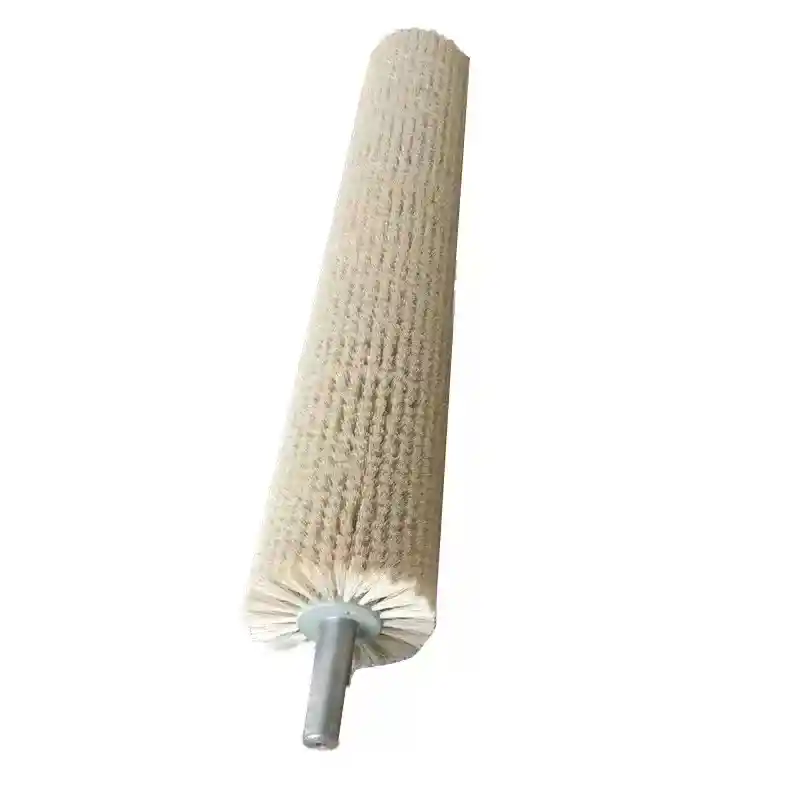
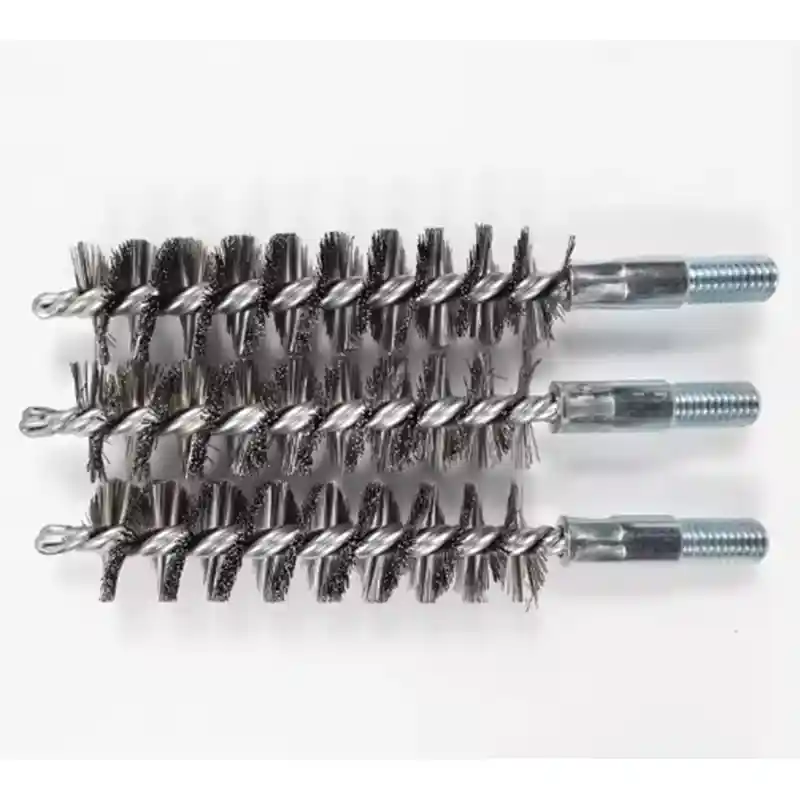
A stainless steel wire end brush removes material by mechanical impact. The individual wire tips act like thousands of small chisels that knock off burrs and break edges. In our production support work, we see shops choose stainless wire when the part material is carbon steel, stainless steel, or cast iron—substrates hard enough that the wire can cut without immediately folding over. For softer materials such as aluminum or brass, the same stainless wire will smear material rather than cut it cleanly; this is not a brush defect, it is a hardness mismatch.
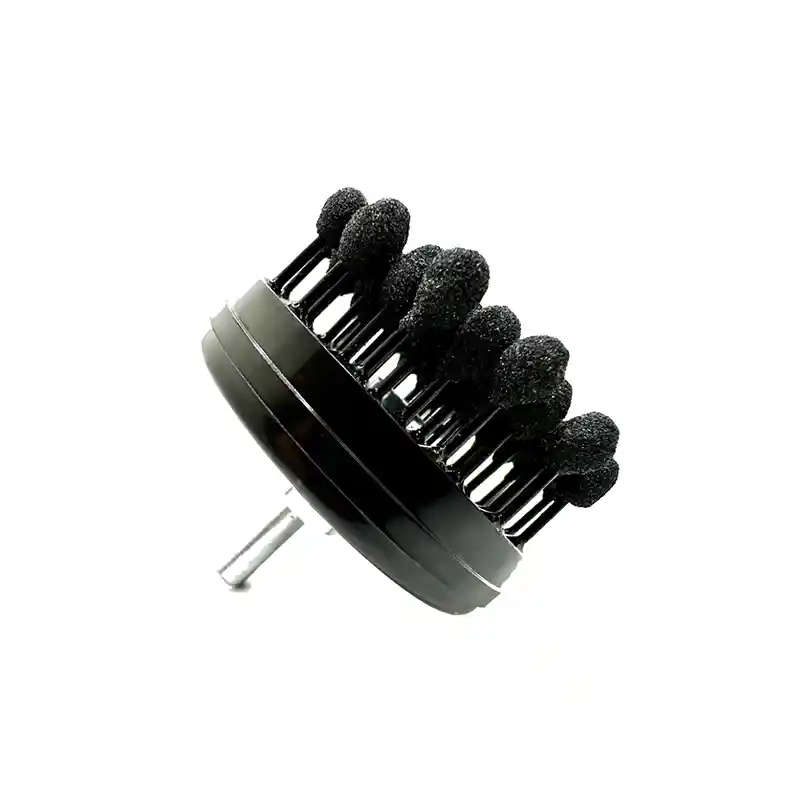
An abrasive filament end brush cuts by abrasive grain exposure. The filament matrix—typically nylon loaded with silicon carbide, aluminum oxide, or ceramic grain—wears down during use to continuously expose fresh cutting edges. I have specified abrasive filament brushes for Swiss-type lathe parts in 316L stainless and titanium where the finish callout is 32 Ra or finer, because the abrasive filaments produce a more controlled edge radius and do not embed wire fragments into the workpiece. The operating cost per hour is higher than wire brushes, but the scrap reduction usually offsets that when finish requirements are tight.
How Does the Wire Diameter and Grit Size Affect the Deburring Result
The wire diameter in a stainless steel end brush directly controls the impact energy at the tip. A 0.005-inch (0.12 mm) wire filament will flex more and produce a softer cut; this works for light edge blending on threaded parts. A 0.014-inch (0.35 mm) wire filament is stiff enough to remove heavy burrs after milling or turning. The trade-off is that the heavier wire inevitably leaves deeper scratch patterns on the flank surface. If your part print calls for no visible scratching, you will need to finish with a finer wire or switch to an abrasive brush.
On the abrasive side, grit size behaves similarly to coated abrasives. A 120-grit filament removes material aggressively and leaves a visible directional finish; a 320-grit filament is better for final edge honing where the goal is to break an edge from 0.001 to 0.003 inch (0.025–0.075 mm) without altering the surface under the radius. There is no single correct grit for “precision hardware”—the definition of the edge condition in the drawing is what picks the grit for you.
| Factor | Stainless Steel Wire End Brush | Abrasive Filament End Brush |
|---|---|---|
| Cutting mechanism | Wire tip impact and scraping | Abrasive grain micro-cutting |
| Best workpiece materials | Carbon steel, stainless, cast iron | All metals, including aluminum and titanium |
| Edge condition produced | Broken edge with slight radius | Controlled radius, smoother finish |
| Typical wire/grit range | 0.005–0.020 inch wire diameter | 80–600 grit |
| Risk of wire embedment | Yes, especially on soft materials | No wire embedment, nylon residue possible |
| Tool life per brush | Often longer on hard materials | Shorter; abrasive grains wear continuously |
Why Spindle RPM and Brush Overlap Determine the Edge Consistency
End brushes are small-diameter tools, typically 1/4 to 1 inch (6–25 mm) in brush diameter, meant to run in CNC toolholders or pencil grinders. The surface feet per minute (SFM) requirement is often overlooked. A stainless wire brush running too slowly will simply polish the burr rather than cut it; running too fast will cause the wires to break prematurely from fatigue. I have recorded wire breakage failure on a 1/2-inch brush running at 8,000 RPM in a multi-spindle machine—the SFM was around 1,000, which is typical for wire brushes on steel—but the issue was the feed rate creating zero overlap, so every wire hit the burr on the exact same spot until it snapped. Reducing RPM and adjusting the tool path to give at least 30 percent overlap distributed the wear and extended brush life.
For abrasive filament brushes, SFM is also critical but for a different reason: overheating. The nylon matrix softens above roughly 300°F (150°C), and if the brush loads up with debris and heat builds, the filament will glaze. A glazed brush stops cutting and smears. I recommend starting at 1,500–2,500 SFM for abrasive end brushes and checking for heat discoloration on the filament after the first run.
If your current process runs an end brush in a fixed position without any oscillation or cross-feed, you are likely getting edge rounding that varies from part to part. A simple dwell-time adjustment can be the difference between passing and failing a CMM inspection, but rarely do shops tune this after the initial setup.
When Should You Customize an End Brush Rather Than Use a Stock Size
Stock end brushes cover many applications, but precision hardware parts with undercuts, close shoulder radii, or deep counterbores often demand a non-standard overall length, face thickness, or shank configuration. I have worked with aerospace component manufacturers who needed an end brush with a 3/8-inch face width ground to a radius to match a bearing seat contour—off-the-shelf did not exist. In those cases, a custom brush built on the same shaft diameter and filament type is the only way to maintain process capability.
Customizing does not always mean a dramatic cost increase. We frequently adjust the trim length, filament density, or grit grade while retaining the standard shank and diameter. The lead time extends by two to three weeks typically, but the one-time investment avoids buying multiple stock brushes that fail to meet the print. If your production volume is above a few hundred parts per shift and the edge condition is a critical-to-quality feature, it is worth at least requesting a custom brush evaluation. We can help with that—share your part drawing and quantity projections with us at [email protected] or call +86 1580 0932 713 to discuss the tool configuration.
How Do End Brush Filament Choices Affect Tool Life and Part Cost per Thousand
Cost-per-part analysis often reveals that the cheaper brush per unit is the more expensive solution. A stainless steel wire brush at $3 can produce 500 parts on a single setup, while an abrasive filament brush at $8 may produce only 300 parts—but if the latter eliminates a secondary manual deburring station that costs $0.02 per part in labor, the abrasive brush yields lower cost per thousand. I have seen shops reduce deburring labor by over 60 percent simply by switching to the filament that produced a 90 percent first-pass edge quality, even though the tool cost per piece went up.
The numbers are process-specific. If you are tracking scrap rates and brush change intervals already, pull the data for a single part number over one shift and compare brush consumption against rework hours. Without that calculation, any brush selection is a guess.
Common Questions About End Brush Selection for Precision Machining
What brush can deburr a cross-drilled hole without breaking the edge radius spec?
It depends on the hole size and the intersecting diameter. For a cross hole under 3 mm, I would not use a wire brush at all—a 240-grit abrasive filament end brush with a flexible shaft adapter can reach the intersection and lightly break the edge without enlarging the hole. For holes above 6 mm, a fine-wire stainless brush with 0.005-inch diameter wire and controlled speed can work, but you must monitor the edge radius with a comparator for the first handful of parts.
Does an abrasive filament brush leave nylon residue on the part?
Yes, abrasive brushes shed fine nylon particles as the filament wears. This is rarely a contamination issue for metal components, but if the part goes into a cleanroom assembly or medical packaging, we recommend a follow-up cleaning step—aqueous wash or ultrasonic—to remove the residue. The residue is far easier to clean than embedded wire fragments.
Can one end brush handle multiple materials in a mixed-production shop?
In our experience, a medium-grit abrasive brush (180–240 grit) can cross-material deburr mild steel, stainless, and some aluminum alloys, but the brush will wear faster on the harder materials and cut more aggressively on the softer ones. Multi-material shops often keep two brush stations: one for ferrous alloys with a coarser abrasive or wire brush, and one for non-ferrous with a finer grit abrasive brush. This prevents cross-contamination and gives repeatable edge quality.
Why do end brushes wear unevenly from one side?
Uneven wear almost always points to tool misalignment—either the brush axis is not perfectly perpendicular to the edge orientation, or the feed path is asymmetrical. Check the setup with a dial indicator and confirm the brush enters the part at 90 degrees. Also examine the brush holder for runout; even 0.001 inch of radial play will cause faster wear on one side. Share your setup details and we can help isolate the cause—call us at +86 1580 0932 713 for a technical review.
If you’re interested, check out these related articles:
advantage of hx cylindrical sanding brushes
brass brushes work perfectly for pipe cleaning