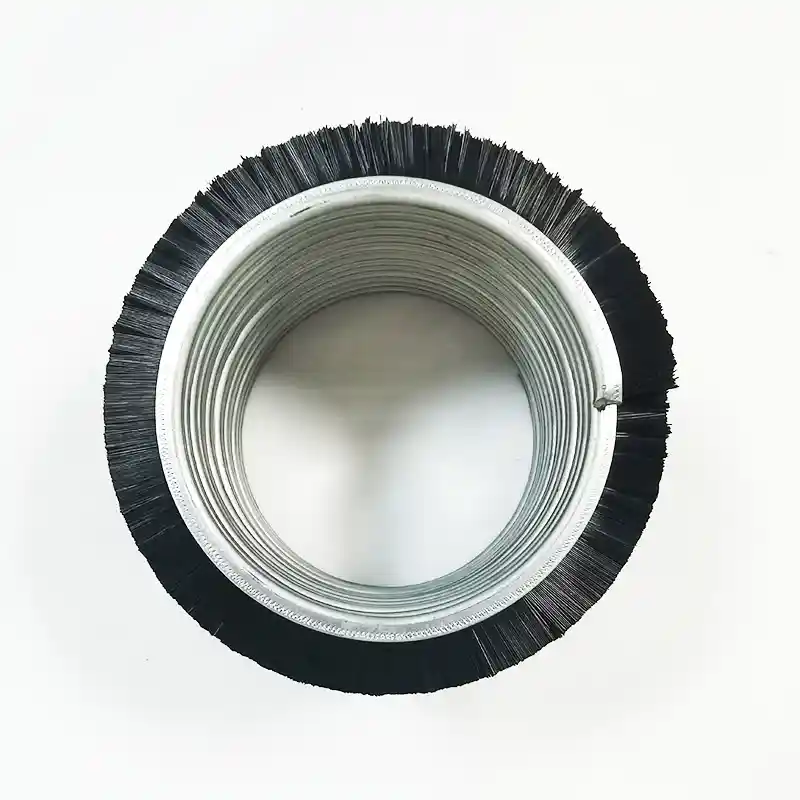

Selecting a solar panel cleaning brush determines whether your PV array runs at peak output or loses efficiency to micro-scratches that degrade glass over time. While many operators focus on water quality or cleaning frequency, the bristle design is what actually touches the panel surface — and choosing the wrong filament can cause permanent damage. I have worked on brush specifications for solar farm maintenance programs across different climates, and the difference between a brush that protects panels and one that slowly etches the glass comes down to four things: bristle material, filament diameter, tip finish, and overall brush construction.
Why Gentle Dust Removal Matters for PV Output
Dust accumulation on photovoltaic panels reduces light transmission and cuts energy generation. In arid or agricultural regions, daily soiling losses can reach 5% to 15% without regular cleaning. Manual and automated brushing are the most cost-effective methods for large installations, but every brush pass carries a risk. Abrasive bristles or stiff filaments can create micro-scratches on the glass surface, which scatter light and permanently lower panel efficiency — even if the scratches are invisible to the naked eye. A properly designed solar panel cleaning brush removes dust without altering the glass surface, preserving the panel’s anti-reflective coating and long-term output. This is more than a softness specification; it is a materials engineering problem.
Key Features of a Solar Panel Cleaning Brush
A brush that safely cleans a solar module needs to combine gentle contact with effective dust lifting. Filament tip design matters first: rounded or polished tips glide over the glass, while cut tips with sharp edges can score the surface. Bristle density controls how many filaments contact the panel simultaneously — too dense and the brush drags, too sparse and dust stays behind. The brush head width determines the number of passes needed per row, which affects cleaning efficiency. For manual cleaning with a telescopic pole, the brush must be light enough to handle for hours. For motorized systems, the shaft diameter and rotational speed must align with the drive unit. A brush that excels on a small residential array may fail on a utility-scale single-axis tracker line, where cleaning speed and durability dominate.
A common question is whether a simple soft-bristle brush from a hardware store can do the job. In controlled tests I have seen, generic nylon brushes with unspecified filament diameter left faint haze marks after repeated cycles, while purpose-built solar brushes with specified 0.15mm to 0.25mm diameter nylon 6.12 filaments showed no measurable change in glass transmittance. The difference is not in the “softness” label — it is in the uniformity and finishing of the filaments that a professional brush manufacturer controls.
Choosing the Right Bristle Material to Prevent Panel Scratching
Bristle material is the single largest factor in scratch prevention. The table below compares the three most common filament types used in solar panel cleaning brush production.
| Material | Hardness | Water Absorption | Edge Finish | Risk to Anti-Reflective Coating |
|---|---|---|---|---|
| Nylon 6.12 | Shore D 70-75 | Low | Can be tip-finished | Very low |
| Nylon 6.6 | Shore D 75-80 | Higher | Often cut tip | Moderate |
| Polypropylene | Shore D 55-65 | Very low | Rounded naturally | Low |
Nylon 6.12 strikes the best balance. It is stiff enough to flick dust off the glass but soft enough that a polished tip will not abrade anti-reflective coatings under repeated passes. Polypropylene is even softer and absorbs almost no water, but after prolonged UV exposure it can become brittle and shed bristles onto the panels. Nylon 6.6 absorbs more moisture, which can cause filament swelling and dimensional instability in humid conditions. When I help operators specify brushes for desert solar farms, I always recommend nylon 6.12 with a crimped or heat-sealed tip. The modest increase in material cost is recovered ten times over by avoiding warranty issues from glass damage.
Filament diameter also matters. Fine filaments below 0.15mm bend easily and clean gentle dirt but lack the body to remove caked-on dust. Diameters above 0.30mm can act like a stylus if the tip is not perfectly finished. For most fixed-tilt and single-axis tracker installations, a diameter of 0.20mm to 0.25mm gives dependable cleaning without compromising panel safety.
Matching Brush Design to Your Cleaning System
The brush must physically fit the cleaning equipment. Manual poles need a brush head with an industry-standard threaded socket, usually M22 or M26, and the brush should be balanced so the operator does not fight torque from an uneven head. Automated cleaning tractors or robotic arms demand a spindle-mounted brush with a shaft diameter matched to the motor coupler — tolerances of 0.5mm matter here. If your existing fleet of cleaning robots uses a 25mm shaft, a brush with a 24.5mm shaft will slip or vibrate under load.
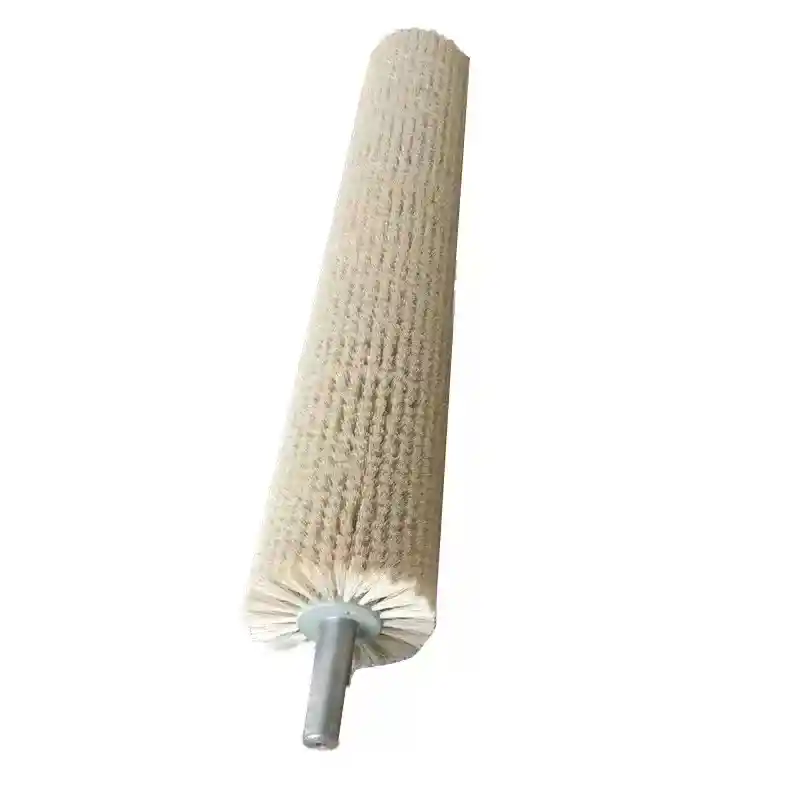
Brush length is another variable that is often overlooked. A standard 600mm brush head may clean two panel rows per pass on one site but require two offset passes on another site where panel spacing differs. We regularly manufacture custom brush lengths for operators who want to reduce pass counts and save labor. A brush that fits your racking geometry correctly pays for itself within a few service cycles.
For cleaning programs in coastal or high-humidity regions, stainless steel shafts and mounting hardware prevent rust contamination on panel surfaces. Standard carbon steel components are cheaper initially, but once rust particles blow onto the glass, they become abrasive agents in the next cleaning cycle.
What to Ask a Solar Panel Cleaning Brush Supplier
Before placing an order, confirm four technical details: the exact bristle material and grade, the filament diameter tolerance, the tip finishing method, and whether the mounting adapter matches your cleaning poles or machines. Suppliers who cannot provide these specifications are likely reselling generic brushes not designed for photovoltaic glass.
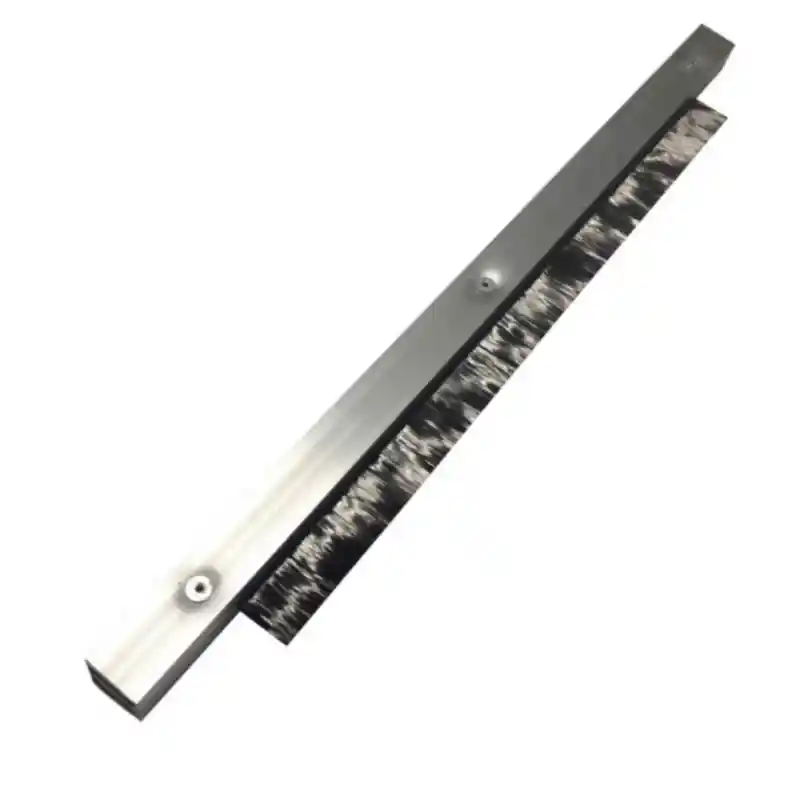
Our team at Huixi Brush supplies solar panel cleaning brushes to operators in regions including the Middle East, Australia, and Southeast Asia. We work with nylon 6.12 filaments in diameters from 0.10mm to 0.50mm, and we can tip-finish according to the panel manufacturer’s friction recommendations. Because no two solar farms are identical, we produce brushes with custom shaft lengths, mounting thread sizes, and bristle patterns to match specific cleaning equipment.
If your project involves cleaning systems with unique shaft dimensions or you need a brush that integrates with a proprietary robotic arm, confirming the mechanical interface early prevents delays. Send your drawing or specification to [email protected] or reach us at +86 1580 0932 713 — we check fitment and provide a sample before bulk production.
Common Solar Panel Cleaning Brush Questions
Will any soft brush work for cleaning solar panels?
Not reliably. A brush labeled “soft” may still have sharp-cut filament tips that can abrade the glass or anti-reflective coating. The only way to verify safety is to confirm the filament material, tip finishing, and diameter. A purpose-made solar panel cleaning brush with polished nylon 6.12 tips is a different product from a generic household soft brush.
How often should I replace a solar panel cleaning brush?
Depends on cleaning frequency and environment. In desert operations where brushes run daily, we typically recommend replacement after 800 to 1,200 cleaning hours. Visual indicators include bent or splayed filaments, worn tips, or any reduction in bristle density visible at the brush face. A worn brush that loses density cleans unevenly and may leave dust streaks.
Can a solar panel cleaning brush be used on automated systems?
Yes, provided the shaft diameter, overall length, and rotational speed rating match the machine specifications. For robotic arms with high-speed spindles, we use a reinforced core and balance-test each brush to prevent vibration. Make sure to supply the machine model and interface drawing when ordering.
What bristle material is safest for anti-reflective coated panels?
Nylon 6.12 with a polished or heat-sealed tip is the safest widely available option. It has lower moisture absorption than nylon 6.6 and better tip stability than polypropylene under sustained UV exposure. I have seen no coating damage in installations using correctly specified nylon 6.12 brushes, even after thousands of dry-cleaning passes. If your program uses coated panels, share the coating type — we can confirm filament compatibility before you commit to a brush specification.
If you’re interested, check out these related articles:
advantage of hx cylindrical nylon brushes
advantage of hx boiler tube brush