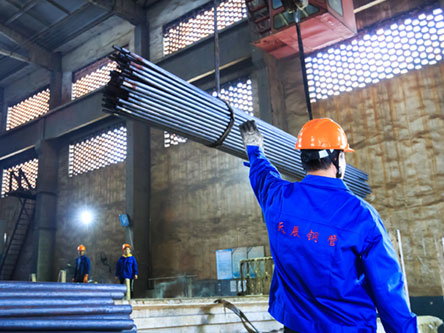

Mechanical steel tubes are the hidden workhorses inside rotating shafts, hydraulic cylinders, and precision bushings. The right tube choice can mean the difference between a component that runs 10,000 hours without a hitch and one that galls or fatigues prematurely. Selecting effectively means matching not just a standard grade but also the cold-drawn dimensional accuracy, material structure, and, when necessary, a non-standard profile that fits your design like a glove. Over my years supporting OEM engineering teams, I have repeatedly seen how a thoughtful tube specification early in the design phase cuts assembly costs, reduces machining scrap, and raises overall system reliability.
Mechanical Steel Tube Standards and Material Options
Mechanical tubing is defined by a set of international standards that dictate chemical composition, strength, and dimensional limits. The most frequently encountered are ASTM A519 (seamless carbon and alloy), EN 10305-1 (precision seamless cold-drawn), DIN 2391 (precision seamless), and JIS G3445 (carbon tubes for machine structural purposes). Each standard covers a range of grades, from low-carbon 1020 to quenched and tempered alloy 4140. Cold-drawn seamless tubes dominate mechanical applications because the drawing process refines grain structure and achieves tight OD/ID tolerances, reducing or eliminating secondary machining.
| Standard | Typical Grades | OD Tolerance (mm) | Primary Use |
|---|---|---|---|
| ASTM A519 | 1020, 1045, 4130, 4140 | ±0.13 | General mechanical, automotive |
| EN 10305-1 | E355, 25CrMo4 | ±0.08 | Precision mechanical assemblies |
| DIN 2391 | St35, St45, 41Cr4 | ±0.08–0.1 | Hydraulic and pneumatic cylinders |
| JIS G3445 | STKM13A, STKM13C | ±0.25 | Machinery and structural parts |
Material Grade Selection for Component Performance
Choosing the right grade means reading the component’s stress and wear profile. For parts that require extensive machining, free-cutting grades such as 11SMn30 or 1215 reduce tool wear and cycle time. Bearing surfaces and bushings often benefit from medium-carbon steels like 1045 or S45C, which respond well to induction hardening. When the application involves cyclic loading or impact, alloy grades like 4140 or 25CrMo4 can be quenched and tempered to deliver tensile strengths above 1000 MPa while retaining fatigue resistance.
I recall a project where a manufacturer of agricultural drive shafts was experiencing premature spline wear. The shafts were initially produced from 1020 cold-drawn tube. After we ran fatigue life calculations and switched to 4140 with a quenched and tempered structure, the failure mode shifted from fatigue cracking to a wear-limited life that extended service intervals threefold.
Precision Tolerances and Surface Finish Impact
Cold-drawn tubes deliver outer diameter tolerances as tight as ±0.05 mm, inner diameter tolerances to H8–H9, and surface roughness values around Ra 0.8–1.6 µm. These figures translate directly to real-world savings: a hydraulic cylinder tube delivered to H8 eliminates honing for seal contact; a shaft tube with straightness of 0.5 mm/m avoids a straightening operation. When a component producer invests in precise incoming tubing, they often remove an entire post-processing step from their routing.
If your design requires surface finish finer than Ra 0.8 µm or a non-standard OD/ID combination, it is worth confirming the cold-drawing mill’s capability early in the qualification process. Small-diameter tubes under 30 mm OD with thin walls can be particularly sensitive to ovality, and working with a mill that monitors ovality in-process prevents headaches downstream. For specification consultation, reach out to [email protected] with your drawing or sample.
Custom Shaped Steel Tubes for Design Integration
Standard round tubes cover a vast number of applications, but when a mechanical assembly needs to locate a bearing nest, create a spline form, or reduce part count, a custom shaped tube can be an elegant solution. Cold-drawing can produce hexagonal, oval, triangular, and octagonal profiles, as well as internal splines and stepped bores. These near-net shapes often replace multi-piece fabrications, cutting weight, tightening tolerance stack-ups, and speeding assembly.
In one case, a construction machinery OEM was assembling a complex pivot joint from a round tube with welded-on flats and a milled keyway. We developed a cold-drawn hexagonal tube with the keyway profile integrated. The switch eliminated two welding and milling stations, cut the part cost by 18%, and improved fatigue resistance because the continuous grain flow around the hex was stronger than the heat-affected zone of the previous weld. Stories like that are exactly why I enjoy stepping outside the round-tube mindset.
Quality Verification and Supplier Partnership
A reliable mechanical tube supplier should deliver a comprehensive quality package: in-line ultrasonic or eddy current testing, positive material identification (PMI) as a standard practice, and certified compliance to ISO 9001 or IATF 16949 if automotive standards apply. I look for mills that can trace every heat number back to its ladle analysis and supply a mill test certificate with actual mechanical properties, not just typical values.
At Tenjan, our PMI on every heat and NDT on finished tubes confirm material integrity before shipment. We have supported customers ranging from hydraulic system builders to automotive Tier 1s, and we understand that consistent quality documentation is as important as the tube itself. If you are qualifying a new mechanical tube source, send your requirements to [email protected] with your target application, and we will deliver a capability statement and process data specific to your profile. You can also call us at +86 13401309791 to discuss technical details directly.
Common Questions About Mechanical Steel Tubing
What separates mechanical tubing from structural tubing?
Mechanical tubing is manufactured to tighter dimensional tolerances and often to specific mechanical property requirements, making it suitable for machined components and moving parts. Structural tubing, by contrast, focuses on load-bearing capacity with broader tolerances, often per ASTM A500. For a part that rotates, slides, or holds a bearing, mechanical tubing is the correct call.
Is there a minimum order quantity for custom mechanical tubes?
It depends on the profile and material. Stock sizes can ship with MOQs as low as a few hundred kilograms. Custom profiles or non-standard alloys generally start at 500–1000 kg per order. At Tenjan, we accommodate smaller initial batches for sampling, typically 200–300 kg, so that first-article validation can proceed without committing to volume before you are ready.
How does cold drawing improve tube performance compared to hot-rolled material?
Beyond tightening dimensions, cold drawing permanently restructures the grain flow. The process elongates and aligns the grain, which raises yield and tensile strength by 10–30%, improves surface finish, and creates a more fatigue-resistant microstructure. In dynamic assemblies, a cold-drawn tube often outperforms a hot-rolled tube of identical chemistry simply because of that altered grain architecture.
What documentation should I expect with a mechanical tube order?
Documentation requirements are best clarified during inquiry, but any competent manufacturer can supply an EN 10204 type 3.1 certificate, along with ultrasonic, eddy current, or PMI reports per your request. If your industry needs additional testing, such as magnetic particle or intergranular corrosion, mention it early so that testing integrates smoothly into the production plan. Share your certification requirements and we will confirm which documentation applies to your order.