A signature fragrance is not just a pleasant scent; it is a brand asset that speaks directly to the emotional brain. Scent branding uses custom fragrances to embed a brand’s identity into the customer’s memory, creating associations that visuals and sounds cannot. In my decade of developing scent solutions for hotels, retailers, and luxury brands across 68 countries, I have watched a carefully chosen aroma turn a generic lobby into a destination and a boutique into an experience. The right scent attracts, engages, and builds loyalty silently but unmistakably.
Defining Scent Branding
Scent branding is the deliberate creation and consistent use of a unique, custom fragrance to represent a brand’s identity. Unlike scent marketing, which uses aroma temporarily to drive a short-term promotion, scent branding is a long-term strategic investment. The fragrance becomes part of the brand’s visual and emotional toolkit, much like a logo or a color palette. A signature scent can be diffused in physical spaces, embedded into packaging, or used in products, making sure that every customer touchpoint reinforces the brand’s story.
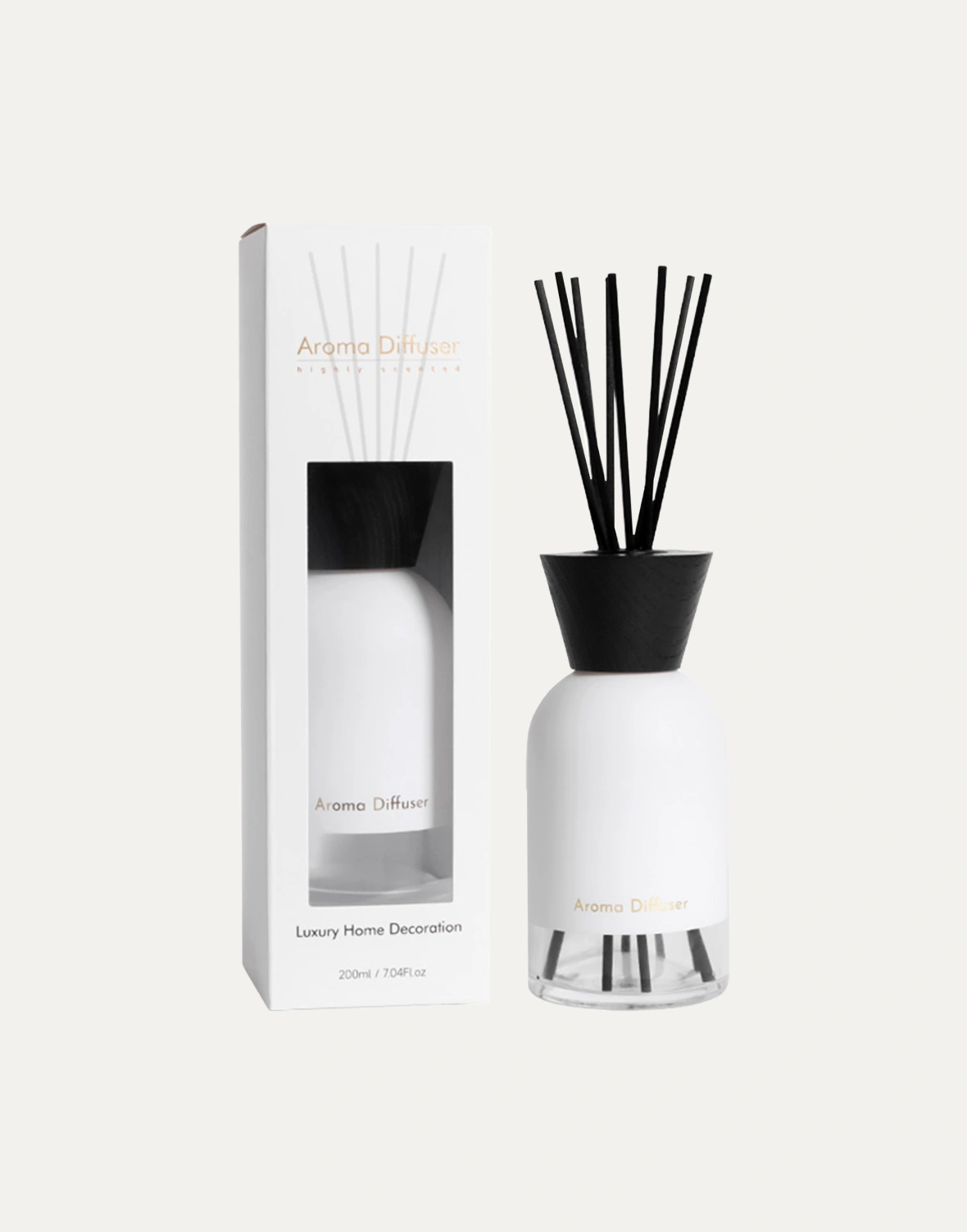
I have worked with luxury hotel chains that treat their lobby fragrance as carefully as their interior design. The scent must reflect the brand promise: a seaside resort might use a marine-floral blend with a hint of driftwood, while an urban luxury hotel may opt for a warm leather-and-amber accord. This level of customization is what separates a generic “nice smell” from an effective brand asset.
Understanding How Scent Branding Influences Customer Behavior
The power of scent branding comes from the direct pathway between the olfactory bulb and the limbic system, the brain’s emotional and memory center. Unlike other senses, smell bypasses the analytical thalamus and triggers immediate emotional reactions. A scent can evoke nostalgia, comfort, excitement, or calm within seconds, often without the person consciously recognizing it.
I recall a flagship retail store we worked with that introduced a soft green tea and bergamot scent in its fitting rooms. The store did not advertise the change, yet feedback surveys showed a noticeable lift in perceived product quality and a 12 percent increase in time spent browsing. The fragrance did not need to shout; it simply made the environment feel more refined and welcoming. This unconscious association between scent and brand quality is what makes scent branding a powerful tool for customer loyalty.
Creating a Signature Scent for Your Brand
Developing a custom fragrance is a collaborative process that translates brand values into an olfactory narrative. It requires a clear brief and a skilled fragrance designer who understands both the art of perfumery and the technical demands of large-scale diffusion.
Translating Brand Values into Fragrance Notes
Start by defining your brand’s personality. Is it energetic and youthful? Warm and inviting? Sophisticated and minimalist? Each attribute maps to a scent family: citrus and green notes convey freshness, floral accords suggest femininity or elegance, woody and spicy notes ground luxury or heritage brands, and gourmand notes bring warmth and comfort. The goal is not to pick a mass-appeal fragrance but to distill the brand’s essence into a recognizable scent signature.
The Role of Top, Middle, and Base Notes
A well-structured fragrance unfolds over time. Top notes deliver the first impression—bright and immediate, like crisp bergamot or green apple. These fade within minutes, giving way to the middle notes that define the fragrance’s character: rose, jasmine, or cardamom. The base notes provide depth and longevity, lasting for hours on surfaces and in diffusion; think sandalwood, vanilla, or musk. In commercial scenting, the base notes are especially important because they persist after the diffusion cycle, maintaining the ambient signature.
Working with a Manufacturer to Refine Your Formula
Partnering with an experienced fragrance manufacturer streamlines the creation process. At Scent-Share, we guide clients through a palette of over 300 scent types, adjusting top and base note ratios, concentration, and projection to match the target environment. Custom fragrance development typically takes four to six weeks, including formulation, testing, and modification. The result is a signature scent that is exclusive, compliant with IFRA standards, and optimized for consistent diffusion across multiple spaces.
Implementing Scent Branding Across Your Business
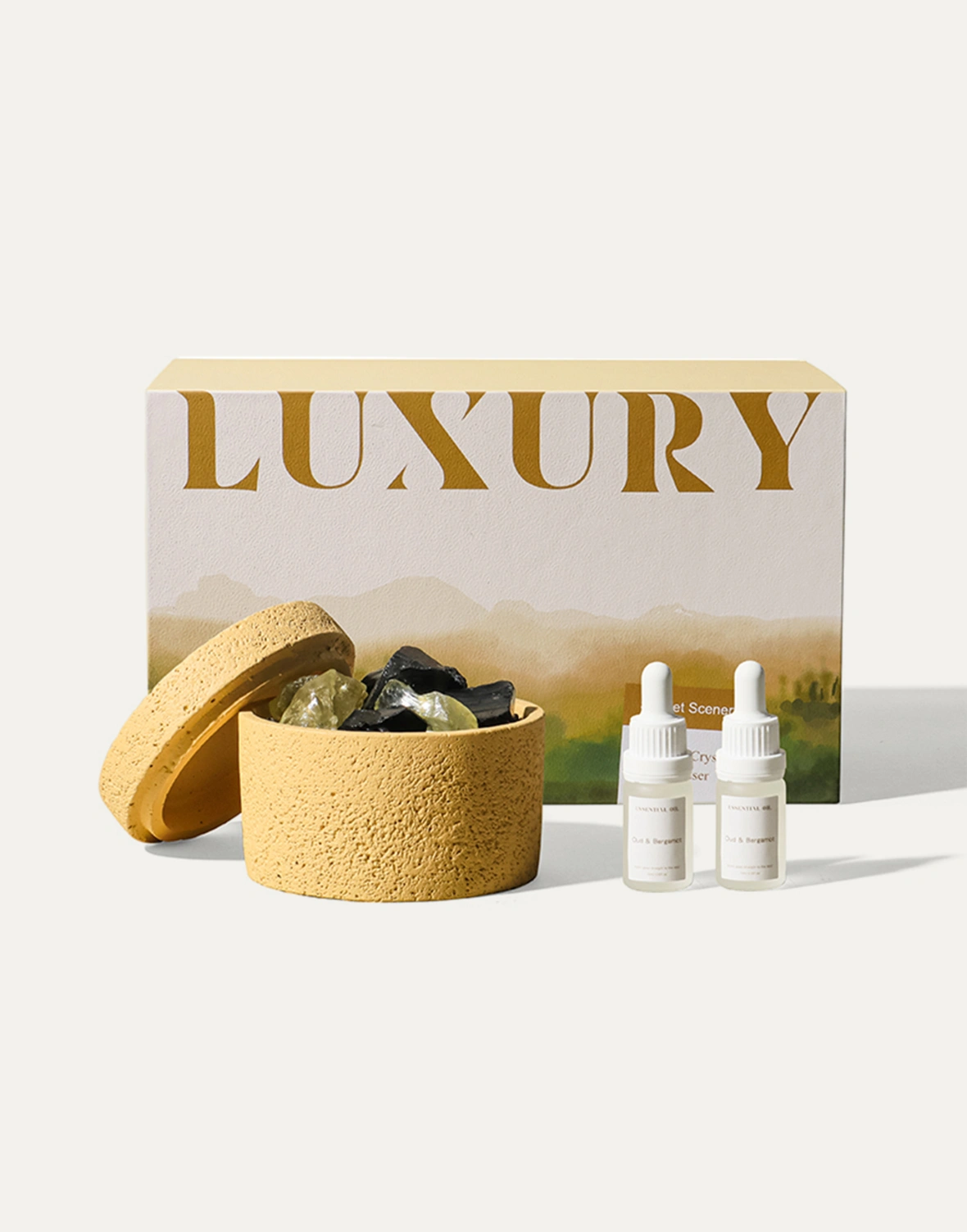
Once the fragrance is developed, the next step is delivering it reliably to every customer touchpoint. The choice of diffusion technology depends on the space’s size, ceiling height, and air handling system.
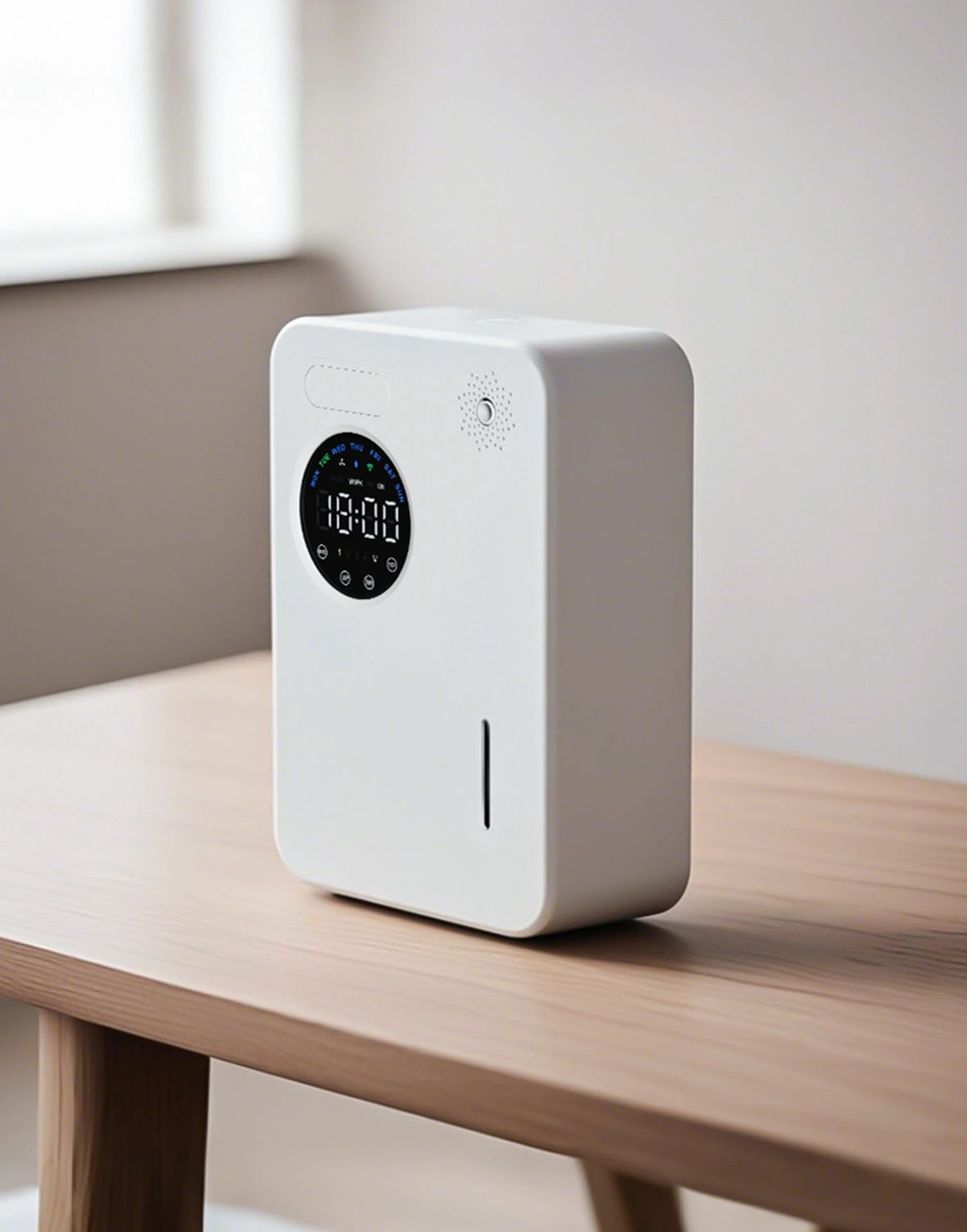
A comparison of diffuser categories illustrates the options:
| Diffuser Type | Coverage (m³) | Power | Best Application |
|---|---|---|---|
| Battery Wall-Mount | 200 | DC5V or Battery | Boutique stores, private offices |
| Bluetooth Commercial | 300 | DC12V-1A | Mid-sized retail, lobbies |
| Hotel Scent Tower | 3,000 | DC12V-2A | Hotel lobbies, large open areas |
| HVAC Integration | 8,000 | DC12V-3A | Multi-floor buildings, chains |
For large-scale installations, the Scent-Share HVAC scent diffuser integrates with existing ductwork and covers up to 8,000 cubic meters, delivering consistent scent across multi-floor buildings.
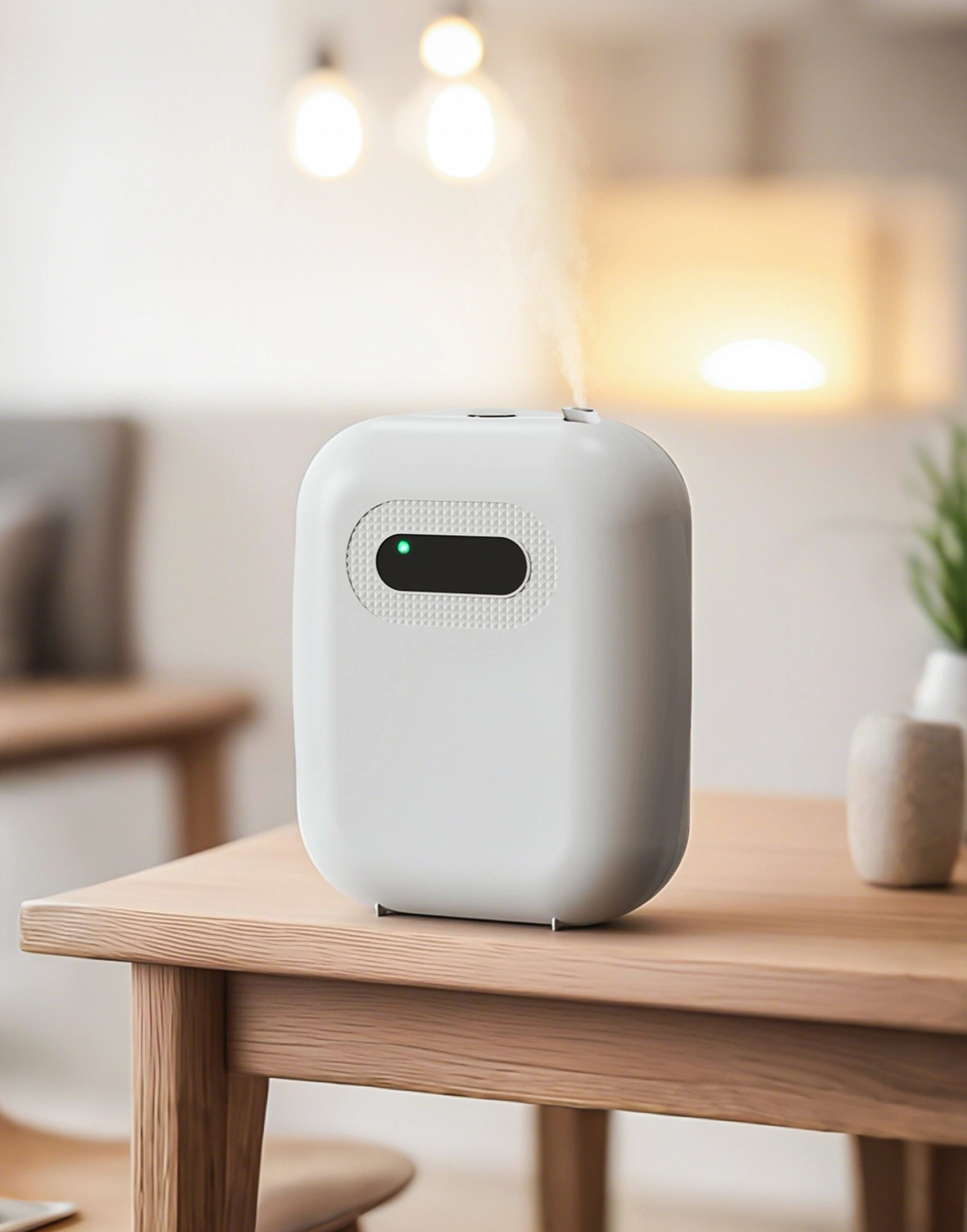
Beyond hardware, consistency matters. For multi-location brands across different climates, the scent intensity and diffusion schedule must adapt. A fragrance that works perfectly in a dry, air-conditioned Dubai hotel may need adjustment in a humid Bangkok resort. Remote management through Bluetooth or WiFi-connected diffusers allows fine-tuning from a central platform, making sure every property delivers the same branded experience.
We also know from serving 68 countries that cultural scent preferences vary. Middle Eastern markets often favor rich oud and amber notes, while European luxury spaces may lean toward understated floral-woody blends. Working with a manufacturer that understands these local nuances prevents costly missteps and helps the scent brand resonate genuinely with the target audience.
Starting Your Scent Branding Journey
Starting a scent branding project can feel overwhelming, but it does not have to be. The most important step is defining what your brand stands for and how you want customers to feel when they walk in. From there, a knowledgeable supplier can translate those feelings into a fragrance profile and suggest the right diffusion equipment.
If you are considering a custom scent for your hotel, retail store, or office, I invite you to share your brand vision with our team. We will prepare sample fragrance profiles, discuss diffuser options that match your layout and budget, and provide a detailed proposal. Contact us by email at [email protected] or call +86 185 6557 5758 to start the conversation. Scent branding is not just for global chains; businesses of any size can create an emotional anchor that brings customers back.
Answering Common Questions About Scent Branding
How much does scent branding cost?
Costs vary depending on the complexity of the fragrance formulation, the number of locations, and the diffuser hardware required. A simple one-store solution with a custom oil and a single commercial diffuser typically starts in the low four figures, while large-scale deployments across multiple properties involve higher investment. The return often appears through increased dwell time, higher average spend, and stronger repeat visitation. I recommend requesting a tailored quote based on your specific space and needs.
Can small businesses afford scent branding?
Yes. Many small boutiques and independent cafes use entry-level battery or Type-C powered diffusers with a pre-blended custom fragrance to create a signature ambiance without straining the budget. A wall-mount diffuser covering 200 square meters costs less than most monthly marketing subscriptions and runs for months on a single oil refill. The impact on customer perception can far outweigh the modest investment.
How long does it take to develop a custom fragrance?
The process usually takes four to six weeks from the brief to the final approved sample. This includes understanding your brand requirements, preparing an initial scent formula, sharing samples for feedback, and refining the blend. Rushed projects risk creating a fragrance that does not fully capture the brand’s identity or lacks stability during diffusion. Thoughtful iteration results in a scent that truly represents your business.
What is the difference between a signature scent and a generic fragrance?
A signature scent is an original, exclusive formula developed for a specific brand. It cannot be found on a retail shelf. A generic fragrance is a pre-made, mass-market blend that anyone can buy. The difference is like having a custom-tailored suit versus an off-the-rack jacket. With a signature scent, you control the notes, intensity, and even the diffusion profile, making sure no competitor smells like you. It becomes a proprietary brand asset.
How often do I need to replace fragrance cartridges?
Fragrance oil consumption depends on the diffuser’s output setting, daily run hours, and the size of the space. A typical 150ml bottle in a commercial Bluetooth diffuser lasts 20 to 30 days on moderate settings. HVAC systems use larger reservoirs that can run for months. Regular refills keep the scent consistent; some diffusers send low-level alerts so you never run dry. If you operate multiple locations, we can arrange a refill schedule that aligns with your maintenance routines. Let us know your floor plan and we will calculate the estimated refill frequency at no charge.
If you’re interested, check out these related articles: