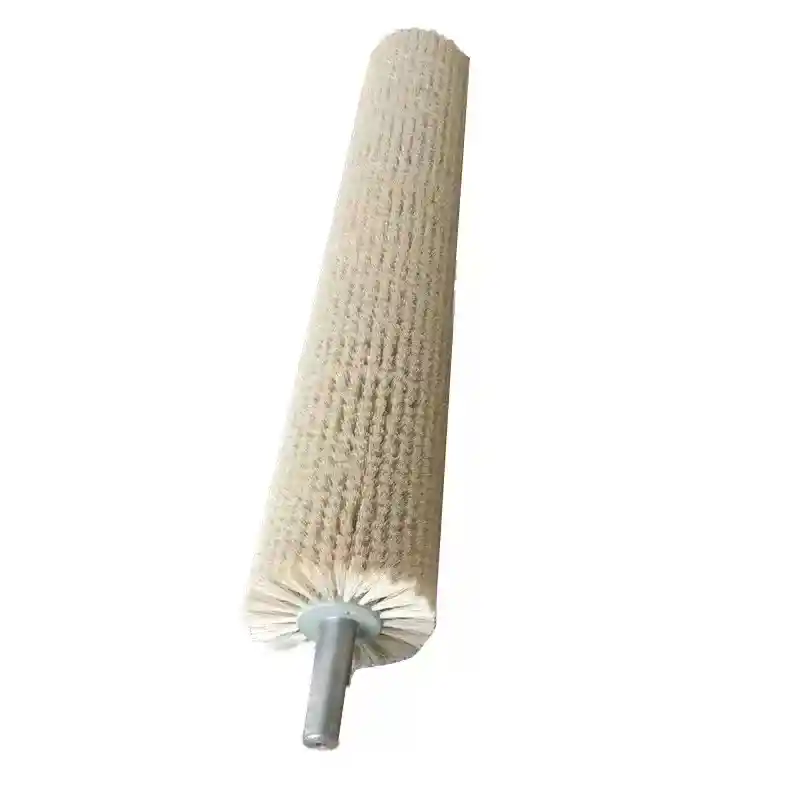

Sanding brush rollers produce consistent surface finish only when the filament grade, fill density, and core construction match the workpiece and the line speed. Most finishing variation is not a material failure. It is a specification gap: the roller is too aggressive for the profile, too soft to load the abrasive, or too open to keep uniform contact. I have spent fifteen years correcting these mismatches in wood, metal, and composite lines, where changing one sanding brush roller parameter often removed haze or striping the operator had accepted as normal. The practical way to hold repeatability is to fix the roller parameters before changing the machine. This article sets out the specifications that matter first and the checks that prevent batch variation.
Sanding Brush Roller Design Determines Finish Repeatability
A sanding brush roller is not a hard sanding drum. The filament tips do the cutting, and the filaments flex as they cross edges and curved sections. That compliance lets the roller follow light contours, but it also means contact force changes with filament length, density, and wear. When the fill is uneven, the roller cuts deeper in open zones and skips in dense zones. The surface can look smooth under normal light yet show shadow lines or uneven haze after coating. Repeatability starts with how the brush face is built, not with how hard the operator presses.
We treat the sanding brush roller as consumable tooling, similar to a cutter. For every new application I collect four inputs before specifying a sanding brush roller: workpiece material, required surface finish, line speed, and the shape of the profile or edge. One missing input is enough to order a roller that passes a sample at low speed and fails in production. That failure path shows up as edge burning, surface striping, or short abrasive life once the line reaches normal speed.
Sanding brush rollers are only as stable as their build. <advantage of hx cylindrical sanding brushes> covers how cylindrical sanding brush construction and filament retention affect finish repeatability and service life on production lines.
Abrasive Filament Selection Sets the Working Range
The abrasive filament is the working component of a sanding brush roller, and it has a narrower effective window than many buyers expect. A filament that is too hard removes stock quickly but can score the surface or leave a coarse scratch pattern. A filament that is too fine produces a smooth surface but may not break an edge or remove a coating. The correct choice starts with the workpiece.
| Filament type | Typical workpiece | Main benefit | Limitation |
|---|---|---|---|
| Silicon carbide nylon | Wood, painted surfaces, composites | Cuts cleanly while flexing over profiles | Wears faster on hard metal |
| Aluminum oxide nylon | Aluminum, mild steel, nonferrous parts | Good stock removal with moderate heat | May glaze on very hard surfaces |
| Ceramic impregnated nylon | Hard metals, edge deburring | Long edge retention, consistent cut | Aggressive; risk of surface scoring on thin stock |
| Fine abrasive nylon | Light finishing, cleaning, matte finish | Low risk of surface damage | Not suitable for heavy removal |
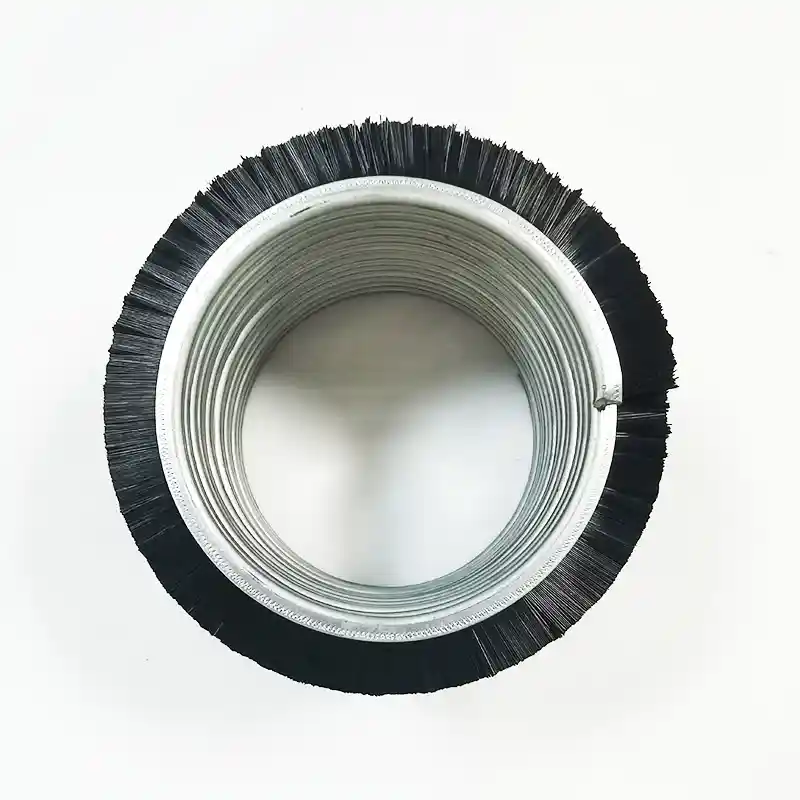
For any sanding brush roller, the specification should state the abrasive grit range, not just the filament color. Color alone says little about how the roller will behave on a specific substrate. For wood panels and painted surfaces, a silicon carbide nylon filament usually balances cutting action with flexibility. For aluminum and mild steel, aluminum oxide is more common. For harder metals or consistent edge radiusing, ceramic abrasive filaments hold a sharp cutting edge longer, although they cost more and can be too aggressive for thin profiles.
If your line runs coated extrusions or thin aluminum parts, confirm abrasive hardness and filament density before ordering. Send the profile drawing and finish requirement to [email protected], and we can check whether the sanding brush roller will cut too aggressively for the surface.
Core Density and Fill Pattern Control Contact Pressure
Fill density is the variable that most often changes contact pressure in a sanding brush roller without any visible difference in the roller. A denser fill carries more filament tips in contact, which keeps the cut more consistent on flat stock. It also reduces chip clearance, and that matters on wood or coating lines because loaded filament tips stop cutting and begin burnishing. An open fill clears waste better but can create uneven pressure on edges or narrow sections. For most profile sanding, we specify a higher fill density at the edges and a lower density in the center only when the profile geometry requires it. That is a design decision, not a standard stock choice.
Filament diameter and trim length work with fill density. A shorter trim length makes the roller more rigid, increases cut pressure, and improves edge definition. A longer trim length increases compliance, which lets the roller follow contours but reduces force at each filament tip. When a sanding brush roller loses cut soon after installation, the issue is often filament wear combined with long trim length. Wear reduces the effective filament length, and the longer initial trim exposes less fresh abrasive. A filament diameter that matches the profile and a trim length that leaves enough working range will keep the finish more stable for more hours.
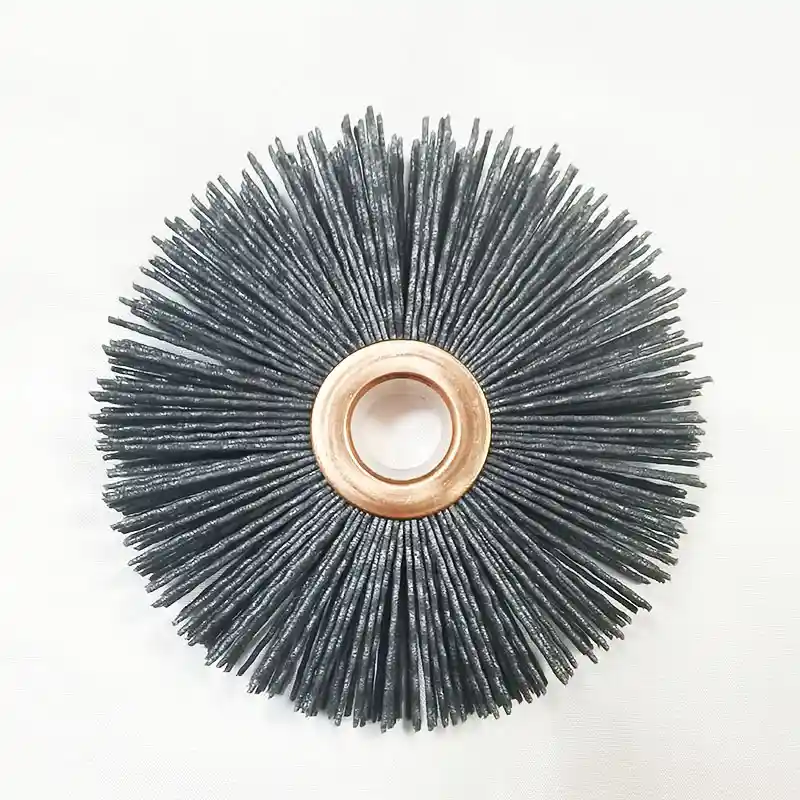
Spiral fill direction also changes how the brush face moves against the workpiece. <the differences between inward and outward spiral brush> covers how spiral direction affects material flow, cleaning action, and the way the brush tracks on a rotating shaft.
Dimensional Tolerance and Mounting Keep Runout Low
Finish uniformity also depends on how true the sanding brush roller rotates. A roller with good abrasive quality but poor shaft concentricity will produce a once-per-revolution variation that looks like light banding or chatter. The critical checks are the core bore or shaft fit, face runout after mounting, and balance for the operating speed. When a machine spindle has wear or the shaft adapter does not seat fully, a sound roller can be blamed for a mechanical problem. Before changing the roller design, I ask the customer to check runout at the operating bearing points first.
This is where OEM projects differ from standard roller purchases. A standard bore may fit a machine and still fret slightly under load. For continuous lines, we prefer a machined bore with a keyway or drive pin so the roller cannot slip during start-stop cycles. The mounting face should pull the roller square to the shaft; any gap on one side will create uneven contact pressure. These details are easy to overlook on a sample order and expensive to correct on a full production run.
Confirm the Full Sanding Brush Roller Specification Before Ordering
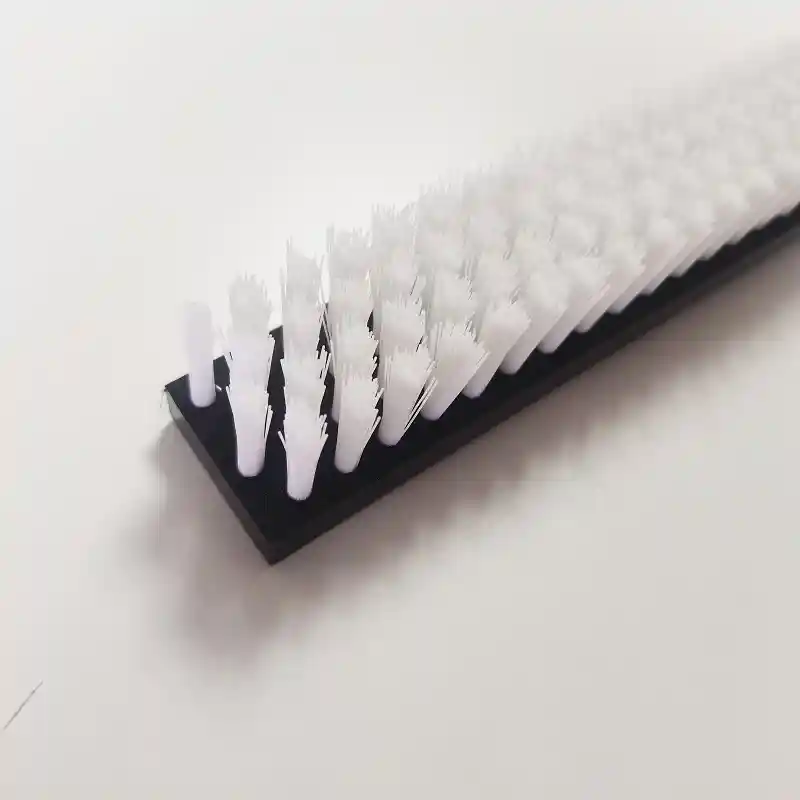
Most repeatability problems are solved before the first production run, in the specification sheet. If your current sanding brush rollers leave uneven scratch, lose cut early, or perform differently between batches, the fix is usually not more machine pressure. It is a cleaner definition of filament type, fill density, core size, trim length, and runout. Send the workpiece material, finish target, roller dimensions, and line speed to [email protected] or call +86 1580 0932 713. We will confirm the sanding brush roller build that fits your line and send sample specifications before you commit to a full order.
Common Questions About Sanding Brush Rollers
What is the difference between a sanding brush roller and a spiral sanding brush?
A sanding brush roller usually refers to a cylindrical roller built with abrasive filaments across its full face, while a spiral sanding brush winds a strip of abrasive filament around a core in a screw pattern. The full face roller gives more uniform contact across wide flat surfaces. The spiral design is often better for feeding and clearing debris on long profiled parts. For most flat finishing lines, we specify the full roller; for contoured or narrow sections, a spiral build can follow the surface better.
How do I know if the abrasive filament in a sanding brush roller is too aggressive?
Many users assume visible scratch means the brush is defective. More often, the filament is too hard or the tip speed is too high for the coating or substrate. Check the scratch pattern under low-angle light. If the lines are deep and evenly spaced, reduce the abrasive grade or use a less dense fill. If the surface shows burn marks, the roller is likely staying in one spot too long or running too fast. Always test on a reject part before changing the whole line.
Can one sanding brush roller handle multiple profiles?
It depends on how much the profiles differ in shape and material. A roller with medium abrasive filament and moderate fill can cover similar flat or gently curved sections, but a sharp radius or a different substrate often requires a separate roller. Using one roller across too wide a range usually produces acceptable finish on some profiles and edge wear or burning on others. For a mixed line, test two rollers on the extreme profiles and check whether the finish specification holds for both. If it does not, splitting the specification is cheaper than reworking parts.
Why does finish quality from a sanding brush roller change after the first few hours?
In production runs we see two causes: filament tip dulling and debris loading. Abrasive filament has a useful cutting window; after the initial tips wear, the roller enters a longer finishing window before it loses effectiveness. If the surface becomes glossy rather than cut, the tips are dull or loaded with resin and dust. Cleaning the roller face and checking air blow-off often restore cut temporarily. If the change appears on every new roller, the specification likely needs a harder abrasive or shorter trim length so the roller keeps fresh cutting edges in contact. Send the used roller photo and a current finish sample to [email protected], and we can identify whether the issue is loading or filament wear.
If you’re interested, check out these related articles:
where stainless wire spiral brush can be used
how do you know about deburring brushes
abrasive wheel brush a magical tool for industrial surface treatment