In the past decade, retail scent marketing trends have moved far beyond simply selecting a pleasant fragrance for a store. Today’s most effective programs treat scent as a responsive layer of the customer experience, one that adjusts to foot traffic, time of day, and even local weather through app-controlled, IoT-connected diffusion systems. Having supported retail chains across 68 countries, I’ve watched the shift unfold firsthand: the retailers who treat scent as static branding are being overtaken by those who make it dynamic. This article explores the practical innovations driving that change, from HVAC integration to real-time scent scheduling, and what they mean for procurement teams planning multi-location rollouts.
How Smart Scent Diffusers Are Changing Retail Environments
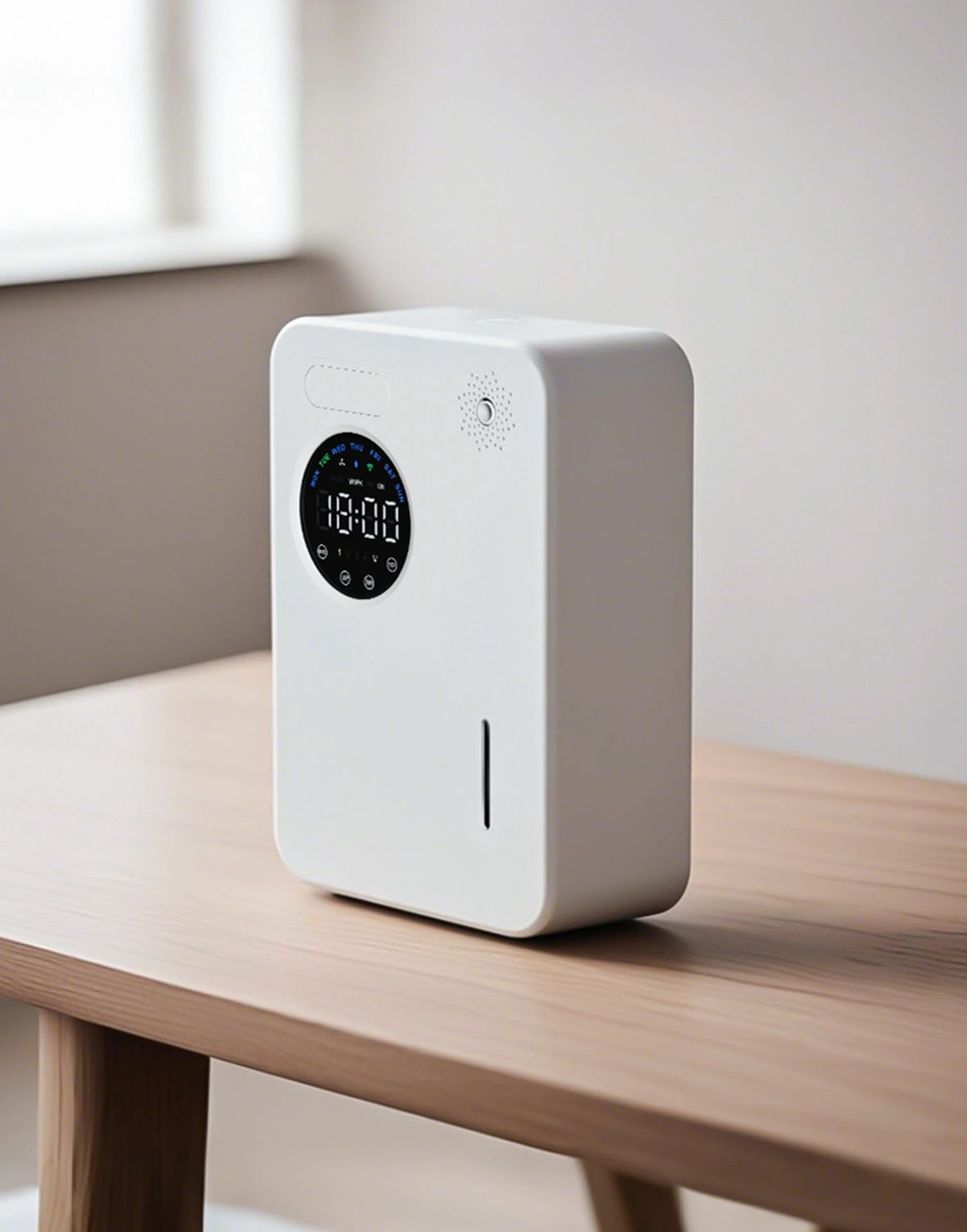 Five years ago, retail scent diffusers were largely mechanical—set a schedule, fill the oil, and hope the intensity stayed consistent. Today, Bluetooth and WiFi-enabled models let retailers control fragrance output from a smartphone app, adjusting intensity by the hour or by zone. This shift changes everything. In one of our projects, a fashion chain used app-controlled diffusers to increase citrus notes during morning hours and switch to warmer sandalwood in the evening, matching the shopper mood cycle. The result was a measurable lift in dwell time in key zones.
These smart diffusers also bring practical benefits. Maintenance alerts come through the app, not by visual inspection. Multiple devices can be synced, so the same fragrance program runs across all stores of a brand, eliminating regional inconsistency. For retail procurement teams, that means fewer site visits and less guesswork.
When evaluating a smart diffuser, look for models that support over-the-air firmware updates and have API access for future integration with your store management software. A device that only offers Bluetooth with no WiFi bridge option may limit your scalability. Our Commercial Scent Oil Diffuser, for instance, covers 300 m³ and runs 24/7 with a long-life pump, which makes it suitable for individual boutique zones or fitting rooms.
Why HVAC Scent Integration Matters for Consistent Customer Experience
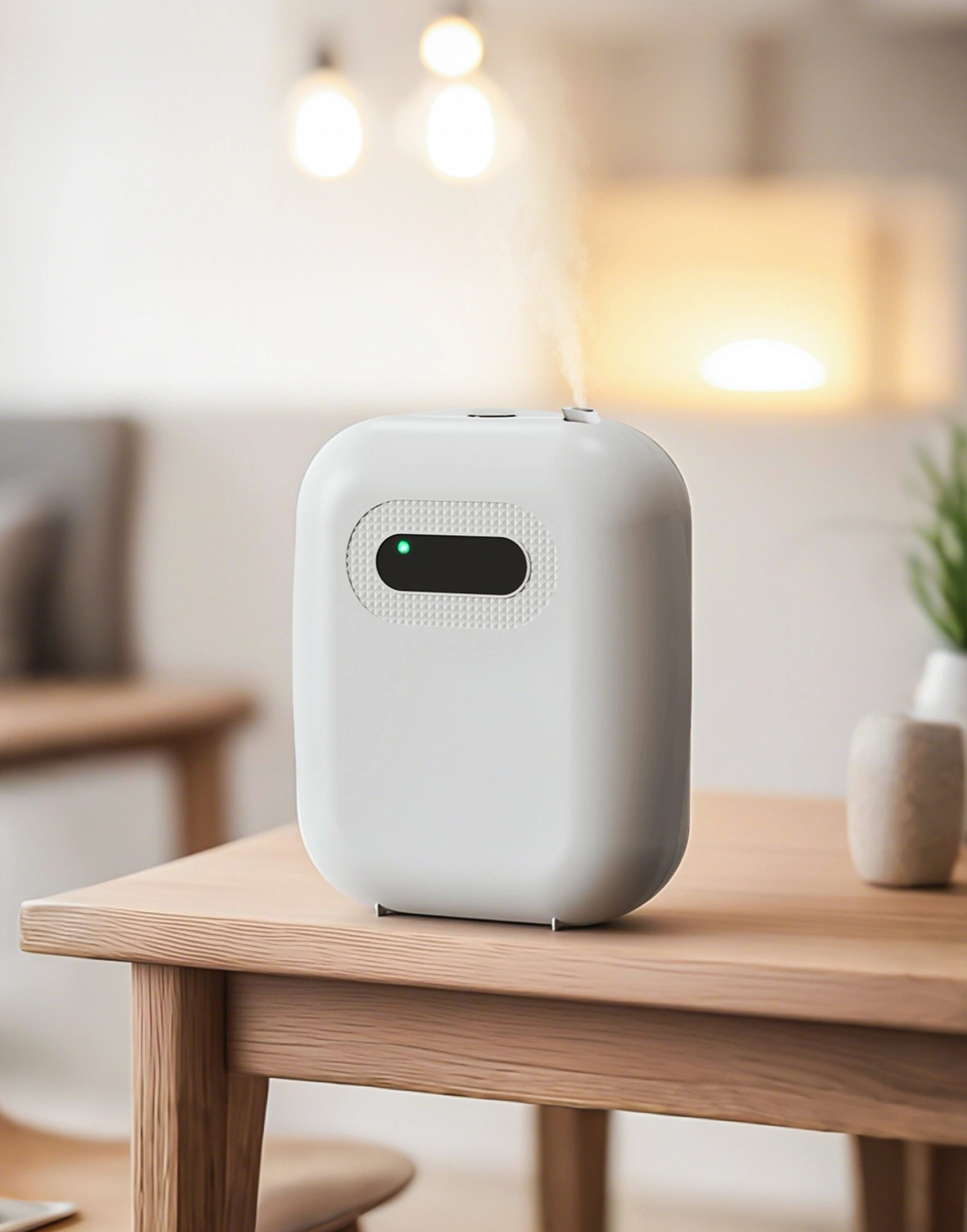
For larger retail spaces, standalone diffusers alone won’t deliver even coverage. Once you exceed about 1,500 square feet, scent distribution becomes uneven without forced air circulation. This is where HVAC scent integration shifts from luxury option to necessity. In our work with multi-level department stores, we consistently find that HVAC-connected systems reduce scent hot spots and cold zones by leveraging the existing ductwork to distribute fragrance uniformly.
The newer generation of HVAC scent diffusers is far simpler to install than older systems. They tap into the supply duct and atomize fragrance oil into the airflow without requiring refrigerant line modifications. The key advantage is consistent scent density across the entire sales floor, not just near the diffuser unit. For a chain with 30 locations, that uniformity becomes a brand credibility issue—a customer visiting a store in one city should experience the same olfactory identity as in another.
Before specifying an HVAC solution, confirm your existing air handler’s static pressure capability and whether the duct design allows a single injection point or requires multiple units. In large atriums or multi-story retail, a single diffuser may need to be paired with booster fans. We often provide clients with a detailed layout plan before installation to avoid cold spots.
Retailers in the Middle East, for example, where air conditioning runs nearly continuously, benefit from HVAC scenting because the fragrance stays suspended in the air column longer. For temperate climates, demand-controlled ventilation may require a diffuser that syncs with the building management system, adjusting output when fresh air intake increases.
| Feature | Standalone Diffuser | HVAC-Integrated System |
|---|---|---|
| Coverage | Up to 3,000 m³ (per unit) | Up to 8,000 m³ (per unit) |
| Scent Uniformity | Localized, needs multiple units | Even across entire duct zone |
| Installation | Plug-and-play, no duct work | Requires duct penetration |
| Maintenance | Refill individual units | Centralized refill, less labor |
| Control | Per device, via app | Central via app, sync with BMS |
| Best For | Boutique stores, pop-ups | Department stores, multi-floor chains |
If your retail chain includes spaces without central HVAC, ask us about standalone diffuser alternatives that maintain scent uniformity across different store formats.
How Data-Driven Scent Adjustments Boost Dwell Time
The promise of smart diffusers isn’t just remote control—it’s the ability to tie scent output to real-time store data. Footfall counters, POS transaction volumes, and even weather APIs can feed into scent scheduling algorithms. In a pilot we supported for a European electronics retailer, the scent system increased its output of a focus-enhancing rosemary blend when customer traffic spiked above a threshold, then dialed back during quiet periods to save oil consumption. The store reported a 12% increase in average dwell time for those periods.
This kind of real-time adjustment would be impossible with a standalone mechanical timer. It requires a diffuser that can accept API calls or integrate with a central IoT platform. When selecting a system, look for devices that support MQTT protocol or at minimum have REST API endpoints. Don’t settle for a proprietary app that cannot talk to anything else.
Beyond intensity, data can guide fragrance selection by zone. A store might run a calming lavender scent in the fitting rooms while the main floor uses an energizing citrus. By analyzing sales data per zone against scent parameters, retailers can refine their scent marketing program into a precise conversion tool. The technology exists; the missing piece is often in-house expertise to connect scent data to existing BI dashboards. That’s where a partner with both fragrance and integration experience becomes valuable.
How Do You Scale Scent Marketing Across Multiple Store Locations?
Launching scent in one store is straightforward. Rolling it out to 50 stores is where the real work begins. The biggest challenges we see are: (1) inconsistent installation quality across sites, (2) unplanned maintenance gaps, and (3) fragrance supply chain breaks when refills aren’t ordered on time. Here’s how to avoid them:
-
Standardize the diffuser specification. Choose a single model that works for the majority of your stores. Avoid mixing five diffuser types unless necessary, because each will have different maintenance schedules, oil consumption rates, and control apps. Using a model like our HVAC Scent Diffuser for large flagships and a smaller Bluetooth unit for satellite stores keeps the program manageable.
-
Centralize scent management. Use a cloud-based app that lets you monitor oil levels, battery status, and error logs across all locations from headquarters. This prevents a store manager from simply unplugging a diffuser when the scent is too light or too strong—something that happens more often than you’d think.
-
Train local staff minimally but thoroughly. We recommend a 15-minute video and a laminated guide showing how to refill and restart the diffuser. Over-training leads to misconfiguration.
-
Plan refill logistics with lead times. Fragrance oils are not stocked like paper clips. A custom blend for a retail chain can take 4–6 weeks to produce and ship internationally. Work with your scent partner to establish auto-replenishment based on device usage data, not calendar months.
-
Pilot first, then scale. Test your scent program in two stores for 90 days before full rollout. During the pilot, measure dwell time, staff feedback, and customer survey sentiment. Use that data to tweak the fragrance intensity and composition before it becomes a brand-wide standard.
In our experience, the retailers who succeed are those who treat scent as an operational asset, not a marketing experiment. That means involving facilities management, IT, and procurement from the beginning.
How Is Retail Scent Branding Evolving Beyond Signature Scents?
Ten years ago, the goal was to create a single signature scent that customers would associate with a brand forever. That approach worked for luxury hotels, but retailers are now realizing that a monolithic scent strategy can feel dated. Today, the trend is toward scent ecosystems—a collection of related fragrances that vary by season, campaign, or even time of day, all anchored by a consistent olfactory DNA.
This shift is partly driven by consumer novelty seeking. A shopper who visits a fashion store weekly might tune out a constant jasmine scent, but a rotating palette of floral notes—jasmine in spring, gardenia in summer, rose in autumn—keeps the experience fresh without breaking brand coherence. Our fragrance library of over 300 scent types makes it possible to build such an ecosystem without reinventing the wheel each time.
Developing this range requires a fragrance partner who understands your brand’s emotional positioning and technical constraints. The oils must perform consistently across diffuser types, and the subtler variations in the ecosystem must be perceptible but not jarring. That’s a level of formulation expertise that goes beyond simply mixing essential oils.
The payoff is a more dynamic, memorable brand interaction. As more retailers adopt smart diffusion, those who treat scent as a static logo will find their olfactory presence becoming background noise—and that’s exactly what they’re trying to avoid.
Bringing Smart Scent Marketing to Your Retail Brand
Scent marketing works best when the technology, fragrance, and logistics are aligned from day one. At Scent-Share, we help retail chains in 68 countries achieve consistent scent experiences through integrated equipment, custom fragrance formulation, and ongoing support.
If you’re evaluating a retail scent program and want to avoid the common pitfalls of scaling—uneven coverage, IoT integration gaps, or supply chain breaks—reach out to our team. Tell us how many stores you’re planning to scent, their average floor area, and any HVAC infrastructure details. We’ll return a recommended configuration, including diffuser models and fragrance options, without any obligation.
Email us at [email protected] or call +86 185 6557 5758 (or +86 134 2048 5758) to start a conversation. A practical scent strategy is closer than it seems.
What Retailers Ask About Smart Scent Marketing
How much does a retail scent marketing system cost?
The cost varies widely based on diffuser type, number of zones, and fragrance complexity. A single boutique with a standalone Bluetooth diffuser and a three-month fragrance supply might start around $2,000, while a full HVAC-integrated system for a ten-store chain with custom fragrances can exceed $50,000 annually. The real variable is often the fragrance itself: custom development costs more than off-the-shelf oils, but provides brand exclusivity. Request a quote with your store specs to get an accurate figure—share your floor plan and we’ll break down the costs.
Can existing HVAC systems be retrofitted with scent diffusers?
In most cases, a commercial scent diffuser can be installed into an existing air handler by penetrating the supply duct with a small atomizer nozzle. The installation does not affect cooling or heating performance. The diffuser mounts near the HVAC unit and connects via a flexible tube. You do need to confirm your duct material and static pressure with the supplier beforehand. Our team provides technical drawings for your HVAC contractor to follow, keeping the process straightforward.
How long does custom retail fragrance development take?
Typically 6 to 8 weeks from brief to first sample. The process involves understanding your brand’s emotional positioning, selecting base notes, and then iterative testing so the fragrance performs consistently across your diffuser models. For tighter timelines, we can sometimes accelerate using pre-developed accords from our library of over 300 scents. A quicker route is to select a base signature and modify it with one or two top notes, which can cut development to 4 weeks.
What maintenance do commercial scent diffusers need?
Routine maintenance is minimal: replenishing the oil bottle when low (typically every 30–90 days depending on usage), cleaning the atomizer nozzle every 6 months, and occasionally replacing filters or pump components. Our diffusers send low-oil alerts via the app, so you won’t run out unexpectedly. For multi-location chains, we can set up a remote monitoring service where our team tracks device status and ships refills proactively, reducing the burden on store staff.
Does scent marketing work well in large department stores?
Modern HVAC-integrated systems excel in large spaces. We’ve equipped department stores covering over 30,000 square feet with our high-capacity diffusers that cover up to 8,000 cubic meters per unit. The key is designing the layout with multiple injection points to avoid fragrance drop-off in distant aisles. For multi-level stores, each floor may need its own unit. When installed correctly, customers perceive a consistent ambient scent without identifying the source, which enhances the shopping environment without overwhelming. Share your floor plan with us at [email protected] and we will evaluate the fit.
If you’re interested, check out these related articles: