Restaurant scent marketing works against the strongest competing smell in the building: the kitchen. A dining room rarely needs more fragrance; it needs scent that survives grease, steam, and open flame without becoming air freshener. I have spent ten years formulating commercial fragrance systems for restaurants, and the installations that fail almost always begin with the same mistake: operators choose a favorite scent before measuring how air moves through the room. This article covers the decisions that determine whether guests notice the fragrance, stay longer, and remember the meal.
Restaurant Scent Marketing Starts With the Dining Room, Not the Diffuser
Scent has to follow the dining room, not compete with the food. The first measurement I ask for is not the table count but the ceiling height and the HVAC return path. A high ceiling, a strong kitchen exhaust, or a dining room that shares air with the bar changes the intensity you need. If you cannot control where the air goes, the diffuser becomes an expensive air freshener that collects near a corner.
I have seen dining rooms where the fragrance disappeared from the front section because the return air pulled it into a low ceiling pocket. The operator kept raising intensity until guests near the door complained of perfume, while the rest of the room smelled nothing. The fix was not a stronger scent. It was moving the diffuser closer to the supply air and lowering the output.
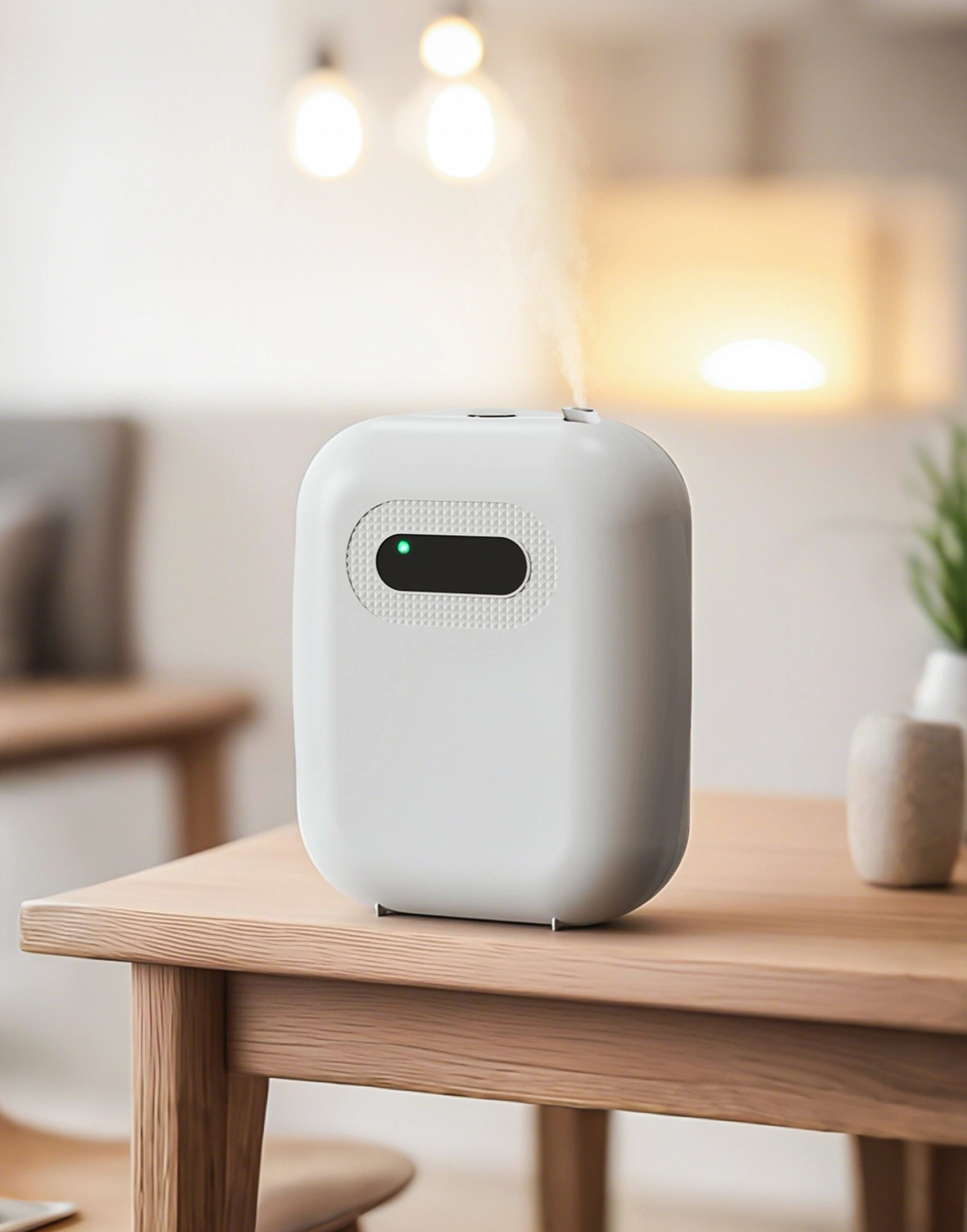
The Scent Profile Has to Match the Food and Service Style
Restaurant scent marketing fails when the fragrance tells one story and the food tells another. A smoky oud in a bright ceviche bar confuses the nose, and a bakery scent in a sushi restaurant can read as synthetic. We maintain more than 300 scent types because a coffee shop and a steakhouse cannot share the same formula.
| Dining style | Scent direction | Intensity | Why it works |
|---|---|---|---|
| Fast casual burger or grill | Citrus, green leaf, light smoke | Low | Opens appetite and counters grease |
| Sushi or raw bar | Green tea, cucumber, light marine | Low | Keeps the room cool and clean |
| Bakery or dessert cafe | Warm vanilla, butter, cinnamon | Very low | Reinforces the visible food |
| Steakhouse | Cedar, black pepper, amber | Medium | Matches the char and weight |
| Fine dining | Orris, white tea, mineral | Very low | Reads as background, not predictable perfume |
| Outdoor terrace | Neroli, mint, light wood | Low | Holds attention without clashing with open air |
These directions are a starting point; the exact dose changes with ceiling height and table density.
Why Most Restaurant Scenting Fails in Open Kitchens
Open kitchens create a specific failure that most scent plans skip. When the exhaust hood runs, it pulls more air from the dining room than the HVAC supply returns. That negative pressure may draw your scent straight into the kitchen before it reaches a single table. I have corrected this in open dining rooms where the chef liked the fragrance more than the guests did.
The most common mistake is placing a diffuser near the pass-through. The hood pulls that air out, and the operator keeps raising the intensity. The room does not smell better; the staff stop noticing. Before adding scent to an open kitchen, confirm the dining room is slightly positive in relation to the kitchen. Otherwise the system spends its life conditioning the exhaust.
If your restaurant has an open kitchen or a strong exhaust hood, confirm the pressure direction before you buy equipment. Send your kitchen exhaust CFM and dining room square footage to [email protected] and we can check whether the dining room will hold the scent.
The Right Restaurant Scent Diffuser Depends on Room Volume and Airflow
Scent machine choice is less about brand and more about how much air you move. A small closed dining room can work with a compact unit, while a double-height restaurant or a space tied to an HVAC system needs a larger delivery system. I use the room volume first, then the airflow path, then the scent type.
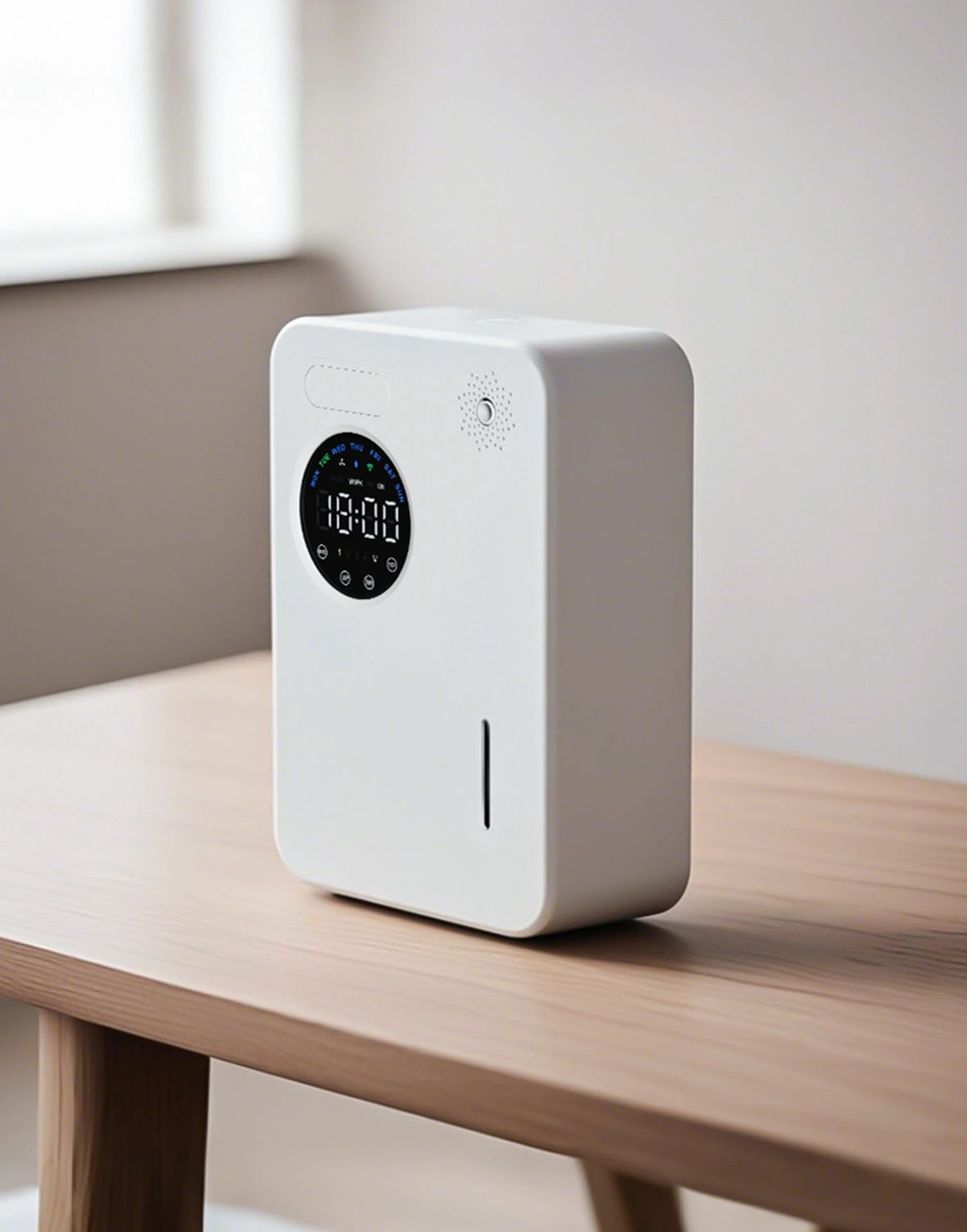
| Diffuser type | Coverage | Best restaurant use |
|---|---|---|
| Commercial Scent Oil Diffuser (Bluetooth APP) | 300 m³ (1,000 sq ft) | Small dining room, private room |
| Ceiling Track-Mount Aroma Diffuser | 500 m³ | Low ceiling cafe, narrow front area |
| Wall Mount Aroma Diffuser HVAC System | 3,000 m³ (10,000 sq ft) | Full service restaurant, multi-room |
| Hotel Scent Oil Diffuser Tower | 3,000 m³ (11,000 sq ft) | High ceiling dining hall, lobby dining |
| Commercial HVAC Scent Diffuser Aroma Dispenser System | 8,000 m³ (30,000 sq ft) | Large venue, central HVAC |
Placement matters more than output. The diffuser belongs on the supply air side, away from the pass-through and away from open windows. One unit at the entrance will not cover a long rectangular room; two smaller units almost always perform better than one oversized unit.
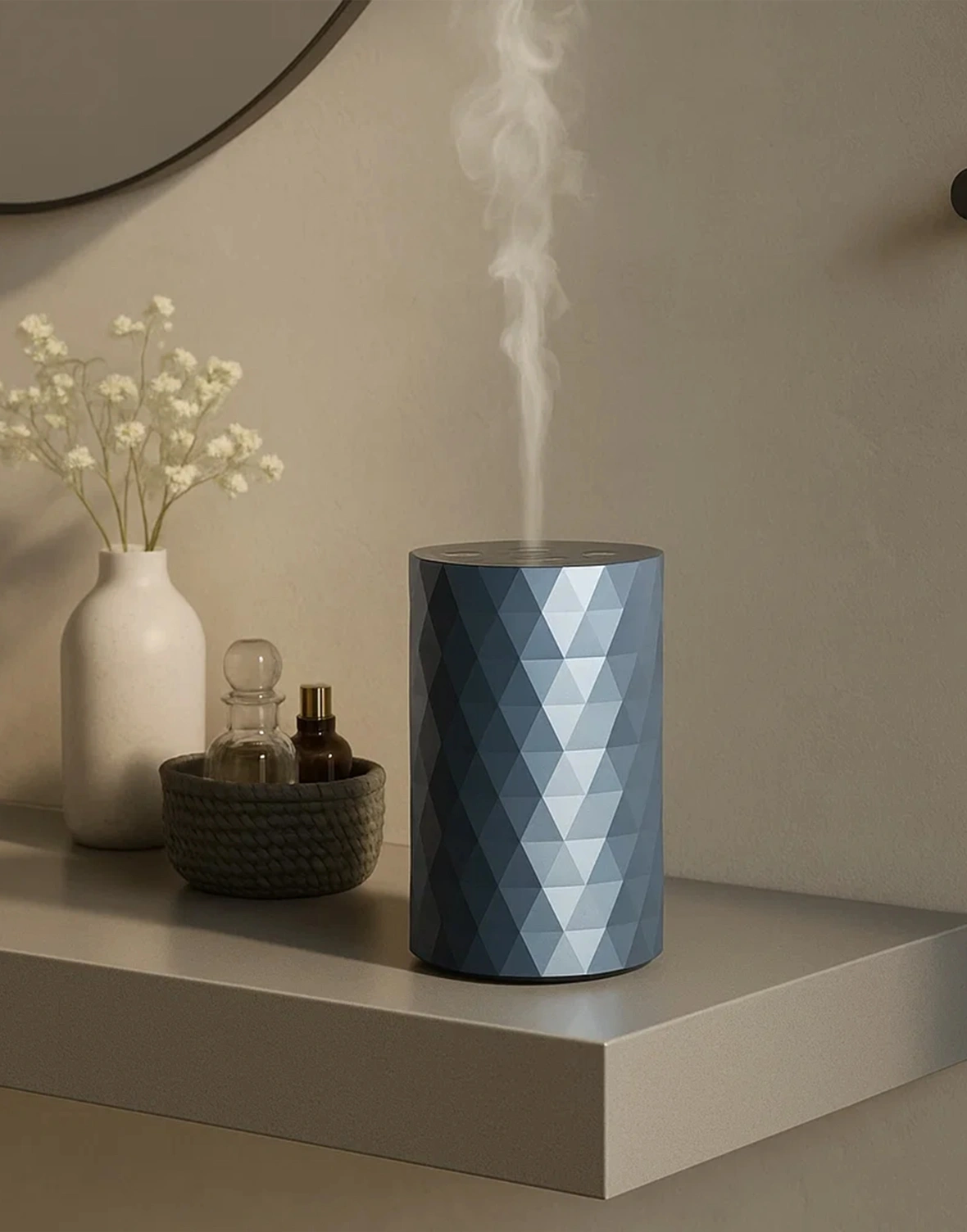
A Scent Specialist Shortens the Testing Period
Most restaurant operators do not want a six week trial. Staff become nose blind, and a guest cannot always tell you whether a scent is working. A specialist shortens this by testing the room volume and air balance before installing, then limiting the selection to two or three directions rather than twenty.
At Scent-Share, we ask for a floor plan instead of a favorite scent. Send your dining room floor plan, ceiling height, kitchen exhaust CFM, and the type of service to [email protected]. We will return a shortlist of three scent directions and one diffuser recommendation matched to your air balance. You can also call our team at +86 185 6557 5758 or +86 134 2048 5758.
Restaurant Owners Ask These Questions Before Starting
How much fragrance will guests actually smell?
Guests should notice the room, not the diffuser. In a properly set restaurant system, the scent sits at the edge of awareness. Some will not name it; they will simply say the space feels clean, warm, or appetizing. If guests can identify the fragrance within two minutes, the intensity is usually too high. The goal is a background impression that complements the food rather than competing with it. We measure scent in relation to room volume, not by a fixed oil setting, because the same setting overproduces in a small room and disappears in a high ceiling.
Does scent marketing work for small restaurants?
A common assumption is that scent marketing belongs to hotel groups and large chains. Small restaurants have one real advantage: the air volume is small enough to adjust quickly. A single restaurant can change intensity by service period without rebalancing an entire floor. The problem is usually not size but exhaust. A strong kitchen hood will erase scent from a 40 seat dining room just as fast as from a 200 seat hall. If the air balance is correct, a compact diffuser in a small space can create a stronger brand impression per square meter than a scattered system in a large venue.
Do I need a different scent for lunch and dinner?
It depends on the shift and the kitchen. A daytime fast casual service usually benefits from a lighter citrus or green note that keeps the room feeling quick and clean. Evening service, with longer dwell time and stronger food, can carry a warmer wood, amber, or spice note at a slightly higher intensity. The cuisine matters more than the hour. A seafood raw bar should not swing from marine freshness at noon to heavy vanilla at night, or the identity will blur. We often program two intensity levels within the same scent family rather than switching formulas.
When do I know the scent is set correctly?
In restaurant programs we run, the useful test is a five minute absence. Leave the space, walk outside, and come back. If the first impression is the food and then the room, the scent is doing its job. If the first impression is perfume or a noticeable machine smell, the dose is too high. Staff feedback is unreliable because the nose adapts quickly. A better check is to ask a regular who does not work there whether the room feels clean and appetizing. If you want to avoid guessing, send your floor plan and kitchen airflow details to [email protected] and we can confirm the dose before you run a full service cycle.
If you’re interested, check out these related articles: