FLT-3L keeps showing up in our work with hematopoietic systems, and for good reason. This cytokine sits at the center of how stem cells decide to become myeloid or lymphoid lineages, and getting the recombinant version right matters more than most people realize when you’re trying to push dendritic cell populations or support immune recovery protocols.
How FLT-3 Ligand Drives Receptor Activation and Downstream Signaling
FLT-3L binds to the FLT-3 receptor, a class III receptor tyrosine kinase found on hematopoietic stem cells and progenitor populations. When the ligand attaches, the receptor dimerizes and autophosphorylates, kicking off several intracellular signaling cascades. The PI3K/Akt pathway handles survival signals. MAPK/ERK pushes proliferation. STAT5 activation drives differentiation programs.
These pathways don’t operate in isolation. They cross-talk constantly, and the balance between them determines whether a cell expands, differentiates, or maintains its stem-like state. When FLT-3L signaling goes wrong, the consequences show up as hematological malignancies, particularly certain leukemias where the receptor itself carries activating mutations.
Working with recombinant human FLT-3L gives us control over these variables. We can dose precisely, time exposures accurately, and compare results across experiments without worrying about batch-to-batch variation. The purity of the starting material directly affects how clean the data comes out.
Dendritic Cell Expansion and Immune System Effects
Dendritic cells need FLT-3L. Both plasmacytoid DCs and conventional DCs depend on this cytokine for their development from bone marrow progenitors. pDCs produce type I interferons when they encounter viral patterns. cDCs excel at grabbing antigens, processing them, and presenting peptides to T cells in ways that actually generate productive immune responses.
The practical impact here is straightforward. If you want more DCs for an experiment or a therapeutic application, FLT-3L is how you get them. The cytokine expands progenitor populations and pushes them toward DC fates rather than other myeloid lineages.
Quality matters enormously in these applications. Contaminated or partially active preparations introduce variables that obscure real biological effects. When we run in vitro differentiation protocols, the recombinant FLT-3L needs to perform consistently across multiple experiments.
FLT-3L Effects on Dendritic Cell Maturation
FLT-3L doesn’t just increase DC numbers. It affects their functional capacity. DCs expanded with FLT-3L upregulate co-stimulatory molecules like CD80 and CD86. They increase surface expression of MHC class I and class II proteins. They secrete more IL-12 and TNF-α when activated.
These changes translate directly into better T-cell priming. A DC that presents antigen without adequate co-stimulation tends to induce tolerance rather than immunity. FLT-3L-expanded DCs come equipped with the molecular machinery needed for productive immune activation.
Cancer Immunotherapy and Transplant Applications
The therapeutic angle on FLT-3L centers on two main areas. First, expanding DC populations for cancer vaccines. Second, supporting hematopoietic recovery after myelosuppressive treatments.
DC vaccines work by loading patient-derived dendritic cells with tumor antigens, then reinfusing them to stimulate anti-tumor T-cell responses. The limiting factor is often DC numbers. FLT-3L administration or ex vivo expansion with recombinant cytokine addresses this bottleneck.
After chemotherapy or radiation, patients frequently develop neutropenia and other blood count problems. FLT-3L accelerates the recovery of hematopoietic populations, reducing the window of vulnerability to infections. In bone marrow transplant settings, the cytokine can improve engraftment by mobilizing stem cells and supporting their expansion.
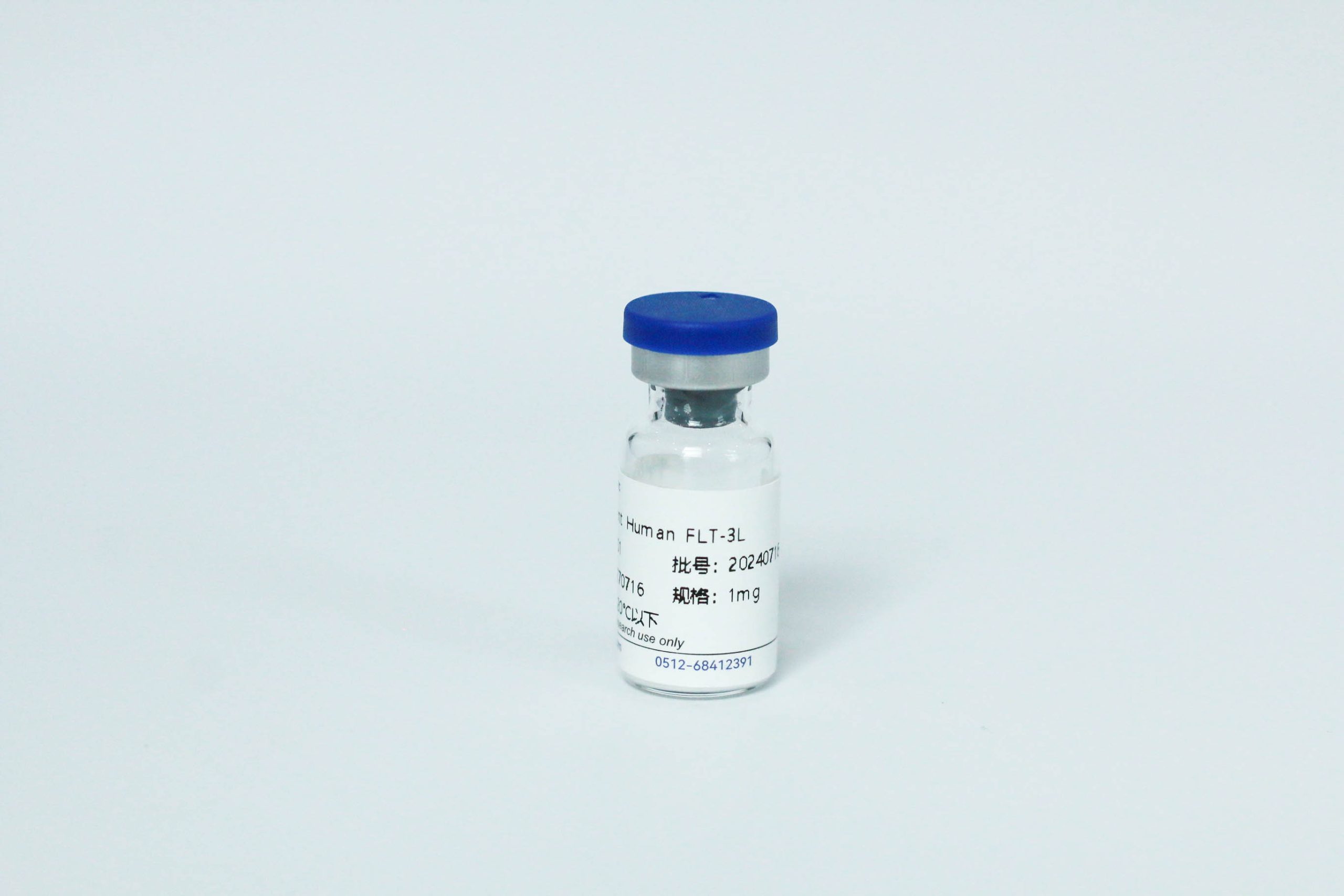
Oncology Applications for Recombinant FLT-3L
Recombinant human FLT-3L serves multiple roles in cancer treatment research. It generates the DC populations needed for vaccine approaches. It reduces chemotherapy-induced cytopenias. It combines with other immunomodulatory agents in protocols designed to overcome tumor-mediated immune suppression.
The combination therapy angle deserves attention. FLT-3L alone may not break through the immunosuppressive tumor microenvironment, but paired with checkpoint inhibitors or other immune activators, it contributes to more robust anti-tumor responses.
For researchers working on immune co-stimulation mechanisms, we recommend reading “《Recombinant Human 4-1BBL: Unlocking Immune Co-stimulation for Advanced Therapies》”.
Production Standards and Quality Requirements
Making recombinant FLT-3L that actually works requires attention at every step. Expression system selection affects protein folding and glycosylation patterns. CHO cells remain a common choice because they produce properly modified human proteins.
Purification needs to achieve high purity, typically above 95%, without damaging the protein’s three-dimensional structure. Endotoxin contamination causes problems in any immune cell assay, so levels below 1 EU/mg are standard for research-grade material.
The final validation step involves functional testing. A protein that looks pure on a gel but doesn’t stimulate cell proliferation or differentiation isn’t useful. We run bioactivity assays to confirm that each lot performs as expected.
Critical Factors in FLT-3L Manufacturing
Expression system choice determines post-translational modifications. Purification strategy affects both purity and recovery. Endotoxin control prevents experimental artifacts in sensitive cellular systems. Functional validation confirms that the protein actually does what it’s supposed to do.
Each of these factors contributes to the final product quality. Cutting corners at any stage creates problems downstream, whether that means inconsistent experimental results or failed therapeutic applications.
Research Directions and Clinical Translation Pathways
FLT-3L research continues expanding into new areas. Ex vivo expansion of hematopoietic stem cells for transplantation represents one active front. Using the cytokine as a vaccine adjuvant to boost responses against infectious agents or tumor antigens is another.
Personalized medicine approaches may eventually tailor FLT-3L dosing and timing to individual patient characteristics. Some patients respond better than others to cytokine-based interventions, and understanding the variables that predict response could improve outcomes.
The cell therapy field particularly benefits from reliable FLT-3L supplies. Whether expanding CAR-T cells, generating DC vaccines, or preparing stem cell products, the quality of the starting cytokines affects what comes out at the end.
Work with East Mab Bio on Recombinant Human FLT-3L
Jiangsu East-Mab Biomedical Technology Co., Ltd. produces high-quality recombinant protein raw materials for research and therapeutic development. Our $30 million investment in research and production infrastructure supports consistent delivery of highly pure, biologically active recombinant human FLT-3L.
We supply materials for IVD development, cell culture media formulation, cell therapy manufacturing, and organoid research applications. Contact us at [email protected] or +86-400-998-0106 to discuss your specific requirements.
Common Questions About Recombinant Human FLT-3L
What biological role does recombinant human FLT-3L play?
Recombinant human FLT-3L stimulates hematopoietic stem and progenitor cell proliferation, differentiation, and survival. The cytokine particularly supports dendritic cell and natural killer cell development, making it central to immune system regulation and blood cell production.
How does FLT-3L support dendritic cell development?
FLT-3L drives the expansion and maturation of both plasmacytoid and conventional dendritic cell subsets. These cells gain enhanced antigen presentation capacity and T-cell activation ability, which translates into stronger adaptive immune responses. This property makes FLT-3L valuable for immunotherapy research and DC vaccine production.
What therapeutic applications exist for recombinant human FLT-3L?
Current applications include cancer immunotherapy, where FLT-3L expands DC populations for vaccine approaches, and hematology, where it supports recovery after myelosuppressive treatments. Potential future uses include vaccine adjuvant applications and cell therapy support for expanding immune effector populations.
Why does FLT-3L quality matter for research and clinical use?
High purity, confirmed biological activity, and low endotoxin levels ensure reproducible research results and safe clinical applications. Poor-quality material introduces experimental variability and can cause off-target effects in therapeutic settings. Consistent quality standards protect both data integrity and patient safety.