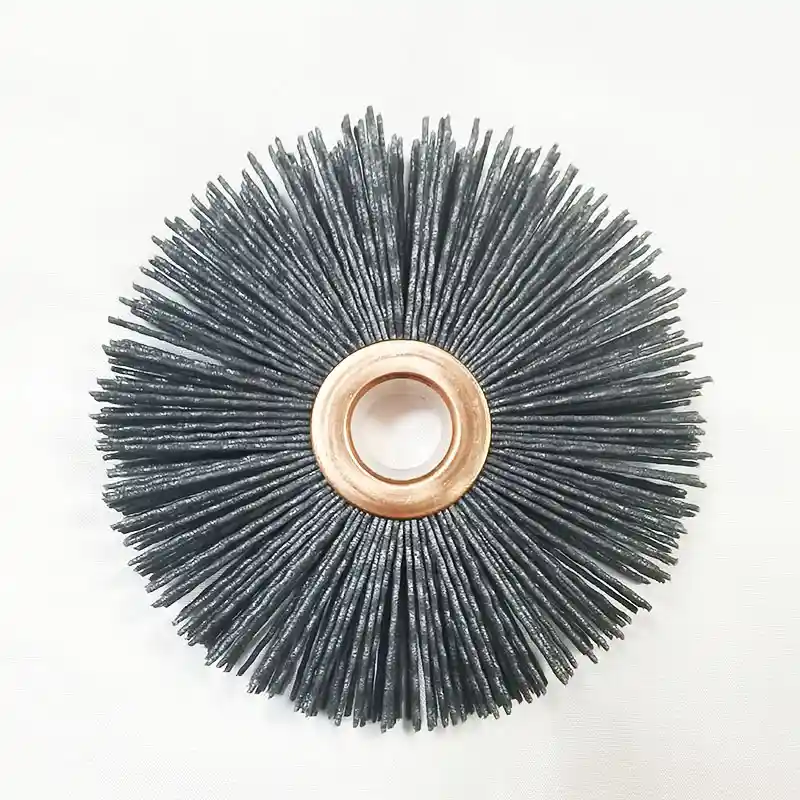

A knotted wire wheel brush for heavy-duty rust removal, descaling, and metal surface prep is one of the most aggressive wire brush tools used in industrial maintenance and fabrication. It removes thick corrosion, mill scale, old coatings, weld spatter, and hard surface contamination faster than most hand-held brushing tools. This guide explains how a knotted wheel works, where it fits in the preparation sequence, and how to specify it for reliable production results.
What Makes a Knotted Wire Wheel Different
A knotted wire wheel brush is built from wire filaments that are twisted together into dense rope-like bundles and secured around a center ring. Because the wires are locked into tight knots, each bundle acts more like a rigid cutting point than a flexible filament. Under rotation, those points hit the workpiece with concentrated force. The result is faster removal of heavy rust, scale, and residue, but also a coarser surface profile and more visible brush marks.
For light cleaning or final blending, a crimped wire wheel is usually the better choice. For heavy contamination and fast material removal, the knotted wheel is the more productive option.
Knotted and crimped wire wheels often look similar at a glance, but they are not interchangeable for every preparation task. <The differences between knotted wire wheel brush and crimped wire wheel brush> covers the structural and finish trade-offs in more detail.
Where Knotted Wire Wheels Fit in Metal Surface Prep
Heavy rust and mill scale create a weak interface between steel and a new coating. ISO 8501-1 divides uncoated steel surfaces into rust grades A through D; grades C and D represent widespread corrosion and pitting that usually require mechanical cleaning before painting or metalizing [1]. Knotted wire wheels are commonly used on hand-held grinders, bench motors, and brushing machines to reduce those surfaces to a mechanically cleaned condition quickly. They also work well around fillets, edges, and corners where a flat abrasive disc cannot follow the contour.
The main targets for a knotted wire wheel include heavy rust, cracked mill scale, flaking paint, weld slag, and embedded dirt on structural steel, plate, castings, and heavy equipment components.
Construction, Wire Type, and Performance Variables
The performance of a knotted wheel changes with several variables:
- Wire material: carbon steel for general steel surfaces, stainless steel when ferrous contamination must be avoided, and brass where a softer or non-sparking option is required.
- Wire diameter: heavier wire cuts more aggressively and lasts longer on thick scale; thinner wire produces a finer finish but removes less material.
- Knot density and trim length: dense knots provide more cutting points and longer service life under pressure; shorter trim lengths make the wheel stiffer and more aggressive.
- Wheel dimensions: diameter, face width, and arbor hole must match the machine and the workpiece access.
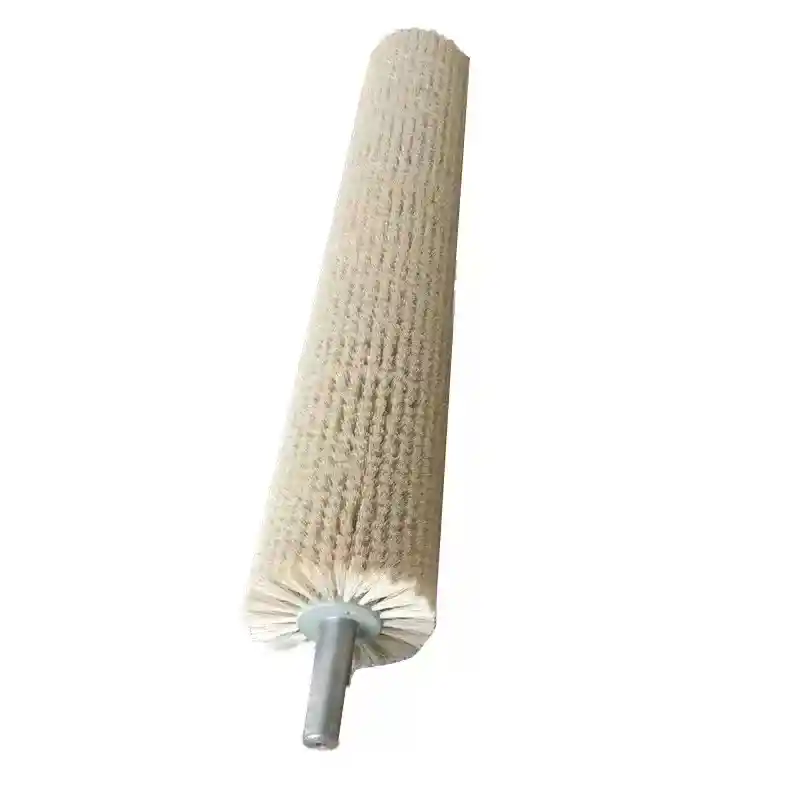
Carbon steel knotted wheels are selected most often for general structural work. Stainless knotted wheels are preferred for stainless steel tanks, food equipment, or aluminum fabrications where carbon steel smearing could cause corrosion or contamination.
Selection Checklist for Knotted Wire Wheels
Before you specify or purchase a knotted wire wheel brush, record these details:
- Machine type and maximum free speed
- Arbor size and available guards
- Workpiece material and hardness
- Surface condition to be removed
- Required final profile or coating acceptance standard
The wheel must be rated for at least the free-running speed of the tool. ANSI B165.1 sets safety requirements for power-driven brushing tools, including speed marking, arbor fit, and guarding [2]. If the wheel is not marked for the machine speed, do not use it.
Get a Specification Check
If the standard diameter, arbor, trim length, or wire grade does not fit your application, send the part drawing, workpiece material, and current surface condition to [email protected] or call +86 1580 0932 713. Huixi Brush can recommend a suitable construction and provide samples for validation before batch production.
Operating Practices and Safety
Run the knotted wheel at the speed marked on the brush and tool, with the correct guard in place. Use a full face shield, safety glasses, cut-resistant gloves, hearing protection, and close-fitting clothing. Knotted wheels can shed broken wires, so inspect the wheel before each use and replace it if the knots are uneven, the center ring is damaged, or vibration is abnormal [2].
Keep the wheel moving across the surface under light, controlled pressure. Dwelling in one spot generates heat, cuts too deeply, and accelerates wire breakage. For edges and narrow welds, use only the face of the wheel, not the side.
From Mechanical Cleaning to Coating Readiness
After heavy rust and scale are removed, the surface still needs inspection for oil, dust, and tightly adherent residue. SSPC-SP 3 defines power tool cleaning and describes the amount of tightly adherent material that may remain after mechanically cleaning steel [3]. When the specification calls for bare metal with no visible rust or mill scale, a more demanding power tool standard such as SSPC-SP 11 may govern the work [4].
This distinction matters because a knotted wheel alone does not guarantee that a surface meets a particular coating specification. The wheel is an aggressive mechanical cleaning tool; the final inspection standard still controls acceptance.
When to Pair a Knotted Wheel with Other Brush Types
One brush type rarely solves an entire metal preparation line. Severe scale removal may require a knotted wheel first, followed by a crimped wheel, abrasive nylon brush, or cylindrical brush for a more uniform finish. The sequence should be based on the final surface requirement and the workpiece geometry.
A knotted wheel is a useful first step, but the final finish often depends on the brush that follows it. <Wire wheel brush the right assistant for industrial cleaning and polishing> covers how the wheel family fits into a complete cleaning and polishing sequence.
In steel wire processing, the challenge is different from plate or structural steel. The wire moves continuously, and the cleaning station must remove drawing lubricant, scale, and rust without cutting or marking the product.
Steel wire lines have different demands from plate or structural steel because the workpiece moves continuously. <Brushes for steel wire industries cleaning descaling derusting polishing> details the brush configurations used in those processing lines.
Contact Huixi Brush for Custom Knotted Wire Wheels
Shanghai Huixi Trading Co., Ltd. manufactures knotted wire wheel brushes and other industrial brush systems at its Anhui Province factory, with 16 years of production experience. Huixi Brush supports ODM and OEM projects, provides low-MOQ and free-sample validation options, and supplies customers in Europe, North America, Australia, New Zealand, the Middle East, and Southeast Asia.
For a technical recommendation, send the part drawing, workpiece photo, and required surface finish to [email protected] or call +86 1580 0932 713.
Frequently Asked Questions
What is the difference between a knotted and a crimped wire wheel brush?
A knotted wheel uses wires twisted into dense bundles to produce an aggressive cutting action. A crimped wheel uses individually crimped wires for a softer, finer finish. For heavy rust and scale, choose knotted; for light cleaning or final blending, crimped is generally the better match.
Can a knotted wire wheel remove mill scale?
It can remove loose or cracked mill scale and reduce heavily scaled surfaces to a mechanically cleaned condition. However, thick and tightly adherent mill scale on critical coating jobs may still require abrasive blasting. The wheel is often used for edge preparation, weld cleanup, and local scale removal.
What safety equipment do I need when running a knotted wire wheel?
Use a face shield over safety glasses, cut-resistant gloves, hearing protection, and close-fitting clothing. Keep the tool guard installed, match the arbor correctly, and follow the speed rating on both the tool and the wheel. Stop and inspect if the wheel vibrates, throws wires, or shows uneven wear.
How do I choose the right wire diameter and wheel size?
Start with the machine arbor and power, then match the wire to the contamination. Heavier wire cuts more and lasts longer on thick scale; thinner wire leaves a finer surface. For difficult or unusual applications, supply the workpiece details to Huixi Brush for a specific recommendation.
Does Huixi Brush provide custom knotted wire wheel brushes?
Yes. Huixi Brush customizes diameter, arbor size, face width, wire material, wire diameter, and knot density. Low-MOQ or free-sample trials can be arranged for production validation before bulk supply.
References
[1] ISO 8501-1:2007, Preparation of steel substrates before application of paints and related products — Visual assessment of surface cleanliness — Part 1: Rust grades and preparation grades of uncoated steel substrates and of steel substrates after overall removal of previous coatings, International Organization for Standardization, 2007.
[2] ANSI B165.1-2019, Safety Requirements for Power-Driven Brushing Tools, American National Standards Institute, 2019.
[3] SSPC-SP 3, Power Tool Cleaning, The Society for Protective Coatings, 2018.
[4] SSPC-SP 11, Power Tool Cleaning to Bare Metal, The Society for Protective Coatings, 2018.
If you’re interested, check out these related articles:
abrasive wheel brush a magical tool for industrial surface treatment
the differences between inward and outward spiral brush
abrasive disc brush an efficient tool for many applications