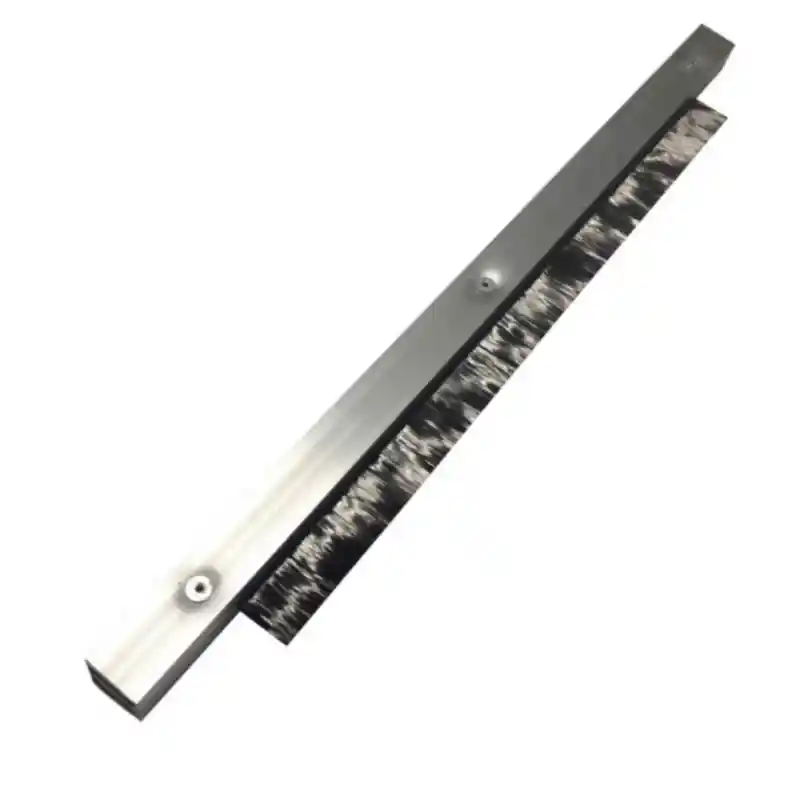

Selecting the right sealing component for automated machinery means weighing a dozen variables, but one failure mode consistently disrupts production: bristle pullout on strip brush seals. Integrated formed strip brushes solve this by fusing the bristles directly into a continuous polymer channel, eliminating the staple-anchored design that loosens under sustained vibration and high-cycle motion. For machine designers and automation engineers evaluating long-term seal reliability, the integrated forming process delivers measurable improvements in mounting stability, consistent compression recovery, and reduced downtime from seal degradation. Over fifteen years of supplying custom brush sealing solutions for CNC enclosures, robotic cells, and linear guide systems, we have found that this manufacturing method significantly lowers the total number of seal-related service interventions in high-throughput automated lines.
How the Integrated Forming Process Improves Over Stapled Brush Assembly
In a conventional strip brush, bristles are folded over a staple wire and pressed into a U-shaped metal or plastic extrusion. This mechanical crimp works for static doors and low-frequency use, but it introduces two vulnerabilities in automation machinery. First, the staple holes create stress concentrators in the backing material. Second, repeated compression and side-loading gradually work the bristle bundle loose, especially when the brush contacts moving parts or handles abrasive particles. I have seen stapled strip brushes on CNC door edges lose over ten percent of their bristle density within a year of cyclic operation, eventually leaving gaps that allow coolant mist and metal fines into the guide rails.
Integrated formed strip brushes avoid this entirely. During production, the bristle material is fed into a continuous extrusion die, and the polymer channel is formed around the root of the bristle row, encasing the filaments in a solid, heat-fused block. There is no staple and no mechanical pinch point. The bond is uniform along the full length, so a localized side-impact event does not propagate to adjacent sections the way it does with staple-constrained segments. For an automation environment where a single brush strip may cycle thousands of times per shift, that structural continuity directly translates to months of additional service life before any maintenance flag appears.
Key Material Profiles for Automation Sealing Applications
The material specification for a formed strip brush in automation machinery must address three operating parameters: chemical exposure, temperature, and mechanical wear. The following table summarizes commonly selected bristle materials and their practical limits, based on feedback from field installations in Asia and European automated manufacturing plants.
| Bristle Material | Max Operating Temp | Chemical Resistance | Typical Durometer / Stiffness |
|---|---|---|---|
| Polypropylene (PP) | 90°C | Good against mild acids and alkalis, poor against strong oxidizers | Soft to medium |
| Nylon 6/6 | 80°C (70°C wet for continuous) | Fair resistance to hydrocarbons; absorbs moisture | Medium |
| Polyester (PBT) | 120°C | Excellent resistance to oils and solvents | Medium-firm |
| Stainless Steel (AISI 316) | 250°C | Excellent corrosion resistance | High stiffness |
Polypropylene remains the most common choice for chip guards and coolant splash barriers because it offers a balance of cost, flexibility, and adequate chemical resistance against water-based machining coolants. Nylon provides a softer touch and quieter operation but loses stiffness in high-humidity environments, which makes it a less reliable choice for coolant-drenched zones unless the channel backing is angled to limit soak time. For high-temperature applications such as furnace door seals or welding machine curtains, stainless steel bristles in an aluminum channel provide the necessary thermal tolerance without losing sealing pressure.
The Engineering Behind Integrated Channel Stability
When a strip brush is mounted into an aluminum profile slot on an automated machine door, the brush holder typically grips the channel along its top edge. Any twisting force around the longitudinal axis, caused by unsupported brush weight or uneven contact pressure, concentrates stress at the grip line and creates a propagation point for bristle column collapse. The integrated formed channel resists this bending because the polymer backing is continuous and dense, without the linear slot discontinuity that a stapled channel base introduces.
We tested several samples in a cyclic deflection fixture that simulated a 150mm brush seal being compressed by a steel plate offset 5mm laterally for 200,000 cycles. The integrated formed samples retained over 95% of their initial sealing width and showed no visible bristle migration at the root. Common stapled configurations of the same outer dimensions lost consistent bristle alignment after approximately 60,000 cycles, with bristle bundles tilting in the staple zones. For a procurement engineer comparing suppliers, this test outcome means the integrated brush can sustain its seal integrity through a typical production year without needing replacement, while a stapled version may require scheduled replacements every quarter.
That durability also simplifies the mechanical design of the machine. Designers can specify a longer brush and cut it to length on site from a continuous strip, without worrying that exposing a staple line at the cut end will lead to cascading bristle loss.
How to Specify a Formed Strip Brush for Automation Machinery
Submit these five parameters to a brush manufacturer and the technical discussion narrows to relevant options quickly:
- Channel dimensions: the cross-section of the backing that fits into the mounting slot. Common integrated formed channel sizes include 3×3mm, 4×4mm, 5×5mm, and 4×5mm — specify both width and height.
- Bristle material and diameter: select from the table above. Bristle diameters range from 0.15mm for fine debris exclusion to 0.50mm for coarse particle barriers; smaller diameters provide better sealing but have lower wear resistance.
- Overall brush height including bristle projection: measured from the bottom of the channel to the bristle tip, typically 15mm to 100mm.
- Required density: expressed as bristle rows per centimeter or bristle filaments per centimeter width; higher density improves sealing against small particulates but increases friction against moving parts.
- Minimum bend radius: if the brush follows a curved path, the integrated formed channel can bend to a tighter radius than a stapled channel before bristle alignment is affected. Typically, a 5×5mm integrated channel can handle a radius down to about 80mm without flaring.
If your automation application involves both oil mist and fine metal particles, polyester bristles in a high-density configuration often perform best. For dry dust exclusion on conveyor belt skirts, polypropylene with a medium density and a taller bristle height provides effective sealing without excessive drag on the belt surface.
Installation and Maintenance in High-Cycle Environments
Mounting formed strip brushes is straightforward when the machine frame includes a standard T-slot or dovetail groove. The brush channel slides into the slot and is secured with end clamps or a few set screws. The integrated backing does not require a separate retention clip along the full length, which speeds up initial assembly and on-site replacement. We advise clients to include a slight preload compression on the bristle tip contact surface, typically 1mm to 2mm, to compensate for bristle set over time.
In automated lines operating 24/7, a monthly visual inspection catches the early signs of uneven wear. The inspection focal points are the first and last 50mm of the brush strip and any sections where the bristles contact a moving part edge. If a section shows angled or shortened bristles while the rest remains straight, the root cause is usually side-loading from misalignment rather than material fatigue. Correcting the mounting straightness often returns the seal to full function without replacing the brush.
Some maintenance teams cut worn sections and splice in a new segment. Integrated channel brushes support this practice because the polymer backing can be cut cleanly with a fine-tooth saw, and the two ends butt together without a gap when fitted tightly into the slot. Stapled channels, by comparison, may fray at the edge if the cut falls on a staple location.
How to Source Formed Strip Brushes That Match Your Automation Requirements
Your automation project likely demands specific dimensions, material certification, and a reliable supply chain that supports consistent quality across production runs. We receive brush inquiries that come with a part number, quantity, and deadline, and most of those orders ship within a few weeks because the integrated forming process is adaptable to short-run production without tooling charges that delay small batches. If you need a brush that can handle abrasive dust on your robotic arms or a flexible seal for a CNC door that opens sixty times an hour, send your specifications to [email protected] or call +86 1580 0932 713 to start a technical conversation that leads to a sample in your hands.
Common Questions About Formed Strip Brushes
What is the maximum continuous length available for an integrated formed strip brush?
Integrated formed strip brushes are manufactured by continuous extrusion, so the process is not inherently length-limited like injection-molded segments. Standard production lengths reach 2,500mm, and longer lengths can be joined with a precisely machined butt joint in the field without compromising bristle continuity. For very long runs on conveyor systems, multiple sections are joined end-to-end, and the joint is placed in a non-contact zone to avoid creating a gap.
Is the integrated channel as strong as an aluminum channel?
The polymer channel, typically made of a rigid PVC or polyethylene compound, has lower tensile strength than aluminum, but its structural role is different. It does not carry the seal’s mechanical load; it transfers compressive forces from the slot into the bristle root. In this function, the integrated channel has performed without fracture in applications where the brush is compressed up to 30% of its free height. If the mounting slot allows the channel to pivot, an aluminum reinforcement strip can be embedded into the backing during forming.
Can formed strip brushes handle side-load from a moving workpiece?
Yes, within limits. A vertical strip brush on a guided ejection gate will see side forces from product impact. The integrated channel distributes that impact along the full length rather than concentrating it at staple points. We recommend a channel size of 5×5mm or larger for any installation expecting side-loading above 5 N per 100mm of brush length. This keeps deflection within elastic limits and avoids permanent bristle tilt.
What other industrial brush types does Huixi produce alongside strip brushes?
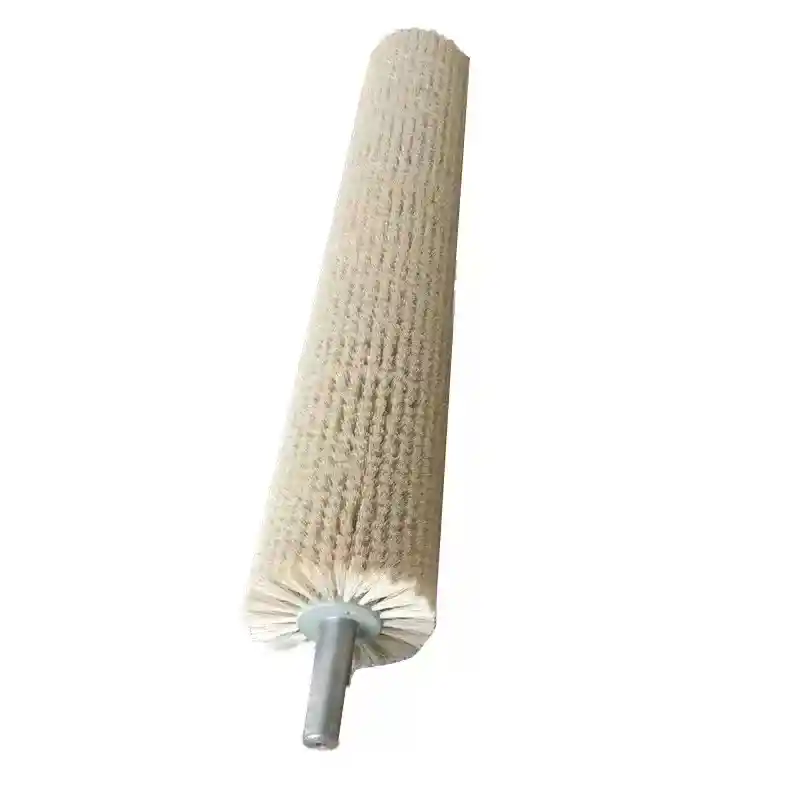
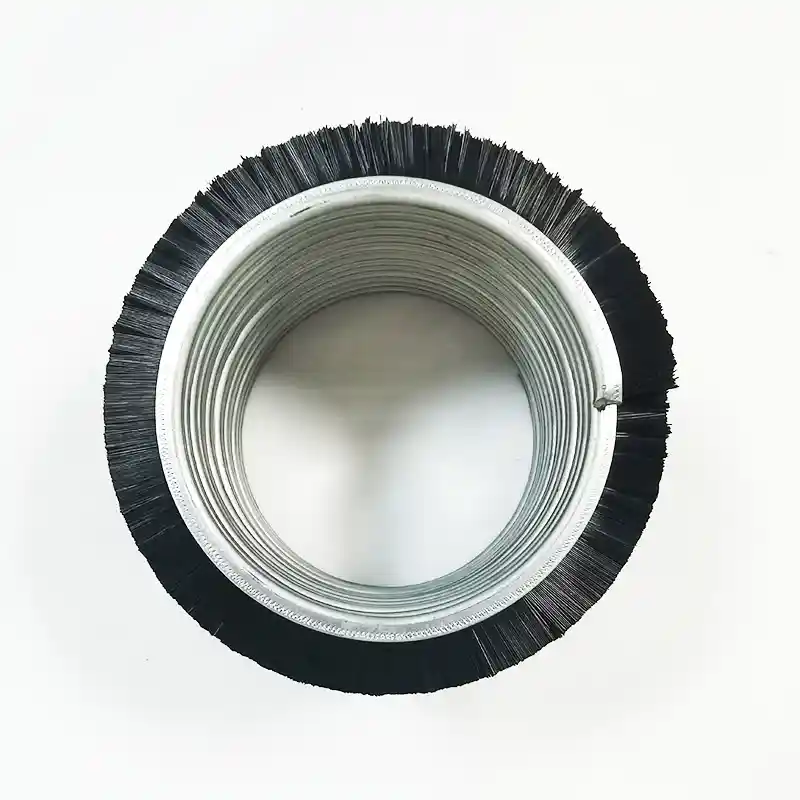
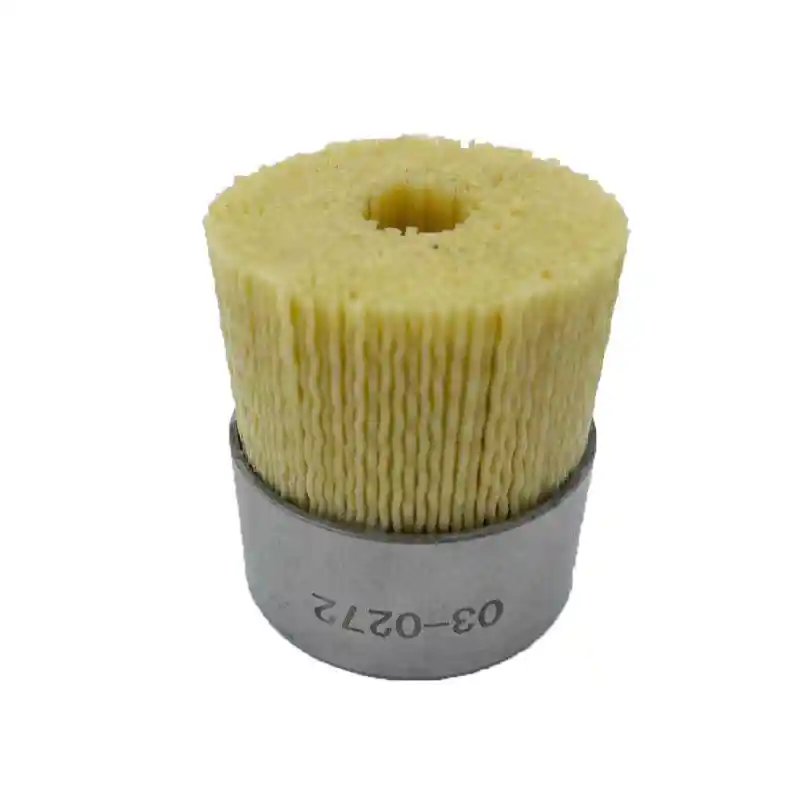
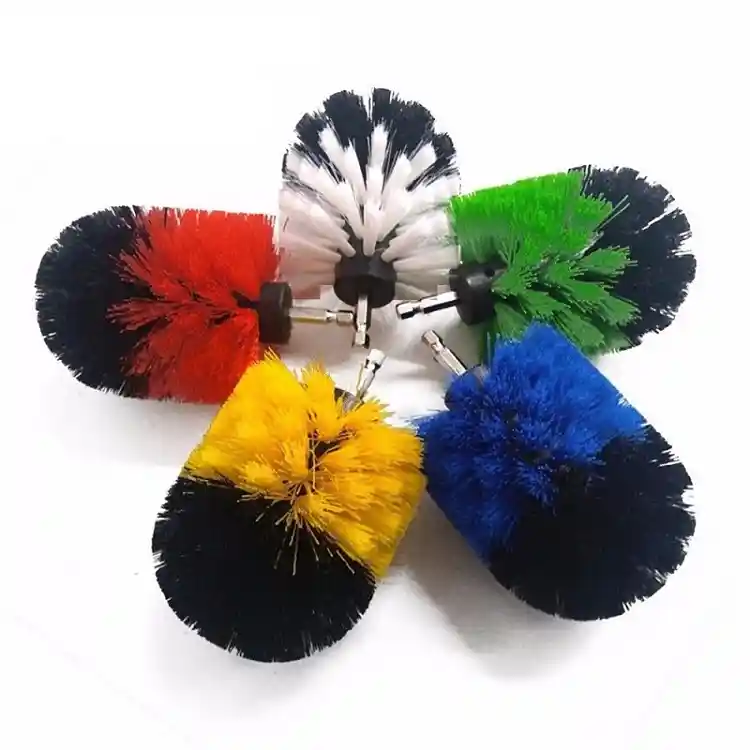
Huixi manufactures a wide range of brush types that complement strip brushes in automated machinery. These include cylindrical brushes for cleaning rollers and conveyor surfaces, disc brushes for precision deburring, spiral brushes for internal pipe and tube cleaning, and drill brushes for handheld maintenance tasks. Each product line supports the same customization philosophy: we match the bristle material, filament diameter, and core design to your machine’s requirements rather than offering only off-the-shelf sizes.
How do I qualify a new brush supplier for automated production?
Begin with a dimensional drawing and a batch sample. Test the samples in your specific machine for bristle wear rate, seal compression recovery, and any chemical degradation under your operating conditions. Reliable brush suppliers provide material traceability, process control data for bristle density tolerance, and can hold consistency across multiple production batches. If your program has a validation protocol that requires documented batch testing for ISO or customer audit compliance, share that requirement early so the supplier can align their in-process checks with your acceptance criteria.
If you’re interested, check out these related articles:
rope cleaning brush for industrial use a key tool for maintaining safe production
advantage of hx cylindrical sanding brushes
advantage of hx boiler tube brush