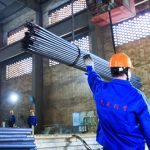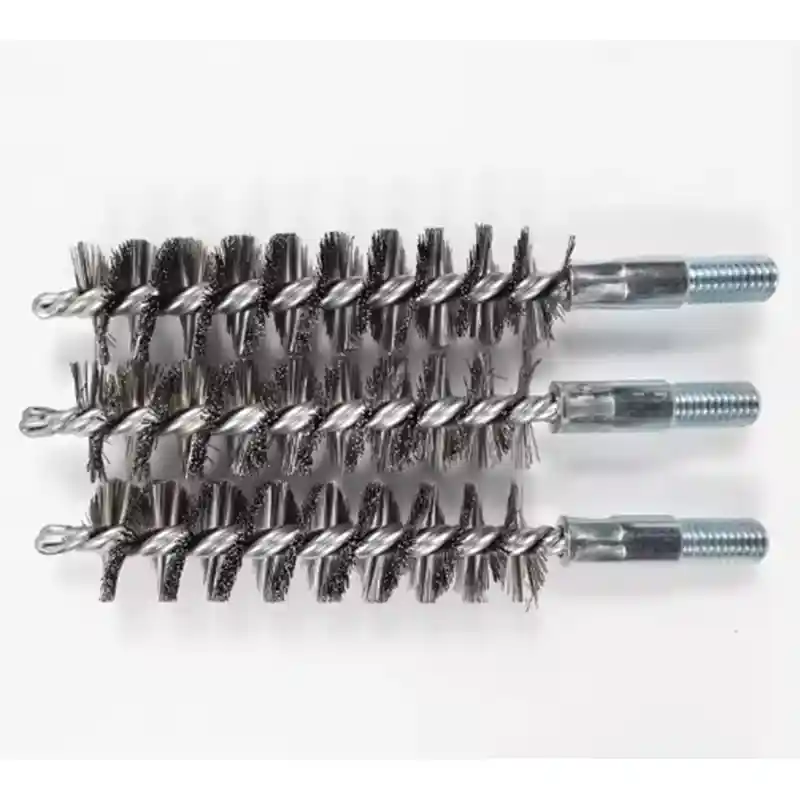

A tube deburring brush is a straightforward tool, but achieving smooth, consistent metal tube edges in high-volume production is anything but simple. In my fifteen years engineering industrial brushes, I have seen too many production lines slowed down by brushes that wear unevenly, miss burrs, or scratch the tube surface. The truth is that smooth edge finishing requires a brush that matches not just the tube diameter, but also the material hardness, surface finish target, and production speed. This article breaks down the brush construction details that matter most and how to specify a tube deburring brush that delivers predictable results.
What Does Smooth Tube Edge Finishing Demand from a Deburring Brush?
Industrial tubes must leave the deburring station with edges that are uniformly rounded, free of sharp projections, and with a consistent surface finish. A quick visual inspection should not reveal chatter marks or uneven wear patterns along the circumscribed edge. In many tube fabricating shops I have visited, the issue is not that the brush fails to remove burrs. It is that the edge finish changes from one end of the tube to the other, often because the brush filament engagement shifts as the stem deflects under load. A tube deburring brush must maintain stable radial pressure and uniform filament contact along the full workpiece edge. When the brush is undersized or the fill density is too low, some sections of the edge are polished while others are barely touched, leading to rework or scrap.
What Brush Construction Essentials Deliver Consistent Deburring?
Three brush construction parameters directly determine edge quality: filament material, fill density, and stem design.
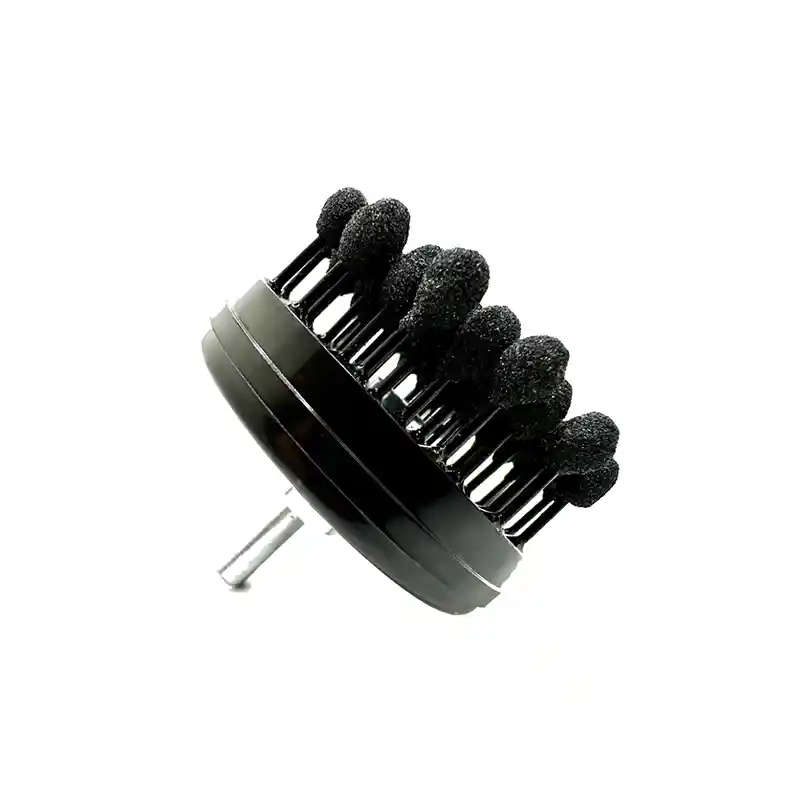
Filament material sets the aggressiveness and surface finish range. Stainless steel crimped wire provides aggressive cutting but can leave scratching on softer metals. Knotted wire delivers high impact for heavy burrs but may chatter on thin-wall tubing. Abrasive filaments, such as nylon with silicon carbide or aluminum oxide, produce a finer, more controlled finish and are often the choice for applications where surface roughness must stay below a specified Ra value. Fill density (the number of filaments packed into a given length of the brush) determines how many cutting points contact the tube. A low fill density means very few filaments actually touch the metal, so wear concentrates and the edge finish degrades quickly. We typically recommend a minimum fill density of 80% for continuous production deburring brushes, though this can be increased for harder materials. Stem design matters because any stem flex under load causes uneven filament engagement. A rigid stem with a straight or stepped core keeps the brush centered inside the tube, maintaining equal radial force and consistent edge rounding.
| Filament Type | Aggressiveness | Surface Finish | Best For |
|---|---|---|---|
| Crimped Wire | High | Moderate roughness | Carbon steel, heavy burrs |
| Knotted Wire | Very High | Rough | Thick-wall tubes, scale removal |
| Abrasive Nylon (SiC) | Medium | Fine finish | Stainless steel, aluminum |
| Abrasive Nylon (Al2O3) | Low-Medium | Fine finish | Soft metals, precise edge radii |
How to Match a Tube Deburring Brush to Tube Material and Size?
Selecting the correct brush diameter is step one. The brush overall diameter must be larger than the tube inside diameter by roughly 2 to 5 mm, depending on filament type and desired interference. For abrasive brushes used on thin-wall aluminum tubes, too much interference causes the filaments to splay outward and reduce contact at the tube edges. I have learned to start with a conservative interference fit and adjust based on edge quality measurements from the first samples.
The stem length and diameter must suit the machine spindle or collet. In automated cells, the brush stem often must accommodate quick-change tooling or a through-hole for coolant. We have seen many production delays caused by a brush with the correct OD but a stem diameter that did not fit the machine holder. Material hardness also dictates filament choice. For stainless steel tubes, a nylon filament with silicon carbide grain works well because it cuts without embedding metal particles into the surface. For mild steel, a crimped wire brush can deburr faster and with lower cost per part, provided the finish specification allows a slightly rougher edge. When tubes are plated or coated after deburring, even minor scratching that would be exposed after plating is unacceptable, so the brush must be specified with that downstream process in mind.
If your program involves multiple tube materials running on the same line, a single brush specification is unlikely to perform equally well across all alloys. It is worth confirming the optimal filament material and fill density for each tube type before finalizing your BOM. Reach out at [email protected] with your tube specifications.
How Does a Tube Deburring Brush Perform in Continuous Production?
In continuous production, a tube deburring brush must deliver the same edge quality from the first part to the last part of the shift. This depends on filament wear characteristics and the brush’s ability to maintain diameter over time. Wire filaments tend to wear by breaking or bending, which changes the effective brush diameter and reduces deburring pressure. Abrasive filaments wear down gradually, so edge quality declines in a more predictable way, making it easier to schedule brush changes based on part count.
One practical method I recommend is to measure the brush outside diameter after every 500 cycles initially and plot the wear curve for your specific tube material. That data tells you when to replace the brush before edge quality drops below tolerance. Spindle speed and feed rate also interact with brush construction. Too high a speed on a stiff wire brush can heat the filament tips and cause galling on the tube end. A speed between 800 and 1500 RPM, paired with a feed rate that gives about 2 to 3 seconds of dwell per tube, is a reasonable starting range for most production deburring stations. Thin-wall tubing benefits from slower speeds to avoid deformation.
Why Custom Brush Engineering Outperforms Off-the-Shelf Deburring Options
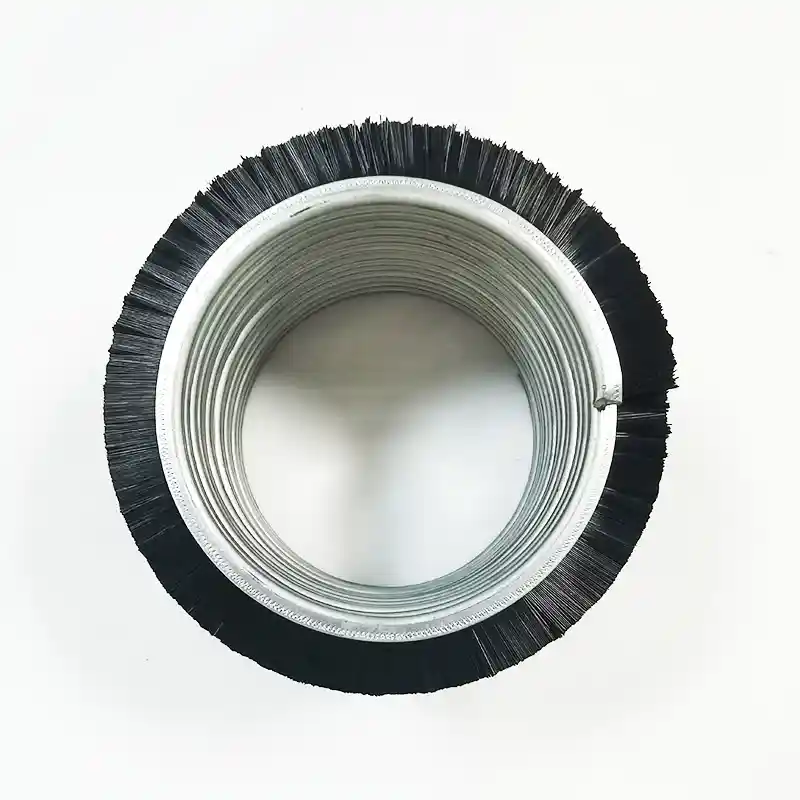
Catalog brushes are made to fit standard tube diameters and common material groups, but production reality rarely fits a catalog. A slightly non-standard tube ID, a stem mount that requires a custom length, or a finish specification that calls for a specific filament grit all push beyond what an off-the-shelf brush can deliver. That is where custom brush engineering, backed by direct manufacturing experience, changes the equation.
At Huixi Brush, we start each tube deburring brush project with the tube specifications and the edge finish target, then design the stem, select the filament material, and set the fill density to match. Because we manufacture in-house and have sixteen years of brush production experience, we can adjust fill density, stem diameter, and overall brush diameter without the lead-time penalties that external catalog suppliers impose. You receive a brush that fits the first time and performs predictably, reducing the trial-and-error that eats into machine uptime.
If your tube finishing process demands consistent smooth edges without rework, the right brush specification is the difference. Send your tube specifications, material grade, and production volume to [email protected] or call +86 1580 0932 713. We will recommend a tube deburring brush engineered for your exact application.
Common Questions About Tube Deburring Brush Selection
How do I know if my tube edges are smooth enough?
A properly deburred tube edge feels smooth to the touch with no sharp projections. For quantitative verification, use a profilometer to measure the edge radius or surface roughness Ra. Most industrial applications require an Ra of 1.6 µm or better on the tube edge, but the exact value depends on your assembly or coating requirements. In practice, if a fingernail catches on the edge, the brush is underperforming.
Can a tube deburring brush handle multiple tube diameters?
In short, no. A brush designed for a 25 mm ID tube makes poor contact on a 22 mm or 28 mm tube. The interference fit that produces even edge rounding requires close dimensional matching. Using a single brush for a range of diameters causes uneven wear and inconsistent edge quality. It is more cost-effective to stock a separate brush for each tube size you produce, especially when part quality is non-negotiable.
What filament material lasts longest on stainless steel tubes?
Nylon filament loaded with silicon carbide abrasive delivers the longest service life on stainless steel while maintaining a consistently smooth finish. Hardened crimped wire cuts faster initially but tends to wear unevenly on stainless, producing a rougher edge over time. The abrasive nylon wears predictably, so you can schedule brush changes based on part count and avoid unexpected quality drops.
How do I prevent scratching on plated or coated tubes?
Scratches often come from wire filaments that are too aggressive or from a brush that has worn unevenly and exposes the stem or base material. Switch to an abrasive nylon filament with a fine grit, and check that the brush diameter is not too large, which would cause excessive pressure. Before full production, run a small batch and inspect the deburred edge under lighting that reveals surface marks, then check again after plating. If scratches appear, the filament type or interference fit needs adjustment.
Is custom brush engineering worth it for pilot runs and small batches?
Even a small batch justifies a properly specified brush if rework or scrap from a poor edge finish is costly. Custom brushes from a manufacturer that handles low minimum orders mean you can start production with the correct tool rather than experimenting with catalog brushes. The savings in machine downtime and rejected parts usually outweigh the modest additional brush cost. Share your tube specifications and production volume with us at [email protected] and we can recommend the right filament type, fill density, and stem design for your run.
If you’re interested, check out these related articles:
rope cleaning brush for industrial use a key tool for maintaining safe production
the differences between inward and outward spiral brush
advantage of hx cylindrical nylon brushes
abrasive wheel brush a magical tool for industrial surface treatment
what you know about brass wire brush strip