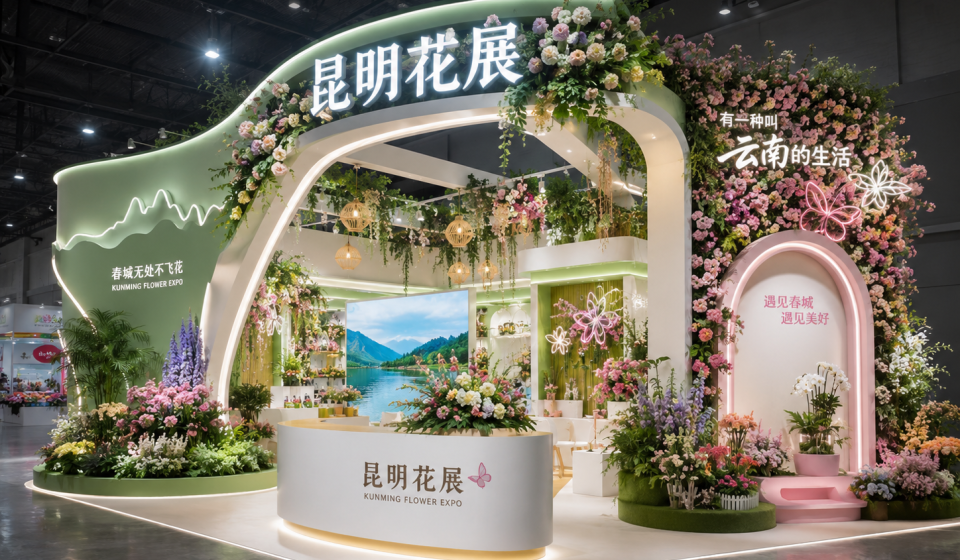

Most wasted time at a trade fair comes from one error: accepting a booth meeting before checking what a supplier actually ships, to whom, and how. I have watched buyers at IFEX Kunming lose entire mornings in the wrong booths while the right grower contacts sat untouched in their lead list. The show floor spans 50,000 square metres and draws more than 30,000 distributors, wholesalers, and floral retailers, so the cost of that mistake compounds fast. Qualifying flower suppliers at IFEX before you commit separates a workable sourcing pipeline from a pocketful of cards that never convert.
Which Suppliers Should Pass Your Export Screen Before IFEX?
A booth appointment only earns a place on your schedule if the exhibitor can show evidence of export work. That starts with a short preshow check, not a long meeting. Ask the exhibitor three things before you agree to see them: which destination markets they already ship to, whether they own the farm or trade on behalf of growers, and whether they can send a packing specification before the show. These three answers tell you more than a glossy catalogue.
| Signal to request | Why it matters | What a serious supplier sends |
|---|---|---|
| Destination market references | Confirms real export volume, not domestic sales only | Named countries, seasons, rough volumes by flower type |
| Farm location and ownership | Shows whether the booth controls cutting and packing | Named farm, production area, direct grower contact |
| Packing specification | Separates cold chain operators from traders | Box dimensions, stem counts, precooling temperature |
| Phytosanitary record | Shows the supplier can clear export inspection | Example certificate or named customs broker |
I have watched buyers skip this screen because a booth promised “all varieties from Yunnan.” That phrase usually means the exhibitor can source from many farms but may not control any of them. A trading company is not automatically weak; some manage strong grower networks. But you need to know which one you are meeting before you spend an hour at a stand.
What Counts as a Serious Export Reference?
A serious export reference is a destination market plus a season plus a rough weekly volume. A supplier who only says “we export to Japan” has not shown they can hold a commercial order. Ask which city, which auction or retail channel, and what stem count per box they shipped last year. If the answer drifts to general praise of Yunnan roses, the meeting will drift too.
Which Booth Red Flags Appear Before the Conversation Starts?
Preshow messages that arrive without a spec sheet, a farm name, or a named contact are the first signal to remove the appointment. The same applies to exhibitors who cannot send a simple packing list when asked. If a supplier cannot produce paperwork before the fair, they will not produce it faster on a busy booth.
What Cold Chain Evidence Do You Need Before Price Talks?
Price means nothing if the carton arrives warm and the stems turn gray. That is why the first technical conversation before any price discussion should be about temperature control. For fresh cut flowers, ask what temperature the stems are held at after harvest, whether the pack is dry or wet, and how the carton moves from farm to Kunming airport. A supplier without ready answers is not ready for export.
Which Cold Chain Questions Reveal Gaps Fast
The three questions that separate growers from booth staff are: what is your precooling temperature, how long from cut to cold storage, and what is the box interior temperature at handover. Serious Yunnan growers can answer all three without checking a phone. Trading staff who cannot answer any of them should not take up more of your day.
What Clean Packing Evidence Looks Like at a Booth
Ask for the actual box: dimensions, stem count, ventilation placement, and inner liner material. For long-stem roses, the box must handle vertical load without crushing heads. A grower who has invested in export packing will open a sample box. A booth with only loose bunches and no box on hand is a retail display, not an export operation.
If your program involves mixed rose and filler categories, verification matters before you finalize the appointment schedule. The matchmaking platform can confirm which exhibitors own their grower relationships and which are trading desks. Before you lock the calendar, send your target categories and volume to [email protected] so you are meeting names from the qualified list rather than collecting booth cards.
How Do You Use IFEX Buyer Tools to Shorten Qualification?
You do not need to land in Kunming cold. Before the fair, sort the exhibitor list by your product categories and send the matchmaking team a clear brief: which species, which stem length or pot size, which market you buy for, and what weekly volume you need. A narrow brief returns a shortlist, not a pile of irrelevant invitations. That prequalification work cuts half a day of walking.
Once the shortlist exists, confirm the buyer badge and preregistration path before you travel. The business lounge and on-site information points work better when you already carry a filtered list. If a booth appointment disappears, you can replace it from the qualified backup list instead of starting a new search in the aisle.
What Should Your Five Minute IFEX Booth Conversation Cover?
A booth meeting does not need to be long to be useful. Set the agenda in the first sentence: which varieties you need, which market you sell into, and if the supplier can document that they already serve that market. Then ask the direct questions in order. If answers arrive as stories rather than specifications, end the meeting politely.
Ask for the farm location first. Then ask current lead time and minimum order quantity together, because a supplier who cannot quote both has not handled regular orders. Then ask where the flowers are consolidated, and whether the supplier can arrange phytosanitary inspection at origin. That sequence takes five minutes and usually exposes whether the booth controls the order path.
A supplier who says “we can arrange everything” without naming a freight forwarder, a cold store, or a certificate process has just told you they are not the decision point. You do not need to be aggressive. You say the product mix is not a fit and move two aisles over. At a fair with this many exhibitors, the next qualified booth is rarely far away.
I have learned to watch for the moment a booth staff member starts selling Yunnan as a story instead of selling their own production. That switch is the exit signal. A serious booth stays on variety, volume, box spec, and shipment date.
How Do You Set Your Buyer Shortlist Before Kunming?
The pattern behind wasted time at a trade fair is the same every year: too many meetings accepted without a screen, too few documents requested, and too much trust placed in a friendly booth conversation. The fix starts before your flight. Narrow the floor to suppliers who can show farm ownership or a documented grower network, export references, cold chain control, and a clear order path.
A short qualification routine changes the fair from a card collection exercise into a working sourcing trip. Send your target species, weekly volume, and destination market to [email protected] or call +86 10 5933 9349 before you book meetings. The matchmaking team can align your list with the exhibitor profiles that match your requirements. That way your first conversation at the stand is about order terms, not basic screening.
Which Questions Do Buyers Ask About Qualifying Flower Suppliers?
Can I verify a supplier before I arrive at the fair?
Yes, and the preshow window is the cheapest time to do it. Ask the matchmaking team for a filtered exhibitor list, then send the supplier a short request for a farm name, a destination market reference, and a packing specification. A serious exporter replies with documents. A trading booth that replies with only a brochure should fall off your list.
Should I meet trading companies or only Yunnan growers?
It depends on the order path and your market. A trading company can be useful when it already holds accounts with the growers you need and can consolidate mixed product. A direct grower works better when you want variety-specific control and a simpler origin story. The qualification test stays the same: ask who grows, who packs, and who owns the cold chain.
How many suppliers should I shortlist for a three day visit?
In the visits I have planned for international buyers, the best shortlists stay between eight and twelve qualified booths, not thirty. Across three days you can fit six to eight serious stand meetings plus time to compare samples and price points. Any more and the conversations blur. Screen hard before you travel, keep the list tight, and leave space for one or two discoveries on the floor.
What red flag should make me leave a booth immediately?
The red flag is not a small booth or a junior staff member. It is a supplier who cannot produce the document that matches the claim. If you ask for a phytosanitary record, a farm name, a cold storage temperature, or a named freight forwarder and the answer stays vague, the meeting has already told you what you need to know. A polite but fast exit preserves the hours you need for qualified leads. After the fair, share your shortlist with [email protected] and we can confirm which exhibitors fit the compliance path you need.