Scent marketing ROI is best treated as an operational metric, not a branding mood claim. Most businesses fail to measure it because they look for a single sales lift instead of isolating the scent program variables they control: zone coverage, fragrance intensity, schedule, and repeat exposure. From our work across 68 countries and more than 300 commercial fragrance formulations, the reliable path is to track dwell time, average transaction value, and repeat visit rate against a stable baseline before changing anything else. This article explains the calculation method, the metrics that matter, and the common isolation mistakes that make results unreliable.
What Counts as Scent Marketing ROI?
Scent marketing ROI is not simply revenue uplift. It is the incremental profit created by the scent program after subtracting hardware, fragrance oil, installation, and service costs, divided by those same program costs. A retail store that sees sales rise during a holiday period cannot credit all of that increase to scent unless it has a comparison period with identical traffic, promotions, and staffing.
I prefer a conservative formula: incremental profit equals the average transaction value change multiplied by transactions during the test period, less cost of goods sold on that uplift, less scent program cost. ROI then equals incremental profit divided by scent program cost. A clear scent marketing ROI calculation keeps the program accountable to the same financial logic as any other operational investment.
How Do You Calculate Scent Marketing ROI?
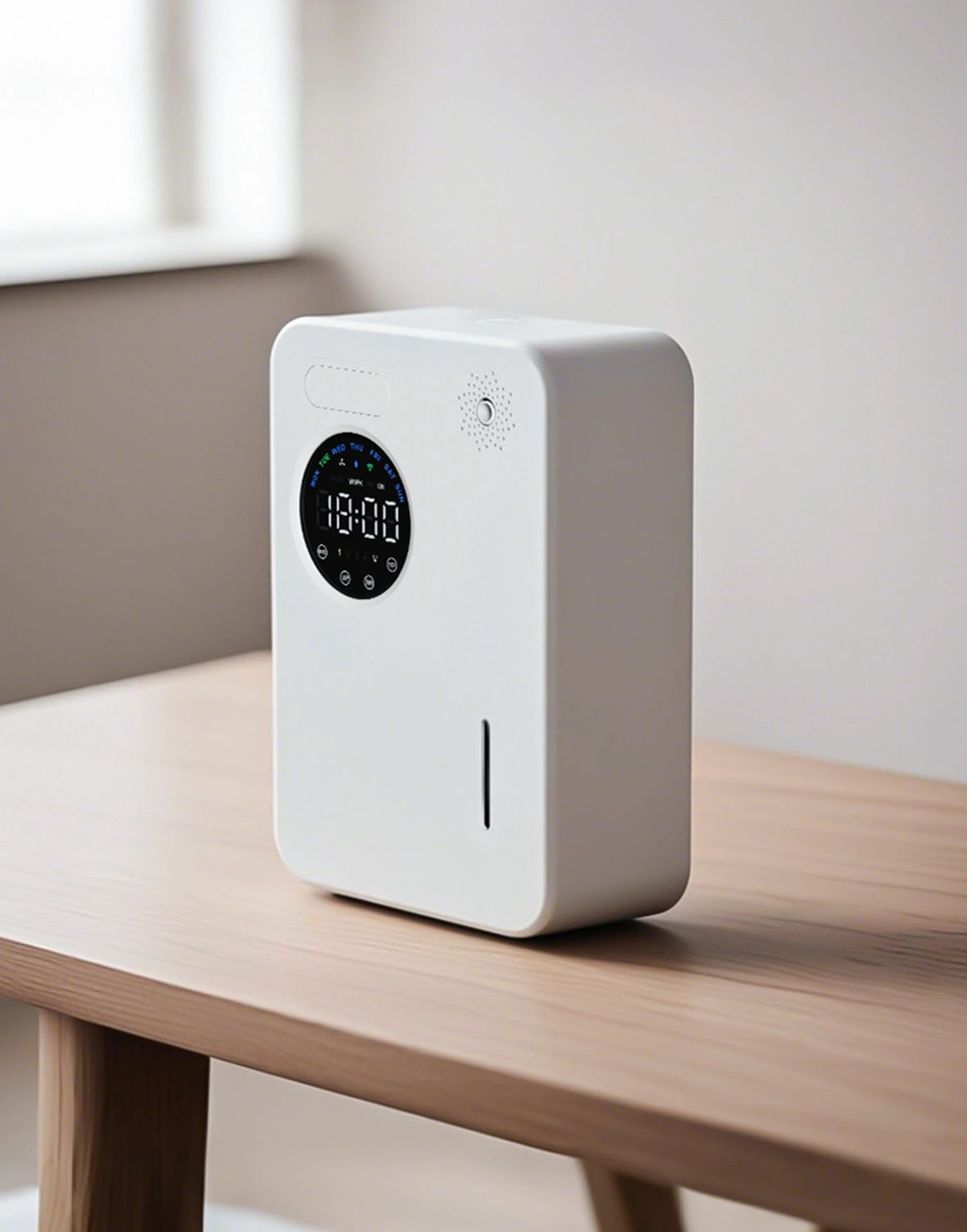
Start with a baseline, not a guess. We ask clients to record four weeks of pre-launch data before turning on any diffuser: daily traffic, transaction count, average transaction value, and staff notes on odor issues. Then launch in selected zones and hold everything else unchanged for at least eight weeks.
- Define test zones and control zones with similar traffic and layout.
- Record baseline dwell time, conversion rate, average basket, and repeat visit share.
- Launch the scent program only in test zones with a fixed fragrance formulation, intensity, and schedule.
- Collect the same metrics weekly and compare test versus control, not test versus the previous month.
- Estimate incremental profit and subtract all program costs to get scent marketing ROI.
One warning from practice: do not run the test during a planned promotion, a store reset, or a seasonal peak. Those events create noise that is larger than the scent effect you are trying to measure.
If your program includes multiple zones or HVAC integration, confirm your diffuser coverage and fragrance consumption before finalizing the measurement plan. Send your floor plans and zone count to [email protected].
Which Metrics Actually Capture Scent Marketing ROI?
Sales lift alone is too aggregated for a meaningful scent marketing ROI. You need the mechanism behind any change, plus the cost side.
Which Metrics Reflect Customer Behavior?
| Metric | What it tracks | How to measure |
| Dwell time | Time spent in scented zone | Camera analytics, heat mapping, or staff timing samples |
| Conversion rate | Transaction share from visitors | POS data compared with foot traffic count |
| Average transaction value | Basket size change | POS data for test versus control period |
| Repeat visit rate | Return behavior over 30 or 60 days | CRM, loyalty data, or manual count |
Which Metrics Reflect Program Cost?
On the cost side, we track fragrance oil consumption per hour per zone, diffuser amortization, and service time. A large HVAC system covering 8,000 cubic meters consumes differently from a 300 cubic meter standalone unit, so cost per cubic meter is the number we compare across sites. If consumption rises without a matching dwell time change, the issue is usually diffusion coverage or intensity, not the fragrance itself.
What Makes Scent Marketing ROI Hard to Isolate?
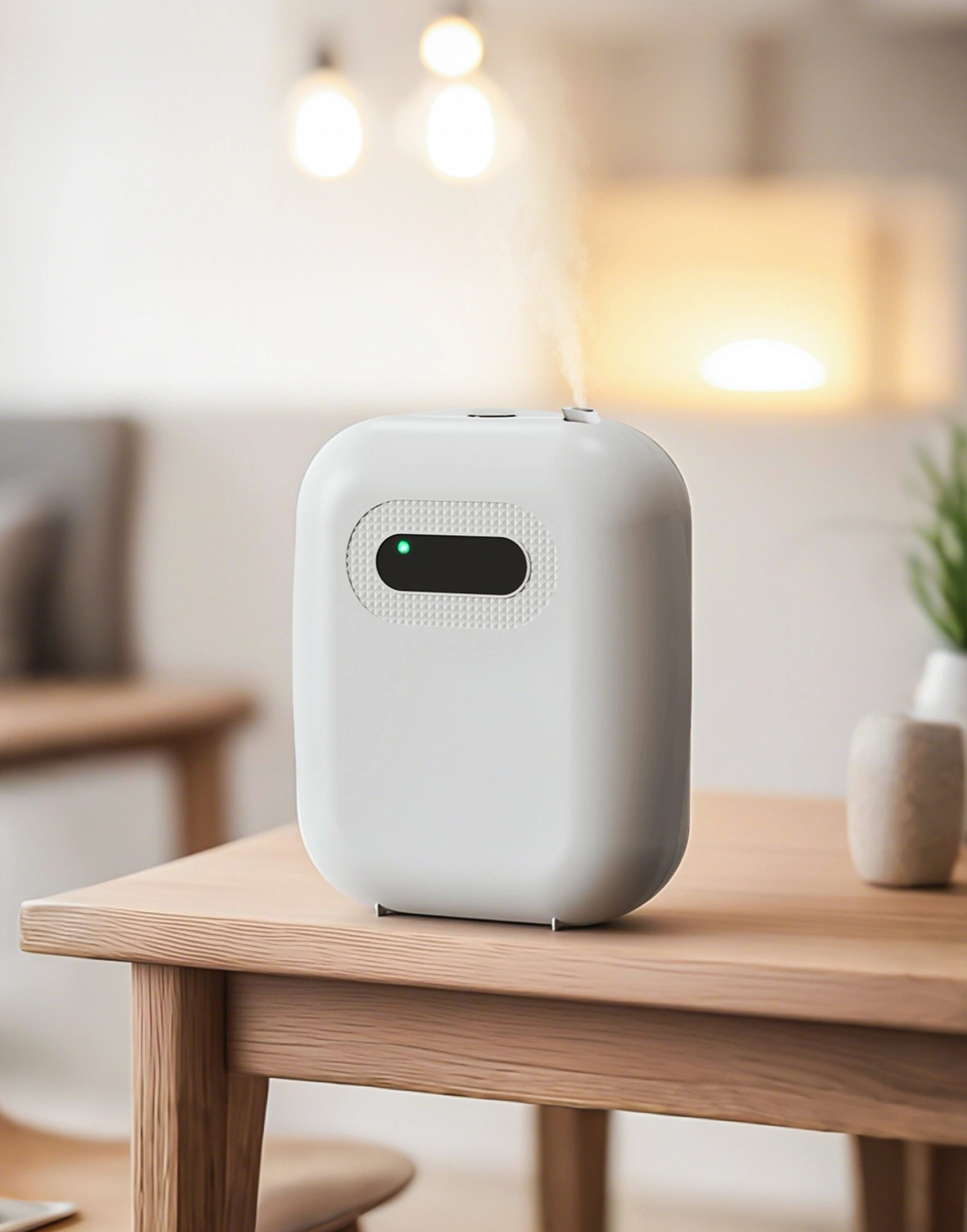
The most common failure in scent marketing ROI measurement is changing the scent or diffuser settings mid-test. Once the fragrance profile or intensity shifts, every later data point mixes two different conditions, and the original baseline no longer applies. We ask clients to lock the fragrance formulation, diffuser model, schedule, and intensity before data collection starts. If a change is unavoidable, end the test period and restart the baseline, or run the change as a separate controlled phase.
Scent alone rarely fixes a weak merchandising or pricing problem. If conversion is limited by inventory or staff availability, the scent can only affect the emotional and environmental portion of customer behavior. The ROI model should say that honestly. Otherwise the result is a number that flatters the fragrance and hides the real constraint.
How Do You Put Scent Marketing ROI Numbers to Work?
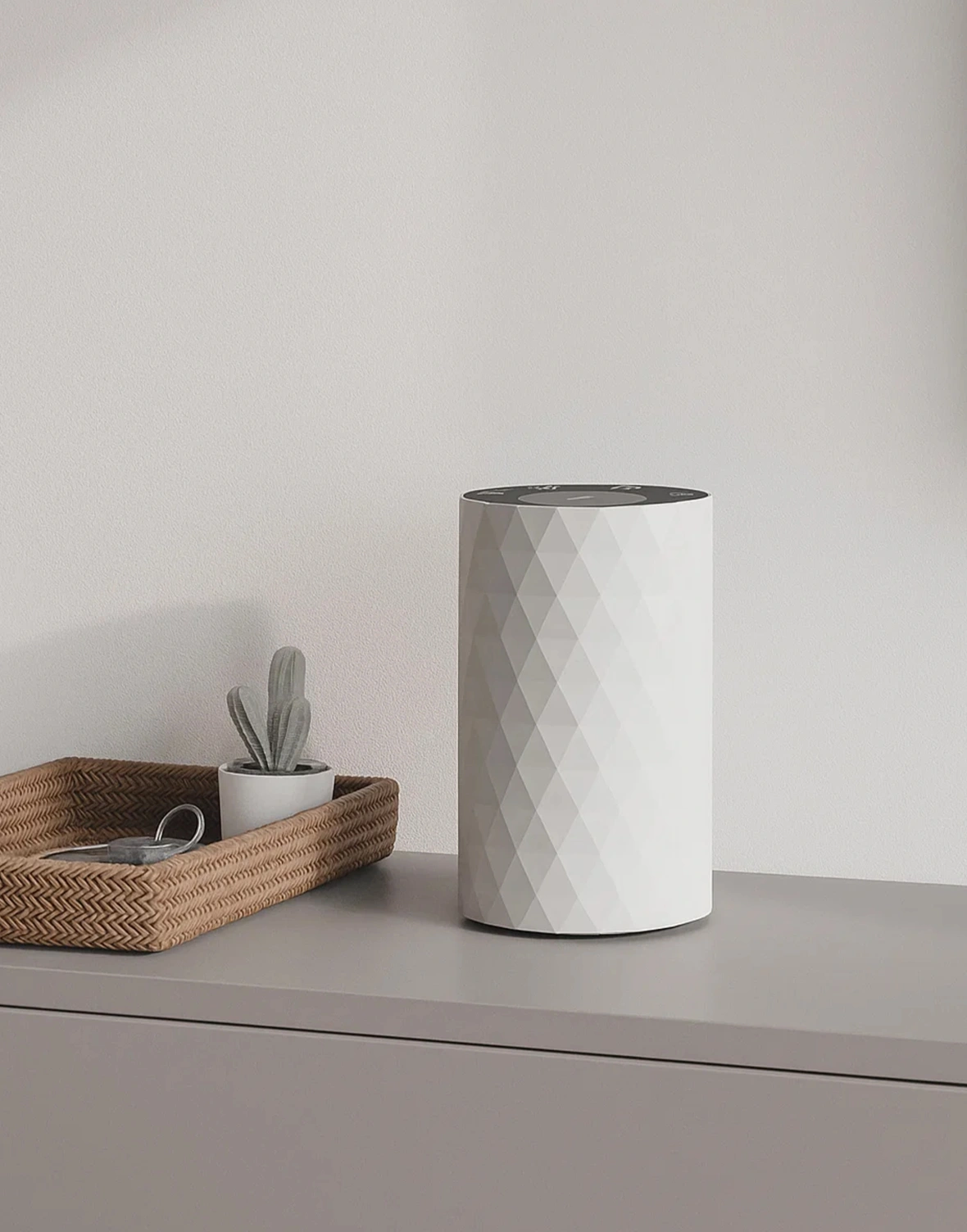
A scent marketing ROI calculation only matters if it changes a decision. If the number is below target, the next move is usually not to remove scent but to adjust zone coverage, fragrance intensity, or oil choice. We recommend comparing current dwell time and fragrance consumption against the diffuser specification before replacing a program. A commercial HVAC system covering 8,000 cubic meters will behave differently from a 300 cubic meter standalone unit. If your program involves multiple zones or HVAC integration, it is worth confirming coverage, oil consumption, and schedule before finalizing your order. Send your zone dimensions, current traffic or dwell data, and fragrance goals to [email protected], or call +86 185 6557 5758 or +86 134 2048 5758.
What Else Should You Know About Scent Marketing ROI?
Can scent marketing ROI be measured in a B2B office space?
Yes, but the metric shifts from sales to occupancy quality and retention indicators. In an office, we measure employee perception surveys, time spent in common areas, meeting room utilization, and reported comfort levels. The ROI calculation uses those operational outcomes on the benefit side while keeping the same cost formula: fragrance oil consumption, hardware amortization, and service. The challenge is that benefits are softer, so we set a lower bar for hard return and treat the program as one component of workplace experience rather than a standalone revenue driver.
How long before scent marketing ROI shows up?
Many buyers expect a two-week signal, but that is usually too short to separate noise from effect. In retail programs, we look for at least eight weeks of stable comparison data, and in hospitality or office settings, two to four months because repeat visits and memory effects accumulate slowly. The first four weeks show whether the fragrance intensity and diffusion schedule are working technically, not whether ROI is real. If you shorten the test too much, you are mostly measuring weather, promotions, and foot traffic fluctuation.
Does a signature scent improve ROI more than a generic scent?
It depends on the type of repeat exposure your space creates. For a hotel or retail chain where customers return across weeks or months, a signature scent tends to improve recall and repeat visit behavior more than a generic fragrance. For a single-visit convenience store or a short-term trade show booth, the ROI difference is often small because there is not enough memory reinforcement. In those cases we recommend spending the budget on correct diffusion coverage and intensity rather than custom fragrance development.
What is the biggest mistake buyers make when measuring scent marketing ROI?
In programs we have reviewed, the most expensive mistake is changing fragrance oil or diffuser settings mid-test. Once the scent profile shifts, every later data point mixes two different conditions, and the baseline no longer applies. We ask clients to lock the fragrance formulation, diffuser model, schedule, and intensity before data collection starts. If you think a change is needed, end the test period, restart the baseline, or run the change as a separate controlled phase. Share your current floor plans and baseline metrics with [email protected] and we will confirm whether your measurement setup is clean before you commit more budget.
If you’re interested, check out these related articles: