The moment guests step through your doors, scent shapes their first impression—often before they’ve even registered the décor. I’ve watched lobbies transform from forgettable to distinctive simply by introducing the right aroma at the right intensity. Getting this balance wrong means wasted fragrance oil and confused brand messaging. Getting it right creates the kind of sensory memory that brings guests back.
How Scent Actually Changes What Guests Remember
Hotel aroma marketing works on a level most guests never consciously notice. A well-chosen fragrance doesn’t just smell pleasant—it shifts how people perceive everything around them. Rooms feel cleaner. Spaces seem more luxurious. The whole property takes on a coherent personality.
Research backs this up. Pleasant aromas correlate with higher satisfaction scores and stronger rebooking intent. But the mechanism matters more than the statistics. Scent bypasses analytical thinking and connects directly to emotional memory. When someone recalls your hotel months later, that fragrance brings back the feeling of the stay, not just the facts of it.
This is why scent branding for hospitality has moved from novelty to standard practice. A signature scent becomes part of your identity—as recognizable as your logo, but operating through a different sensory channel entirely.
What Actually Matters When Choosing Commercial Scenting Systems
Selecting commercial scenting systems comes down to three practical questions: How large is the space? How visible can the equipment be? How much control do you need over timing and intensity?
The technology differences are real. Nebulizing diffusers convert liquid fragrance into fine mist without heat or water, which preserves the scent’s original character. Cold air diffusers work similarly, keeping essential oil compounds intact rather than degrading them. Smart scent technology adds programmable scheduling and remote intensity adjustment—useful for properties managing multiple zones or wanting to shift ambiance between morning and evening.
Coverage capacity varies dramatically between units. A desktop diffuser handles a small reception area. An HVAC-integrated system can scent an entire floor.
Which Diffuser Type Works Best for Large Hotel Lobbies?
Large lobbies present a specific challenge: consistent scent distribution across hundreds or thousands of cubic meters without visible equipment cluttering the space. HVAC scent diffusers solve this by connecting directly to existing ventilation infrastructure. The fragrance travels through ductwork, reaching every corner uniformly.
High-capacity commercial diffusers designed for this application include systems covering 8,000 cubic meters or more. Dual-system configurations can handle up to 15,000 cubic meters. The equipment stays hidden in mechanical rooms while the scent appears everywhere simultaneously.
| Diffuser Type | Coverage Area (approx.) | Power Source | Key Features |
|---|---|---|---|
| HVAC Scent Diffuser | 8,000m³ | DC12V-3A | HVAC integration, Bluetooth APP, large capacity |
| Hotel Scent Diffuser Tower | 3,000m³ | DC12V-2A | Aluminum alloy, Bluetooth APP, tower design |
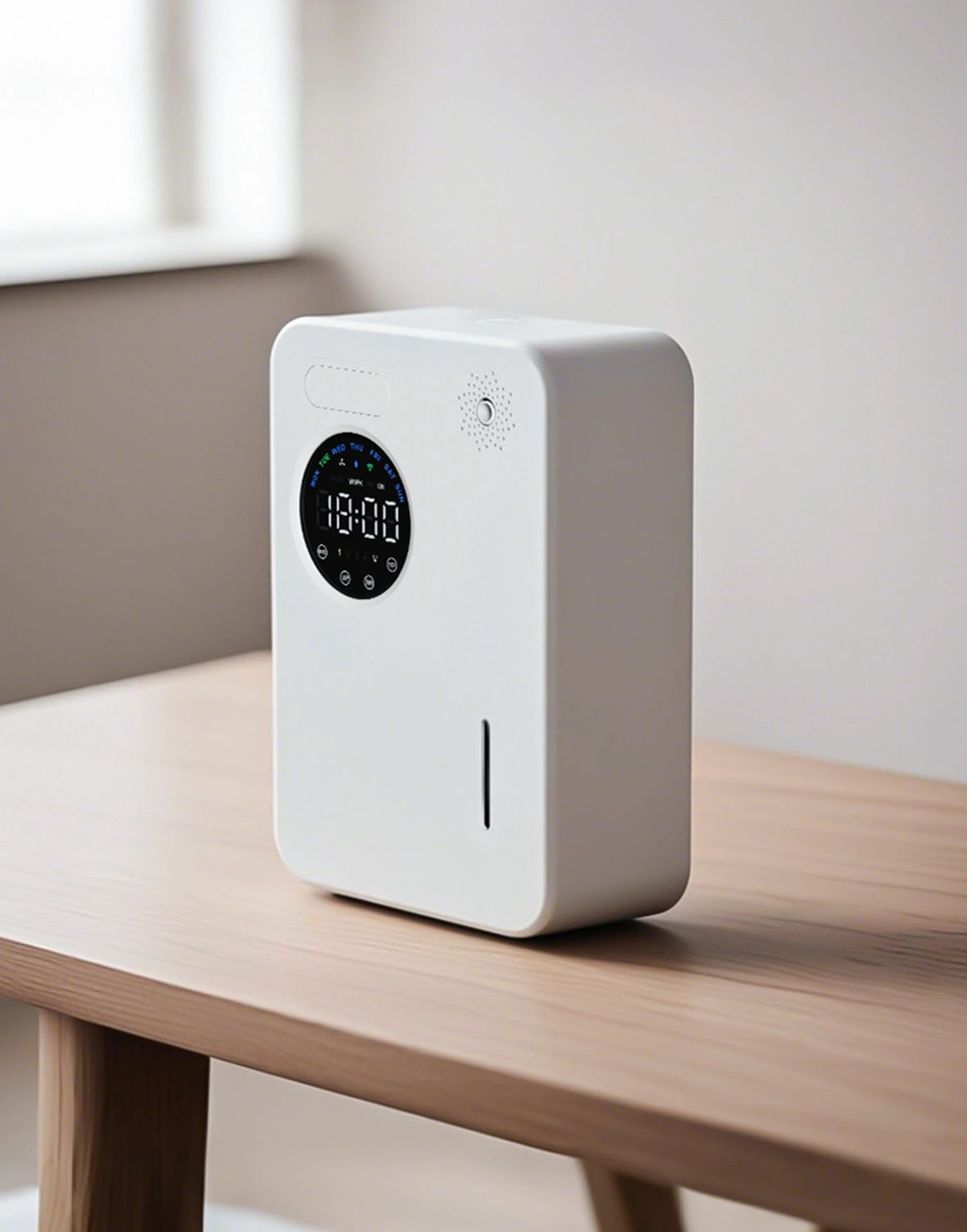
| Desktop Scent Diffuser | 300m³ | DC12V-1A | Bluetooth APP, 24/7 operation, ultra-quiet |
| Wall Plug-in Diffuser | 200-250m³ | 100-240V (wall plug-in) | Bluetooth APP, no manual buttons |
 ## Building a Signature Scent That Guests Associate With Your Property
Fragrance oil selection for hotels requires more than picking something that smells nice. The scent needs to align with your property’s character—its architecture, location, target guests, and the emotional tone you want to establish.
Different fragrance families trigger different psychological responses. Citrus energizes and feels fresh. Lavender calms. Woody notes suggest sophistication. Oceanic scents evoke openness. The right combination depends on what you want guests to feel when they arrive and what you want them to remember when they leave.
Custom scent creation takes this further, developing an exclusive aroma that no other property uses. This becomes a genuine competitive advantage—a sensory signature that guests can’t encounter anywhere else.
Odor control fits into this strategy too. Before introducing your signature fragrance, neutralizing existing smells ensures the intended scent comes through clearly rather than competing with kitchen exhaust or cleaning products.
How Do Hotels Develop a Scent That Appeals Broadly While Staying Distinctive?
The process balances brand identity with guest preference research. Hotels typically start by defining their positioning—luxury, boutique, family-friendly, business-focused—then work with scent consultants to identify fragrance profiles that match.
Geographic location influences choices. A coastal resort might lean toward marine and citrus notes. An urban business hotel might favor clean, subtle compositions that don’t overwhelm. The goal is a scent that feels inevitable once you experience it, as if the property couldn’t smell any other way.
Testing matters. What seems perfect in a small sample can feel overwhelming at scale, or disappear entirely in a large space with high ceilings. Pilot installations in limited areas help calibrate intensity before committing to property-wide deployment.
Installation and Maintenance That Keeps Systems Running Properly
Professional installation matters most for HVAC-integrated systems. Connecting to ventilation infrastructure requires understanding airflow patterns, duct configurations, and system pressures. Poor installation leads to uneven distribution—some areas overwhelmed, others barely scented.
Standalone units are more forgiving but still benefit from thoughtful placement. Air circulation patterns, foot traffic, and proximity to entrances all affect how scent disperses through a space.
Maintenance keeps everything working as intended. Fragrance oil levels need monitoring. Atomizers require periodic cleaning to prevent residue buildup that affects mist quality. Neglected equipment delivers inconsistent results and eventually fails entirely.
Operational efficiency comes from matching fragrance output to actual needs. Running diffusers at maximum intensity around the clock wastes product and can create an overpowering environment. Programmable systems that adjust based on occupancy or time of day optimize both guest experience and operating costs.
What Does Ongoing Maintenance Actually Involve?
Daily checks confirm oil levels and basic operation—a quick visual inspection that catches problems before they affect guest experience. Weekly tasks include exterior cleaning and checking for anything blocking scent output.
Monthly maintenance goes deeper: cleaning atomizer components, replacing fragrance bottles, and verifying that programmable settings still match operational needs. A 150ml bottle in a wall-mounted unit might last several weeks at moderate intensity, but high-traffic areas running continuously will need more frequent refills.
Keeping records helps predict replacement schedules and budget accurately. Most properties find that maintenance becomes routine quickly—a small time investment that prevents larger problems.
Measuring Whether Your Scenting Investment Pays Off
ROI for hotel scenting shows up in several places. Guest satisfaction scores often improve, particularly on questions about ambiance and cleanliness perception. Online reviews may mention the pleasant atmosphere without specifically identifying scent as the cause—which is actually the goal. Scent should enhance experience without calling attention to itself.
Repeat booking rates provide longer-term evidence. Guests who form positive sensory memories are more likely to return and to recommend the property. Some hotels track ancillary revenue too—gift shop purchases, spa bookings, restaurant spending—looking for correlations with scenting implementation.
The challenge is isolating scent’s contribution from everything else affecting these metrics. Properties that implement scenting alongside other improvements may see combined effects that are difficult to separate. Still, the pattern across the industry suggests that well-executed aroma programs contribute meaningfully to guest perception and business results.
Working With Scent-Share Technology
Scent-Share Technology brings a decade of experience across 68 countries and more than 300 fragrance options to hospitality scenting. The product range covers everything from large-scale HVAC systems like the Scent-Share Commercial Scent Diffuser HVAC Aroma Dispenser System to compact units for smaller spaces.
Continuous R&D drives new product development, keeping pace with evolving hospitality needs and scent technology advances. The approach treats scenting as more than equipment installation—it’s about creating emotional connections through carefully designed sensory experiences.
Common Questions About Hotel Scent Diffusers
How Long Do Commercial Scent Diffusers Typically Last?
Well-maintained commercial units, particularly HVAC-integrated systems built for hotel environments, commonly operate for 5-10 years. Actual lifespan depends on usage intensity, environmental conditions, and maintenance consistency. Higher-quality equipment with professional installation tends toward the longer end of that range. Budget units or those subjected to harsh conditions may need replacement sooner.
Are These Systems Safe for Guests With Fragrance Sensitivities?
Safety depends on fragrance quality and dispersion method. IFRA-certified fragrance oils meet international safety standards. Nebulizing technology that creates micro-fine particles generally causes fewer reactions than heat-based systems that can alter fragrance compounds.
Hypoallergenic fragrance options exist for properties particularly concerned about sensitivities. Proper ventilation helps too—scent should be present but not concentrated. Working with experienced providers helps identify the safest approaches for specific guest populations.
Can Diffusers Address Problem Odors in Specific Areas?
Targeted odor control is one of the most practical applications for commercial scenting. Fitness centers, smoking areas, kitchens, and service corridors all generate smells that can drift into guest spaces. Strategic diffuser placement with odor-neutralizing fragrances addresses these issues directly.
The approach works better than simply masking bad smells with stronger good ones. Neutralizing compounds eliminate the unwanted odor first, then the pleasant fragrance fills the space cleanly. Guests perceive improved cleanliness throughout the property.
Start Developing Your Property’s Scent Strategy
A well-designed scenting program transforms how guests experience your hotel. Scent-Share Technology offers the expertise, product range, and fragrance library to create solutions matched to your specific property and brand positioning. Contact our team at +86 185 6557 5758 / +86 134 2048 5758 or [email protected] to discuss what’s possible for your property.