
Guests often remember a hotel not by the color of its walls but by the way it made them feel within the first few minutes. Hotel signature scents operate on that principle. In my work as a scent solution specialist, I have watched a lobby fragrance shift a guest’s posture from hurried to present before anyone spoke to them. The strongest programs do not start with a pleasant smell. They start with the emotional register the property wants to hold. That means translating a brand’s promise into a controlled, repeatable sensory signature across every floor, lift lobby, and guest corridor. When done well, scent becomes part of the hotel’s operating identity rather than a decor afterthought.
The Emotional Mechanics of Hotel Signature Scents
Smell bypasses the analytical filtering that visual branding has to pass through. A guest can ignore a logo, but an ambient scent arrives before language and attaches itself to the context of arrival, relief, or comfort. That is why hotel signature scents tend to strengthen with repetition. Each visit layers the same sensory cue onto the same emotional peak.
A coastal resort project we developed used a marine profile with white tea and driftwood in the lobby. Months later, repeat guests described the arrival moment before they described the room. The sequence matters. The scent had become a time stamp for the emotional peak of the trip. In city hotels, the mechanism is the same but the register shifts. A sharp citrus and cedar profile can signal that the outside day is over. A soft fig and linen profile can make a business arrival feel less transactional. The common thread is not the fragrance family. It is the precision of the association.
Brand Story Translation Into a Repeatable Hotel Scent Profile
A hotel’s signature scent should not be selected from a list of current best sellers. It should be extracted from the same brief that directs lighting, music, and service style. I ask hotel teams one question first: what do you want the guest to feel when the door closes behind them? The answer usually falls into one of a few emotional families, such as calm, arrival, warmth, exclusivity, or restoration.
From Brand Voice to Fragrance Families
For a business hotel, that might mean a transparent, slightly dry profile built on citrus, light woods, and clean musk. For a resort, the brief tends to favor oceanic, green, or tropical notes. For a heritage property, labdanum, leather, and cedar carry a sense of permanence. We translate the brand voice into a fragrance pyramid, then adjust the top note for immediate freshness and the base note for lingering warmth. The middle note does the heavy work of recognition.
Why the Same Note Performs Differently in a Lobby
The same fragrance oil behaves differently in a forty meter lobby with triple height ceilings than in a low ceiling corridor. Air exchange, temperature, humidity, and surface materials change evaporation. We test in the actual environment whenever possible. A scent that reads fresh in a showroom can turn syrupy near a heat source or vanish in a high flow return air zone. This is why a hotel scent program should be specified with the built environment first and the fragrance selection second.
Zone Based Hotel Scent Diffusion and the Details Guests Actually Notice
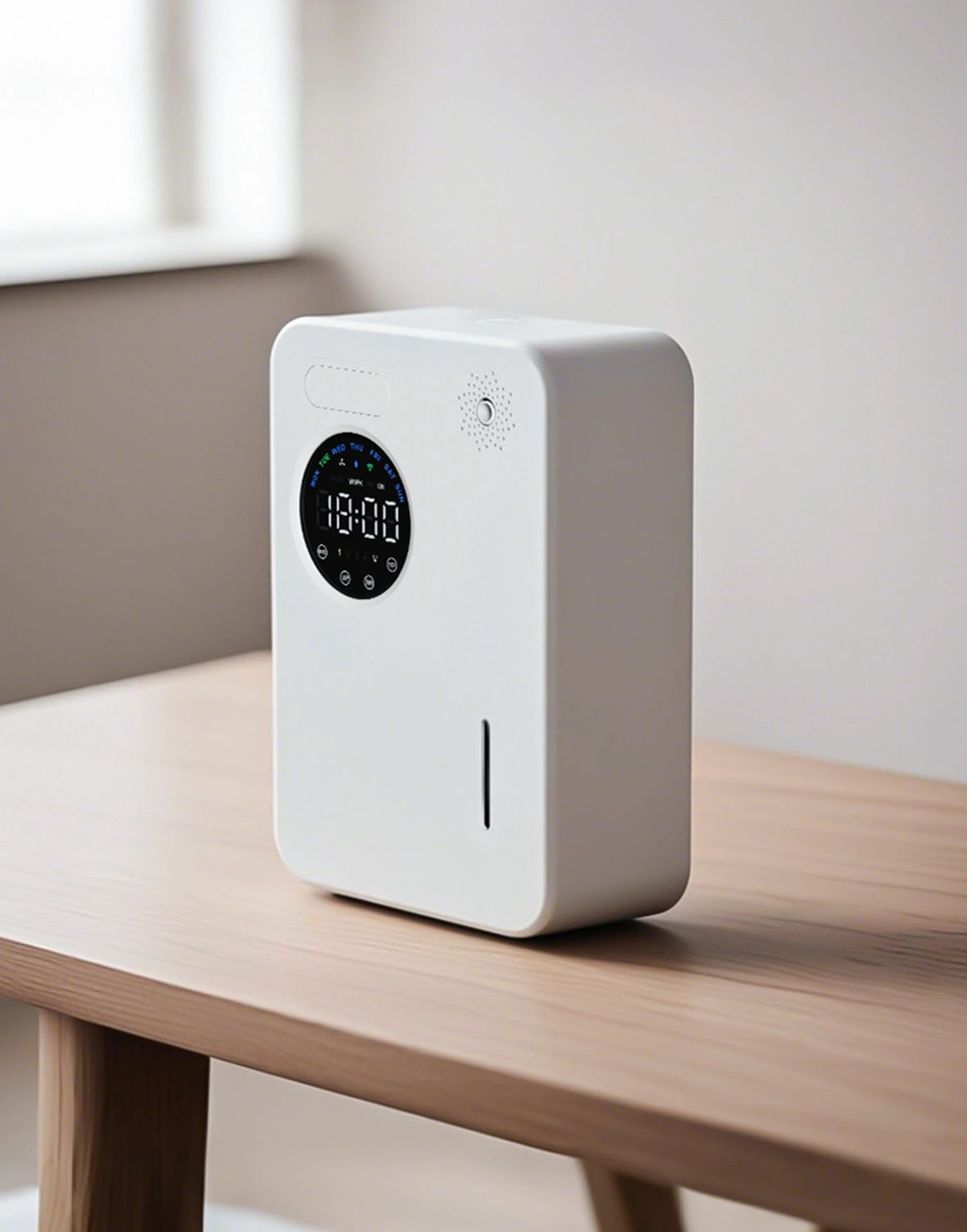
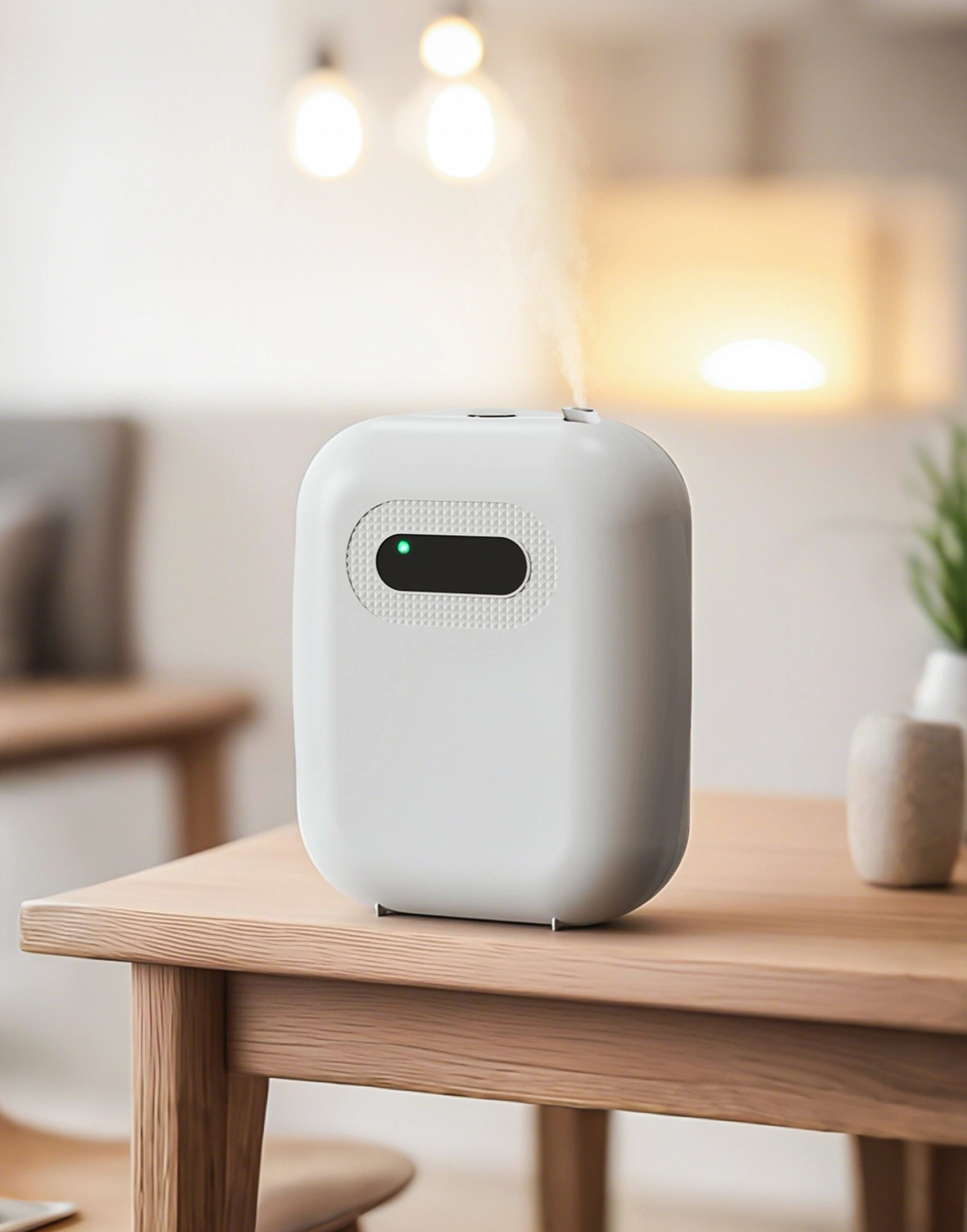
A signature scent is only as good as its delivery. Hotel floors are not uniform, so the equipment should not be either. Lobbies need wide, consistent coverage. Guest corridors need low, steady presence so the scent does not become noise. Rooms need precise, guest adjustable intensity or timed release.
| Approach | Best Placement | Typical Coverage | Control Style |
|---|---|---|---|
| HVAC scent diffuser | Main air handling unit or primary duct | up to 8,000 m³ | Bluetooth APP scheduling |
| Hotel scent oil diffuser tower | Lobby, atrium, or double height arrival space | up to 3,000 m³ | Bluetooth APP and touch control |
| Ceiling track mount diffuser | Corridors, meeting floors, spa walkways | 500 to 600 m³ | Bluetooth APP contactless operation |
| Commercial scent oil diffuser | Boutique retail zones, small lounges, private suites | up to 300 m³ | Bluetooth APP 24/7 |
Large properties generally use HVAC integration because the existing air distribution carries the fragrance without adding visible equipment. Standalone towers are better in boutique hotels or in an atrium that cannot be modified. The mistake to avoid is selecting a coverage number from a spec sheet without checking the actual throw against furniture, plants, and ceiling pockets.
 A scent audit is not an opinion survey. It is a walk through the property at the times guests actually arrive. I look for dead zones, scent stacks, and contradiction zones. A dead zone is a corridor with no measurable presence. A scent stack happens when the lobby fragrance, the restaurant fragrance, and the cleaning product meet in one air stream and form an unnamed third note. A contradiction zone is worse: a spa corridor that smells like breakfast.
In one hotel, a strong sandalwood profile in the lobby met a bakery note near the breakfast room in a compact lift lobby. Guests standing there received a dense, sweet, oily blend that some interpreted as poor air quality. We reduced the lobby intensity by adjusting the atomization interval and moved the breakfast scent deeper into the dining area. The complaints stopped within the week.
If your property mixes a double height lobby with narrow guest corridors, the correct setup is not one number. It is worth confirming throw distance, run time, and placement before you lock the fragrance oil order. Send your floor plan and ceiling details to [email protected] and we will confirm the right split between HVAC and standalone units.
Consistency Systems for Multi Property Hotel Signature Scents
Keeping one hotel consistent is a matter of discipline. Keeping twenty hotels consistent requires a control system. I treat the scent oil and the diffuser as two parts of the same repeatable specification. A property should not reorder by fragrance name alone. It should reorder against an approved master reference.
Master Oil References and Batch Control
We keep a master reference oil for each hotel account. Every production batch is checked against that reference before packing. Natural materials shift with harvest and weather, so a jasmine note may not smell identical in two seasons. The master reference lets our team make a small corrective adjustment without changing the character of the profile. We also document the approved concentration for each diffuser type, because a corridor setting and a room setting draw from the same oil at different rates.
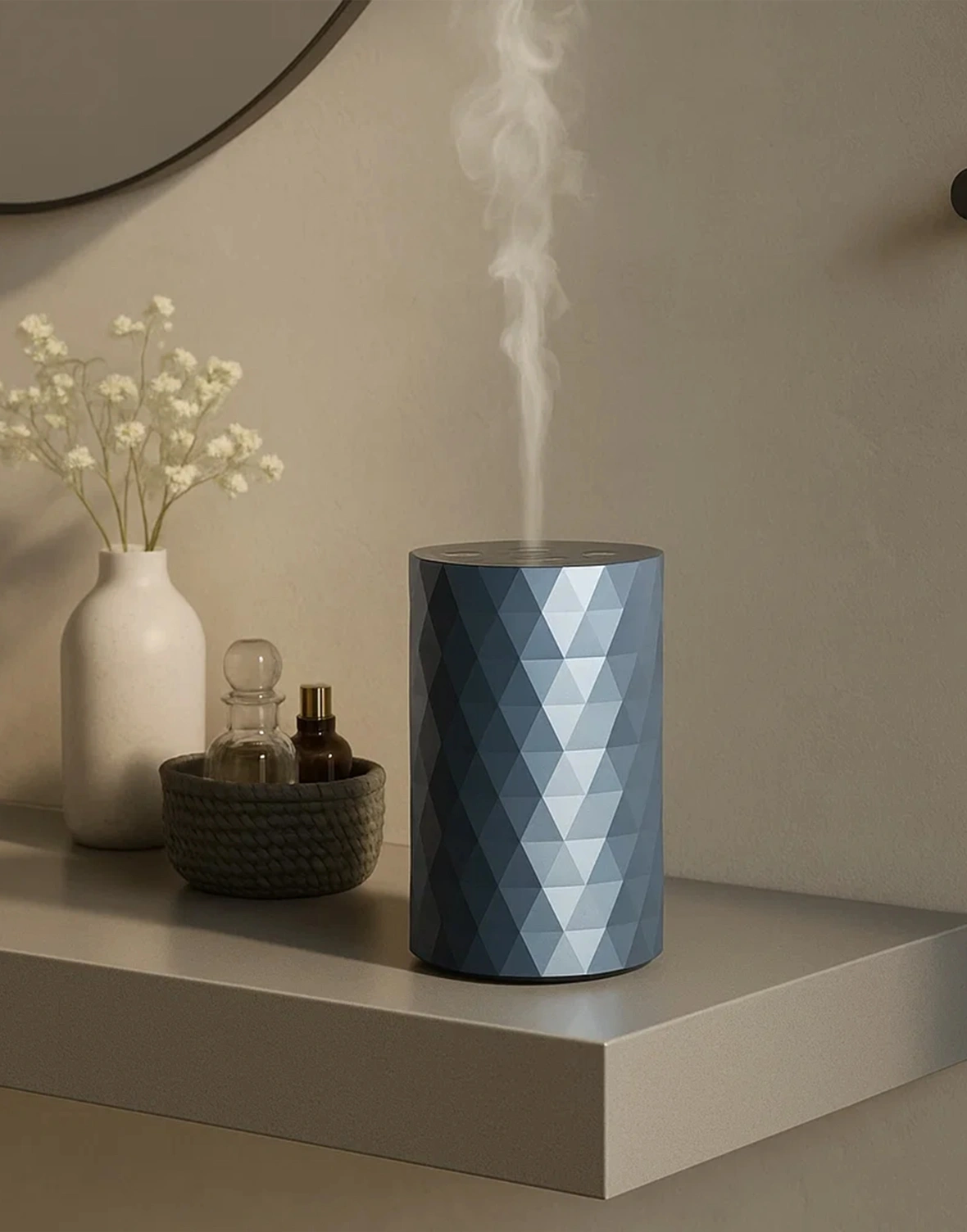
Equipment consistency matters as much as the oil. When a hotel group uses one diffuser model with Bluetooth APP scheduling, housekeeping and engineering teams can set run times without opening the housing. Across our library of more than three hundred scent profiles and project work in sixty eight countries, the properties that stay consistent are the ones that treat scent as an operating specification, not a marketing ornament.
Start With a Scent Specification, Not a Fragrance Sample
Most hotels begin the conversation by asking which scents are popular. The better starting point is the brief: guest profile, architecture, HVAC layout, and the emotion to hold. That information lets us narrow a fragrance selection from hundreds of profiles to the few that will actually perform in your building. If you are responsible for a hotel property or group, send your floor plan, ceiling height, and brand mood to [email protected] or call +86 185 6557 5758 / +86 134 2048 5758. We will return a recommended scent profile and diffuser layout rather than a generic list.
Common Questions About Hotel Signature Scent Programs
How long does a hotel signature scent program take to set up?
Most hotel programs move from brief to installed scent within three to five weeks. Custom fragrance development usually takes ten to fifteen days for the first profile, followed by approval, adjustment, and production. Multi property rollouts take longer because each building must be mapped against its HVAC zones. The practical first step is not to rush the scent. It is to lock the brief and the zone plan early.
Can a hotel use the same scent in the lobby and guest rooms?
It depends on the function of the space. The same profile can carry through a property, but the intensity should drop sharply in guest rooms. A lobby may run at a noticeable ambient level, while a room usually sits at a subtle trace that a guest senses without identifying. If the room scent is too present, sleep quality and comfort can be questioned. A well designed program keeps the signature recognizable but changes the concentration and diffusion schedule by zone.
What makes a hotel signature scent different from a standard fragrance oil?
A common misconception is that a signature scent is simply a stronger fragrance oil. It is not. A hotel profile is formulated with a defined evaporation curve, concentration, and diffusion specification. Standard oils are often blended for personal or retail use. A hotel oil must hold its character across a long run time, perform through HVAC or atomizing systems, and stay safe for continuous ambient exposure. The difference is not intensity. It is engineering and repeatability.
How often should a hotel review its scent intensity?
In hotel programs we manage, intensity is reviewed at least once per season and after any HVAC maintenance. Air distribution changes when filters age, return air paths are altered, or furniture moves. A spring setting may not suit a humid summer. The best practice is to walk the property at arrival time, note any dead zones or overpowering spots, and adjust before guests start commenting. If your property has seasonal humidity swings or frequent event setups, send your property profile to [email protected] and we will confirm the right intensity schedule for the current season.
If you’re interested, check out these related articles:
