
Hotel signature scent ideas fail when they begin with a fragrance oil instead of a specific guest memory. In ten years of scent formulation for international hospitality projects, I have seen properties chase a competitor’s lobby note and end up with a fragrance that smells good but says nothing about the hotel. The more useful starting point is a simple decision: what should a guest feel in the first eight seconds after walking through the door, and which scent profile will carry that feeling from the lobby to the elevator, corridor, and room? This article runs through the scent direction options, segment mapping, and delivery choices that turn a general idea into a consistent signature.
Hotel Signature Scent Ideas Start With an Emotional Anchor, Not a Fragrance Note
A signature scent is not the most pleasant fragrance in the catalogue. It is the fragrance that reproduces the mental image a hotel already wants to own. One property may want the smell of pressed linen and green tea because the brand promise is quiet restoration. Another wants dark amber and sandalwood because the design language is masculine, low-lit, and built for long business evenings. Starting from the emotional anchor makes later formulation decisions simpler because every note either reinforces or fights that anchor.
I apply one test when a hotel team cannot agree on a scent direction. We run each candidate in the lobby at working concentration for two hours, then ask staff whether the space feels more or less like the brand they believe they work for. The wrong scent creates a subtle mismatch that is hard to name but easy to feel. The right one disappears into the space and simply becomes the hotel.
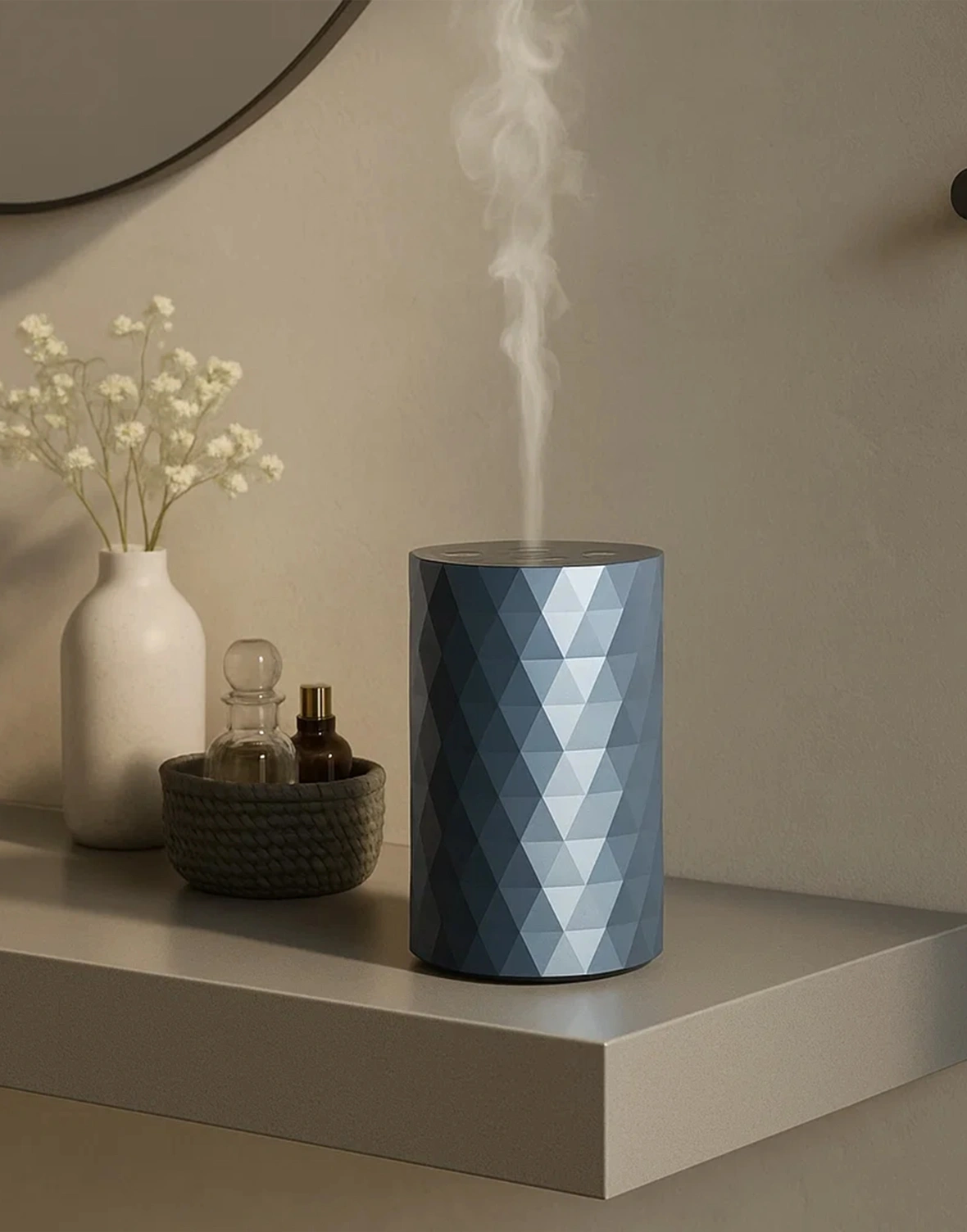
Different Hotel Segments Need Different Signature Fragrance Profiles
Hotel signature scent ideas are most useful when they are separated by segment. A wellness resort and a business hotel may both use a citrus top note, but the supporting structure should be different. The table below groups the directions I most often recommend when clients ask us to narrow a fragrance library.
| Hotel Segment | Scent Direction | Primary Character | Best Diffusion Approach |
|---|---|---|---|
| Boutique design hotel | White tea, fig leaf, clean musk | Fresh, intimate, residential | Small lobby system or reed amenity accents |
| Business and airport hotel | Bergamot, cedar, light amber | Polished, calm, efficient | HVAC scent system in lobby and conference floor |
| Luxury resort | Sea salt, frangipani, soft woods | Expansive, relaxed, warm | Tower or HVAC diffuser for high-volume spaces |
| Wellness and spa | Green tea, bamboo, white floral | Soft, breathable, gentle | Low-intensity waterless or cool-air diffusion |
| Heritage grand hotel | Oud, leather, amber, spice | Weighted, formal, memorable | HVAC system with consistent low intensity |
| Modern select-service hotel | Linen, lemon zest, sheer musk | Clean, bright, uncomplicated | Wall-mounted or ceiling diffuser in entry areas |
It is a mistake to copy a luxury resort profile into a compact city hotel. The diffusion volume and air change rate are different, so the same formula will read heavier or sharper than intended. The fragrance character and the delivery method need to be chosen together, not separately.
The Most Effective Hotel Scent Ideas Map Fragrance to Guest Touchpoints
A hotel signature fragrance should be adjusted by touchpoint. The lobby can carry the fullest version of the scent. The elevator needs a lighter dose because the enclosed space has less air movement and a shorter dwell time. Corridors should be consistent but restrained, and guest rooms usually work better with a near-neutral background so the scent does not interfere with sleep.
This sequencing matters because guests experience the hotel as one continuous journey, not separate rooms. If the lobby is amber and the corridor is citrus, the guest registers the change as inconsistency even without knowing why. Consistency is one of the least expensive ways to make a hotel feel more expensive.
A common failure is over-scenting the front desk area. Staff who stand in that zone for hours become nose-blind long before guests do. The result is a heavier dose over time because the team keeps adjusting upward. We usually set the lobby at the lowest level that is still consciously noticeable for a first-time guest, then verify after 48 hours of continuous operation.
If your property has a double-height lobby or open atrium, it is worth confirming throw distance and air change coverage before choosing a diffuser. Email [email protected] with your lobby square meters and ceiling height and we will confirm a configuration before you commit to a device.
A Practical Development Process Turns Signature Scent Concepts Into Consistent Delivery
The fastest route from inspiration to installed program follows five steps.
- Write a one-sentence memory brief that names the feeling the hotel should leave behind.
- Select three to five fragrance directions from a library rather than evaluating dozens of open options.
- Test the shortlist at working concentration in the actual lobby, not in a closed office.
- Match the chosen fragrance to the air volume and diffusion zone layout.
- Lock a refill and maintenance calendar before the launch date.
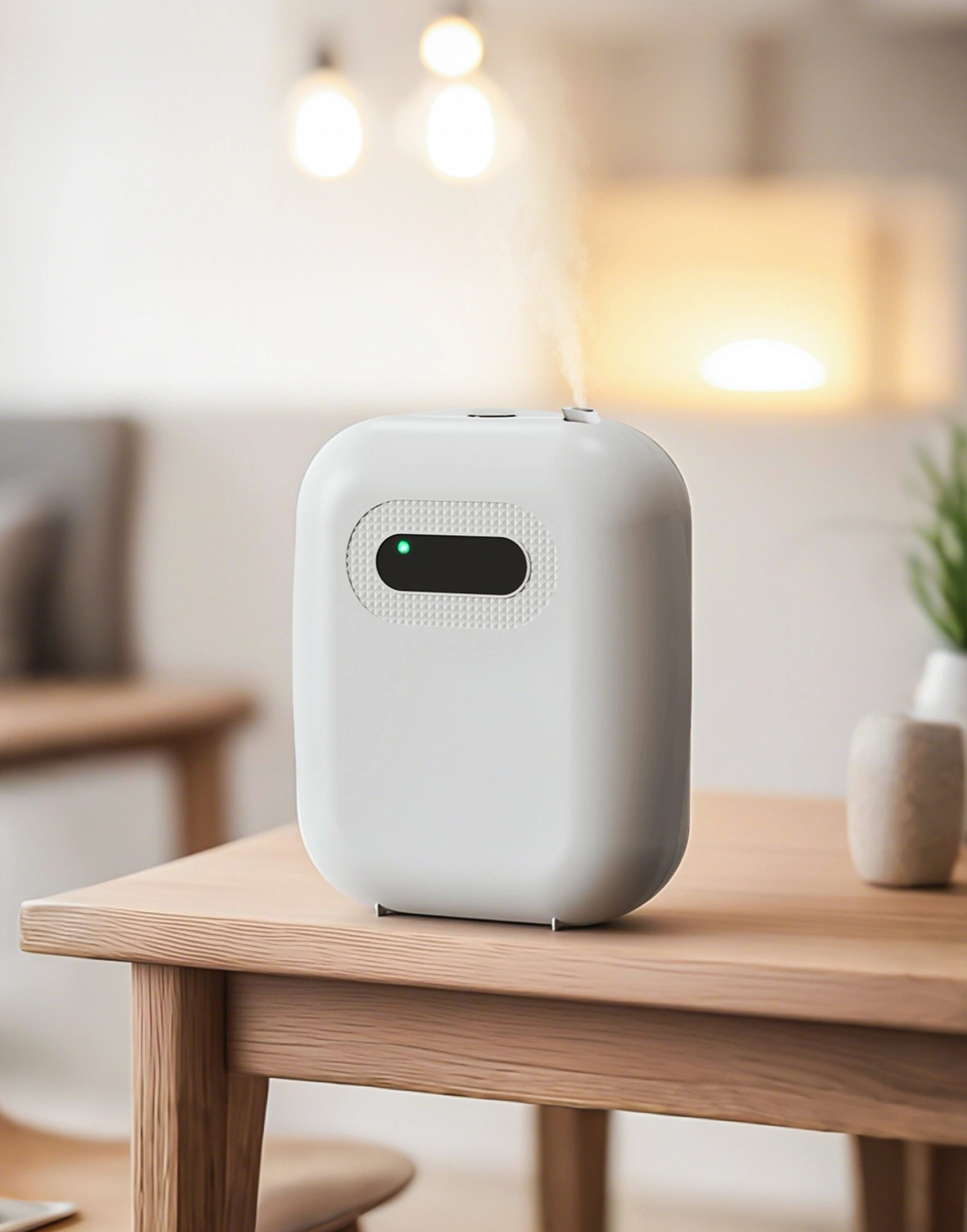
For a large lobby, a 3,000m³ tower diffuser or an 8,000m³ HVAC scent system keeps distribution consistent across open space and connected corridors. For a compact boutique property, a Bluetooth controlled 300m³ commercial diffuser is easier to calibrate without over-scoping the space. The equipment decision is not about brand preference. It is about matching output, throw distance, and ceiling access to the zone the fragrance must cover.
Certain Scent Decisions Make a Hotel Smell Expensive and Others Do the Opposite
Some decisions push a property toward the expensive end without raising cost. A single recognizable blend used with restraint feels more considered than five different fragrances in five zones. A lower concentration delivered close to the nose can feel sharper than a slightly higher concentration diffused through HVAC. Frequent refill schedules also matter more than the initial fragrance choice because oil that sits below the recommended level starts to deliver an inconsistent dose.
The opposite happens when hotels treat scent as an air freshener. A cloying vanilla or a fruit-forward fragrance at high volume signals a retail store, not a hotel. The same note that feels warm in a candle can feel sticky in a 24-hour HVAC scent system. The difference is not the ingredient cost. It is the delivery design and the fragrance’s behavior at working concentration.
I have watched hotel teams reject a well-formulated oud because the test bottle read too heavy, then accept it after we lowered the dose and softened the top note with cardamom. The result was more expensive, not less. Small formulation adjustments often matter more than switching fragrance families.
A Signature Scent Decision Should Lead to a Simple Next Step
Choosing a hotel signature scent can stall when too many fragrance ideas are in the room. The way out is to reduce the decision to three items: the guest memory, the strongest touchpoint, and the air volume that must be covered. Once those are fixed, the fragrance direction and equipment choices become manageable.
If you already have a scent brief or a competitor fragrance you want to reinterpret, send it to [email protected] or call +86 185 6557 5758 with the property type and lobby dimensions. We will narrow the 300 plus fragrance options to a shortlist and confirm the diffuser coverage before you commit an order.
Hotel Owners Ask These Questions About Signature Scent Ideas
How long does it take to develop a hotel signature scent?
Most hotels can move from brief to approved signature scent in two to four weeks. The timeline depends less on blending alone and more on how quickly the property can test candidates at working concentration and make decisions. We usually shorten the process by sending the client a pre-curated shortlist from the fragrance library, then running two to three lobby trials instead of an open-ended selection process. Revisions to a custom blend can add another one to two weeks. The more useful step is to lock the decision criteria early: guest memory, intensity level, and the zones that matter most.
Should a hotel use the same scent in guest rooms and the lobby?
A common assumption is that the exact same fragrance should run everywhere so the scent feels consistent. In practice, guest rooms should usually be softer and slightly less present than the lobby. The same fragrance family or the same recognizable signature can carry through, but the concentration and top-note balance often shift. A bright lobby formula with citrus and woods may keep guests alert; that same intensity in a bedroom can make the space feel less restful. We usually recommend a related room variant with the base structure intact and the sharper top notes dialed back.
Do hotel signature scents have to be expensive?
It depends on what a hotel is trying to signal. A signature scent does not require an expensive rare oil. Many memorable hotel fragrances are built from well-designed synthetic and natural blends where the creative work is in the structure, not the raw material cost. Costs rise when a hotel wants a custom development cycle, IFRA-compliant reformulation for multiple markets, or a very large diffusion area with frequent refills. A boutique property may spend far less than a resort with multiple lobby atriums and long corridors. The right starting point is to define coverage before choosing fragrance cost.
Can a hotel create a signature scent if it already uses a standard diffuser?
In hotel programs I have worked on, the most common constraint is never the diffuser brand. It is the compatibility between the fragrance oil, the device, and the throw distance. I have seen signature scent programs underperform because the fragrance was chosen for a 300m³ lobby but the property needed an 8,000m³ HVAC scent system with a different viscosity and flow rate. Before expanding a scent program, we check the existing equipment coverage and oil feed rate. Share your lobby coverage area and ceiling access details and we will confirm the right diffuser configuration for your property.
If you’re interested, check out these related articles:
