Most luxury hotels choose a signature fragrance before they decide how the scent will actually travel through the building. That sequence creates the most common failure in hotel scent marketing: a beautiful fragrance that arrives too strong at the reception desk, vanishes by the elevator bank, and never reaches the guest floor. After ten years of designing scent programs across 68 countries, I see the same pattern in properties that treat scent as a fragrance choice rather than an atmosphere-level system. The strategy that builds repeat guest loyalty starts with zoning, intensity control, and diffusion hardware first. A signature scent is only as memorable as the system that carries it.
Hotel Scent Marketing Starts With Zoning, Not Fragrance Selection
Hotel scent marketing is usually presented as a branding exercise. The hotel picks a fragrance that matches its interior, its lighting, and the story it wants to tell. That part is real, but it is not the part that fails. What fails is the assumption that one fragrance can behave the same way from the lobby to the top-floor suite. A lobby with a nine-meter ceiling does not hold scent the way a carpeted corridor with low airflow does. If the program starts with fragrance selection, the first week often ends with the front desk turning the diffuser down because a guest complained.
I approach the sequence differently. We map the property first. We look at ceiling height, return air paths, open staircases, restaurant exhaust, and the hours when different zones are occupied. That map tells us where the scent will collect, where it will disappear, and where it will become too loud. Only then do we begin fragrance selection. The winning luxury hotel scent marketing strategy is not the best smell in the world. It is the right smell delivered at the right intensity in the right place.
Scent Intensity Mapping Is the Core of a Luxury Hotel Scent Program
Guests do not register a scent program consciously. They register consistency. If the lobby smells like white tea and fig but the corridor smells like cleaning solution, the signature scent never forms. Intensity mapping prevents that break. We divide a property into zones based on two factors: how long a guest stays in the space and how much competing odor already exists.
A lobby needs a wider, more diffuse scent because guests pass through quickly. A spa treatment room needs a much lower load because the guest is lying down for sixty minutes and the nose adapts. A corridor can carry a faint echo of the lobby note, but it must not compete with the fragrance later used in the guest room. The same fragrance oil can be programmed at different output levels across these zones, but the equipment must hold that control over time.
We keep more than 300 fragrance oil formulations in the working library, so a hotel can keep one signature direction while adjusting the regional expression. The formulation choice matters, but it sits behind the intensity decision.
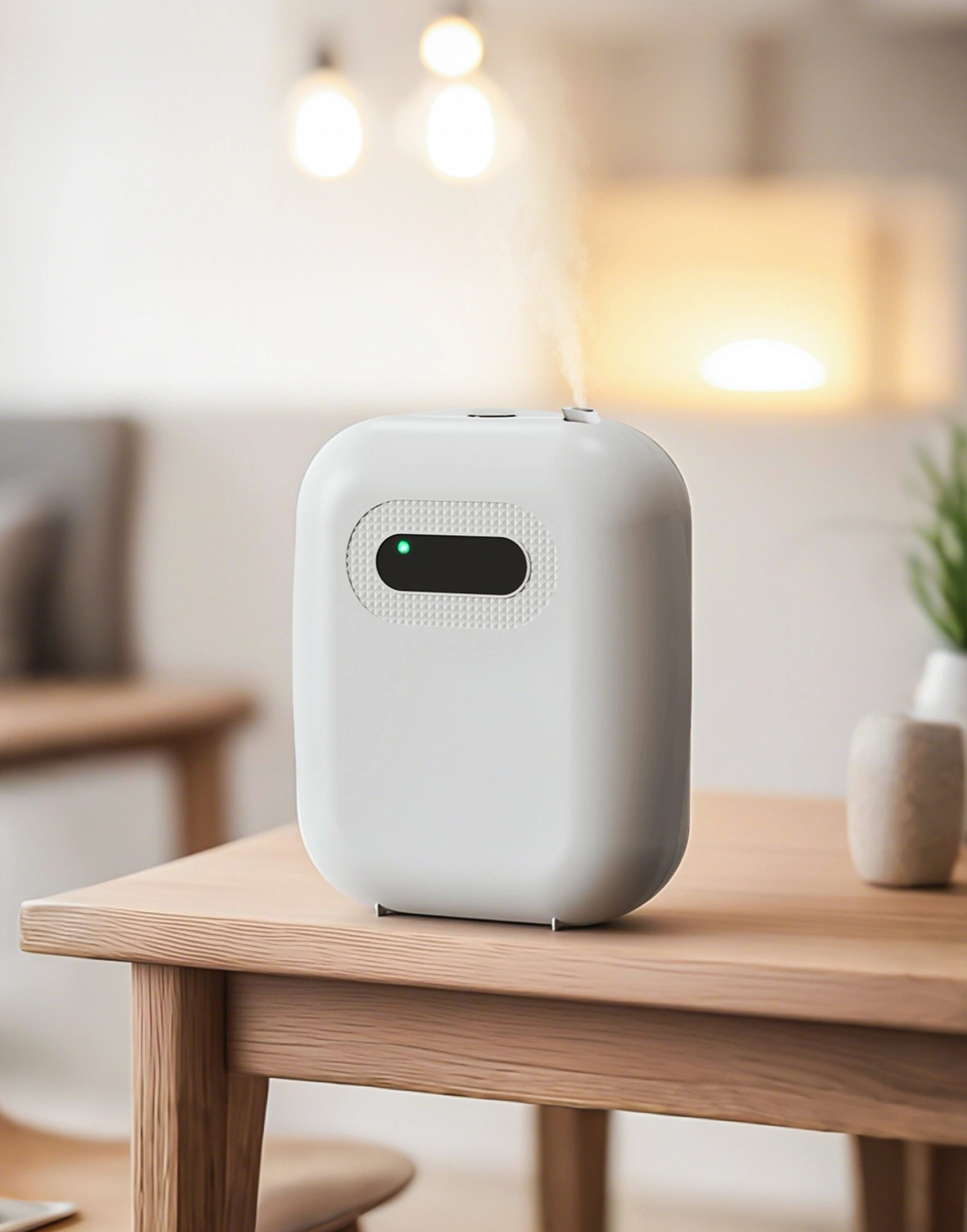
How many scent zones does a typical luxury hotel need?
Most hotels need at least four: arrival and lobby, guest floor corridors, food and beverage spaces, and wellness or spa areas. Larger resorts add a fifth for outdoor transition spaces or conference floors. The mistake is not choosing a number. The mistake is using the same machine output in all of them. We start with four and then split further only when there is a structural reason to do so, such as a mezzanine bar sharing air with the lobby.
Why do lobbies and guest floors need different fragrance loads?
A lobby is a high-movement space. Guests spend a few minutes there, so the scent can be a little more present without becoming overwhelming. A guest floor corridor is an enclosed, repeated space where housekeeping carts and room service already create odor. If the same load is pushed there, the scent becomes cloying by the third night of a stay. We keep corridor output faint, almost a confirmation of the lobby note, and leave the guest room itself to the room amenities.
The Right Diffusion System Keeps Hotel Scent Marketing Consistent
Fragrance choice gets more attention than equipment choice, but equipment determines whether the strategy survives past the trial period. We specify two broad approaches. For properties with central air handling, HVAC scent diffusion works inside the duct flow and treats large connected volumes. For smaller zones or buildings without accessible ducts, standalone diffusers with Bluetooth control give the hotel team independent intensity settings.
The table below reflects the equipment classes we use most often in hotel programs. The coverage numbers come from the Scent-Share product range, but the logic applies to any proper commercial system.
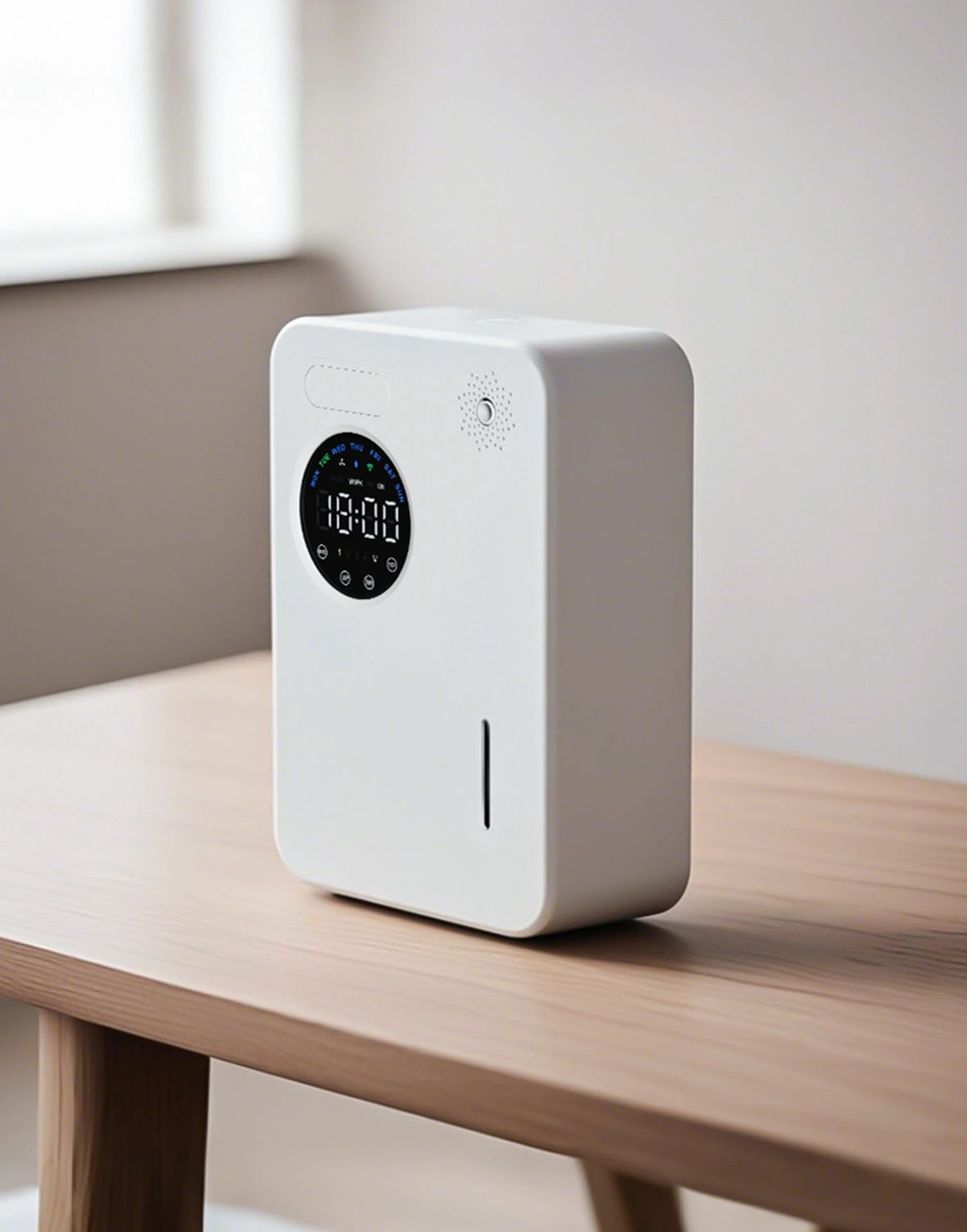
| Zone | Equipment type | Coverage reference | Fragrance strategy |
|---|---|---|---|
| Grand lobby or atrium | Commercial HVAC scent diffuser | 8,000 m³ (30,000 sq ft) | Wide dispersion at low background intensity |
| Guest floor corridors | Wall mount HVAC scent system | 3,000 m³ (10,000 sq ft) | Faint echo of the lobby note |
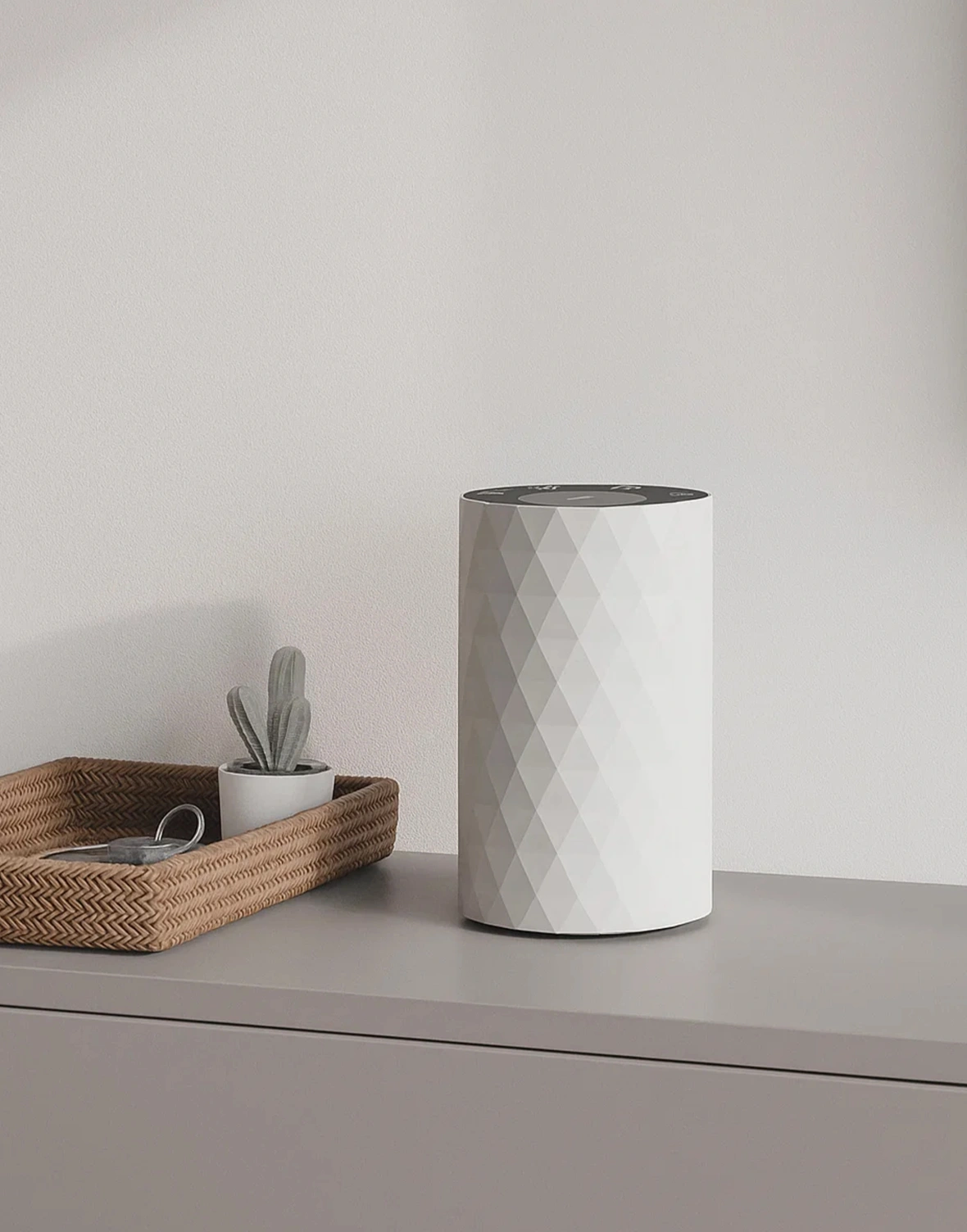
| Club lounge or larger suite | Hotel scent oil diffuser tower | 3,000 m³ (11,000 sq ft) | Slightly warmer, closer to the signature fragrance |
| Restaurant, spa, or private dining | Bluetooth app commercial diffuser | 300 m³ (1,000 sq ft) | Contextual scent, lighter and closer to the activity |
| Large connected public areas | Dual-system HVAC scent diffuser | 5,000 to 15,000 m³ (15,000 to 55,000 sq ft) | Independent fragrance loads for two air streams |
The deciding factor is not brand. It is whether the system can hold a set intensity for weeks without drifting, and whether the team can adjust zones without climbing into the ceiling. Across the hotels we work with, Bluetooth or WiFi control is no longer a bonus. It is the difference between a quick adjustment and a guest complaint that sits unanswered for a day.
If your property combines a double-height lobby, multiple elevator banks, and a connected restaurant, the coverage calculation is rarely simple. Send the floor plan and ceiling heights to [email protected] before you finalize the equipment list, and we will confirm the zone-by-zone layout.
Poor Maintenance Ruins Even the Best Hotel Fragrance Strategy
Most luxury hotel scent marketing programs do not fail because the fragrance was wrong. They fail because the system drifted out of calibration and nobody noticed until a guest review mentioned it. Fragrance oil consumption changes, nozzles degrade, and HVAC filters absorb scent over time. A diffuser that performed well in August may be nearly invisible in November, not because the oil is different but because the air is drier and the fan draw has changed.
One failure mode stays with me. A property kept overriding a lobby system to zero because guests said the space smelled like a duty-free shop. The fragrance was not the problem. The return air in that lobby was restricted, so the scent built up in one corner and never diluted properly. We moved the diffuser, cut the output by about a third, and the complaints stopped. That experience is why we now ask hotel teams to record pressure-based or time-based settings once a week, not just check the oil level.
A Hotel Scent Program Should Be Designed for Long-Term Consistency
Many hotel teams have been burned by a scent trial that impressed the GM in week one and faded by month three. That happens when the program is sold as a fragrance rather than as a system. A long-term hotel scent marketing program needs a mapped layout, specified equipment, and a maintenance rhythm. It also needs a supplier who can adjust the fragrance formulation and oil output as the property changes.
If you are planning a hotel scent program or replacing one that already drifted, share your floor plan, ceiling heights, and current pain points with us. We will return a zone-by-zone recommendation using the fragrance and diffuser types discussed here. Write to [email protected] or call +86 185 6557 5758 and tell us the number of zones you want covered and the intensity you want at the front desk.
Hotel Scent Marketing Buyers Ask Practical Questions First
How long does a hotel scent marketing program take to show results?
Operational results can show within the first month if the system is mapped correctly. Brand recognition takes longer because it depends on repeated guest exposure. We separate the two. The first month tells you whether the intensity feels comfortable and whether the equipment holds its settings. The first full season tells you whether the scent is becoming connected to the property. Luxury hotel scent marketing works as a memory system, and memory forms through repetition, not through a stronger fragrance.
Can a luxury hotel use one signature scent everywhere?
One signature scent does not mean one intensity everywhere. The fragrance identity can stay constant across the lobby, corridors, and spa, but the output must change by zone. A common mistake is to apply the same diffuser settings in a double-height lobby and an enclosed corridor. The lobby needs a wider throw, while the corridor needs only a trace. Keeping one fragrance identity is good. Forcing one output level is what makes guests feel the scent is too loud.
What is the right diffuser for a hotel lobby?
It depends on ceiling height and HVAC access. For a grand lobby above six meters or an open atrium, an HVAC scent system with coverage up to 8,000 m³ (30,000 sq ft) is usually the better choice because it uses the existing airflow. For a boutique lobby under 300 m³ (1,000 sq ft), a Bluetooth-controlled standalone diffuser is often enough. The deciding question is whether the air moves evenly. If the lobby has dead air pockets, no single device will fix that without placement changes.
How much fragrance oil does a hotel diffuser use?
In the hotel programs we have designed, the fragrance load depends on zone size and airflow more than brand. A large lobby may use more oil per week than an entire guest floor because the volume is larger and the air exchanges constantly. Instead of guessing, we calculate from coverage and run hours. A system covering 3,000 m³ (11,000 sq ft) will naturally draw more than one covering 300 m³ (1,000 sq ft). If the oil draw is too high, we check for leaks or fan speed problems before reducing the scent. Share your property layout and run hours with us and we will confirm the realistic oil draw for your zones.
If you’re interested, check out these related articles: