A hotel lobby fragrance can shape a guest’s judgment before the front desk interaction begins. After ten years of developing and calibrating hotel scent systems across 68 countries, I’ve seen the same failure pattern: hotels choose a beautiful scent, place the diffuser next to the entrance, and then wonder why the experience disappears after the first three steps. Hotel lobby fragrance best practices start with air volume and airflow, not with fragrance notes alone. A well-tuned lobby scent should be noticeable without being identifiable, consistent from door to elevator, and quiet enough to stay invisible.
How Should a Hotel Lobby Fragrance Match the Brand and Guest Profile?
The scent in a four-star urban business hotel should not smell like a beach resort. Hotel lobby fragrance works best when it reinforces the hotel’s brand register before the guest can put words to it. In our projects, we ask hoteliers to narrow the first impression to three adjectives. A property that wants to feel calm, modern, and residential may fit white tea, light woods, and a soft musk. A luxury property with heavier materials and an older clientele may need oud, amber, or sandalwood to hold presence in a larger air volume. The mistake is choosing a perfume that reads as a candle fragrance instead of an environmental scent. Environmental fragrances must stay stable across hours of repeated diffusion, not smell different after the first two weeks. With more than 300 scent types available, the real constraint is not finding a fragrance; it is committing to one that matches the brand.
How Much Hotel Lobby Fragrance Output Does a Lobby Need?
Start with air volume, not floor area. A lobby with a ten meter ceiling behaves differently from a low-ceiling boutique entrance. We calculate cubic meters, then match the diffuser coverage to that volume. If the diffuser is undersized, the operator raises intensity and creates a concentrated cloud near the machine. If it is oversized, the scent becomes a thin trace that guests cannot name.
| Diffuser Type | Coverage | Installation |
| Commercial Scent Oil Diffuser (Bluetooth APP) | 300 m³ (1,000 sq ft) | Desktop, 24/7 operation |
| Ceiling Diffuser Commercial Scent Machine (Round) | 600 m³ (2,000 sq ft) | Track-mounted ceiling |
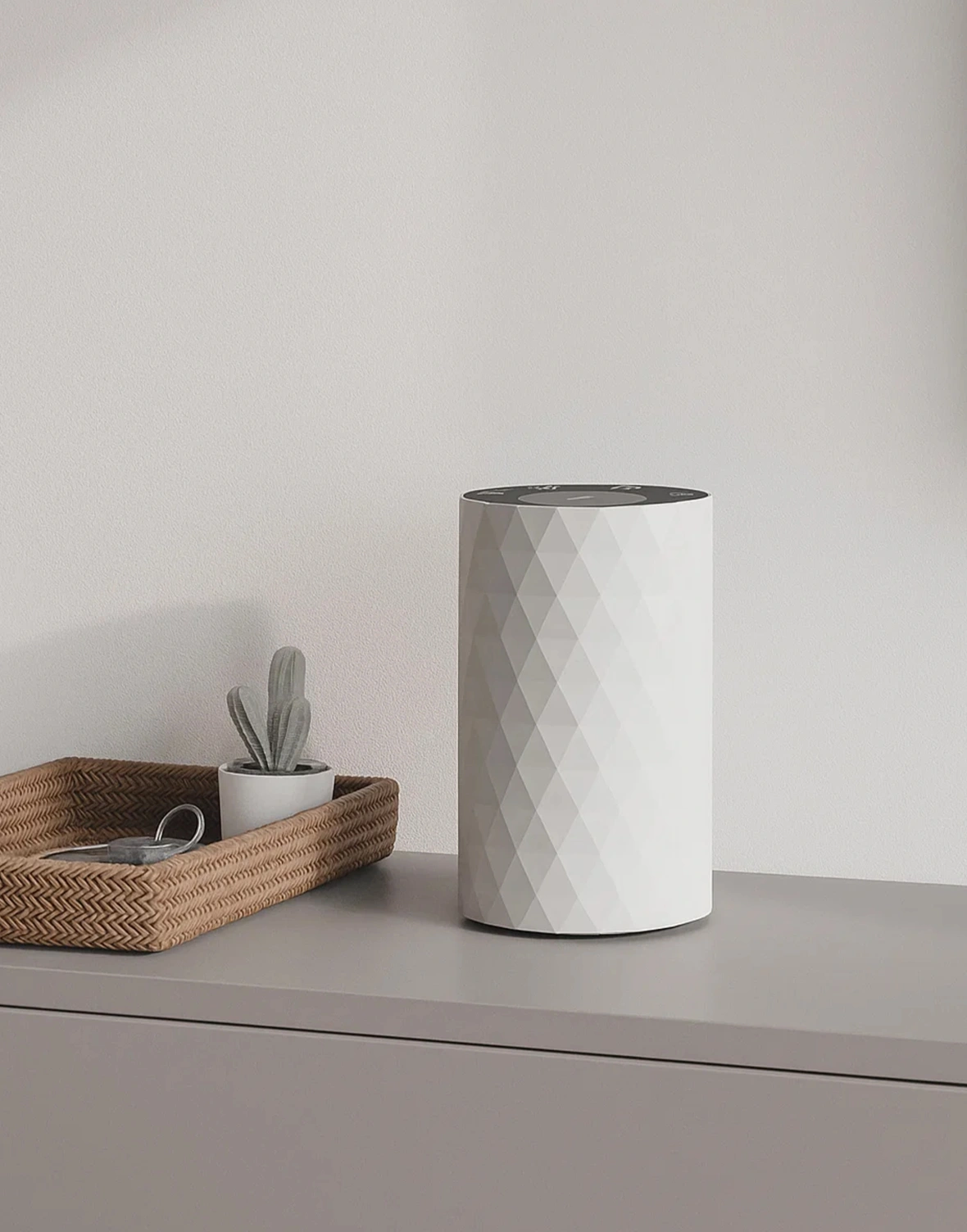
| Hotel Scent Oil Diffuser Tower (Commercial) | 3,000 m³ (11,000 sq ft) | Freestanding tower, 500 ml or 1 L aluminum bottle |
| Wall Mount Aroma Diffuser HVAC System | 3,000 m³ (10,000 sq ft) | Wall mount, multiple installation methods |
| Commercial HVAC Scent Diffuser Aroma Dispenser System | 8,000 m³ (30,000 sq ft) | HVAC duct integration, 1 L to 5 L bottles |
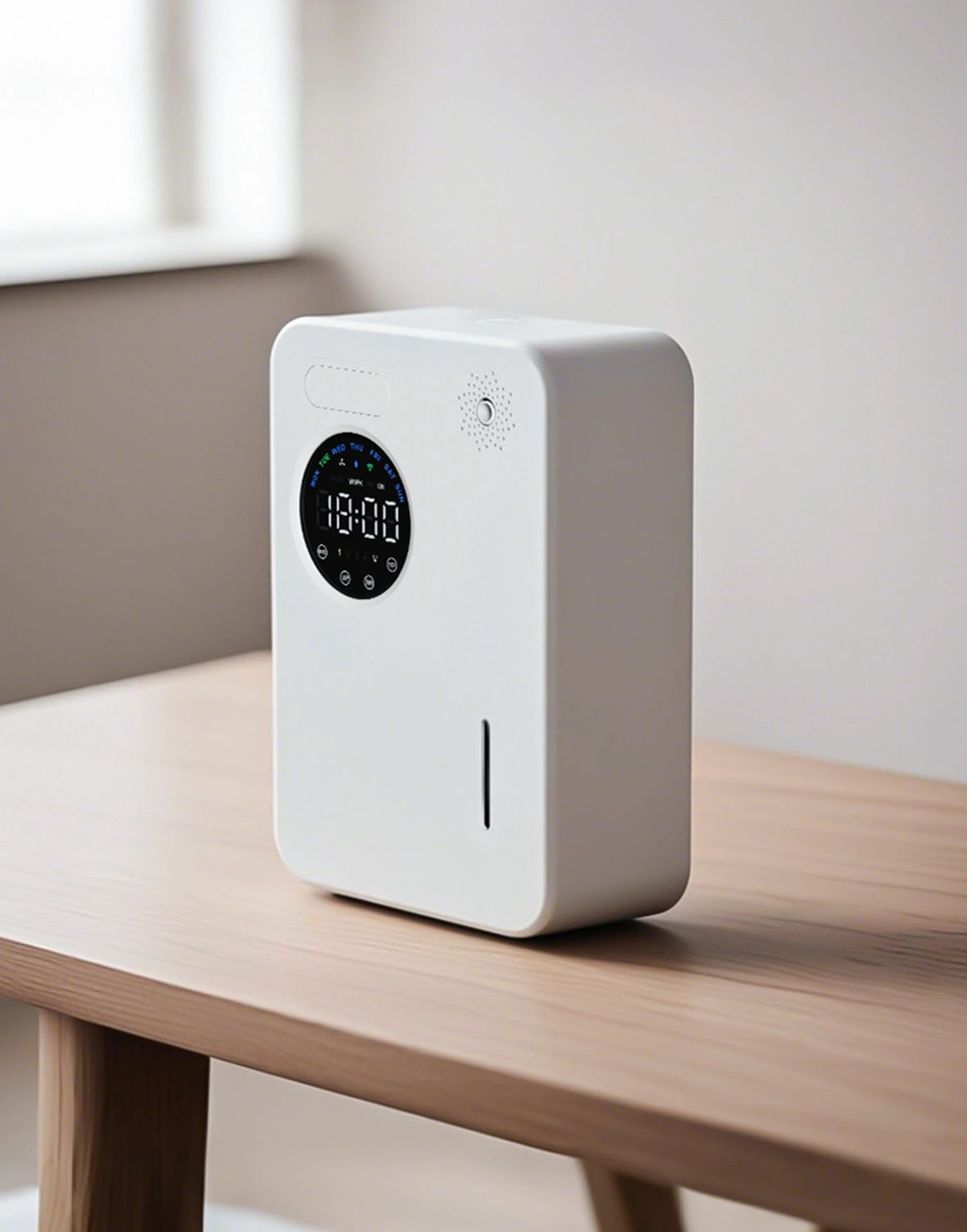 Coverage ratings are useful starting points, but they assume an unobstructed space. A lobby that opens into a double-height atrium or connects to a mezzanine may need more than one diffuser, even if the square footage looks small. We usually select a tower or HVAC unit based on the room’s cubic volume, then adjust output through the programmed intensity settings rather than oversizing the machine. The goal is even saturation, not a concentrated burst near the entrance.
Where Should Hotel Lobby Fragrance Diffusers Be Placed?
Place diffusers where air moves, not where guests sit. In many lobbies, the first mistake is putting the unit directly behind the front desk or next to the entrance doors. The scent then reaches the first three meters strongly and fades before the seating area. We position units along the dominant airflow path, typically near the HVAC supply or on a wall across from the entrance, so the scent arrives with the air instead of fighting it.
Keep hotel lobby fragrance diffusers at least two meters above the floor and angle the nozzle away from direct seating. Avoid dead zones behind columns, near elevator banks, or inside narrow corridors where fragrance can pool and become cloying. If the lobby includes a cafe or bar, place a separate lower-output unit near that boundary rather than pushing the lobby diffuser harder.
When Should Hotel Lobby Fragrance Run at Full Intensity?
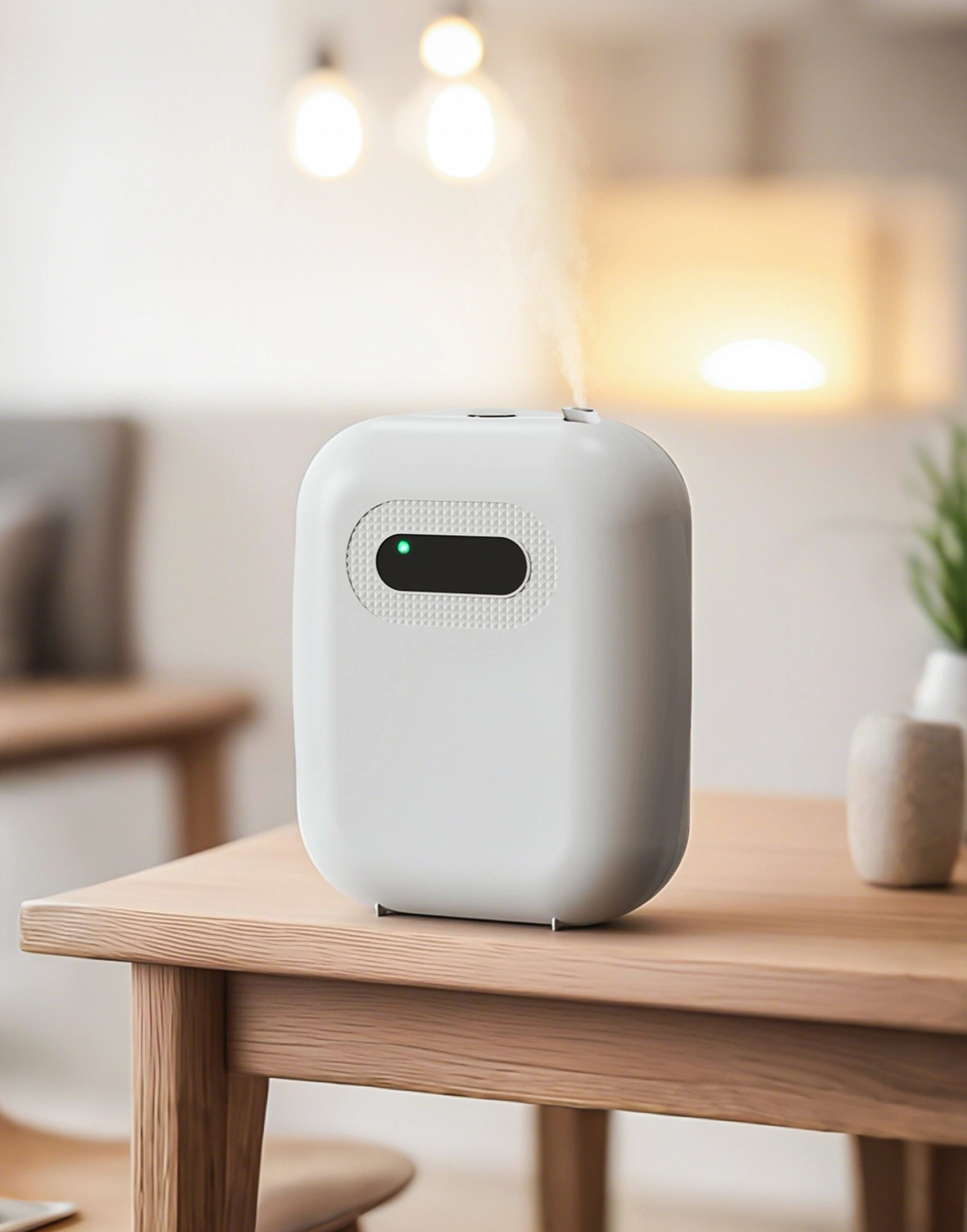
Hotels do not need the same scent intensity at 3 a.m. as at 5 p.m. The strongest output should cover arrival peaks, typically the hours when check-in and pre-dinner movement are highest. Scent fatigue is real. Staff who sit in the lobby for eight hours will stop noticing a constant fragrance, and repeat guests may perceive it as background noise. Running the diffuser on a Bluetooth app schedule with lower overnight output and a short high-output window around key arrival hours keeps the scent effective.
In a property with a 3,000 m³ lobby, we often set two or three daily programs rather than leaving the unit at a fixed setting. Doors, exhaust fans, HVAC cycles, and outside humidity all change how much fragrance stays in the air. A fixed setting ignores those changes. Programmable settings also save oil and reduce the telltale accumulation around the nozzle.
 If your lobby connects to a restaurant, lounge, or open staircase, it is worth confirming how air moves between those zones before finalizing the scent schedule. Send your floor plan and peak arrival hours to [email protected] and we’ll confirm whether one scent zone can carry the lobby or whether separate programs are needed.
What Should Hotels Verify Before the Lobby Opens to Guests?
Most scent problems become obvious only after the lobby is fully occupied. The scent may be perfect during a quiet afternoon walkthrough and disappear by evening, or it may be strong at the door and absent at the lounge. Before opening to guests, we walk the arrival path and check three things: the first ten seconds at the entrance, the seated area after five minutes, and the area near the elevators where guests stand still. If any point feels blank or overpowering, the system needs recalibration rather than a new fragrance.
If your hotel is preparing for a rebrand, a lobby renovation, or a seasonal refresh, send your lobby dimensions, ceiling height, and current diffuser model to [email protected] or call +86 185 6557 5758 / +86 134 2048 5758. We will recommend the right equipment, fragrance profile, and output settings for your space.
What Questions Do Hoteliers Ask About Lobby Fragrance?
How Strong Should a Hotel Lobby Fragrance Be?
The right intensity is noticeable on entry and subtle in the seating area. If guests immediately name the scent or staff complain after an hour, the dose is too high. A hotel lobby fragrance should function like lighting, not perfume. You notice the atmosphere without being told it is there. We usually start at the lowest setting that survives the first five minutes at the entrance, then raise output only if the scent fails to reach the elevators. Stronger is rarely better.
How Often Should Lobby Diffuser Oils Be Replaced?
It depends on the programmed run time and the bottle size, not on a fixed calendar week. A tower diffuser with a 500 ml aluminum bottle running only at peak hours will consume far less than one left at full output overnight. We prefer to schedule refills by actual usage hours and weekly visual checks. In most properties, a 1 L or larger bottle reduces the service burden, but only if the diffuser calibration is correct. Replacing oil on a set date without checking nozzle condition can waste product and leave the scent at the wrong intensity.
Can Hotel Lobby Fragrance Cause Headaches?
Most complaints come from overconcentration or from a fragrance that fights the room’s existing cleaning products, not from the oil category itself. When a lobby uses an intense sweet scent in a humid space with low air exchange, some guests will react. The fix is usually dosage and air movement rather than removing fragrance entirely. We ask properties to reduce nighttime output, position the nozzle away from seating, and switch to lighter top notes in warm or enclosed lobbies.
How Do We Build a Signature Scent for an Independent Hotel?
In the scent programs I have calibrated, a signature scent comes from reducing the hotel’s story to two or three notes, not from copying a competitor. A boutique property by the coast might build on a marine note and white tea, while a restored heritage building may need cedar and amber. Once the profile is fixed, the diffuser schedule and zonal placement carry the result. Share your guest profile and three adjectives that describe the arrival experience with [email protected], and we’ll send a shortlist from more than 300 scent options.
If you’re interested, check out these related articles: