
Corn ethanol producers and project developers face a recurring integration risk: they source quality individual components—a proven hammer mill here, a reliable distillation column there—then spend months reconciling mismatched throughput, control logic, and utility balances across units that were never designed to work together. That gap between equipment cataloguing and true process integration is where project timelines and capital budgets most often unravel. At AGRIFAM, we have delivered complete grain-to-ethanol EPC solutions across multiple continents, and I can say from direct project experience that the difference between a smooth commissioning and an eighteen-month delay rarely lies in a single machine. It lies in whether the equipment was selected as a coherent system from the very start.
Mapping the Bioethanol Plant Equipment Landscape
Too many project sponsors launch their equipment search by collecting datasheets on standalone items—fermentation tanks from one vendor, distillation columns from another—without first establishing the process design basis that all those components must serve. The outcome is predictable: specifications that pass individual checks but collide at the interfaces. A fuel ethanol equipment supplier that works from a complete process flow diagram, by contrast, sizes every piece of machinery relative to the upstream and downstream units it connects to. This matters most at the boundaries: the mill-to-liquefaction transfer, the fermenter-to-distillation feed rate, the dehydration unit’s vapor feed quality.
A modern corn-to-ethanol plant includes six core process blocks: raw material handling and purification, milling and liquefaction, saccharification and fermentation, distillation and rectification, dehydration to anhydrous product, and by-product recovery—DDGS drying, CO₂ capture, and biogas utilization where integrated. Each block operates within narrow mass and energy balances. A hammer mill sized for 500 tonnes per day of corn cannot simply be matched with a fermentation train designed for 400; the bottleneck locks the plant’s entire throughput.
The procurement conversation also needs to address multi-grade production. Many facilities are designed for fuel-grade anhydrous ethanol alone, but a growing number of clients we work with initially target that market while preserving the option to produce pharmaceutical-grade or food-grade alcohol through modular purification add-ons. Specifying the initial equipment with that upgrade path in mind—particularly the rectification column internals and the dehydration unit’s regeneration loop—avoids costly retrofits later.
Turnkey EPC Delivery vs Assembling a Multi-Vendor System
Decision-makers weigh two procurement models: contracting separate suppliers for civil works, process equipment, automation, and utilities, or engaging a single EPC provider that accepts design-through-commissioning responsibility. The decentralized approach can seem cheaper at the bid stage, and occasionally it works for operators with deep in-house engineering teams who have commissioned multiple plants before. For most sponsors, however, the hidden cost is integration engineering: design coordination across disciplines, interface management between control systems, and the inevitable finger-pointing when a performance guarantee is missed.
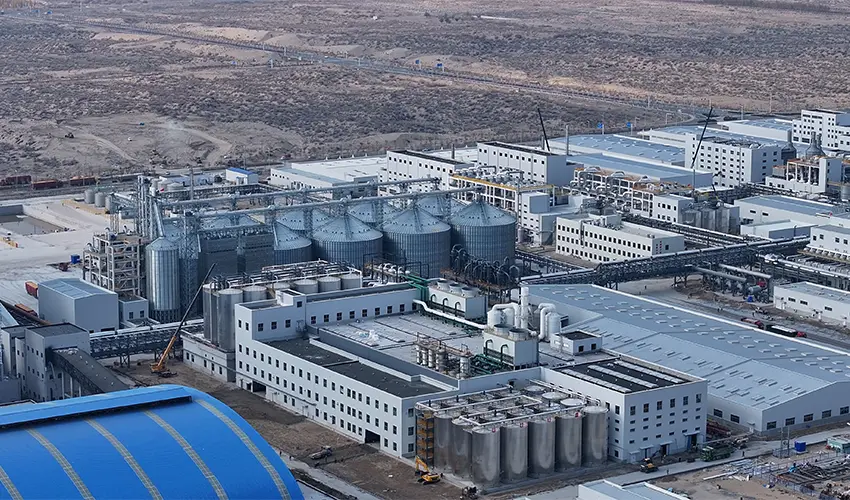
An EPC fuel ethanol equipment supplier like AGRIFAM assumes single-point accountability. This means the process guarantee covers the entire line—from grain intake to anhydrous ethanol storage—not just the output of any one skid. It also means that commissioning engineers arrive on site having already tested control logic in a factory acceptance environment, which cuts hot-commissioning time substantially. In a recent project design, we shortened the standard commissioning window by integrating digital twin simulation into the FAT phase, allowing operators to be trained on virtual process scenarios before touching live equipment.
Procurement managers should scrutinize the EPC provider’s scope around automation depth. A turnkey contract that stops at equipment supply and field installation without delivering a fully configured DCS, SCADA, and historian system merely shifts the integration burden downstream. We require our project handover packages to include a validated process model, instrument index, and loop check documentation—not just the control hardware.
Fermentation, Distillation, and Dehydration: Equipment That Defines Plant Performance
These three systems are the heart of the ethanol plant’s conversion efficiency and product quality. Corn-based ethanol production relies on dry or semi-dry milling, followed by jet cooking and liquefaction to break starch into short-chain dextrins, then saccharification and yeast-driven fermentation. The fermenter design—whether continuous stirred-tank cascade or a batch configuration—determines how close the plant gets to its theoretical glucose-to-ethanol conversion. We have found that continuous fermentation with yeast recycling can push overall carbohydrate utilization above 92% when paired with precise temperature control and consistent mash feed quality, but that stability requires seed yeast propagation systems sized for steady-state operation, not just a lab flask.
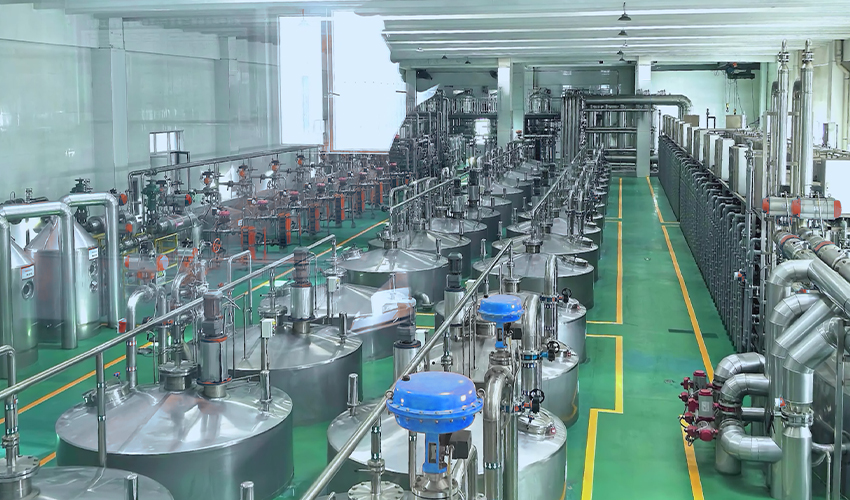
Distillation is the largest energy consumer in the plant. Multi-column differential-pressure distillation arrangements recover heat from the rectifier overhead to drive the stripper column, cutting live steam demand by roughly 25 to 30% compared to atmospheric single-column designs. The specific equipment choice—tray columns versus structured packing, the number of theoretical stages, the reflux ratio—directly impacts both fuel-grade purity and the capacity to swing between grades. A properly designed rectification section can produce 95.5% v/v ethanol as a base product, which then feeds into the dehydration unit.
For anhydrous ethanol (≥99.5% v/v), molecular sieve pressure-swing adsorption has displaced azeotropic distillation in virtually all new-built fuel ethanol plants. The technology is reliable, but the sizing of the sieve beds and the regeneration cycle must align with the upstream distillation rate, otherwise the dehydrator becomes the bottleneck that forces reduced throughput. Our process teams model the full train from column base temperature to sieve bed breakthrough curve before finalizing equipment selections; there is no substitute for that integrated simulation work.
Circular Economy Integration: Turning By-Product Streams into Revenue
The economic case for a corn ethanol plant is substantially shaped by its ability to valorize co-products. Thin stillage from the distillation column goes through centrifugation and drying to produce DDGS—distiller’s dried grains with solubles—a high-protein animal feed ingredient. The value of DDGS can represent 15 to 20% of a plant’s total revenue, so the dryer system is not a peripheral unit; it is a profit center. We design DDGS drying loops with indirect steam-tube dryers that recover heat from the main plant steam system, avoiding the fire risk and product degradation that direct-fired dryers sometimes introduce.
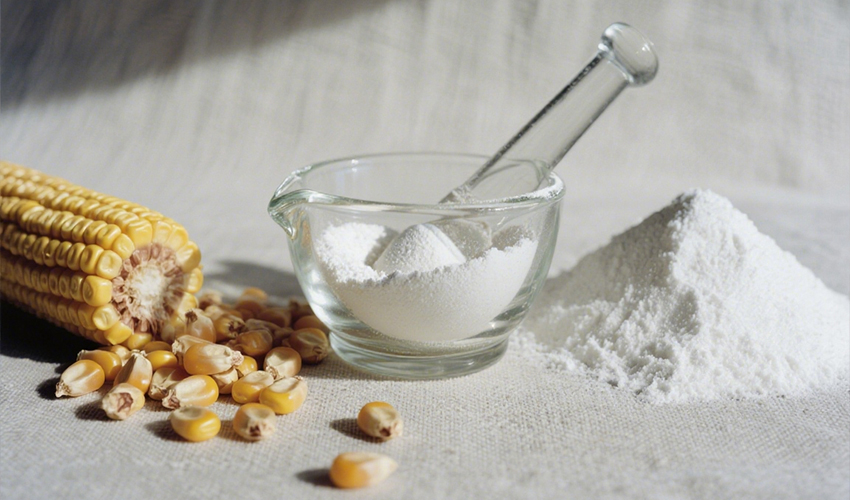
The CO₂ generated during fermentation is another underutilized asset. In a plant producing 100,000 tonnes per year of ethanol, roughly 95,000 tonnes of high-purity CO₂ are released. A scrubber, compression, and liquefaction train can capture that stream for food-grade liquid CO₂, serving the beverage and industrial gas markets. The addition is capital-intensive but often pays back within three to five years in markets where CO₂ prices support it. Meanwhile, anaerobic digestion of process wastewater generates biogas that can replace a portion of the plant’s boiler fuel; we typically route biogas to a dual-fuel boiler or a combined heat and power unit, which further reduces the plant’s carbon footprint and fossil fuel dependence. The integrated mass balance—corn to ethanol, DDGS, CO₂, and biogas—is what turns a single-product plant into a bio-refinery with multiple income streams.
From Feasibility Study to Steady-State Operation: Project Delivery Realities
Having the right equipment specification means little if the execution plan cannot bring it to life on schedule. A fuel ethanol plant construction project moves through distinct stages: feasibility study and process configuration, basic and detailed engineering, procurement and factory acceptance testing, civil works and equipment installation, commissioning and performance testing, and finally operator training and handover. The sequence is well-understood, yet the majority of delays we are called to troubleshoot arise from gaps at the transition points—engineering documentation that doesn’t reach the construction team in time, procurement lead times that outrun the civil schedule, or commissioning procedures that assume a level of utility readiness that doesn’t exist on the ground.
A seasoned fuel ethanol equipment supplier manages these interfaces with a project control system that ties the engineering, procurement, and construction schedules into a single live document. The project manager can see that a delay in the distillation column delivery will cascade into the piping installation and steam blow activities, and can re-sequence downstream tasks before the problem compounds. This is not theoretical; it is the difference between a fifteen-month build and a twenty-six-month build for the same process design. We also encourage buyers to factor in the availability of long-lead items—molecular sieve vessels, high-head steam compressors, stainless steel columns—when establishing the financial close timeline, because locking in those orders early often secures better pricing and prevents forced schedule compression later.
Common Questions About Fuel Ethanol Equipment Supply
How Do I Confirm the Equipment Supplier’s Process Guarantee Structure?
Look for an offer that ties the performance guarantee to the complete production line—from corn intake through anhydrous ethanol output—rather than to isolated units. Ask to see a sample performance test procedure that defines the exact feedstock specification, operating conditions, measurement methodology, and acceptance criteria. A credible EPC fuel ethanol equipment supplier will share that methodology before contract signature, not after.
Is It Better to Buy European, Chinese, or Locally-Sourced Core Equipment?
It depends entirely on your plant’s target product grade, local code requirements, and long-term service expectations. Major Chinese manufacturers now produce distillation columns, molecular sieve units, and fermenters that meet international design codes and are backed by domestic service teams, which can significantly reduce maintenance response time. European components often carry advantages in specialized instrumentation and automation hardware, but the overall system integration matters more than the origin of any single component.
What Are the Most Frequently Overlooked Budget Items in a Bioethanol Project?
In my experience across multiple project designs, the items most often underestimated are site preparation and civil works for heavy rotating equipment foundations, the cost of control system integration and factory acceptance testing, and the initial fill of enzymes and yeast for commissioning. Additionally, buyers frequently overlook the steam system tie-ins—whether a new boiler is required or the plant can connect to an existing utility source—and the wastewater treatment balance-of-plant.
Does the Supplier’s Engineering Team Stay Involved Through Commissioning?
A committed fuel ethanol equipment supplier will keep the process design engineers engaged through commissioning, not just hand over documentation and leave. We assign our lead process engineer to the commissioning team so that any deviation from design conditions can be evaluated and corrected immediately. This continuity is vital when the plant is being tuned to meet its performance guarantees and the operators are still learning the control system.
Can I Phase the Plant Build to Match Market Growth?
Yes, and this is a strategy we have applied for clients entering markets with uncertain ethanol demand. The prudent approach is to design the overall site infrastructure—utilities, main process building, storage tanks—for the ultimate capacity, then install the first fermentation and distillation train at a reduced throughput. As market conditions improve, the second train can be added with minimal disruption. The key is making those phasing decisions early in the basic engineering phase so that pipe racks, cable trays, and DCS architecture are provisioned for future expansion. If you are evaluating a phased construction strategy, sharing your capacity growth projections early with the equipment supplier can substantially reduce the cost and timeline of later expansions. Contact our team at [email protected] or call 010-8591 2286 to discuss a configurable plant design that aligns capital outlay with market uptake.
If you’re interested, check out these related articles:
Driving Global Food Conservation Through Technological Innovation