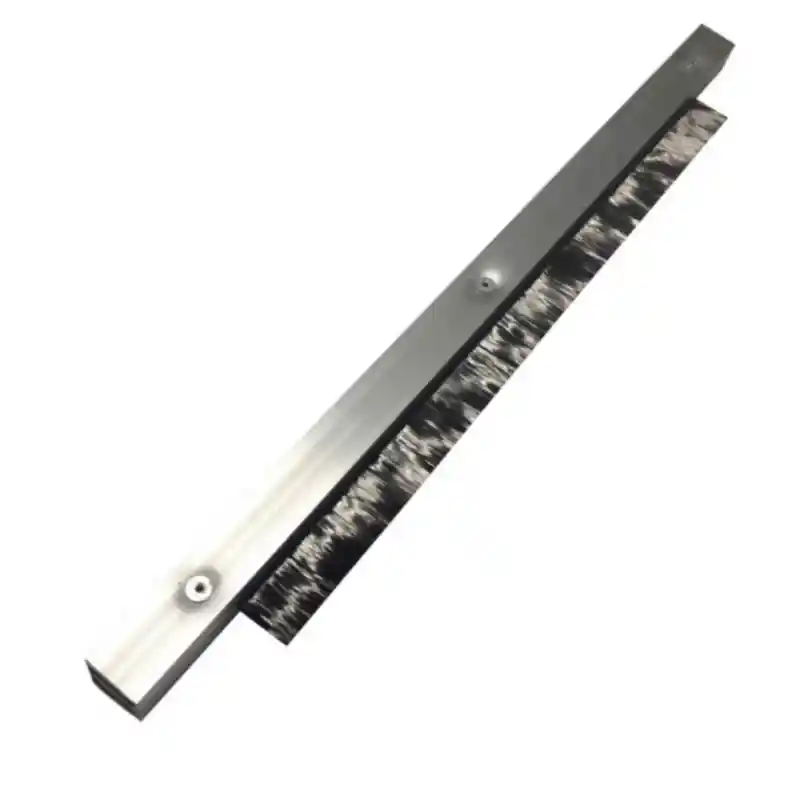

In industrial sealing and cleaning, the difficult areas are rarely flat. Cabinet edges, conveyor side walls, machine guards, and door gaps all have steps, curves, and uneven profiles that rigid sealing systems cannot follow. A flexible strip brush solves this by using a bendable backing channel and densely packed filaments that conform to the installation shape while maintaining consistent contact with the workpiece or sealing surface.
When a gap changes along its length, a standard rubber or rigid seal can lift away or bind during movement. A flexible strip brush can be bent and cut on site, which makes it a practical replacement for static seals on enclosures, conveyance equipment, and processing lines.
How the Bendable Design Works
The bendability comes primarily from the backing profile, not only from the filaments. The brush is built around a metal or synthetic channel that holds filaments in a continuous row. Depending on the installation, that channel may be U-shaped, T-slot, flat, or slotted. Shorter backing segments and a moderate filament trim height allow the strip to follow curved edges without kinking or leaving open gaps.
Huixi builds both industrial strip brush and flexible strip brush versions with punched or rolled channel backings, plus custom filament density to match the length of the run. The key is to keep the mounting channel flexible where the surface curves and rigid where the line must stay straight.
Sealing Irregular Gaps in Machinery
Flexible strip brushes are most often used where a moving panel, door, or conveyor edge must be sealed against dust, airflow, light, noise, or light debris. The bristles compress into uneven openings while still allowing the adjacent component to move without excessive friction.
For doors and enclosures, a door seal brush uses the same filament-channel concept and can be integrated into a flexible strip assembly. The difference is in mounting: a flexible strip brush is often fitted into a formed track, clipped into a T-slot, or screwed into a prepared edge at regular intervals.
Strip brush sealing is used in enclosures, clean booths, and machinery guards; the bristles compress to fill uneven gaps while letting doors or panels move without binding. <What you know about brass wire brush strip> covers the material options and strip construction used in similar sealing applications.
Cleaning Contoured Surfaces
The same flexible structure also works in light cleaning and wiping applications. A strip brush mounted along a conveyor edge can sweep away dust, chips, or loose residue from a product surface without stopping the line. Because the backing can be curved, it keeps contact across crowned or stepped profiles instead of touching only at the high points.
For round or tubular sections that require rotary cleaning action, a related spiral wire brush may be more effective than a stationary strip. Flexible strip brushes are better suited to linear edges, irregular contours, and applications where the brush remains fixed while the workpiece passes over it.
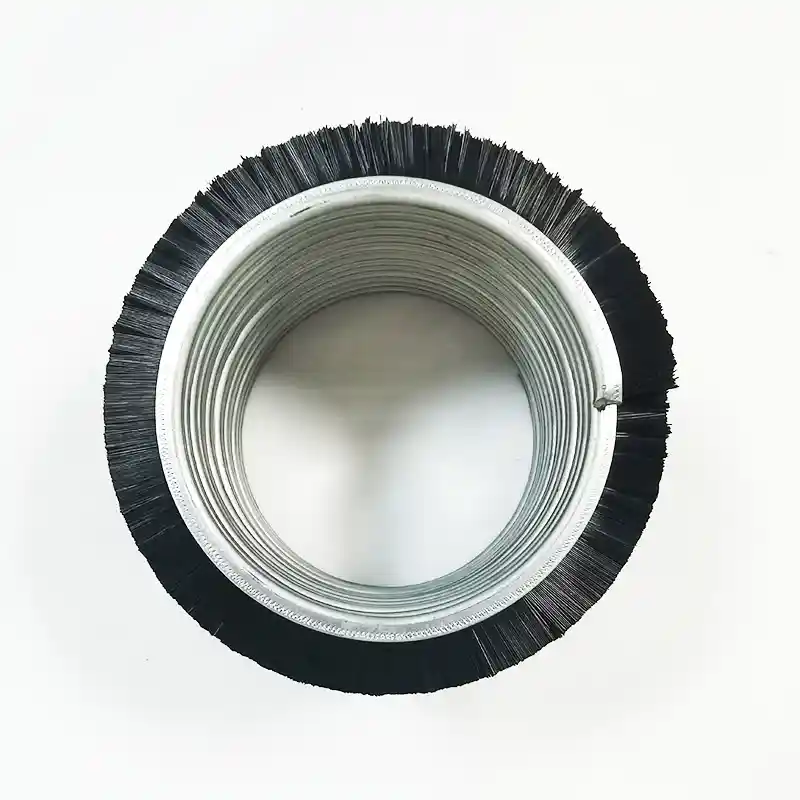
Choosing the Right Filament and Channel
Material selection should start with the operating environment and the required contact level. Standard choices include:
- Nylon: good general-purpose sealing, moderate wear resistance, and good recovery after bending
- Polypropylene: lightweight filament often specified for indoor dust and splash shielding
- Polyester: stiffer feel, useful for sweeping and wiping light process debris
- Metal wire: used when higher hardness or a more aggressive wiping action is required
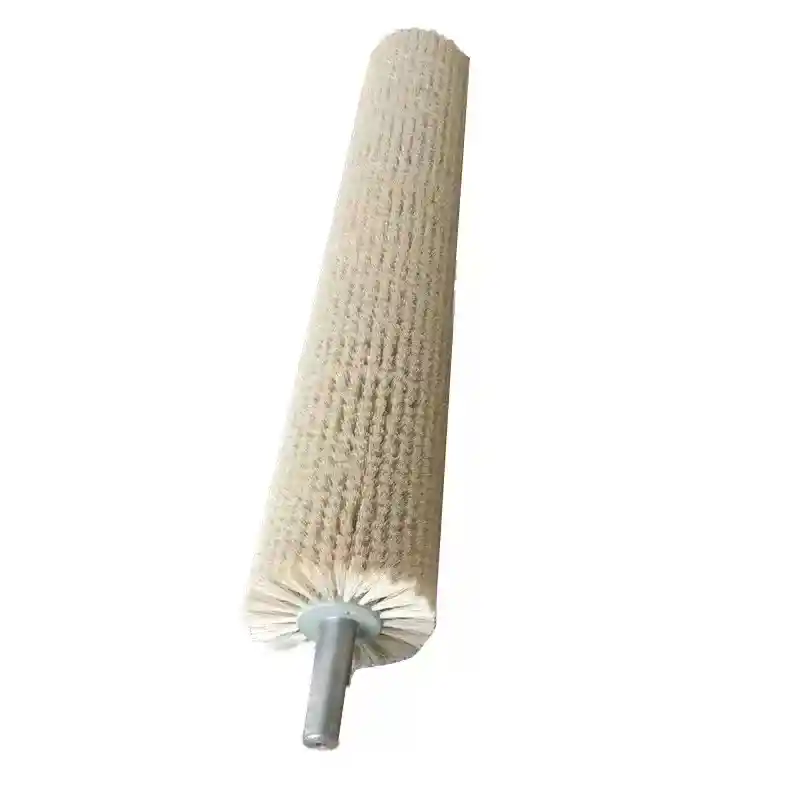
Huixi production follows ISO 9001:2015 process controls [1], and filament options can be specified to comply with REACH substance restrictions [2]. For linear or irregular edges, flexible strip brush is the preferred match. For round shafts and rollers, a cylindrical spiral brush is usually the better choice.
Installation Notes
Flexible strip brush installation should be approached as a mounting system rather than a single component. Bend the backing gradually instead of forcing a sharp corner, and use enough fasteners or clamping points to hold the curve in place while allowing access for replacement.
Cut the strip to length with suitable cutting tools, and deburr the cut end of metal backings before installation. If the brush will be subjected to repeated motion, leave enough clearance to prevent the filaments from being crushed or permanently deflected.
Why Custom Sizing Is Usually Necessary
Off-the-shelf strip brushes work for straight runs and standard gaps, but irregular surfaces rarely match a catalog dimension exactly. The better approach is to measure the maximum and minimum gap along the path, note the bend radius, and specify the filament height, density, and backing type from those measurements.
Huixi Brush provides professional technical support for these calculations. The goal is a brush that fills the worst gap without being too tall for the narrowest point after bending.
Get a Flexible Strip Brush Matched to Your Gap Profile
Send the installation drawing, measured gap width and height, environmental exposure, and required mounting profile. Huixi Brush can recommend the correct filament density, channel type, and cut length, with low MOQ and free samples for qualified projects.
Contact Huixi Brush at [email protected] or +86 1580 0932 713 for a technical recommendation or OEM/ODM support.
FAQ
How tight can a flexible strip brush bend?
The minimum bend radius depends on the backing channel, cut length, and filament trim height. A shallow trim and a segmented or soft backing can follow tighter curves, while deep trim and a rigid channel require a larger radius. It is best to send the intended curve drawing so the correct backing style can be selected.
What is the difference between flexible and formed strip brush?
A flexible strip brush is supplied straight or in coil form and is bent during installation. A formed strip brush is pre-shaped to a fixed profile for equipment that repeats the same contour, so the two products solve different mounting problems.
Which filament is best for sealing?
For most indoor dust and airflow sealing applications, nylon or polypropylene filaments provide a good balance of flexibility, recovery, and cost. Polyester is more appropriate when the brush also wipes away debris. Metal wire should only be selected when the environment or required contact action demands the additional hardness.
Can the brush be cut to length?
Yes. Flexible strip brush is normally cut to the required length at the installation site. Metal backing cuts should be deburred after cutting to prevent sharp edges from damaging the mounting track or adjacent equipment.
Is flexible strip brush suitable for wet or outdoor installations?
It can be, when the backing and filament are selected for the exposure. Stainless steel backing and synthetic filaments resist moisture better than plain steel and natural fibers. The final choice should be based on the specific chemical, temperature, and washdown requirements.
References
[1] International Organization for Standardization. ISO 9001:2015 Quality management systems — Requirements. Geneva: ISO; 2015.
[2] Regulation (EC) No 1907/2006 of the European Parliament and of the Council concerning the Registration, Evaluation, Authorisation and Restriction of Chemicals (REACH). Official Journal of the European Union; 2006.
If you’re interested, check out these related articles:
honing brush a magic tool for flexible burr removal
honing brush treat burrs in barrel parts without affecting accuracy and scale
rope cleaning brush for industrial use a key tool for maintaining safe production
brushes for steel wire industries cleaning descaling derusting polishing
abrasive disc brush an excellent industrial surface treatment tool
