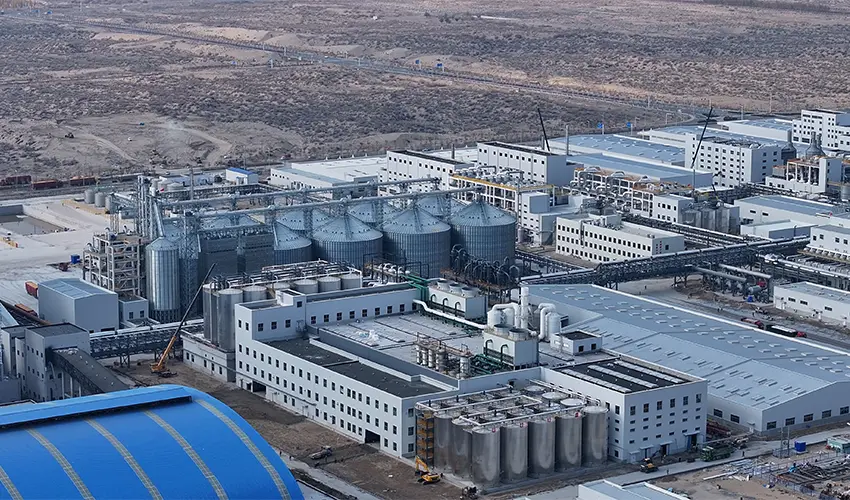

Ethanol plant safety depends less on the fuel tank at the fence line than on the dust, vapor, and energy interfaces inside the process. The engineering decision that matters most is made before equipment is ordered: zone classification, relief paths, and HAZOP actions set during design. In integrated grain-based alcohol projects, the highest fire and explosion risk rarely sits inside the distillation columns. It sits at the boundaries where corn receives its first grinding, where wet cake enters a dryer, and where product moves to loadout. Those interfaces can be designed to reduce fire and explosion risk from the start rather than patched after commissioning.
Where Do Fires Actually Start in an Ethanol Plant?
In most grain-based ethanol plants, fire risk concentrates in three areas. Grain dust forms during receiving, cleaning, milling, and transfer. Ethanol vapor gathers around vents, sample points, flanges, and low points in distillation and storage. DDGS drying and biogas handling add heat, product smolder, and methane. A fire protection review that starts at the tank farm can miss the grain handling system entirely, and that is where a plant can lose production even if no fuel-grade ethanol is involved.
Grain Receiving and Milling Dust
Corn dust is a fuel. A suspended dust cloud in a confined space can deflagrate when a spark, hot bearing, or static discharge ignites it. We look first at three controls: grounded conveying equipment, magnetic separation to remove tramp metal, and dust collection at every transfer point. Housekeeping matters, but engineering controls matter more because a thin dust layer on beams and cable trays can become the fuel for a secondary explosion.

Ethanol Vapor and Distillation Systems
Ethanol vapor is heavier than air and can travel along pipe racks and trenches before finding an ignition source. Distillation columns, condenser vents, sample ports, and product pumps are common release points. The effective safeguard is not a single detector; it is a combination of ventilation, spill containment, gas detection tied to shutdown or alarm, and rated electrical equipment. A vapor release remains manageable only if the cloud cannot reach an ignition source at a concentration inside the flammable range.
DDGS Drying and Biogas Interfaces
DDGS dryers combine heat, combustible dust, and residual product, which makes smoldering and dust ignition practical risks. Temperature interlocks, airflow monitoring, and manual inspection of ductwork and cyclones belong in the operating procedure. Biogas from anaerobic treatment introduces methane into the same plot. Flame arresters, pressure relief, and gas detection separate the digester and flare from the alcohol process instead of turning one fuel source into two unprotected ones.
Which Explosion Protection Zones Apply to Ethanol Processing Areas?
Classification drives equipment selection. Under IEC 60079-10-1 and NFPA 497, areas are assigned by release frequency and ventilation. Most process areas around distillation and storage are Zone 2 or Class I Division 2, with Zone 1 around vents, open sumps, and frequent release points. Grain handling areas follow dust explosion rules, not the same gas classification as a chemical plant. Mixing the two frameworks produces either overpriced instrumentation or underprotected transfer points.
| Plant Area | Typical Hazard Class | Protection Approach |
|---|---|---|
| Grain receiving and milling | Combustible dust | Dust control, grounding, explosion venting |
| Fermentation | Low gas risk, confined space | Ventilation, gas monitoring, entry control |
| Distillation and dehydration | Zone 2, some Zone 1 | Rated equipment, gas detection, relief paths |
| Ethanol storage and loadout | Zone 1 at fill points | Grounding, vapor recovery, no ignition sources |
| DDGS drying | Combustible dust and heat | Temperature interlocks, dust extraction, smolder response |
| Biogas and wastewater | Methane hazard | Flame arresters, ventilation, gas detection |
Zone Classification and Ventilation
Zone classification is an engineering output, not a product label. It comes from release sources, pressure, temperature, and airflow. Open structures in warm climates can dilute vapor quickly; closed buildings with poor ventilation can push a low-risk area into Zone 1. We ask the ventilation designer for air change rates and the process engineer for release scenarios before selecting instruments. If those two inputs are not aligned, the classification will drift from what the equipment can actually handle.
Equipment Certification and Interlocks
Certified enclosures mean little if the interlock logic is weak. A Zone 2 rated transmitter wired to a general-purpose junction box still creates an ignition risk. We verify the complete electrical loop, not just the instrument label. High level trips, pump dry-run protection, pressure relief discharge routing, and emergency shutdown buttons need to close the loop within the risk analysis. Equipment from different suppliers must share the same protection philosophy; otherwise gaps appear at the interface.
If your plant includes molecular sieve dehydration, direct-fired or indirect-fired dryers, or anaerobic biogas recovery, confirm the relief paths and zone boundaries before locking the equipment list. Send the preliminary PFD and plot plan to [email protected] and we will check the fire and explosion interfaces against the process flow.
What Does a HAZOP Analysis Cover in an Ethanol Plant?
HAZOP does not tell you whether the plant is safe. It tells you where the design may deviate from its intended operating envelope. A grain-based ethanol plant has enough nodes to require judgement: mash preparation, fermentation, distillation, molecular sieve dehydration, storage, utilities, and DDGS handling. Each node is examined for pressure, temperature, flow, level, composition, and reaction deviations. The study is only as useful as the corrective actions that follow it.
Node Selection and Deviation Ranges
Node selection should follow the process flow, not the drawing count. We start at grain receiving and move through liquefaction, saccharification, fermentation, distillation, dehydration, evaporation, and DDGS drying. For each node, the team applies guide words such as high, low, reverse, and no flow. The value of the session comes from specific conditions: a blocked condenser vent, a failed reflux pump, a stuck dryer damper. General questions produce general actions; specific deviations produce relief sizing, interlock settings, and operating limits.
Turning HAZOP Findings Into Project Actions
Findings should become line items in the P&ID, instrument list, and commissioning plan. An action that says ‘review relief valve’ is not closed. We prefer actions that name the valve tag, the required capacity, and the verification method. When the HAZOP is run before procurement, those actions change purchase specifications at lower cost. When it is run after installation, the same finding becomes a retrofit with shutdown risk. This is why HAZOP belongs inside the EPC schedule, not in a separate compliance exercise after handover.
When Should Ethanol Plant Safety Enter the EPC Scope?
Safety is often treated as a checklist at the end of basic engineering. That is the wrong sequence for fuel ethanol projects. Explosion protection, flare and vent location, relief system design, and electrical classification all affect equipment layout, piping, and civil work. Changing a Zone 2 area to Zone 1 after concrete is poured is expensive. Changing it after startup is worse. When AGRIFAM integrates a grain-based alcohol line, fire and explosion protection is part of the same system logic as fermentation, distillation, dehydration, water recycling, and biogas recovery. The safety systems share the utility balance and control architecture from the first PFD.

How Do You Confirm Fire and Explosion Protection Before Startup?
When fire and explosion safeguards are assembled from separate vendor packages, the gaps rarely appear until a test or incident exposes them. The practical review checks three documents together: the area classification drawing, the relief system design, and the HAZOP action register. If those three do not line up, startup is not ready.
Before commissioning, send your preliminary layout, process flow diagram, and product grade to [email protected] or call 010-8591 2286. We will review the fire and explosion interfaces against your capacity and site constraints and return the specific points to close before hot start.
What Do Operators Ask About Ethanol Plant Safety?
Is ethanol the only explosion risk in the plant?
No. Grain dust and biogas methane are just as capable of an explosion. Corn dust becomes explosive in the right concentration, and methane from anaerobic treatment can migrate into low spots and enclosed spaces. A plant that only treats ethanol vapor as the hazard can underprotect its grain receiving, DDGS drying, and biogas interfaces. Each fuel needs a specific set of controls: dust collection and grounding for grain, flame arresters and ventilation for methane, and rated equipment plus gas detection for ethanol.
What is the difference between fire prevention and explosion protection?
Many teams treat them as one discipline, but they address different stages. Fire prevention removes or separates fuel and ignition sources. Explosion protection assumes that an ignition may still occur and limits the damage through venting, suppression, containment, or isolation. A grain receiving system needs both: housekeeping and grounding reduce the chance of ignition, while explosion vents protect the equipment if a deflagration starts. A layered design fails only when both the prevention barrier and the protection barrier fail at the same time.
How often should HAZOP be repeated after commissioning?
HAZOP frequency is better measured against change triggers than against a fixed calendar. A full revalidation on a periodic cycle is common for plants that have not changed materially, but any change to relief paths, process chemistry, control logic, or operating range calls for a targeted review. The trigger list should include new feedstocks, revised operating limits, and equipment changes at the boundary of a rated area. A management of change procedure that routes every modification through the right safety review does more than a fixed schedule.
Do older plants have to meet current zone classification rules?
It depends on how the plant is being changed. An existing facility that continues to operate under its original classification may remain acceptable if the risk assessment confirms that equipment and ventilation are still intact. New equipment, relocated vents, or expansion into a previously unclassified area should be evaluated against current standards. The practical test is whether the original assumptions still hold. If a building is now enclosed or a release source has moved, the old classification no longer describes the actual hazard.
Can a grain-based alcohol plant share utilities with other processing lines?
In integrated alcohol projects we have reviewed, shared utilities create the most overlooked interfaces. Steam, water, air, and drainage can carry a hazard across plant boundaries if isolation is not defined. A common steam header can transmit pressure or contamination; a shared drain can route ethanol vapor into a non-hazardous area. The answer is not automatic separation but explicit isolation and backflow prevention at each interface. Send your utility diagram and process flow to [email protected]; we will confirm which shared interfaces need isolation before startup.
If you’re interested, check out these related articles:
Driving Global Food Conservation Through Technological Innovation