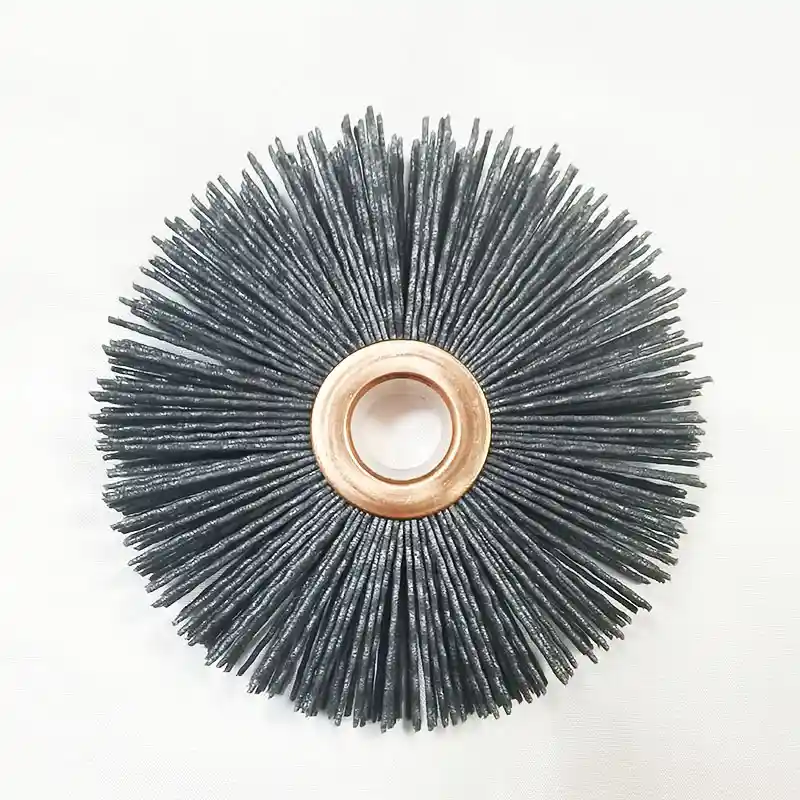

End brush selection usually starts with the wrong question. Buyers ask which brush is best, but the useful question is what the burr, the part material, and the entry angle require. A stainless steel cross-hole with a heavy feather burr needs a different fill, filament diameter, and speed than an aluminum edge that only needs blending. I approach every end brush specification by working backward from the part feature, then matching shank, trim length, fill material, and process settings to keep the edge consistent without breaking filaments or widening the hole.
Which Fill Material Matches the Burr and the Part Material?
End brush fill does two jobs at once. It removes the burr, and it sets the edge radius and surface finish. Carbon steel wire is the most common choice for mild steel, cast iron, and general deburring. It cuts fast, but it leaves fine steel residue and can rust a stainless workpiece if the same brush later touches stainless. Stainless steel wire costs more and cuts a little cooler; I specify it for stainless parts, aluminum components, or any job where rust stain or cross-contamination is a reject condition. Brass wire is softer and non-sparking, which suits soft alloys and maintenance work where the base material cannot be scratched. Abrasive nylon filament with silicon carbide or aluminum oxide grain is the least aggressive option and is usually better for edge blending and surface improvement than for removing a heavy burr.
| Fill material | Best use | Watch for |
|---|---|---|
| Carbon steel wire | Mild steel, cast iron, heavy burrs | Leaves steel residue; rust risk on stainless and aluminum |
| Stainless steel wire | Stainless steel, aluminum, contamination-controlled parts | Higher cost; slightly lower cutting aggressiveness |
| Brass wire | Soft alloys, non-sparking maintenance work | Short wear life; not for hard or thick burrs |
| Abrasive nylon | Edge blending, light deburring, finish improvement | Not for heavy or thick burrs |
Filament diameter matters more than most buyers expect. A 0.005 in stainless wire conforms to a small bore but does not have enough stiffness to peel a thick burr. A 0.014 in carbon steel wire cuts a heavy edge fast but can chatter in a cross-hole and leave a wavy radius. I usually start with the smallest diameter that still cuts the burr, then move up only when cycle time is too long or filaments snap from fatigue too early.
On a stainless steel valve part with a 6 mm cross-hole, the initial carbon steel end brush worked for a few hundred parts before the edge radius grew uneven. The failure came from two places: the wire fill splayed under spindle pressure, and carbon steel residue discolored the surface after passivation. We changed to a stainless steel wire fill in the same diameter and shortened the trim so fewer filaments contacted the wall at once. The edge radius held through the production run, and the post-treatment staining disappeared. That change was not a better brush in the catalog; it was a better match between the fill and the part.
Fill type changes how aggressively a wire brush cuts. <the differences between [knotted wire wheel brush](https://www.huixibrush.com/knotted-wire-wheel-brush/) and crimped wire wheel brush> covers why knotted wire removes heavy contamination faster while crimped wire runs cooler on lighter finishing work, which is the same trade-off we manage when specifying wire end brushes.
What End Brush Shank, Trim Length, and Face Diameter Do You Need?
Shank diameter is a spindle fit issue. If the shank does not match the collet, the brush will run out, vibrate, and snap filaments at the root. Hand die grinders and flexible shaft tools typically take 1/4 in or 6 mm shanks; CNC spindles often use 3 mm, 1/8 in, or 6 mm collets. Lock the collet size first, then choose the shank. A shank that needs an adapter adds runout, and runout is what shortens brush life in a tight hole.
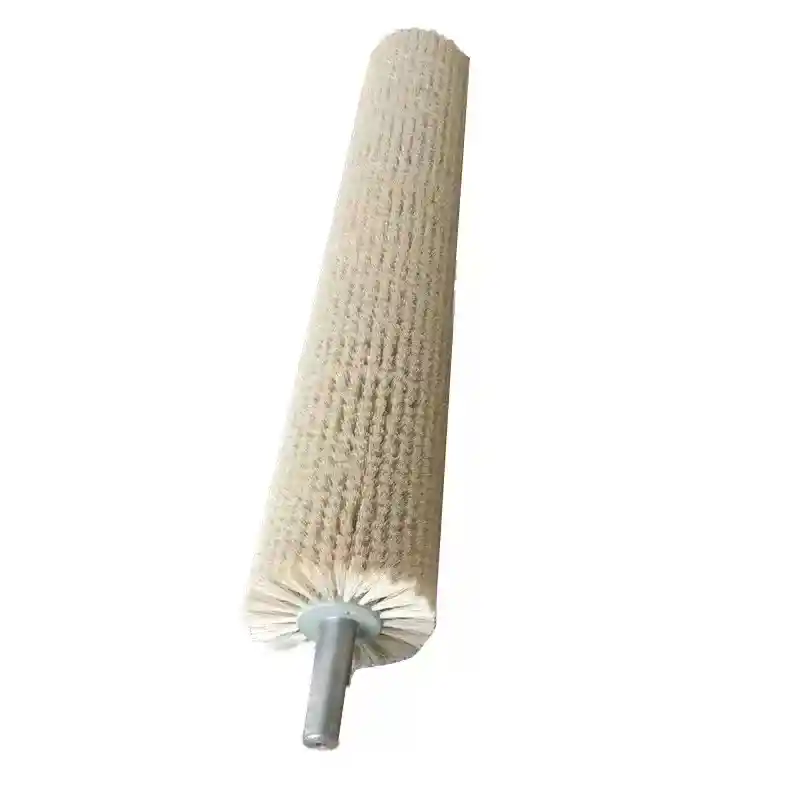
What happens when the trim length is too long?
Trim length is the exposed filament length from the hub or knot to the brush face. The longer the trim, the more the filaments can flex around a corner, but the less force they transmit to the burr. For tight-area work, I keep trim as short as the entry path permits. This stiffens the fill and keeps the edge radius controlled. A long trim can reach past a shoulder, but it also lets the brush wrap around the edge and blend areas the operator did not intend to touch.
How much larger than the hole should the face diameter be?
The face diameter should fit the feature, not just the hole size. For a straight through-hole, an end brush face slightly larger than the hole gives enough interference for the wire tips to work the edge. For a cross-hole, a ball-shaped or smaller-diameter face enters the bore and then deburrs the intersection without removing material from the main bore wall. I usually specify face diameter after I know the entry angle and the smallest opening the brush must pass.
Face diameter, trim length, and shank diameter work as a set. A large face on a long trim makes a flexible, long-reach tool that is hard to control. A small face on a short trim is rigid and precise but covers little area. For production deburring, I prefer the smallest face that still reaches the burr and the shortest trim that lets the brush enter the feature. That combination reduces vibration, keeps cycle time predictable, and limits filament breakage.
How Do Speed, Pressure, and Dwell Affect the End Brush Cut?
End brush performance usually changes more from process settings than from the brush itself. Wire fill cuts by scraping; abrasive nylon removes material by controlled light pressure. If the speed is too low, the filaments do not have enough tip energy to break the burr and the brush wears from rubbing. If the speed is too high, wire filaments flare outward under centrifugal force, the brush face spreads, and the tool loses contact with the feature. I run most small wire end brushes in the 15,000 to 25,000 RPM range and check the brush face after the first part. If the wire is splaying wider than the hub, the speed or the interference is too high.
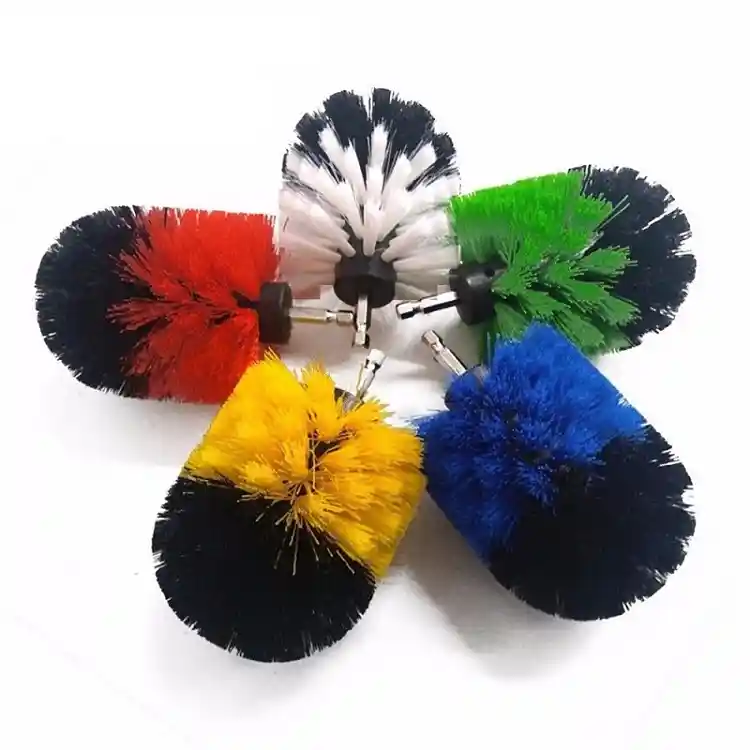
Pressure is the setting operators get wrong most often. An end brush does not need the same downward force as a mounted point. Light contact lets the wire tips flex, cut, and return. Heavy pressure bends the filament at the shank root and causes fatigue failure. I can usually hear the problem before seeing it: a chattering end brush under too much load is not cutting, it is bouncing.
If your part has cross-holes, thin walls, or a surface finish window measured in microinches, the interaction between face diameter, speed, and dwell becomes difficult to judge from a catalog. Confirm the shank size and maximum operating RPM before finalizing your tooling list. Send your part drawing, cycle time target, and current edge finish result to [email protected].
Dwell decides edge radius. A quick pass removes the sharp burr and leaves a small, controlled radius. Holding the brush in the same spot widens the radius and can enlarge a hole if the material is soft. In CNC programs, I ask for dwell time and feed rate to be defined together. On manual work, I train operators to count a set contact time rather than judging by sound alone.
When Should You Replace an End Brush Instead of Pushing It Further?
Pushing an end brush past its useful life does not save money; it moves the cost into rework and inconsistent edges. The brush wears in three ways: wire tips fatigue and break, abrasive grain dulls or rounds off, and the face diameter shrinks as the outer filaments wear back. Each failure changes the result before the operator notices.
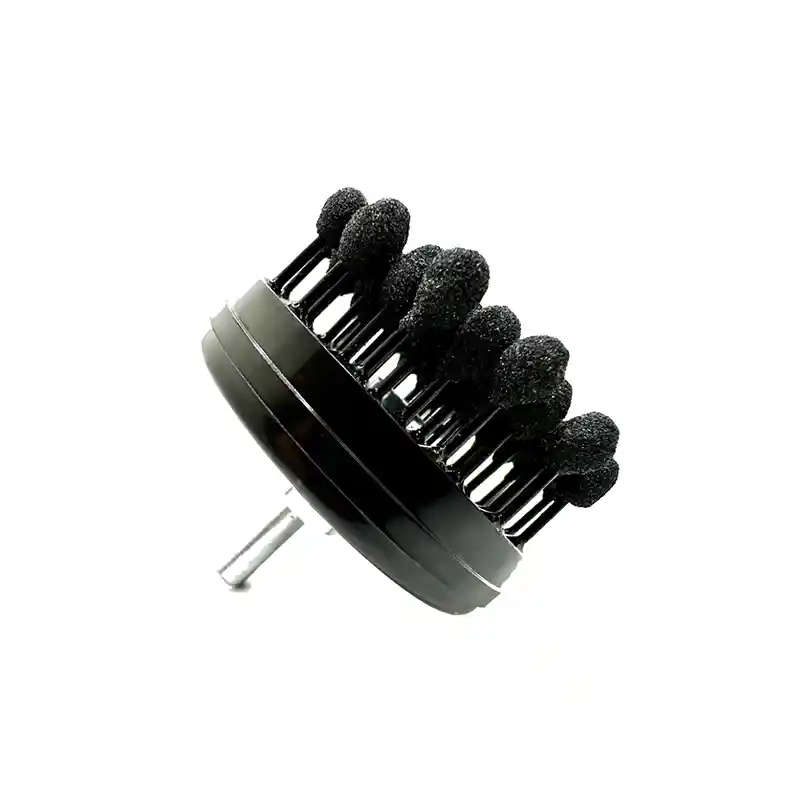
Broken wire at the root is the clearest sign. When a few filaments at the outer edge snap, the remaining wires carry more load and break faster. The brush may still rotate, but the face is no longer round and the edge radius becomes uneven. I replace wire end brushes as soon as I see root breakage or a face that no longer matches its original diameter. Waiting until the tool stops cutting usually means the part has already been blended beyond tolerance.
Abrasive nylon end brushes wear differently. The grain dulls and the filament smooths, so the brush starts to polish instead of cut. Cycle time climbs, operators apply more pressure, and the edge begins to smear rather than deburr. The replacement signal is the same: a measured change in either edge condition or cycle time.
Internal holes often need a brush that can flex without losing contact pressure. <honing brush a magic tool for flexible burr removal> covers how a centered ball-shaped honing brush follows a bore and removes feather burrs without changing the hole dimension, which is a useful comparison when an end brush is too small or too aggressive for the job.
What Should You Send Us to Specify an End Brush?
Most end brush inquiry forms ask for a product number, but product numbers alone do not tell us the burr location, the part material, or the edge condition your inspection accepts. When we specify an end brush for production, we need four pieces of information before we confirm a reliable tool. Send the part drawing or a photo that shows the hole, cross-hole, or edge position. Include the part material, hardness, plating, or passivation requirement. Describe the burr type and the required edge condition, whether it is a sharp break, a controlled radius, or a surface finish target. Add the spindle collet size, speed range, and cycle time or manual operation.
Because Huixi Brush manufactures the brushes, we can adjust trim length, fill material, and filament density instead of forcing an off-the-shelf size. Send those details to [email protected] or call +86 1580 0932 713 with the part number and quantity. We will confirm the fill, filament diameter, trim length, shank, and a safe speed range, then send an offer based on the tooling you use.
What Other Questions Do Buyers Ask About End Brushes?
Can one end brush handle both deburring and edge blending?
Yes, if the burr is light and the edge radius requirement is loose, a single wire or abrasive nylon end brush can remove the burr and blend the edge in one pass. The risk is that a wire fill aggressive enough to remove a heavy burr will also leave a wider radius or scratch. If inspection separates deburring from surface finish, I would use carbon steel or stainless wire for the burr and an abrasive nylon end brush for the final blend. Running them as two steps costs cycle time but gives a repeatable edge. Share the part drawing and edge condition, and we can tell you whether one brush is realistic.
Why does wire fill leave dark marks on stainless steel?
The dark marks are usually not a coating failure. Plain carbon steel wire can transfer iron particles into the stainless surface, and those particles later rust or stain after passivation. Some shops believe stainless parts cannot be brushed with wire, but the issue is the fill material, not the brushing process. A stainless steel wire end brush avoids the contamination risk and still removes the burr. If the work is food grade or medical, I specify stainless wire and keep the brush dedicated to that alloy group. Let us know the alloy and cleaning process, and we can match the fill accordingly.
What RPM should we run a small end brush?
It depends on the face diameter and trim length. A small 6 mm wire end brush with a short trim can run near 20,000 to 25,000 RPM without flaring, but a larger face with a long trim needs a lower speed to stay round. More important than a single number is the brush’s maximum safe speed. The wire fill should not splay beyond the original face diameter at operating speed. If it does, reduce RPM or choose a shorter trim. We can give a recommended range after we know the shank, face diameter, trim length, and machine spindle.
How do we order an end brush for a blind hole?
Blind hole deburring is not one question; it is two questions. The first is whether the brush must enter from the open end and reach the bottom corner, and the second is whether the bottom edge needs a controlled radius or only burr removal. For a blind hole, I usually prefer a shorter trim with a face diameter close to the minor diameter so the wire tips can work the bottom corner without side loading the hole wall. Send the hole diameter, depth, bottom geometry, and part material, and we will confirm the safest trim and fill. Email [email protected] or call +86 1580 0932 713, and we will specify a brush that reaches the bottom without damaging the sidewall.
If you’re interested, check out these related articles:
abrasive disc brush an excellent industrial surface treatment tool
where stainless wire spiral brush can be used
how do you know about deburring brushes
the differences between inward and outward spiral brush