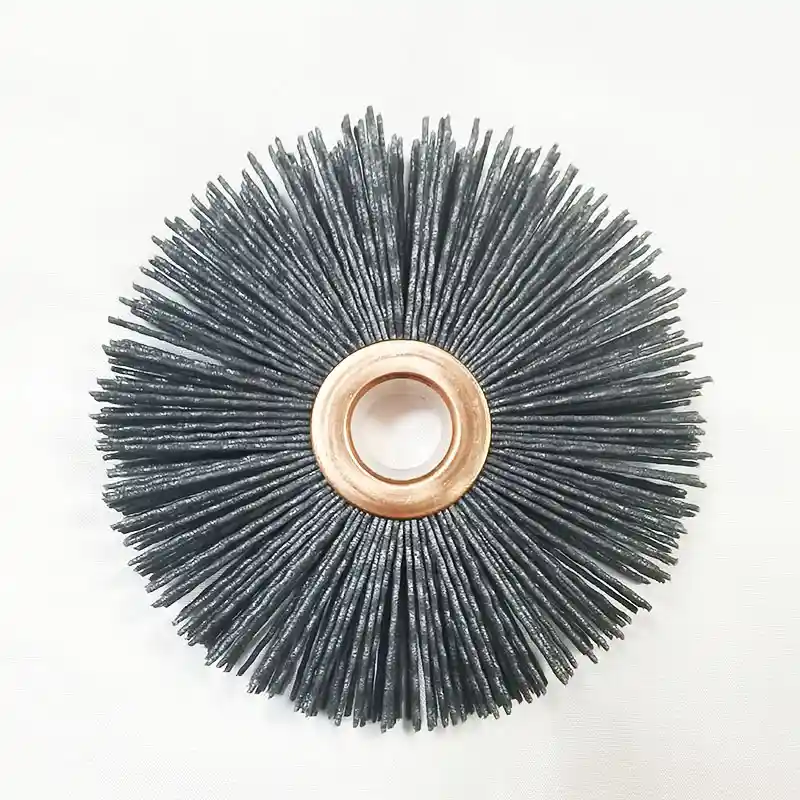

A crimped wire wheel brush is a power-driven surface preparation tool that removes light-to-moderate rust, oxide, old coatings, and light scale while producing a smoother blended finish than a heavier knotted wheel. The brush is built around a center ring, with individual steel wire filaments mechanically crimped before they are secured in place. That crimp gives each filament more flex under load, so the brush spreads contact across the workpiece instead of striking the surface with only a few stiff wire points.
For maintenance teams, fabricators, and coating contractors, this makes the crimped wheel a practical choice for bench grinders, pedestal grinders, straight grinders, and low-speed machine applications where the goal is cleaning plus moderate surface refinement. The key is matching wire diameter, wheel diameter, operating speed, and workpiece material to the conditioning target. ANSI B165.1 requires power-driven brushes to be used within marked speed limits, with proper guarding and face protection [1].
How Crimped Wire Construction Controls the Cut
Crimped wire filaments act as small springs. When the wheel contacts a metal surface, each filament compresses slightly and drags across the part instead of digging in at full stiffness. This distributes cutting energy across many fine wire tips, which tends to produce a more uniform scratch pattern and lower heat concentration.
Most standard crimped wire wheels use high-carbon steel wire conforming to ASTM A227 [2] for general rust removal and surface blending. Stainless steel wire is also available for applications where carbon steel contamination must be avoided. Brass and phosphor bronze versions are less common but useful where non-sparking behavior is required. The wire diameter is the main control for cutting aggressiveness: smaller wire diameters create a finer surface effect, while larger wire diameters remove material faster and leave a more visible texture.
Matching the Brush to the Job
A crimped wire wheel brush is not a universal replacement for every surface preparation step. It works best when the existing surface is lightly or moderately corroded, or when the final requirement is a clean, uniform metal surface with only light texturing. Heavy weld slag, thick mill scale, or deeply pitted rust may require a knotted wheel or a different abrasive process first.
The table below lists common production selection ranges. These are practical references for ordering and discussion, not guaranteed performance limits.
| Application | Common wire diameter | Typical wire type | Expected surface result |
|---|---|---|---|
| Final blending and oxide removal | 0.20–0.30 mm | Stainless steel or high-carbon steel | Fine satin finish, low stock removal |
| Light rust removal and paint stripping | 0.30–0.40 mm | High-carbon steel | Medium cut with moderate surface blending |
| General descaling and weld cleaning | 0.40–0.50 mm | High-carbon steel | Strong cut, more visible wire texture |
| Non-sparking maintenance cleaning | 0.30–0.40 mm | Brass or phosphor bronze | Gentle cleaning without spark generation |
| Aluminum or soft alloy cleaning | 0.20–0.30 mm | Stainless steel | Reduced carbon embedding risk |
For coating preparation, the resulting surface is often assessed against ISO 8501-1 visual cleanliness grades [3]. When the required specification is power-tool cleaning that leaves only sound coating and tight rust, the work often follows SSPC-SP 3/NACE No. 3 requirements [4]. A crimped wheel can support that level when the contaminant layer is not excessive, but it is not a substitute for abrasive blast cleaning.
A knotted wire wheel cuts harder and leaves a heavier texture, while a crimped wheel flexes more and gives a finer, more uniform scratch pattern. > <the differences between knotted wire wheel brush and crimped wire wheel brush> covers selection guidance for heavy scale removal versus fine surface blending.
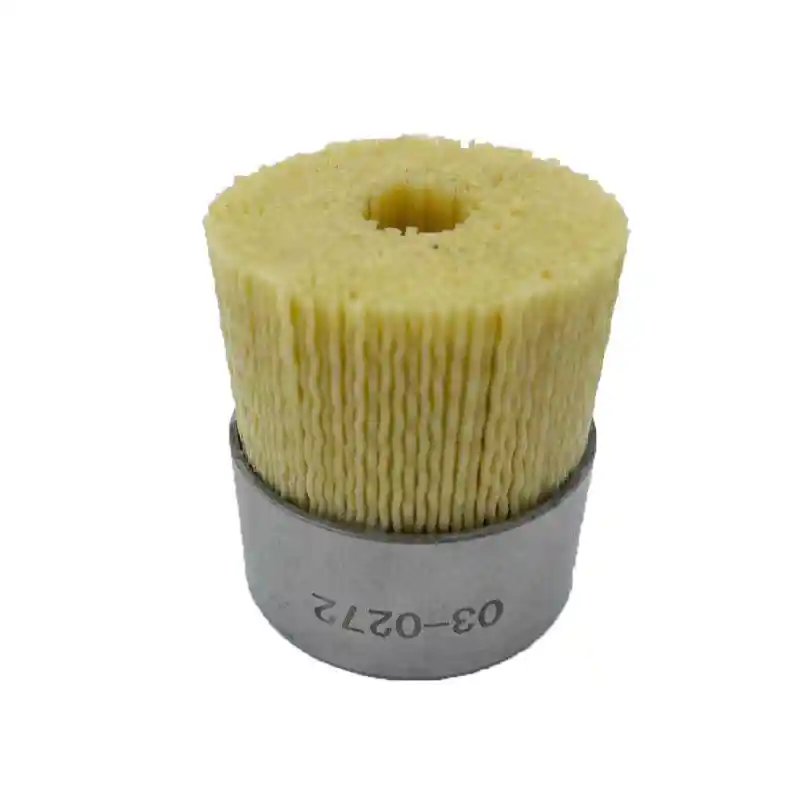
For production lines that handle mixed surface conditions, the safer sequence is usually to remove the heavy contamination first, then finish with a crimped wheel or a finer abrasive nylon brush. This prevents premature wire fatigue and keeps the wheel available for its best-performing task.
Operating Practices and Workpiece Safety
Power-driven brushes operate at high surface speed, and the main risks are wire throw, brush breakage, and workpiece kickback. These practices reduce field failures:
- Inspect the brush before mounting. Look for corroded wire, missing tufts, cracked backing rings, or uneven wear.
- Mount the wheel on a properly sized arbor or shaft. The bore must fit the machine spindle without forcing.
- Do not exceed the maximum RPM marked on the brush. Confirm the machine speed before installing the wheel [1].
- Use the face or periphery of the wheel consistently. Avoid pressing only a small edge into the part.
- Wear a full-face shield, safety glasses, leather or cut-resistant gloves, and close-fitting clothing.
- Use a guard whenever the machine is designed to accept one.
When the brush is used for in-line processing, avoid dwell time in one spot. Constant movement prevents localized heat and helps the wire wear evenly. If the wheel begins to chatter or throw wire early, stop and recheck speed, mounting, and workpiece clearance.
Specification and Application Support
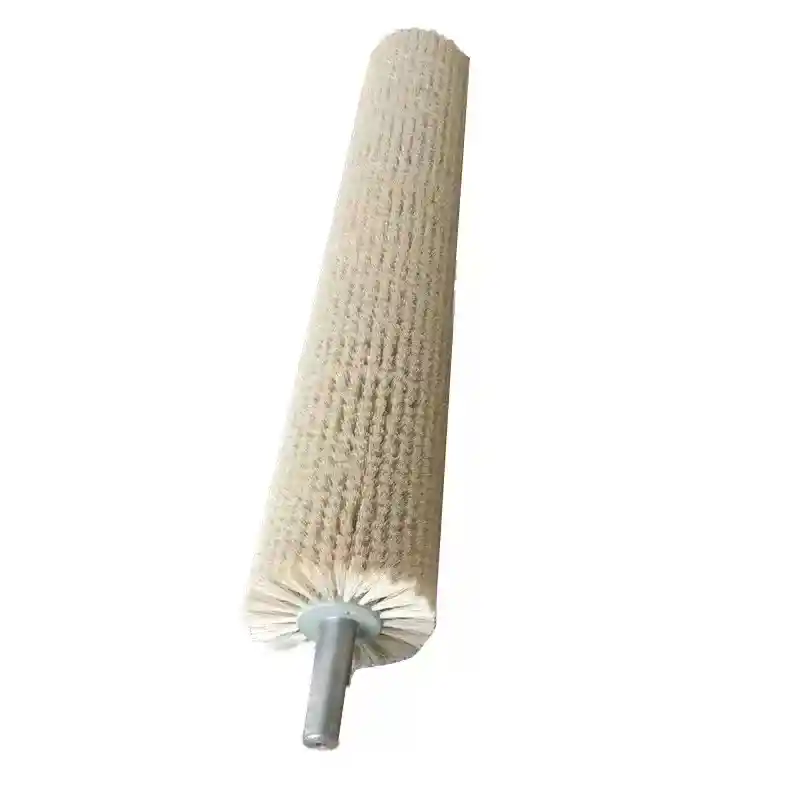
A well-specified crimped wire wheel brush includes more than a general product name. Buyers should confirm outer diameter, face width, bore or arbor size, wire diameter, wire material, wire density, and maximum operating speed. Missing any one of these values can lead to a wheel that fits the machine but performs poorly on the part.
Huixi Brush supplies customized crimped wire wheel brushes and related wire wheel brushes for sealing, cleaning, polishing, and deburring work. If you can share the workpiece material, current surface condition, required finish, and available machine speed, email [email protected] with the wheel diameter, bore size, wire diameter, and required RPM. A direct inquiry with those four data points usually returns a complete specification and quotation faster.
Wheel brush selection depends on wire type, diameter, and surface tolerance. > <wire wheel brush the right assistant for industrial cleaning and polishing> covers application matching for cleaning and polishing lines.
Inquiry and Specification Support
To request a quote, sample, or OEM/ODM evaluation for a crimped wire wheel brush, please provide the following information:
- Workpiece material and current surface condition
- Required surface finish or profile after brushing
- Preferred outer diameter, face width, and bore/arbor size
- Wire diameter and wire material
- Machine type and maximum available RPM
- Target quantity and delivery schedule
Contact Liu Jian at [email protected] or +86 1580 0932 713 for technical support, customized brush design, and current production lead times.
FAQ
What is the main difference between crimped and knotted wire wheel brushes?
Crimped wire wheels use filaments that are bent or waved before being assembled, which gives the wire flex under load. This produces a finer, more blended surface finish and is generally suited to lighter rust, oxide, and coating removal. Knotted wheels use twisted or grouped wire and deliver a harder, more aggressive cut for heavy scale, weld slag, and thick coatings.
What wire diameter should I choose for rust removal as opposed to polishing?
For fine surface blending and polish preparation, wire diameters from about 0.20 mm to 0.30 mm are common. For general rust removal and light descaling, 0.30 mm to 0.40 mm is frequently selected. For faster cleaning with more visible texture, 0.40 mm to 0.50 mm can be used, but final finish requirements should control the choice.
Can a crimped wire wheel brush remove mill scale?
It can remove light or loose mill scale, but it is not the best tool for thick, tightly adhered mill scale. Heavy mill scale often requires a knotted wire wheel, abrasive blasting, or mechanical descaling before a crimped wheel is used for final cleaning and surface blending.
What is a safe operating speed for a crimped wire wheel brush?
Safe speed is not a single universal number. It depends on wheel diameter, construction, wire diameter, and the maximum RPM marked on the brush. Always use the manufacturer’s marked maximum RPM and confirm the machine speed before installation [1].
Can I use a crimped wire wheel brush on stainless steel or aluminum?
Yes, with the correct wire material and operating practice. Stainless steel wire is commonly specified for stainless steel and aluminum parts to reduce carbon steel contamination. The same brush should not be used on both carbon steel and stainless steel parts without a clear cleaning and contamination-control procedure.
References
[1] American National Standards Institute, Safety Requirements for Power-Driven Brushing Tools, ANSI B165.1-2013.
[2] ASTM International, Standard Specification for Steel Wire, Carbon, for Mechanical Springs, ASTM A227/A227M-17.
[3] International Organization for Standardization, Preparation of Steel Substrates Before Application of Paints and Related Products — Visual Assessment of Surface Cleanliness, ISO 8501-1:2007.
[4] SSPC/NACE, Power Tool Cleaning, SSPC-SP 3/NACE No. 3.
If you’re interested, check out these related articles:
the differences between inward and outward spiral brush
where stainless wire spiral brush can be used
how do you know about deburring brushes
honing brush treat burrs in barrel parts without affecting accuracy and scale
